Writing

Indecisive

A complex and cluttered environment for leaders makes old hierarchical models of leadership outdated. We need to adjust our expectation of how leaders behave to meet the needs of our new complex systems. 

History is full of strong and decisive leaders. Mostly male leaders at the top of hierarchies they answer any question simply and directly based on their expertise. They issue orders at will to make our roles as followers as simple and passive as possible. Napoleon rose to the heights of power, conquered nations, dictated laws and built new institutions. He also cost millions of lives, failed to hold on to his power and died in his second exile in the care of jailers. His journey was all before global connection made a leaders challenges far more complex. 

Clarity and directness may be comforting but we are slowly learning that three word slogans aren’t the answer. In our complex era, the appeal of simple directions fades rapidly. Reality intrudes quickly. 

Followers don’t want simplicity for its own sake. They want simplicity because it used to mean effectiveness. They want progress on the issues that matter to them. Most importantly they want to be understood and have their needs at least considered and at best addressed. 

Leaders can no longer demand a following. They must earn it by their actions. The path of engaging others can look a lot like weakness and indecision: listening, engaging, considering, experimenting with approaches and admitting limits and uncertainties. Great leaders don’t have answers and orders. They engage entire communities in taking up the work of change to make things better. Great leaders are not strong, they are interconnected, build connections and know connection is the source of their enduring influence. Leaders can no longer hide out in palaces, parliaments or headquarters.  Relationships last longer than orders and get far more done. 

In a complex world a little indecision is required to find the path to greater effectiveness. 

Despair

Despair demands less of us, it’s more predictable, and in a sad way safer. Authentic hope requires clarity-seeing the troubles in this world- and imagination, seeing what might lie beyond these situations that are perhaps not inevitable and immutable – Rebecca Solnit

Despair is easy because it comes to find us. We must search out and make paths to hope. 

Turn on the television, read the media or engage in social conversations and you will encounter the warm embrace of despair. Change is hard. It is easy to present the barriers to change as dangerous, arduous and insurmountable. Faced with the need to invest effort in understanding complexity, many give up before they even see or consider the paths forward. 

The problems that are easy to be solved will be fixed with technical expertise. Despair abounds at the systemic complexity of the issues that remain. No hero or heroine can single-handedly fix these issues. Systemic challenges demand a systemic response from a large measure of the community. The hard work of hope is the work of informing, engaging, enabling and leading networks in change. 

As long as the future is not fixed there is hope. New connections, lead to shared information and new solutions. Small acts of change accumulate in systems. The path to hope is to bring communities together in change and to help them better understand the reality of their system. Today, as ever, that is the work that matters. This is the work that tests our purposes and talents. Despair is easy. There are many to instruct us in despair. The ‘hopey-changey’ thing is rightfully hard. 

Hope is not a door, but a sense that there might be a door at some point, some way out of the problems of the present moment even before that way is found or followed – Rebecca Solnit

A Better Year Beckons

tunnel-445391_1920.jpg

The first of July in Australia signals the beginning of a new financial year. For many organisations, this means all the scores are back to zero and there are new work challenges to be achieved. The year ahead promises higher targets and more challenges as we try to do more with less in even more complex times. Starting the new year can feel like entering a new complicated tunnel.

You have a better year ahead. However, more of the same won’t get you where you need to go. You will need to make change to make it happen. Working more effectively will be driven by three key changes and a mindset of continuous learning & adaptation.

Focus on Purpose & Value

We deliver purpose and value in our work. That’s all that matters. The surest way to cut waste from your work and to improve your personal effectiveness is to focus on the value that you need to achieve. Anything that doesn’t deliver purpose or create value can be cut without loss. That might mean you have to start again or do something completely different. Are you clear on the connection of your work to the organisations strategic goals? Are you driving enough business value every day?

Start with a plan to achieve purpose and value. Adapt that plan as you learn from work throughout the year.

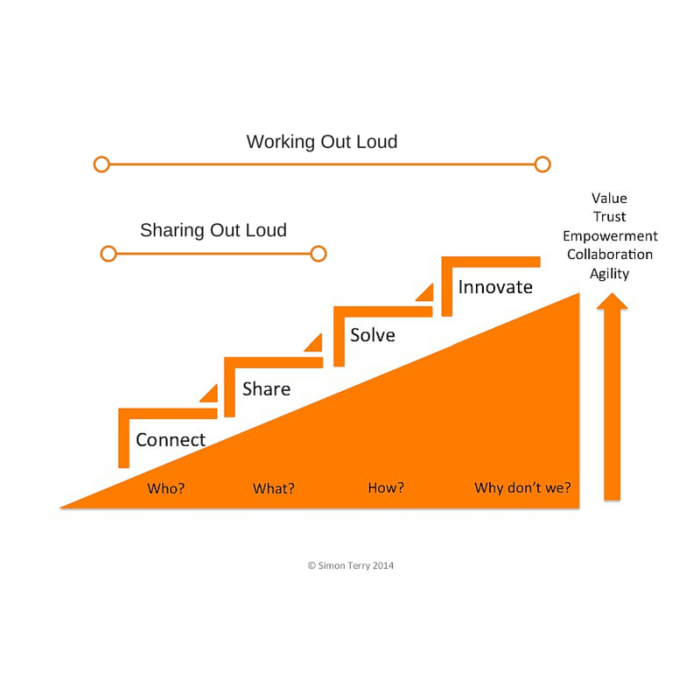
Connect>Share>Solve>Innovate

We don’t have to do everything alone. The value of collaborating in networks is that we can leverage the information, expertise and resources of others to work more effectively. How can you share your work to benefit from these collaborations? How can you help others to solve their challenges and benefit in return? When you need a step change in return, you are going to have to work beyond your own expertise and the limits of your own efforts.

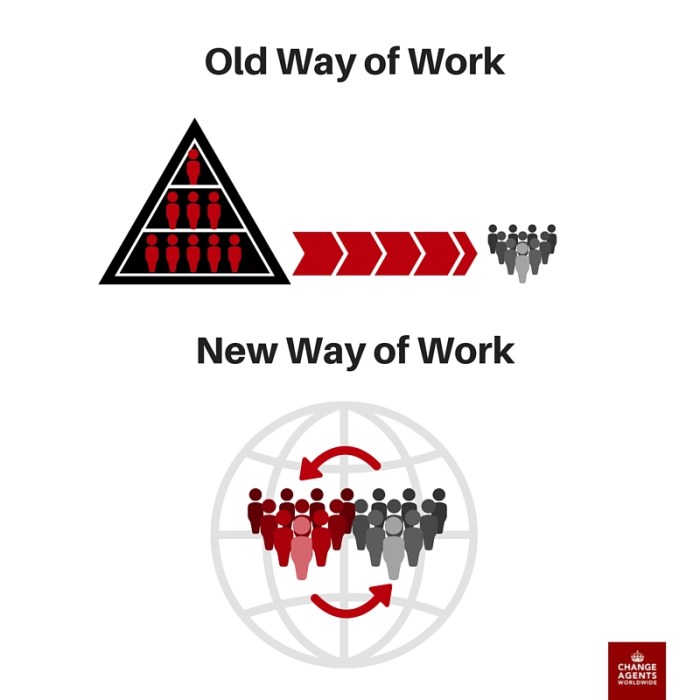
Most importantly, old ways of work just won’t cut it any more. We have pushed more for less to breaking point. We need to examine new ways to approach every aspect of our work and rethink our work for the opportunities offered to co-create in networks that reach around the world.

Take Calculated Risks

Risk and return are correlated. You can’t have one without the other. The greater the uncertainty the greater the opportunity for you to create new value.

You will need to experiment, to test and to learn to find a way forward through the complex systems in which you work. That means you must act when uncertain of the outcome, when it might feel dangerous or when you are not sure you are up to the challenge. You will be able to mitigate some but not all of the risk by focusing on value and collaborating with others. However only personal leadership and your personal actions can bring about a better future. Take the opportunities ahead of you.

If you want to discuss how to apply this to make your work and the work of your team more effective this year, get in touch. I can help you to take the right actions to make this year’s work more effective than ever.

Work Changes Culture

Sharing Out Loud

Work changes culture, not words. The future of work needs action to create new ways of working together. Creating new value requires people to do more than communicate. They must work in new ways.

With management of enterprise collaboration often falling in the Employee Communications function in organisations it can be tempting to see the challenges as primarily challenges of communication. How do we get people to use a new communication tool? What information do we want people to share in our new communication tool? Which communication tool should we use when?

The bigger and more valuable opportunity is to change the very nature of work. Changing work behaviours runs directly into the challenges of changing the culture of the organisation.  After all, culture is the expectation of future behaviours in any organisation. What ways of working are expected, what work is valued and how others will support your work is all wrapped up in a rich tapestry of cultural expectations born of past behaviours, some going back as far as the origins of the organisation.

As we have seen from communication campaigns around values in organisations, message can temporarily influence expectations. However, what confirms a change in expectations is when people see new behaviours being practiced consistently, rewarded and ultimately expected by others.

Sharing information in enterprise social networks is a start but the real value of working out loud is created when people begin to change the very nature of their work process to respond to expectations that they be more agile, more transparent, more collaborative, more trusting and more open to the expertise of others.  When this occurs they get the benefits of the input of others in greater speed, productivity and effectiveness. The changing nature of work and the changing culture of the organisation will develop hand in hand in this case and be supported by increasing personal and organisation value to justify the ongoing change.

Organisations that want to realise the true value of enterprise collaboration need to create an expectation that work will change to be more open. The best way to start that change is not with talk but by fostering the action that role models it to all in the organisation.

Two Paths to Trust

There are two paths to trust. The first is a path of ease, sameness and stability. The more sustainable path is the more challenging, the path of understanding.

In corporate life, I occasionally met a manager who had a team. Whatever role they took on, they brought with them the core of a team from their previous role. In some cases the managers and teams had been working together for years through multiple roles and organisations. What these teams gained in effectiveness through long relationships, they lost more in new ideas and inability to change their relationships.  In many cases the junior partners in these teams were being held back to burnish the glory of their bosses.

Trust with people who are the same as you is far easier. When you begin with little diversity in the team, there are fewer conflicts to iron out. The differences is worldview, style and approach are narrower. There are less likely to be shocks and patterns of decisions are easily implemented based on a shared history. Teams like these exist across the business world and they have advantages in the speed with which they come together. We are psychologically predisposed to recruit people just like us.

However, teams without diversity underperform. Study after study suggests that greater diversity improves team and organisational performance. One key reasons is because diversity gives rise to great bases for conflict. Ideas are less likely to be accepted. People challenge the applicability of patterns and history. There are more inputs available and people are more aware of the diversity of circumstances around their organisation. More time must be invested in debate and understanding. Better decisions result. Importantly, when team members are not just a mini me, their individual needs and potential can be considered.  Team members have the opportunity to realise their potential.

Creating high levels of trust in a diverse team is more challenging. It takes effort, conflicts and richer understanding of each individual.  Any team is better for that effort.

Invest in Better Work

Collaboration and other future work practices require investment from organisations to foster community and support the changes in practices. The potential value from this investment is better work organisation-wide.

Speaking at Intranets2016, I had the opportunity to see a showcase of presentations from organisations large and small on how they have leveraged value from new ways of working, better communication and collaboration with employees. I also got a chance to speak to many of the people attending the event and discuss their challenges and concerns.

Reflecting after the event one thing was striking: Each of the case studies had invested time and resources into helping their organisation get the most out of collaboration and community.  They had spent time and money on strategy, on design work, on employee engagement, on training and community management. They had ongoing resources devoted to realising the value of community. When I spoke to many members of the audience winning the support of their organisation to invest in these elements was a major challenge. The success stories were successes because their organisations supported their team to realise the value of changing work.

Many organisations have not yet realised that the potential value creation from their new intranet, their new productivity tools or their new collaboration software far exceeds the investment they need to make to support change and adoption. These tool are part of the furniture in an organisation and while from time to time we invest in the latest version to stay effective, not much more is expected from their use. 

Organisations that invest in community and collaboration know the value creation opportunity is far greater than a more effective tool.  The value creation opportunity goes to the heart of their organisation by making work better, more productive and more effective. What little resource they choose to invest will deliver benefits that are multiplied by all the work that they do in the organisation. Scrimping or not investing at all in this capability leaves the tools to miss their potential and the community of users to miss the benefits.

Champions of social collaboration and new productivity solutions need to do more than fund the technology. They need to help the organisation see the strategic value of the new tool in new ways of working. When that value is clear then the business case for ongoing investment and in community and change is much more obvious.

#WOLWEEK DAY 5: GROWTH MINDSET

This International Working Out Loud Week we will be sharing a reflection on a different element of working out loud each day.  We will be using John Stepper’s latest iteration of the five elements of Working Out Loud as a guide to those reflections. Our fifth reflection is on Growth Mindset.

GROWTH MINDSET

We can be better.

Our talents are not fixed. Through effort, stretch and learning we can improve our abilities. We work every day to be better at what we do, to better fulfil our purpose and our potential.

If our talents are not perfect, that is because they never can be. There are no limits on our ability that work will not release. If our work is not perfect that too is because there is always more, always another better way to attempt. The way we do our work is but one of millions of paths to our goals. If our purpose or potential is never completely fulfilled, then that is because we strive for more. We want to make a bigger difference.

The value of working out loud is to help us see that everyone’s work is not perfect as it develops. We understand the edits, the changes, the false starts and the dead ends that lead to success. We stop comparing other people’s showreels to our own cutting room floor. We realise that embarrassment, failures and setbacks are temporary but abandonment of our purpose is final.

Working out loud brings us together with others who want to grow and to learn.  We come together with others who want to improve their work and achieve their purpose in better ways. We are encouraged, challenged and supported to take on the daily work of getting better. Supported by a global community pursuing better work and a better life, we work together to grow.

We can be better. Together.

International Working Out Loud Week is from 6-12 June 2016

#WOLWEEK DAY 4: GENEROSITY

This International Working Out Loud Week we will be sharing a reflection on a different element of working out loud each day.  We will be using John Stepper’s latest iteration of the five elements of Working Out Loud as a guide to those reflections. Our fourth reflection is on Generosity.

GENEROSITY

Generosity is not new. We know how to give. Human beings are highly sophisticated animals at the fine arts of altruism, collaboration and generosity. Giving generously is what our societies do best.

In our work cultures, we some times lose the generosity of spirit that underpins humanity.  Our focus on performance, on efficiency and on competition, can make generosity seem counterproductive, suspect and weak. Yet elite performance and ultimate effectiveness depend on high levels of trust. We build trust when we move beyond our own agendas. We build trust when we start to give something of us to others.

Working out loud helps us to see that our gifts can be many. We can give as simply as giving our attention to another, to truly listen to their needs or their story.  We can give by recognising another and celebrating their progress in their work. We can give by providing material help, information or even just a sense of direction to someone. We can give by creating a sense of shared community in a task or a challenge and allowing others to use our networks to achieve their ends. Everyone of us can give the gift of reaching down and helping someone else up over the work we have completed to where we stand now. When we share our work visibly with a generous spirit we discover others can learn from our work and others yet may reciprocate our generosity with help, support and guidance.

Generosity is the social magic that triggers the wonderful synchronicity of working out loud. Our generous gifts inspires others, some far from our networks, to respond to our visible work. We cannot know what, when or if we will get something back in return for our generosity in working out loud. Working out loud is not a transactional exchange. Working our loud is an investment in our relationships and our networks. We invest for the future and for others. Be generous in those relationships.

The purpose of our work is to benefit others. Give a gift

International Working Out Loud Week is 6-12 June 2016

#WOLWEEK DAY 3: VISIBLE WORK

This International Working Out Loud Week we will be sharing a reflection on a different element of working out loud each day.  We will be using John Stepper’s latest iteration of the five elements of Working Out Loud as a guide to those reflections. Our third reflection is on Visible Work.

VISIBLE WORK

All our work is visible to others to some extent unless we actively seek to hide it. What the visible work element of working out loud asks us to do is to consider how we can make our work more visible to those who can benefit and those who can help.

This is not about completed work.  That would be visible outcomes. The element of visible work is making work more visible to others and narrating that work in ways that enable other people to learn and to help. You may not value your work and your work process but making that work more visible to the right people might help you to understand how they value your work and how they can help you make your work more valuable.

Visible does not necessarily mean public. The audience who can see your work might be small and focused.  Visible does not necessarily mean insistently distracting. Visibility is the beginning of findability.  You may want to simply make your work visible where it may be found later by someone like you working on a similar problem.

Visible work is a far wider trend than working out loud in the future of work. We see visible work in Visual Management Boards, Kanban, Trello, dashboards and other tools of visual management. We see visible work in agile projects, in design thinking exercises, in ideation exercises and other environments where people need to coordinate work into one vision. The post-it note is the byte of visual work in these contexts. Visible work underpins our activity based workspaces, our collaboration solutions and many more management systems and practices. Rather than simply let the process or environment make your work visible, take control of your work and shape its visibility to help yourself and others.

Think for a minute about your invisible work – the efforts you put in, the anonymous giving, the work that gets folded into other work or slides off the end of the desk or meeting table. How rare is it that there is joy or even satisfaction in the invisible work? Most of it goes to waste. All of it is neglected. Visibility of work is a step to a better life and a better career. Start sharing your work as it happens.

International Working Out Loud Week is from 6-12 June 2016