Do you Lead People or Fiddle with Structures?

image

The problem with hierarchy is that it validates the illusion that restructures are valuable management work. Let’s lead people to create potential and better ways of work instead.

Restructures are a Joke

An old joke about management hints at the role of restructures in management life, an opportunity to avoid leadership. In the joke, a CEO is left three numbered envelopes by a predecessor. Each envelope is only to be opened only when the CEO’s job is threatened by a crisis.

At the first crisis the CEO opens the first envelope and it says ‘Blame your predecessor’ and it works. At the second crisis, the second envelope says “Announce a restructure’ and it works.  At the third crisis, the CEO eagerly tears open the envelope to see it says “Fill out three envelopes…”

Time for New Options

Leadership is how we realise human potential in real people. Leadership is not the management of the ideal hierarchical structure of fungible full-time-employee equivalents (FTE). The latter is avoiding the real work of leadership of people.

No human potential has ever been realised in an organisation by a restructure. Restructures may create short term value by reducing the cost of people in an organisation, but without leadership no value is created. Without a change in processes or the patterns of interaction that create culture, the structure change amounts to little. The old culture will take over the new structure. Either cost drifts back because the work processes have not changed or worse the reduced workforce has impacts internally on people and externally on customers. 

Sadly leadership often disappears in restructures. Mostly restructures involve an evident loss of human potential. Because many managers view their people as a fungible resource, the costs of human and social capital lost in restructures can be missed. The loss of tacit knowledge and capability is often evident immediately after a restructure as people struggle to make processes work and newly clarified roles fail to cover the inevitable areas of whitespace. The loss of social capital can be seen as new jobs in new structures force people to build new relationships of trust and collaboration internally and externally. Engagement and trust both need to recover. 

A focus on structures of fungible people lets managers avoid the hard work of leadership. Poor managers use restructures to force people to “remove resources”. They hope that with less people, the remaining staff will find creative ways to improve, often without any support from leadership. Poor managers also use restructures to address the lack of skills and underperformance of their people that they have been avoiding. In both cases would we not create more performance, more potential and less anxiety if we took on the leadership work to engage people directly?

Don’t Restructure. Become Responsive.

The pace of change requires organisations to be more agile with their processes and organisation than a traditional restructuring process allows. One of the reasons traditional organisations now feel like they are in a process of continual restructure is the need to keep up with external change. No organisation can afford to stand still to sort out its structure while more agile competitors continue to move forward.

Leaders need to create organisations, teams and processes where change in work is responsive to the demands of customers and the external market. Large scale shifts in hierarchies are irrelevant when the organisation learns to continuously adapt to the needs of work, supported by leaders focused on creating the right culture and realising more performance through helping people to realise more human potential.

A continuous process of small adaptations in agile teams across the organisation is far safer and far more productive than large restructuring efforts. This process will best leverage the networks in the organisation and employees understanding and engagement. Each of those adaptations brings the organisation closer to better performance for its customers and gives the people a say in how to make their work better and how they can contribute more.

The cost of this change in approach is that the work and power of leadership must change. Adopting a responsive culture requires leaders to step away from their power to periodically fiddle with organisational charts. A responsive culture requires leaders to step up to engage, enable and empower their people to change they way the organisation works every day. The new work of leadership is to create the responsive culture and an organisation that supports individuals to make their work better for customers, employees and the community. 
If Your Company was a Country, Would You Live There?

image

Imagine a country like this:

  • Run by a small group of powerful individuals (let’s call them oligarchs)
  • Transitions of power only occur when those in power hand it hand down to chosen successors or as a result of bloody coups
  • Status in the society is intensely hierarchical. Changes in status are managed carefully after interviews and testing by those responsible for correct human behaviour
  • The rewards to oligarchs can far exceed those of others in the country
  • Resources are subject to allocation and expropriation. Individuals engage in barter and black market activities to work around resource constraints
  • There is a constant state of war with the country battling external threats and the daily activities and goals are often meaningless
  • Decision making can be arbitrary and decisions are often made without consultation or explanation
  • The oligarchy engages in continuous propaganda.  There is a black market in real information
  • Freedom of speech and action is tightly constrained by policies and process. 
  • Any form of rebellion against these stringent rules results in exile or a significant loss of status and livelihood.

Sadly, countries like this are all too common in human history. Most prompt a consistent flow of refugees fleeing an environment that stifles human potential and human relationships.

How many of these characteristics apply to your organisation?

If you company was the country above, would you choose to live there? Are some of these characteristics driving engagement in your organisation?

Today more talented individuals are choosing careers that avoid the kinds of experiences listed above. They are refugees who ‘voted with their feet’ to leave dysfunctional organisations

In a country, arbitrary decision making power used without consultation is seen as bad thing, risking unrest, poor policy outcomes and corruption. In business, it is called ‘strong management’. Many organisations are beginning to see the limits of these traditional models.  

Rethink Power, Purpose and Potential

The answer is not necessarily that we should make every organisation function like a country using a political system like democracy or an anarchy. We know from looking at our own countries that these systems have real issues too. For almost all organisations that transition is too great a leap to make in one step.  Few organisations that have led working in new ways are copied. However we can learn by reflecting on what refugees are seeking.

There are three transitions most people would seek in fleeing the country above, if they could. Anyone who becomes a refugee knows that the life ahead is hard and that they must put up with many new challenges.  People flee to escape oppression and experience better leadership, fulfil purpose and to realise their potential.

These are the key transitions that leaders of organisations can help create to avoid that exodus:

  • From Power to Participation: A move from arbitrary hierarchical power to a situation where people, customers and community are respected and there is an opportunity for all to lead and contribute transparently to the discussion and the work.
  • From Subsistence to Purpose: Giving people the opportunity to find intrinsic meaning and to work for a purpose, not just a pay check.
  • From Subjugation to Potential: Recognising that everyone has the ability to contribute more if given information, flexibility, a chance to learn and the opportunity to grow.

Those three transitions don’t even require leaders to surrender final say in decisions, their hierarchies and their processes today. However, these transitions build trust and enable new conversations about how the organisation will work and the consequences of its actions.  Those insights will form the basis of the next phase of transformation of the way the organisation works.

Leadership is the way to better realise human potential.  Leveraging the innovation inherent in human potential is the way to improve our leadership and our organisations.

The Future of Work is The Future of Leadership

An insight about the future of work dropped this morning as I discussed leadership in the network era with Harold Jarche and Jon Husband, colleagues from Change Agents Worldwide

image

The Future of Work is the Future of Leadership

The future belongs not to the leadership of technology. The future belongs to the technology of leadership.

Our opportunity is not incremental improvement in the leadership of change to implement network technologies. Our opportunity is a much more important transformation of the critical human technology of leadership for the network era. Only new leadership capabilities & concepts will enable us to realise the potential of the future of work

Realising Human Potential is What Matters

If you are one of the thought leaders, consultants or vendors working to bring about the adoption of social collaboration technology, you know there is a raging debate about what changes in social and network technology means for organisations. However, there is much that is unclear in the debate about the future of work.  Social Business is dead, not dead or even not enough. The biggest challenge is adoption, lack of executive buy-in, return on investment or even organisation’s success. You need a collaboration layer, you need purposeful collaboration or you need cooperation instead.

If you are a manager in an organisation trying to achieve outcomes in a rapidly changing business climate, you most likely missed this entire conversation. The debate about the impact of social collaboration technology is not even on your radar (unless a consultant or vendor has caused you to reflect on it for a moment before you returned to the daily challenge of running your business).

What matters most to managers is more effective human collaboration – collaboration that improves the performance of your business for your customers and delivering better work experience for your people. Managers everywhere wish there were better ways to tap the talents, innovation and engagement of their people to help deliver better outcomes. That is at the heart of the discussion of employee engagement in our organisations.

The technology that engages people and realises potential is called leadership. That’s why so many investments are made by organisations in leadership development and in a push for leadership in every role. Leadership is the most effective technology to solve for the management wish.

Network Era Leadership Realises Human Potential

Work is a human task. Leadership is the work of mobilising others to action. Leadership is how we help people to realise their human potential. Much of our network and collaboration technology is just an infrastructure for the work and leadership required. The network can magnify the culture of the organisation, but we need the right leadership models for managers to realise the potential of a network era of work.

Traditional management & leadership approaches inherit many of their concepts from process models borrowed from the industrial era. In this mindset human potential is measured in productivity terms.  The command and control culture focuses on using the right processes to drive human productivity and align that productivity with the right tasks. The engines of human potential (engagement, knowledge creation, experimentation, innovation & enablement) are driven out as sources of volatility & waste. What many call leadership is better described as a process of command of people with an efficiency mindset. That is not leadership at all.

These traditional management concepts also get baked into organisational systems. We have built much technology to explicitly or implicitly reflect these industrial models of management and work. Look inside any organisation and you will find plenty of systems designed from the top-down that reinforce hierarchical command and control. Pull out your system process maps and look for your employee’s ability to do exception handling. In many cases there is no exception process. Exceptions are handled in hacks

Transparency, responsiveness, the ability to work across silos and effectiveness are often surrendered to tight control of process, narrow measurement of process outcomes, compliance and efficiency. Critical systems in customer management and human resources systems offer some of the most striking examples of these constraints and are widely copied from organisation to organisation. To the frustration of everyone, managers and people must work around these systems to collaborate and cooperate effectively while managing waves of top down change management to bring them back to compliance with process.

The disruption of the networked era is evidence of the scale of change that networks are bringing to our lives. ‘Kodak Moment’ has an entirely new meaning today. This pace of change focuses our attention on a need for change in the concepts of leadership & organisation to support a changing world of work.

We need not focus much on the threats of this era. The opportunities of new models of work and leadership are greater. New network technologies give a glimpse of the potential for leaders to better leverage the people of organisations for work and innovation.  However, realising the potential of human collaborative and cooperative knowledge work in networks demands new leadership models.

We Know How to Start Leading in the Network Era

Each new era brings social changes and requires new more effective concepts. We updated the concepts of leadership and management at the birth of the industrial era, leveraging existing concepts from the military and other spheres of human life. Now people need to work to develop new models to leverage the infrastructure delivered by networks and collaboration technology.

The good news is that many of these concepts are already clear and have been developed by practitioners to the point where they are capable of application in everyday work. These practices now work highly effectively and can be taught. Managers now need to pick these up and build the capability in their people to lead in new ways, using:

  • Deeper self-awareness and understanding of human behaviour and drivers of high performance
  • A greater focus on systems and a wider view of outcomes and stakeholders
  • PurposeTrust to enable leadership & followership in every role
  • Experimentation & Adaptation
  • Collaboration & Cooperation
  • Network models of work organisation like Wirearchy, Pods and Swarms
  • Social work and learning, such as personal knowledge management, working out loud.

However, we cannot expect managers do to all the work alone. We will need to support them with learning, coaching and the opportunity to practice the new skills and mindsets.  We need to change the organisational systems and processes that hold back this opportunity to better leverage human potential.  

Making these changes is the great challenge of leadership is in the new network era. It is the work I will be focused on with my colleagues in Change Agents Worldwide as we help others to navigate these changes.

The future of work is the future of leadership for everyone in organisations. Building a better more effective model of leadership will help realise the human potential of this future. Join the effort in your organisation to build a new technology of leadership to make this possible.

From Safety to Safer: Middle Management’s Dangerous Transition

image

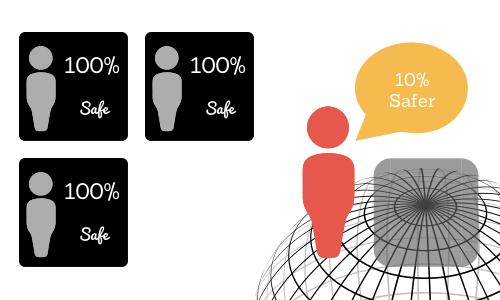
Safety is a common conversation, explicitly or implicitly, in the halls of middle management. Change agents among the ranks of middle managers experience conversations about the need for safety and the dangers of change on a daily basis. Safety is the focus because there are many for whom safety means the preservation of status, roles and resources. We need to move from safety to making our organisations safer for a world of rapid networked change.

The Wrong Kind of Safety

Ask enough middle managers and you will find that there are definitions of safety which involve elements of the following:

  • Ownership: a clearly defined area of responsibility and resources that can be controlled tightly
  • Knowledge is Power: a set of skills, capabilities or knowledge that is closely guarded and relatively unique in the organisation
  • Hierarchical Power: relationships of dependence with management above dependent on the department’s functional expertise and the team below dependent on sponsorship of their careers in the domain
  • Comfortable Accountabilities: Accountabilities should be designed with reference to achievable measures, preferably internal measures related to the discipline.
  • Limited Stakeholders: A few internal stakeholders often from similar functions with similar ideas and ideally few customer or community stakeholders who may introduce different perspectives and diverse issues. 
  • Few Dependencies: Trusting others reduces control and introduces risks, so collaboration and cooperation are avoided by controlling as much of processes and projects as possible 
  • Limited Transparency:  With utmost politeness, share little and participate little in the concerns of the rest of the organisation to preserve the comfort of your domain.
  • Stability: Ensure there is minimum change in business environment, even if this includes refusing to acknowledge market changes.
  • Minimum Risk: Avoid any change that offers risk. Why jeopardise an environment under close control?

The core of these definitions of safety is the idea that the threats to middle managers are internal. The biggest threats comes from other managers or senior management. The external world is not a cause for concern. Safety comes from building an walled fortress within the organisation and focusing internally.

Unsafe at any Speed

In the rapid change of our current business environment, the greatest risk to middle management is not internal. The need for change, the pace of change and its impacts are being driven in the networks around the organisation. Middle management has much more to fear from changing consumer and social behaviour, disruptive technologies and networked ways of working. 

The classic middle management definition of safety makes nobody safer. By turning inward, by resisting accountabilities, stretch and change, these managers guarantee that their organisations are exposed to much more wrenching changes than need be the case. Each of these elements of safety stand in the way of an open, agile and responsive organisation. When middle managers choose to act as barriers to change, the forces of change risk sweeping whole layers and organisations of managers away.

By focusing on a misguided view of individual safety, these managers make the organisation more unsafe as a collective.

Leaders who do not challenge a culture of safety in their organisation are putting their whole organisation at risk. Leaders need to be working to make the organisation more responsive. The safer organisation adapts.

From Safety to Safer

Leaders, change agents and forward thinking middle managers need to disrupt this misguided culture of safety in organisations. The conversation must not be about safety but how to make the organisation safer through adaption. This disruption must involve conflict with traditional views. However, that disruption will help the organisation adapt to a safer culture that opens the organisation up to its internal and external networks.

Here are some simple steps that any leader in an organisation can take to drive a responsive culture:

  • Push for external accountabilities: Raise the bar on performance. Measure customer outcomes. Consider end-to-end process performance to cut across siloed walls. Look externally for measures of success (and not just in the same industry).
  • Bring in external stakeholders: If customers, community, employees and other partners are not stakeholders in the organisations decisions then gather their perspectives and bring them into discussions across the organisation.  There is enormous power in real external views of the organisation, its purposes and performance.
  • Network the organisation: Focus on increasing the flow of information and knowledge within the organisation. Demonstrate the value of collaboration and cooperation in greater efficiency, innovation and engagement in the way work is done. Foster diverse perspectives on the way forward. Most importantly of all delegate outcomes and enable people to make change to adapt without reference to the hierarchy.
  • Experiment: The new definition of safety needs to be a well-run experiment to improve performance. The absence of well-run experiments is a sign of major concern. If you are not testing the way forward in changing times, then you are taking big risks.

You don’t need to be CEO to drive these changes to make a more responsive organisation. (Undoubtedly, it helps). You will need to effectively manage your role & influence in the organisation. However, effective change agents and middle managers can begin to ask the questions and start new conversations leveraging external perspectives. Most importantly of all they can build a network of others frustrated by the culture of safety and work together for change.

From Safety to Safer: Middle Management’s Dangerous Transition

image

Safety is a common conversation, explicitly or implicitly, in the halls of middle management. Change agents among the ranks of middle managers experience conversations about the need for safety and the dangers of change on a daily basis. Safety is the focus because there are many for whom safety means the preservation of status, roles and resources. We need to move from safety to making our organisations safer for a world of rapid networked change.

The Wrong Kind of Safety

Ask enough middle managers and you will find that there are definitions of safety which involve elements of the following:

  • Ownership: a clearly defined area of responsibility and resources that can be controlled tightly
  • Knowledge is Power: a set of skills, capabilities or knowledge that is closely guarded and relatively unique in the organisation
  • Hierarchical Power: relationships of dependence with management above dependent on the department’s functional expertise and the team below dependent on sponsorship of their careers in the domain
  • Comfortable Accountabilities: Accountabilities should be designed with reference to achievable measures, preferably internal measures related to the discipline.
  • Limited Stakeholders: A few internal stakeholders often from similar functions with similar ideas and ideally few customer or community stakeholders who may introduce different perspectives and diverse issues. 
  • Few Dependencies: Trusting others reduces control and introduces risks, so collaboration and cooperation are avoided by controlling as much of processes and projects as possible 
  • Limited Transparency:  With utmost politeness, share little and participate little in the concerns of the rest of the organisation to preserve the comfort of your domain.
  • Stability: Ensure there is minimum change in business environment, even if this includes refusing to acknowledge market changes.
  • Minimum Risk: Avoid any change that offers risk. Why jeopardise an environment under close control?

The core of these definitions of safety is the idea that the threats to middle managers are internal. The biggest threats comes from other managers or senior management. The external world is not a cause for concern. Safety comes from building an walled fortress within the organisation and focusing internally.

Unsafe at any Speed

In the rapid change of our current business environment, the greatest risk to middle management is not internal. The need for change, the pace of change and its impacts are being driven in the networks around the organisation. Middle management has much more to fear from changing consumer and social behaviour, disruptive technologies and networked ways of working. 

The classic middle management definition of safety makes nobody safer. By turning inward, by resisting accountabilities, stretch and change, these managers guarantee that their organisations are exposed to much more wrenching changes than need be the case. Each of these elements of safety stand in the way of an open, agile and responsive organisation. When middle managers choose to act as barriers to change, the forces of change risk sweeping whole layers and organisations of managers away.

By focusing on a misguided view of individual safety, these managers make the organisation more unsafe as a collective.

Leaders who do not challenge a culture of safety in their organisation are putting their whole organisation at risk. Leaders need to be working to make the organisation more responsive. The safer organisation adapts.

From Safety to Safer

Leaders, change agents and forward thinking middle managers need to disrupt this misguided culture of safety in organisations. The conversation must not be about safety but how to make the organisation safer through adaption. This disruption must involve conflict with traditional views. However, that disruption will help the organisation adapt to a safer culture that opens the organisation up to its internal and external networks.

Here are some simple steps that any leader in an organisation can take to drive a responsive culture:

  • Push for external accountabilities: Raise the bar on performance. Measure customer outcomes. Consider end-to-end process performance to cut across siloed walls. Look externally for measures of success (and not just in the same industry).
  • Bring in external stakeholders: If customers, community, employees and other partners are not stakeholders in the organisations decisions then gather their perspectives and bring them into discussions across the organisation.  There is enormous power in real external views of the organisation, its purposes and performance.
  • Network the organisation: Focus on increasing the flow of information and knowledge within the organisation. Demonstrate the value of collaboration and cooperation in greater efficiency, innovation and engagement in the way work is done. Foster diverse perspectives on the way forward. Most importantly of all delegate outcomes and enable people to make change to adapt without reference to the hierarchy.
  • Experiment: The new definition of safety needs to be a well-run experiment to improve performance. The absence of well-run experiments is a sign of major concern. If you are not testing the way forward in changing times, then you are taking big risks.

You don’t need to be CEO to drive these changes to make a more responsive organisation. (Undoubtedly, it helps). You will need to effectively manage your role & influence in the organisation. However, effective change agents and middle managers can begin to ask the questions and start new conversations leveraging external perspectives. Most importantly of all they can build a network of others frustrated by the culture of safety and work together for change.

Your Future Talent is in Your Networks

Focus on your networks. Your future talent is in your organisation’s networks.

Few organisations have all the talent they want or they need to cope with future changes. If you are lucky and have managed your people well, you will have enough talented people to get by. When you start to focus on talent, you quickly realise that the answer to managing talent is not to manage within hierarchy. Managing talent within a hierarchy will only get you so far.  The answer to great talent lies in managing the talent in your network and draw them closer to your organisation. 

Manage your network, offer your organisation as a network knowledge hub and you can attract the talent needed to develop new capabilities for your organisation.

No Hierarchy Has Enough Talent

Great organisations invest in developing their people for the future. But rapid change makes that an exercise of great challenges. Just as organisations can no longer keep up with the change of the network economy, they can no longer keep up with the network’s ability to build new capabilities:

  • New information: Your network knows what your organisation does not. Opening your organisation to its network allows you to learn and share more information with your people. This learning is critical in filling blindspots and generating insights.
  • Diverse Experiences: Your organisation does what it does best. That experience must be less rich than the networks around your organisation. The rest of the networks are developing richly diverse experiences with new learning.  Some small part of that experience might be of value in future. Think of rich diversity of experience as experiments you don’t have to pay to run. However, you will want to watch the outcomes carefully to know where to look when you need.
  • Diverse Capabilities: New strategies demand new capabilities that differ from those of the past. These can be learned slowly. Often it is hard work for them to be bought or borrowed when needed urgently to meet the pace of change.
  • Rich Interactions: Your organisation may need new information, new customers, new distribution channels or new suppliers for its new strategy. Who is building those networks and connections now? How can you leverage their work rather than rebuild it all yourself at a cost of money and time? Even if you are going to build it, who can do that for you?

Your Network is a Rich Source of Talent

The talent to propel your business can be found in many places around your organisation.

  • Competitors, Suppliers and Partners: Do you know who is helping others with the capabilities that you need to succeed? Individuals with the critical capabilities for your business can be found in your organisation’s competitors, suppliers and partners.
  • Other leaders: In times of change, it is likely that the capabilities are best found in leaders from other industries or individuals with different & unique sets of experiences. Have you gone looking in new and different places?
  • Employees: Your employees often know people with the right skills and experience.  Their friends and networks will often be talented people just like them. Do you engage these people?
  • Customers: Passionate customers intimately understand your products, processes and experiences. They can be the ultimate advocates and champions for your business. When did you last consider hiring or exchanging talent with a customer?
  • Community: If your business has a physical location, then there is a good chance that the attractiveness of that community plays a large part in the appeal of your organisation to potential employees. Play a role in that community to make it a better place to live.  Help make your comment a knowledge hub.  Through those interactions will also get a change to understand the talent in your local markets.

Now the talent is there. What have you done about it?

From Acquisition to Attraction

In the hierarchical model of talent, the language is that of command and control:

  • talent is acquired (often at great cost and temporarily)
  • talent is owned (though the talent likely disagrees)
  • talent is deployed (often over the career goals of the talent)
  • talent is managed (but the talent may or may not participate fully)
  • talent is developed (when the talent engages in learning anything)

The parentheses highlight the choices that talented have in a highly networked economy. That choice does not favour command and control. The barriers to information, choice and change for talented people continue to fall. Organisational change has broken traditional loyalty-career trade-offs.  New models of organisations and new flexibility of working make a traditional hierarchical organisational career highly unlikely.

In a networked model of talent, the focus needs to be attraction – Can we access the required talent when we need for as long as we need? This opens new focuses in the management of talent:

  • Knowledge: Do we know where that talent is in our networks?
  • Connection: Have we made a connection with our target talent now for the future?
  • Exchange: How have we shared value with those talented people in our networks we might need in future? How do we make our organisation a hub?
  • Attraction: What can we do to draw them closer to our organisation? How can we encourage them to share with us and enhance our attraction as a hub of the network? How can we accelerate the rate of this sharing?

When we shift to a network model, we may never own the talent we need. There are all sorts of flexible models that may allow the organisation to buy, borrow or partner with individuals to use their capabilities to meet the goals of the organisation. The best talent for the job may only be available or needed on a temporary basis.

Make your organisation an attractive knowledge hub and you can benefit form the dynamic talents of a vibrant network.

Your value is your network

Most of us will never get to manage a large hierarchy. Many of those who do complain about their lack of power.

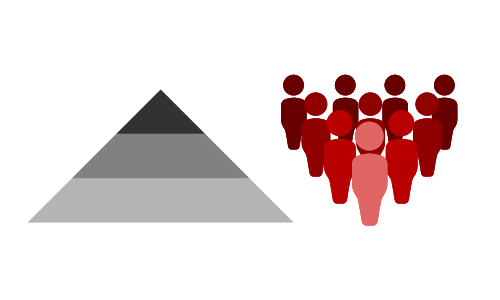
We assume our power and value comes from position in hierarchies. We are trained by our social structures to see these pyramids as sources of power and value. Our hierarchical status influences our health and happiness.  Hierarchical instincts may well run back to our ape brain. There is a very good chance that hierarchy is solving for problems that don’t reflect our current challenges.

I was reflecting on the new maps feature of Linkedin and what struck me was that the hierarchies of my past life were hard to see in the network diagram. In fact, what I saw prompted this:

Hierarchy is the smallest and least valuable part of my network. The relationships formed in hierarchy have disappeared into a much more valuable & diverse mesh of relationships.

If my relationships were created by hierarchies, what created value was direct connection and a net of common relationships that lasted long after the hierarchies changed. Little value came from connections mediated through the hierarchies.

In addition, when I look beyond the hierarchies, I saw a much richer and more valuable network of relationships.  

There were the networks of support. So many people gave me the skills and experiences that helped make me who I am. So many people sustained me and were my sources of advice and counsel. Then there were the hundreds of collaborators

There were networks of value too. Customers and community determine the value that I create in the world. Creating change and making things happen has always been more about ability to influence and collaborate in this wider network than the power to order anything.

In a networked world, it might be time to think differently about influence and value. Stop looking at the hierarchy and look to the network that surrounds it. We may all be more effective, healthier and happier as a result.

Ask obvious questions

Recently I have posted on the benefits of asking different questions for strategy and innovation.  We also need to ask the obvious questions too.

Most of the time we are so busy doing that we skip over the obvious questions.  We need to ask more questions about how we work better and how we interact better.  

Obvious? Yes.  Done? Rarely.

We are at a point where changes in the way we work are surfacing all around us.  To better leverage these new approaches, we need to question assumptions and approaches that we have inherited. We need to relentlessly reflect on improvements in how we work.

That means asking questions that seem to have obvious answers:

  • Why is this important?
  • Who is the customer?
  • What is the problem?
  • Who is doing this task? Who is not?
  • What are we not doing?
  • Who do we engage? How do we engage better?
  • How do we better organise ourselves?
  • What would make the process better?
  • How do we go faster?
  • How do we make decisions better?
  • How do we learn together?
  • What does success look like?

The list of potential obvious questions is long.  Make a habit of quickly reflecting on the key ones together. You will be surprised what changes in approach and new benefits surface when you push against business as usual.

Asking these questions enables people to maximise their human potential in the work ahead.