Sell Aggression. Buy Relationships

image

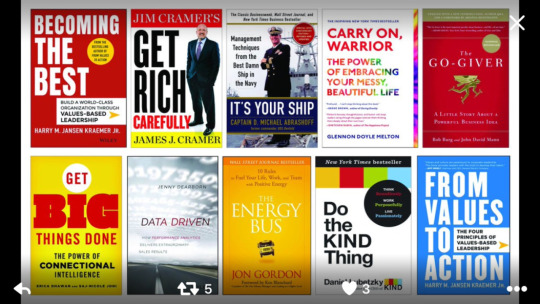
I saw a list shared on twitter of 25 books for CEOs from 2015. The above image was attached to the tweet. I reacted immediately to the macho impression of the attached image of the covers. Then I looked more closely and realised many of the subtitles run contrary to the general image of the cover. These books look like the typical aggressive competitive advice for CEOs to outcompete, outperform and to go big. However, the actual advice within the aggressive red or yellow cover is far more nuanced. Human relationships matter.

Sell Aggression

This is an old game. Strong leadership sells. We sell aggression. Alpha males rule the chimp pack. Wear red and yellow. Stand in a power pose. Be the best. Be simple. Know the right answer. Do one thing better than anyone else on earth and rule the whole damn thing.

Except this is the cheap shot. Aggression primes our primate brain and gets our attention. Aggression makes us pick up the book. Aggression isn’t what makes change happen and isn’t what delivers results. Aggression is the empty wind of a loud shouting exploitative push economy. Aggression is the bait in a leadership bait and switch.

Buy Relationships

Any successful leader knows that relationships is where the real work gets done. Collaboration and cooperation drive progress, not force. Nothing gets done alone. You don’t want anything done by the coerced. You want commitment not compliance.

Humanity triumphs again and again against the forces of power. Force an outcome and passive resistance will undermine its effectiveness. Bureaucracy rules. For every blustery threat, the real deal gets done in a quiet conversation as power is traded for persuasion.

Win commitment and you will see people’s capabilities blossom. The messy beautiful work of leveraging the capabilities of people happens in rich, complex and unpredictable networks of oh so human relationships. That far less saleable work, but it is the work of value. Relationships are where leaders seal the deal when they switch away from the bait of aggression.

Portfolio for the Future of Work

As our economies become more connected, faster and more complicated, these human relationships will only increase in value. Relationships bring information, trust & authority, critical differentiators, cost-lowering capabilities and fundamental elements of effectiveness.

The portfolio strategy for leaders in the future of work is to be long relationships. Those relationships will make your work far richer and more human. Buy now.

What an abyss of uncertainty whenever the mind feels that some part of it has strayed beyond its own borders; when it, the seeker, is at once the dark region through which it must go seeking, where all its equipment will avail it nothing. Seek? More than that: create. It is face to face with something which does not so far exist, to which it alone can give reality and substance, which it alone can bring into the light of day. – Marcel Proust

The Madeleine

The madeleine is a delightful cake and an ideal inspiration for Proust’s great remembrance. Each madeleine depends on a series of transformations. There are many variations on the basic recipe but they all involve these changes to achieve the final result.

First sugar and eggs are beaten until pale and doubled in volume trapping air.

Then butter and flour are gently folded in to form an airy batter.

The batter rests. This is the step that takes confidence and daunts the beginner. However waiting to the right time thickens the batter to the consistency of a fine mousse.

Lastly the heat of the oven sets the batter into light & fragrant cakes.

The Transformations of Innovation

When we confront uncertainty and seek to create innovation whether in knowledge, a product or a business, we must follow similar series of transformations. We must create new ways forward ourselves by taking the uncertainty and transforming it.

We must add volume: if we don’t know then we need to seek, explore and learn. We need to add to our uncertainties before we can resolve them. We need more context and bigger systemic view to form new knowledge, new services or paths forward for a business.

We must create structure: when our expanded ideas begin to collapse under their weight and we doubt anything useful will come we need to start adding structure. Hypotheses, examples, principles, systems and process to support our new ways.

We need to use time as an ally: Not every new idea should be tested immediately. Many do. Some need to mature. Some need more work. Some need to meet the right circumstances. We need to use this time with confidence to enable our ideas to strengthen. This is not passivity. This is the work. We need to be ready to act when the ideas are ready to test.

We must test our innovation in fire: Testing is the only way to discover the flaws. We may fail and need to start again. The obstacles are the work. We might succeed and be able to continue testing all the while to ensure we remain on track to something better.

These transformations of innovation are not easy. These transform us as much as our innovation. They make us ready for success. They are the work we must do to surface great new ideas, products and businesses. We can’t skip steps. We can’t race ahead. We must just stay at our work of creating the future.

Ten times over I must essay the task, must lean down over the abyss. And each time the natural laziness which deters us from every difficult enterprise, every work of importance, has urged me to leave the thing alone, to drink my tea and to think merely of the worries of to-day and of my hopes for to-morrow, which let themselves be pondered over without effort or distress of mind.

And suddenly the memory returns… – Marcel Proust

You Can’t Live A Cliché

Mr. McGuire: I want to say one word to you. Just one word.
Benjamin: Yes, sir.
Mr. McGuire: Are you listening?
Benjamin: Yes, I am.
Mr. McGuire: Plastics.
Benjamin: Exactly how do you mean?
Mr. McGuire: There’s a great future in plastics. Think about it. Will you think about it?
– Dialogue from The Graduate. Directed by Mike Nichols. Written by Charles Webb, Calder Willingham and Buck Henry.

A cliché like any other meme appeals at first because of its comfortable familiarity. However we soon discover that overuse has robbed it of its meaning or worse drawn in a the dark side of platitudes, cynicism and other unwanted resonances. We can’t live a cliché. We must choose our own new path.

Many people stress that they can’t live the life of a comfortable cliché. Either they don’t want one of the well trodden paths or they have met an accident on the way that changes their trajectory. They think that their path should be the same as others, the same as the expectations of their society or even safer, easier or more comfortable, like the nodding response to a cliché.

Every cliché begins as a novelty – an unique choice. It becomes tired when others fail to exercise their choice and just repeat it unthinkingly. The lack of choice and consideration opens up the path to dullness and darkness.

A cliché usually disguises a much more complicated reality. Life is much more complicated and the real paths that others take have many hidden vicissitudes. Trying to force thinks to meet a template of success is usually an exercise of much frustration and little value.

We cannot escape choice. The paths of others can be a guide and an inspiration. However we still need to choose our own way. We must embrace the novelty of our own choices & circumstances. Our desires and accidents are guidance to our own unique path, not a delay or a distraction from the cliché.

We can’t live in the light plastic emptiness of a cliché. Our daily choices push us into something far more valuable.

Get Uncomfortable

“There’s no comfortable way out of your comfort zone.”
– Paul John Moscatello

Traditional hierarchical management has its pressures, but it is a system built around the comfortable path for managers. In the golden goose school of management, life for managers is easier. They have the expertise, they make the decisions and they have the authority. Employees have narrow tasks to fill in tightly measured roles. Compliance is valued over the dangerous unreliability of commitment.

When we move to the future of work as managers we experience new discomfort. The network has a view and capabilities we can only influence. Autonomy and experimentation further break down the predictable nature of a manager’s role. Leadership is expected of everyone and managers play roles as change agents, coaches, facilitators and capability builders demanding far more individual level of support than the routine orientation of traditional management. Transparency changes the nature of decision making, expertise and the exercise of power. There’s more information and more people with a view.

The future of work is going to demand new skills of managers. Learning new skills is always uncomfortable. New skills only develop outside the comfort zone through practice.

If the last few years of business have taught us anything, it is that clinging to comfort in the face of change is not a viable strategy. All managers need to be exploring the uncomfortable future that is the future of work.

2016 – Tackling Reality

We may doubt that we’re up to being a warrior-in-training. But we can ask ourselves this question: “Do I prefer to grow up and relate to life directly, or do I choose to live and die in fear? 

– Pema Chodron

Welcome back old friend. I’m glad you’re here. Now, let’s get to work 

Carl Richards “Learning to Deal with Imposter Syndrome”

It may be cheaper and easier in the short run to ignore failures, schedule work so that there’s no time for reflection, require compliance with organizational norms, and turn to experts for quick solutions. But these short-term approaches will limit the organization’s ability to learn.

– Francaseca Gino and Bradley Staats “Why Organisations Don’t Learn

Let’s add one more detail to the picture
the much longer,
much less visible chains that allow us freely to pass by. 

Chains by Wislawa Szymborka trans. Clare Kavanagh and Stanislaw Baranczak

Leading into year end, I have been reflecting on what I learned in 2015 and what it means for 2016. All of the quotes above appeared in things that I read today. Reading these quotes clarified for me one of the key insights of 2015 that I had been considering (but perhaps was ducking) – life is far better when you are dealing directly with reality.

Tackling Reality Personally

Life as a solo consultant has its challenges. Over two years into that journey I have come to better understand, accept and deal with its ups and its downs. Work isn’t always consistent or predictable. The point at which you need to give up is usually when things change. The best work arrives all at the same time. There are human limits in time and capabilities. Some times you have to say no. You don’t get to do everything you want or need to do. Others will do differently. Things never go quite as planned. Big risks are essential to progress and so are the small (& big) failures. 

Accepting these realities has made me far more comfortable in my practice. Accepting these some times harsh realities has made me more ready to take advantages of the opportunities that are created.  These opportunities might be the chance to play a larger role in Change Agents Worldwide or another community, the new work that comes unexpectedly or the ability to leverage down time for reflection, connection and new projects, rather than panic.

I have found too that a better & richer focus on what is really going on for others and for me has strengthened both the personal and work relationships in my life.  Taking the time to really understand reality of the situation matters more to me than ever. Confronting reality isn’t always easy. Engaging with some perceptions and beliefs can be painful, some of these are deeply hidden and it can take a long time to accept some of the more difficult realities. However, reality will not and cannot be ignored.

My lessons from applying this effort with others have been equally insightful. So many times in our busyness, we assume we know what is required, we rely on expertise and miss the opportunities to really engage, to really help and to make a real difference. Our ability to work and collaborate with others depends on a rich shared context based in reality. Don’t accept things at face value. Take the time in 2016 to probe and to query the reality of the situation. Without feet planted firmly in reality, we have no way to step forward alone or together.

2016 will be another year of working deeply connected in reality for me. 

Helping Organisations Tackle Reality

In 2015, I blogged in a number of different ways about the need for organisations to better engage with reality. I called our hierarchical organisations dumb. I talked about hierarchy as filter failure. I highlighted that these organisations ignore complexity and even need satire to prick their bubbles some times. Change Agents need a good grip on reality and pragmatic skills to move organisations forward. There are many more examples of the battle to hold organisations accountable to the reality of their situation in the blog posts this year.

The future of work demands organisations step out from their cloisters and engage the reality and the pressures of the world inside their organisation and the world around them. Effectiveness of purpose demands that we look to the real human costs and benefit of that which we do. Internal efficiency or narrowly defined success metrics are no longer enough. Global networks and dynamic disruptive global competition will hold us to account for our failure to confront and leverage reality. 

The better organisations are learning how to use the reality of their people, their capabilities and their networks. They leverage the human capabilities of the people, their networks and their capabilities to continuously create change to grow and be more effective. These organisations recognise the reality that they are a human organisation, that they must base their actions on real conversations and real human capabilities for success. The future of work must be much more human to deliver their purposes. 

The need to tackle reality more effectively is why I focus on learning, leadership and collaboration as core enablers of the future of work. I believe that these three are essential to my personal purpose of making work more human. 2016 will be a key time helping organisations improve their effectiveness and better deliver that purpose in the real world.
The Value of Extra

Many organisations performance management values only more. When your organisation values extra outcomes, you lay the foundation for collaboration and innovation.

I meet organisations whose performance management schemes are so tightly managed that the only outcomes that are valued are those planned at the start of the year. Not surprisingly the narrow focus on more of one or two outcomes limits the potential of people and the organisation to change. Their efforts on new ideas or new collaborations will not be counted.

This focus solely on more value is another example of the Golden Goose School of Management. Specifying performance of people like widgets is only a localised maximum. The most obvious consequence of managing performance in this way is getting more of things you no longer need when circumstances change.

I have generally chosen to work where people value both more and extra value. The simple addition of extra value enables people to step beyond the box of their role. They can pursue new ideas, projects and collaborations without the need to seek approvals or changes to performance scorecards. This enables people to respond to changes and do what needs to be done. If that means a CEO of a small healthcare payments business sponsors the parent group’s enterprise social network, it happens and it is valued.

Make sure you value the extra contributions of your people whatever they are. The future of work will demand the flexibility in value and performance.

Inconceivable

The idea that you discount is the innovation someone will use to disrupt you.

[Vizzini has just cut the rope The Dread Pirate Roberts is climbing up] 

Vizzini: HE DIDN’T FALL? INCONCEIVABLE. 

Inigo Montoya: You keep using that word. I do not think it means what you think it means

From the movie The Princess Bride

Many organisations feel comfortable that the prospects of disruptive innovation are limited. They view their history, their client relationships, their propositions and their position in the market. With a view back into history, they cannot conceive how anyone could do better. They discount the threats and the opportunities of innovation.

Ernst & Young estimated that in the fourth quarter of 2014, global venture capital investment was $86.7bn. That money is exploring opportunity in many sectors previously regarded as too difficult for startups like health, government or financial sectors.  For example, the funding for startups targeting financial technology (or fintech) has grown exponentially in the last 3 years.  That’s a lot of enterpreneurial dreams that are being backed with capital. The goal of those startups is to do what is inconceivable to other organisations.

Innovators don’t look backward as to what can be expected from the past. Innovators create their own path through difficulties and challenges in the pursuit of new & different ways. They know there is competitive advantage in being the first through into a new concept and that the doubts will hold others back. They also know that the surprise of a new innovation will often paralyse the incumbent players who go through a grief-like cycle of denial, anger, delay, bargaining and finally acceptance that a response is required.

Explore the inconceivable, ridiculous and stupid ideas.  Break the bounds of your organisations traditional ways of seeing and doing as you explore innovation. You will discover you can conceive a lot more than you expect.