Responsible or Accountable

In a hierarchy, power moves down from their top. The focus of power is the allocation of responsibility to act to individuals and the management of their performance. Holding people accountable is a conversation driven by top down over those responsible. 

Hierarchies retain decision making continues at the top, so in theory that should be where the buck stops. However, the nature of the power relationship internally creates weak accountability for higher level decisions. Traditionally the only accountability for these decisions is through signals from shareholders or some times customers. 

The signals from the stock market and shareholders on management decisions are often weak. We accept high turnover in shareholders, customers and employees and explain away discontent.  Dealing with exit of frustrated shareholders, employees and customers is often as easy as adopting a growth orientation. Management need not consider the voices of those leaving as a source of accountability or a source of performance improvement. 

In an increasingly complex network world, this approach to accountability is no longer sustainable. While you retain a hierarchy for the allocation of responsibility, internally and externally your organisation needs to leverage networks to manage the complex relationships and challenges it faces. Suddenly we need to consider the shifting flow of authority and power in a wirearchy.

Traditional decision making (& the associated accountability) is also backward looking.  We examine history to determine what to do and what should have been done. As Harold Jarche points out we can’t look back to the past to predict the next decision or even who to hold responsible for action. Increasingly the question around accountability is ‘how will this decision be viewed at some point in the future by our stakeholders?’

New Network Accountability

With the increasingly networked world comes new sources of accountability. Employees, customers, shareholders and the community now have voice and the ability to organise.  They can leverage their relationships with the organisation and others to express their concerns. Organisations must increasingly enable all their employees to respond to these situations when and where they arise. That demands a more responsive organisation. 

These new internal and external accountabilities can’t be ignored or managed away without jeopardising business relationships. A decision not to participate in social interactions or the network won’t stop the conversation. It simply means your voice goes unheard In the conversation and might harm your business. Those who better respond to the needs and concerns of your employees, customers and community in the network will see their influence grow as those who ignore the accountability to the network will see influence fade.

The opportunity for responsive organisations is to embrace the new accountabilities in the pursuit of more effective performance.  With these accountabilities comes:

  • new information on the performance of your products, services, opportunities with your customers and your impact in the community
  • new relationships with influencers in the networks within and around your organisation
  • opportunities to leverage the talent and potential of people internally and externally who may not be within the consideration of the current hierarchy.

You may not change your strategy, your products and services or your organisation as a result of this additional network insight.  However, if you will have done much to better understand the true performance opportunities in your business and to remove risks that the weak accountability and weak information flows of a hierarchical approach may miss.

We encourage accountability in business as a driver of performance and an opportunity to improve.  Shift your accountability from the hierarchy to the network. You will discover new opportunities for your organisation.
 

This post is the first in a five part series on managing accountability in the network era. The posts deal with:
Enough and more

Everything In moderation, including moderation. – Oscar Wilde

Enough of what you need to do and more of what you want to do.
Enough reward and more impact
Enough efficiency and more effectiveness
Enough performance and more potential
Enough expertise and more mastery
Enough experience and more learning
Enough saving and more sharing
Enough capability and more challenge
Enough things and more information
Enough decisions and more experiments
Enough transactions and more relationships
Enough symptoms and more cause
Enough measurement and more coaching
Enough management and more leadership
Enough vision and more purpose
Enough hierarchy and more networks
Enough talking and more doing
Enough how and more who
Enough what and more why
There’s never enough time.

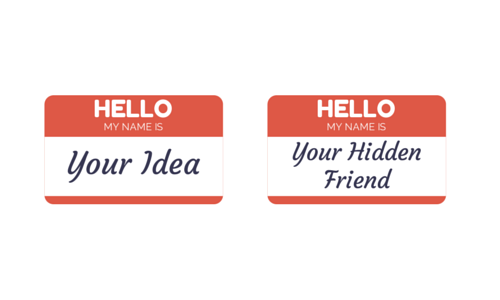
Lonely ideas have hidden friends

Lonely ideas have hidden friends. Working out loud and sharing the ideas draws out the hidden friends.

Draw Out The Hidden Friends

An example of discovering hidden friends came after yesterday’s post on the power of sharing lonely ideas.

Anne Marie McEwan saw my post through a share by Richard Martin (@indalogenesis) on twitter and responded sharing her lonely idea.

//platform.twitter.com/widgets.js

In one of life’s moments of serendipity, I had just been advised through twitter of the launch of peeracademy.org so I knew the hidden friend for Anne Marie’s idea:

All of sudden an idea isn’t so lonely anymore.

Every Idea has Friends Somewhere

If you have an idea, there is a good chance someone else has had the same idea, a similar idea or an aligned idea. If you let your idea be lonely, you will never know how their thoughts and actions might help your agenda.

We manufacture serendipity when we put ideas out in networks to be found, engaged and used. The networks supply the capability but sharing our idea creates the moment of opportunity. Knowledge in flight has somewhere to go.

Working out loud let’s others connect the dots between our ideas and others. Share an idea and it is rarely lonely any more.

See if you can’t draw out a few friends for your lonely idea.

International Working Out Loud Week is from 17-24 November and is an opportunity to experiment for a week with sharing of your work. Join in the movement of people working out loud.

//platform.twitter.com/widgets.js

Share the Lonely Ideas

Put your ideas in circulation. Ideas don’t deserve to be lonely. Share them in conversation. Watch them grow. Discover you do more.

Ideas start in conversation

We are surrounded by wonderful ideas. We have many every day. Too many are born and die lonely and unloved.

Almost all the ideas explored in this blog come from conversations. These posts are the insights and reflections on a flow of daily interactions. Many come from working out loud and the comments others make in reply to my work. 

Over time, I have learned to watch for those wonderful ideas that pop up in conversation. Teasing them out in conversation enriches them. Noting them down supplies a ready source of inspiration for future posts (Evernote is a blessing). Without others to share those conversations, there would be far fewer quality ideas.  

Ideas are better in action.

All of the ideas that become posts are further improved by being shared further, refined, tested, challenged and built upon. The really good ideas grow most through use by others.

Ideas get lonely if they have only one brain to occupy. Lonely ideas wither, lose their power and are forgotten. Sharing an idea increases its value. You still have the idea but now it has been shared elsewhere. Not only do you still have it but the process of sharing enables others to help you improve your once lonely idea.

Even better, a lonely idea shared is a call for collaboration. So many of the best projects I have been involved in arise when an idea shared becomes a common cause.

Share your lonely ideas. Connect with others to create, share and improve your ideas.

You will discover you do more by working out loud.

International Working Out Loud Week is from 17-24 November and is an opportunity to experiment for a week with sharing of your work. Join in the movement of people working out loud.

Step lightly

I have spread my dreams under your feet;
Tread softly because you tread on my dreams. – WB Yeats

Every day those around us spread out their dreams like Aedh from Yeats’ poem. Then we begin work to make the cloth of our personal purpose richer and larger. We must spread the cloth into an overlapping network because each of our purposes involves others. The realisation of our dreams and purposes are interconnected.

Many people don’t see the network spread before them. They focus only on their cloth. They don’t understand the power of interaction and the connected nature of our dreams. They shoo away others who must cross their cloth.

Others don’t see the impact of their interactions. Unaware, they tromp on the dreams of others in their self-centred focus on their own dreams. By design or by accident, they discourage others and damage their dreams. Hierarchal position doesn’t mean your dreams go on top or that you are arbiter of what will and won’t be realised.

Leaders step lightly. Knowing that all footsteps have consequences, leaders also enable others to walk with a lighter step.

Leaders work to realise the potential of others, connecting them, helping them solve challenges and extending their dreams. Leaders help people to stretch their dreams as far as they can go. The right coaching interactions help people learn how to bring dreams about and to invite others in to make more action possible.

Tread lightly. There is a dream beneath each footfall. How you walk in your daily interactions might make a critical difference to another’s dream.

Fragments of Human Stories

Even fragments of human stories engage us deeply. We don’t need to see the finished story. We only need to share enough to engage the imagination of others and draw the humanity out in our consideration of life.

A Fragment of a Richer Story

Browsing the poetry section of a second-hand bookstore in regional Victoria, I came across a volume of the poetry of Matthew Arnold, the 19th century poet, bound in dark green leather with gold leaf. The spine showed the volume had been well read.

image

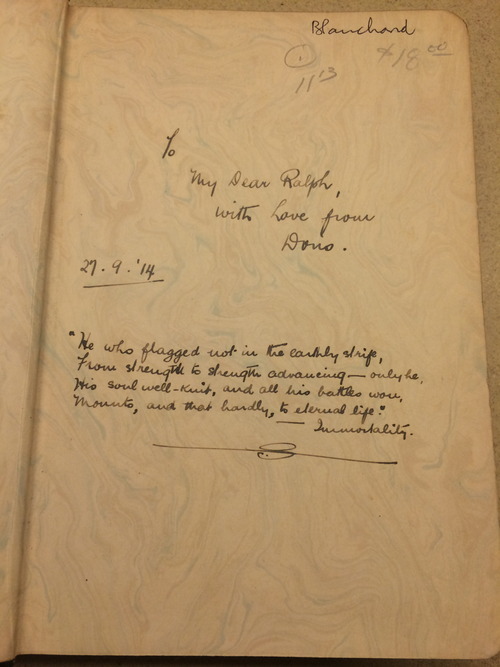
Opening the book I found a dedication which stopped me, brought a rush of emotions and made me reflect on the story of those who had handled the book before.

image

Just over a century ago, as the world descended into the Great War, Ralph received this gift and the love of Doris. We don’t know their story or their relationship. The author of this dedication might well have been be a mother, a sister, a friend or a lover. What happened to Ralph and Doris is currently a mystery to us but the inscription and that date soon after the start of WWI engages our imagination, our emotions and our concern.

From the short fragment of Arnold’s poem Immortality we gain a brief insight into the mind of the author of the inscription. This fragment of a message 100 years later engages us in the rich challenges of human life.  It confronts us to reflect on a world torn with strife, obligations of honour and duty, the need for effort and for faith, the love between two people and the real fears of mortality that confronted them. This message transmitted through the inside cover of a book engages us in the turmoil of the Great War and asks us to reflect on the human fears and costs that surrounded it.

Create & Share Human Stories

Perhaps another hint to us lies in the line immediately before the text chosen for inscription in Arnold’s poem:

“…the energy of life may be
Kept on after the grave, but not begun;” 

We can start, we can take on challenges and we can share our rich human stories in our one life, but only then. We often forget to reflect on this human detail.

Abstractions like life, success, history, war and work are comprised of these individual human stories, can be aggregated to a level where the humanity is lost in numbers, events and outcomes. We must remember as we deal with the abstractions to make an effort to bring forward the fragments of human stories and consider them each in their unique light.

Our stories engage others deeply, even as uncompleted fragments. They speak to our time, our place, our relationships, our conflicts and our challenges.  As an experience that is real and tangible, stories like these help us to reflect and to learn. These are needed skills when we are learning what it is to be human struggling with the challenges of our unique moment in time.

We may never know more of the story. However encountering a fragment of a story like this makes it harder to forget the human efforts & sacrifice of others.

Lest we forget.

The Outrage Economy

image

I was brought up to take the good with the bad, to be polite at all times and always see the other person’s position.

I have spent a lifetime unlearning this upbringing. I have been forced to learn the fine art of outrage.

The Outrage Economy

We now live in an outrage economy. Outrage is the only engine of action in many service organisations:

  • want escalation of a slow process? Resort to outrage
  • want a variation in narrow rules? Resort to outrage
  • want the service you paid for? Resort to outrage
  • want to be heard? Resort to outrage
  • want attention? Resort to outrage at scale

Outrage now powers basic interactions. Organisations have taken customer service flexibility away. Employees are constrained, optimised and disempowered. In many cases this means that they are unable to do their jobs. They need customer outrage to be able to escalate, to loosen processes and solve recurrent issues. The only way to get something done is to invoke the customer retention or a complaint resolution process in response to customer outrage. I have even been invited by customer service employees to express greater outrage so that they could help me better. For example “What I am hearing is that if we don’t solve this for you now, your business with us will be at risk. Is that correct?”

This pattern of interaction means organisations are training their customers to resort to outrage with ever increasing speed. You don’t want to go through the IVR again so you had better get outraged now and hope the team leader has more power. If it going to take outrage to fix a process, why not get outraged now.

If the only channel of service that works is social media, then I will rant there first. Some organisations even have pre-emptive outrage on social media with customers complaining about service processes before they start. Social media seems to be the only place many organisations care about their reputation with customers.

Stop the Escalation of Outrage

Nothing goes better because of outrage. Outrage only destroys value. Outrage weakens relationships and destroys brands.

Let’s start looking for ways to solve issues without requiring customers to rant and complain. There are a few simple steps:

  1. Understand how your processes actually work for customers in interactions: Processes that make sense around the board table often fail in human interactions. Requiring a warning that the warranty will be voided if an item has been used inappropriately might be wise when taking an item for repart but it may also sound like a criticism or a threat to a frustrated customer who just wants the item fixed. Follow issues back from the frontline to those distant places in the organisation that cause them.
  2. Give your people the power, resources and support required to do their jobs: You measure their performance. Do you spend as much time measuring how well you support their interactions with customers? In an age of global integrated logistics, does it make sense that you only move things between your locations once a week? If a morning of flights are going to be delayed by fog, advising customers is great but have you planned how you will manage the situation? If calls are unusually high, is it time to put on extra staff or suggest alternatives to resolve the issue? Enabling single point resolution is more than designing a narrow question that a customer must answers yes to confirm that you have solved their needs.
  3. Give your people the discretion to empathise and delight customers: It is really hard to be outraged at someone who is allowed to be human.  Empathy can be the second most important element to de-escalating the situation for an outraged customer. Let your people apologise for genuine errors. Move beyond the platitudes because otherwise we know your aren’t really concerned about our ‘inconvenience’. Give them the freedom to do a little more than needed to fix things pre-emptively.

An organisation that cannot respond to its customer needs fails the sole reason the organisation exists. If your customers are getting even slightly outraged it is time to learn how to become more responsive.

Disruptive Purpose & Emotion – Experience Design

image

Disruption is often presented clinically as a rational economic & technological process. Often the only consideration of emotion referenced is the emotions in the reactions of those disrupted. Focusing only on the rational misses a lot. Remember Clayton Christensen, who did much to create disruptive innovation’s present focus, began trying to understand companies that seemed to the traditional participants they undermined as irrational entrants to markets.

We can open consideration of disruptive opportunities to a wider range of influences and inspirations. We must not forget the opportunity to design for emotion, passion and purpose. There is much disruptive potential in the design of new and better services and many opportunities to make work and life more human in the process. 

The Emotional Opportunity at Disrupt Sydney

At Disrupt Sydney 2014 in the anti-panel, an unusual theme rose from the synthesis of the morning’s insight into ongoing activities in digital disruption. A recurring theme was the power of emotion, experiences and purpose. We reflected that perhaps as discussion of disruption matures from a focus on technical wizardry, there is a rise in the elements that make disruptive forces more human.

Disrupt Sydney’s keynotes and short talks had laid a strong foundation for the rise of this theme of human emotion & purpose.  Maria Ogneva had spoken of building community and movements, stressing the pragmatic needs for common purpose and human interactions. As Maria noted community is a human activity. Community is not a use case or a feature. Paula Bray had shared insights in the use of digital in the Powerhouse Museum to create new open conversations and experiences. Ruben Martin had described the potential of sharing human intent and developing solutions to bring people together around intent. Equally the compelling Mya Dellow, aged 13, had described the potential of Minecraft to engage students in education because of its open, creative and addictive nature. Most dramatically, Marc Sagar had wowed the audience with a demonstration of Baby X, an intelligent toddler simulation. This latter talk reinforced the value of emotional interaction and the high bandwidth of personal human communication. 

With this wide range of inspirations, the anti-panel played a key role by empowering the audience.  Participants needed time to synthesise, connect and learn with others on their experience of the morning, to reflect on their own emotions and to connect what they had learned to their personal purpose. The anti-panel was a learning experience.

Experience = Purpose + Process + Emotion

As the focus of disruption shifts to the disruptive opportunities in services, it must increasingly account for emotion & purpose, two very human characteristics. The disruptive services will succeed or fail on their ability to unite a customer purpose with a process of interactions and associated emotions to create something unique, memorable and compelling. Creating community through new services requires an even deeper focus on the purpose, the interactions and the emotional journey.

Best practice is no longer to plan for optimum efficiency in a process or a product. Efficient solutions will always be outperformed eventually. Many providers of efficient services never give any thought to the purpose their customers are fulfilling. That is their loss. If their logic never moves beyond the purely rational drivers of efficiency, then real humans will move on to the next better solution to their purpose, a little dissatisfied that their human needs were met so narrowly and so blandly. 

Design for a Human Experience

Better practice is to design for a human experience that enables a purpose and shapes the emotional value of that experience. A diverse market of consumers will have differing purposes and experience differing emotions. There is an incredibly breadth of opportunity to engage them through emotion and purpose.

Some consumers will care about your values. Others will want to know that you have treated your employees or the environment well. You may not be able to satisfy them all. The way the design of your service or solution outperforms in this challenging but human domain of competition is the foundation for something truly disruptive. That radical disruption is to design for human experiences.

By adding human purpose and emotion to our normal focus on process, we start to make work and our lives more human. In addition to focusing on the opportunities at the bottom of markets, we should focus on that which lies in the bottom of our motivations and decision making. There is a much richer opportunity in making experience design more common in services.

Action Changes Culture

It’s easier to act your way into a new way of thinking than to think your way into a new way of acting – Millard Fuller. 

To many in management, culture seems like a soft topic best left to Human Resources or Communications . To this mindset, culture is a matter of getting the words right, saying the right things and having the right tools & programs to change culture. Culture change is a communications issue. Often this results in culture change programs dictated by senior management with a goal of uniformity of culture in the organisation. These approaches at best fail quickly and at worst are counterproductive, generating employee cynicism.

Culture doesn’t work this way. Culture arises in a group of people when there is an expected pattern to interactions. The expectation forms from a consistent and predictable pattern of actions. Rituals are a classic example of how culture is transmitted. Words may help us to notice a change and tools may enable new actions but only the actions done consistently create the new mindsets.

The focus on expectations and actions also highlights how unlikely uniformity is. With consistent behaviour to shape expectations groups may develop a commonality of expectation. However uniformity of expectations remains unlikely. There will always be local variations for good reason. A good reason may be that a different pattern of action is better at fulfilling the organisation’s purpose or customer needs in this context. The heart of embracing diversity as an organisation is understanding these variations and leveraging them too

Expectations cannot be imposed. Begin with discovery of the expectations and the actions that really exist. Be honest. Failure to accept reality won’t help. Creating change then becomes a matter of understanding how to change actions to consistently deliver new patterns and to shape different expectations.

I am often asked ‘how does an enterprise social network change culture?’ There is no universal answer to that question. There are no guaranteed changes in expectations and actions in an enterprise social network just as there is no universal culture. Enterprise social networks in the right circumstances enable transparency, leadership, learning, problem solving, innovation and enablement of people. Where the culture is hostile to these things they do not, without significant investment in changing the way people act and interact.

Better questions are ‘what actions and interactions in our culture will be facilitated by an enterprise social network? How can we encourage these actions to become more consistent? What would these actions do for the expectations of our people as to how we behave here?’ These questions focus attention on the hard work of creating consistency in a community of new and different actions.

The impact of culture on the actions and interactions in the organisation is ultimately why Peter Drucker famously said ‘Culture eats strategy for breakfast’. Strategy that hopes for action inconsistent with the culture’s expectations will fail.

Start new and different actions now. Start small. Build new habits. Experiment with new ways of working. Action matters

Action creates culture. Focus on the actions, not the words or the tools.