#EductechAU Workplace Learning – Building Strategic Capability for Change

Photo: Shannon Tipton (@stipton) votes to change the status quo at #EdutechAU.

As our organisations look to adapt to a connected world, learning will need to play a far more strategic role. Learning functions need to move from being order takers to change agents in the transformation of leadership, culture, work and organisational structures. After all, we won’t achieve our strategic goals if people don’t have the capabilities we need.

Changing the Learning Game

Change was at the forefront of the agenda of the EdutechAU workplace learning congress this week. There wasn’t a speaker or a panel that did not seek to address how organisations were using learning to manage change. These changes were hardly minor. For example, in the case studies alone we had examples of:

  • Medibank building capability for workplace culture and wellness issues in an activity based workplace through experiential & mobile learning
  • the Australian Electoral Commission rethinking its entire employee development cycle between elections with a goal of focusing more on the why and how than the what.
  • Coca Cola Amatil building the capability of its operations teams to learn for themselves and from each other without training
  • AT&T using the scale of MOOCs to retrain its global workforce into strategic capabilities and out of declining roles
  • using learning and the learning function to change culture at Northern Lights

In all the talks were the key drivers of transformation for businesses and that learning is seeking to better leverage.  All our work is becoming:

  • more connected and social
  • more open and transparent
  • more automated
  • more flexible
  • more complex
  • more knowledge based
  • more dependant on culture
  • more demanding in terms of speed, quality, efficiency, effectiveness, etc

These changes present an opportunity and a threat to learning function everywhere. Learning has opportunities to be more strategically valuable, reach more people than every and in far more engaging ways. Learning has the potential to do and control less but achieve far more by moving from design and delivery to facilitating learners to pull what they need. At the same time, the threat to learning is that both learners and management has far more available from social channels external to the organisation and the participatory culture available in those networks often more agile and even more engaging.

To leverage these challenges for opportunity, learning needs to move from an order taker for training programs to a strategic agent of change. The new challenge for learning is to rethink how they set about enabling the network of people in the organisation to build key capabilities, to help people build constructive culture and to change the way managers manage and leaders lead. The answer will be less about control and specific training programs and tools and more about how learning works in a system of capability building that reinforces the organisation’s goals and uses the best of what is available in learning, in the social capital of the organisation and its networks.

Becoming More Human

Speaker after speaker highlighted another key element of this transformation.  As work becomes more personal and more human, there is also a need for learning to lead that change too. Learning functions need to consider how they design human experiences, faciltitate human networks and realise human potential, even anticipate human emotions. The future of work puts a greater demand on design mindsets, systemic approaches and the ability to weave together networks of experiences and people in support of capability building in the organisation.

This human approach extends also to how learning works. These kinds of programs need experimentation, learning from failure and adaptation over time as the people and the organisation changes.  Learning will need to role model and shape leadership as a vehicle for realising the human potential of each individual, organisation and each network.

The Obstacles are The Work

EdutechAU was not an event where people walked away with only a technique to try on a new project. There were undoubtedly many such ideas and examples from social learning, to MOOCs, to experience design & gamification, to networked business models, to simulations and other tools. However, the speakers also challenged the audience to consider the whole learning system in and around their people. That presents immediate challenges of the capability of the learning team and their support to work in new ways.  However, those very challenges are part of helping the system in their organisation to learn and adapt. The obstacles are the work.

Thanks to Harold Jarche, Alec Couros, Marigo Raftopoulos, David Price, Ryan Tracey, Shannon Tipton, Emma Deutrom, Joyce Seitzinger, Con Ongarezos, Peter Baines, Amy Rouse, Mark L Sheppard and Michelle Ockers for their contributions to a great event.
Coach the Community to Create Value

We may have begun to move from an adoption conversation to a value conversation. However our hierarchical mindsets can still hold us back. A responsive organisation needs to shape how value arise from collaboration, not try to specify it top down.

Embrace Value

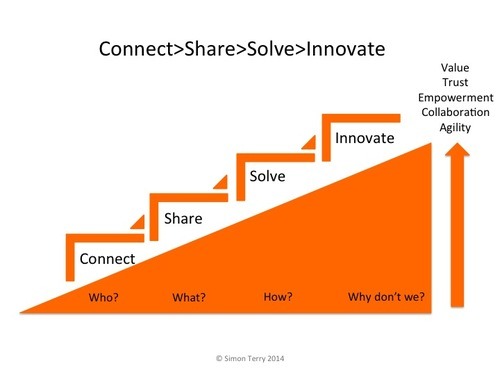
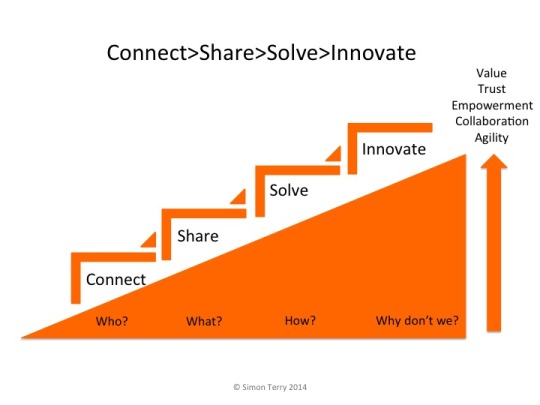
More and more organisations are focusing on how to create strategic business value in their organisation through the use of collaboration. They are seeing the value that can be created as a community journeys from Connection to Innovation. They recognise that adoption & use should reinforce the strategic goals of the organisation and is not an end in itself.

The Temptation to Specify

When an organisation identifies the way that it can create value in a community, our hierarchical tendencies begin to kick in. We start to specify how a community shall work to create value. This is how most organisation’s strategy planning processes usually work. We end up with a plan of what other people have to do. 

Some guidance can be useful at the beginning of a community’s life when people are sense making. However, too much instruction will become a constraint on the value creation if the goals of value creation remain externally imposed on the community.

The best value comes when a community can use its knowledge, capabilities and ideas to create value in new ways. That won’t happen if the community has specified usage cases and a limited focus on the value that it can create.

Coach the Community to Create the Own Value

A large part of the difference between management and leadership is the difference between direction and coaching. Responsive organisations demand leaders who can coach teams managing highly adaptive situations, rather than direct.

Organisations need to coach the members of their communities to create valuable new ways of working using collaboration:

  • Coaching begins by clarifying goals: How do you help your communities understand the alignment between organisations strategic goals and the goals of their own work? 
  • Coaching should enable action & experimentation: How do you help people to translate the opportunities that they can see into work that they can do alone or with the support of others?
  • Coaching should build capability: What skills do people need to manage this process for themselves? What barriers need to be cleared? How can they learn to create, deliver and coach themselves going forward?

The Value Maturity Model Collaboration Canvas is a coaching framework to help community leaders, champions and managers to shape the creation of value through collaboration. The tool asks members of the community to think through the questions that will enable them to create their own value. Spreading this coaching mindset through your organisation is the most powerful way to transform the value created by collaboration & communities. Spreading a coaching mindset through your organisation builds capability as it builds alignment and creates value.  Enabling people to coach themselves helps your organisation become more responsive. It is the only way that you will get the value you didn’t plan and to adapt to the challenges you did not forecast.

Dear CEO: This Enterprise Social Network Doesn’t Work For You

Dear CEO

Re: This Enterprise Social Network Doesn’t Work For You

The purpose of this note is to clarify our most recent discussion in the executive leadership team about our enterprise social network. Thanks to your help we have now clarified that the enterprise social network is the last thing we need.

However our discussion on executive engagement in the network was again challenging. Initially there was a great deal of division in the executive leadership team as to how executives should use the network and their willingness to be involved. We did not get to explore your perspective on the role of executives in using our network when you left the room for another commitment declaring ‘this enterprise social network thing doesn’t work for me’.

We must admit we were initially disappointed by the comment. However, the remaining members of the executive team spent some time considering your insightful remark. We set out below the outcomes of that discussion:

Employee Engagement will deliver our Strategy

We realised that employee engagement, leveraging new ways of working in every role and discretionary effort to achieve our strategy is what will deliver better results. We believe that building a community in our enterprise social network will be another way for our employees to connect, to share, to solve problems and to innovate. The critical question we should consider is ‘Does this new approach to work deliver value for employees?’. The views of executives are less important than the value created for this community of value creators. All the evidence to date is that the network does work for our employees. Employees are more engaged and working more effectively.

This helped us understand that this enterprise social network doesn’t work for you but it works for our employees.

Leadership Helps Create Employee Engagement

We realised that employees need help to make sense of how to use the network, need help to solve problems and make change occur. That means employees need the support of leadership in networks. Importantly, that leadership does not have to come from the most senior executives. Leadership is a role not a job. We had hoped our most senior executives would play that role to ensure that the activity in the network aligned to strategy and best realised the potential of our people. However, we are already seeing new leaders rise up to fill the gap. The senior leaders who are involved can do more to foster this.

This enterprise social network doesn’t work for you. A strong community works for leaders who will help it achieve its potential and the community will surface new leaders to help shape and foster engagement.

Attitude & Capability are a Question of Leadership

We realised that much of the discussion in the room about lack of time, doubts about effectiveness of managing in networks or lack of skill were problems of attitude or of capability. These issues can be solved because they are the kind of challenges our executive leaders solve every day in other domains when required. People learn new skills, they work in new ways to fulfil the strategy and we ask people to be more efficient and better prioritise their time to do what matters. We ask exactly the same from our employees when we want them to achieve more. We don’t accept their refusal to change.

Towards the end of that discussion an interesting question was asked ‘If engaging in the community that creates value in our organisation doesn’t work for you, why are you a leader here?’. We wanted to share this question with you. 

Conclusion: Our Enterprise Social Network Doesn’t Work For You

We didn’t see at first. We now have come to agree with you that this enterprise social network won’t work for you. 

As a result, we have started a thread in the network asking our employees to contribute to the choice of who should takeover as CEO. That conversation is currently favouring the CMO. The community value her authenticity, respect her authority and trust her leadership. We aren’t surprised that the board seems to agree. Sorry leadership of this organisation’s community did not work out for you. We wish you the best in your future endeavours. You may find some useful suggestions as to what to you can do next in the thread that has started with advice on that topic.

Thanks for contributing so much to our efforts to engage the community, realise our strategy and improve performance.

Engage an executive in your enterprise social network. A great chance for executives to get involved is International Working Out Loud Week from 17-24 November 2014. Help an executive to see the leadership potential of working out loud. Find out more at wolweek.com

The OODA Loop of Blogging

Work out loud and accelerate the benefits of blogging.

The OODA loop is one of my favourite strategic tools because it highlights the competitive advantage in speed and learning in a Responsive Organisation. I have also found OODA a useful mindset for my blogging and a way to ship posts consistently.

What is the OODA Loop?

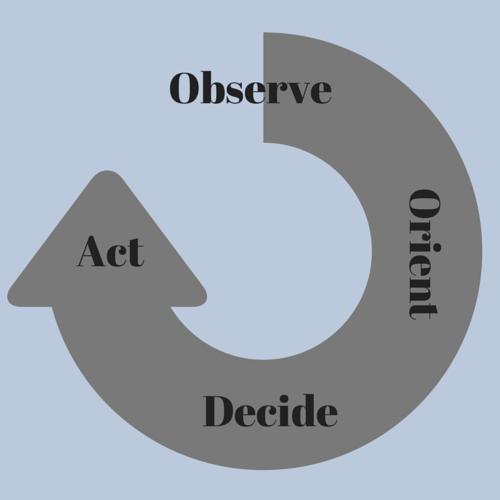
Developed by a U.S. Airforce strategist Col. John Boyd the OODA Loop is the concept that strategic advantage goes to the party who can best navigate the decision loop through observing the situation, orienting themselves, deciding what to do next and translating that decision into action. Through transparency, autonomy and experimentation, a responsive organisation moves decisions to the edge of the organisation accelerating its OODA loop to deliver better business value.

How does OODA accelerate my blogging?

Observe: My blogging is built on a foundation of being constantly on the look out for insights. Every day as we work we are exposed to great ideas, wonderful learning and exciting conversations that challenge our thinking. The more I capture the more I learn and the more I have to share. Are you tuned to observe and capture these opportunities to share through a blog? Managing your attention to observe these moments and building a system to capture notes at the moment helps.

Orient: A blog is an expression of your cumulative knowledge and experience. Finding a way to orient a new observation against your current knowledge matters to building a consistent philosophy. You need to know how a new post fits into your blog. Once I have an insight I try to quickly connect it to other ideas on the blog and elsewhere that extend the thinking. Building this system of links helps reassure you of the value of a new post. Ultimately I would like these links to provide an ever evolving network structure to the ideas on my blog.

Decide: Struggled with a white screen? Found your 500 word post is 2000 words long? These are challenges of deciding what you are writing about. Decide to share one small simple idea. Keep it simple. Stop when it is done. If the idea gets complicated break it into a series. If you have oriented well then the decision on the role and scope of a post is a little easier.

Act: Write. Just start. The best way to solve a problem in a post is to write. You can always throw out and start again later. Only by writing and posting do you generate the interactions that create new insights. Embrace permanently beta. Ship the post and let others help you learn more. This focus on action in blogging is the power of working out loud.

Accelerating the OODA cycle on your blog reduces the risk of a writer’s block or a monster post that can be finished. Work out loud one idea at a time and invite others to share and accelerate your learning.

International Working Out Loud week is from 17-24 November 2014. For more on #wolweek check out wolweek.com. International Working Out Loud week is a great time to put OODA into action in your working out loud.

The Cold Dark Path

image

Two Competing Loops

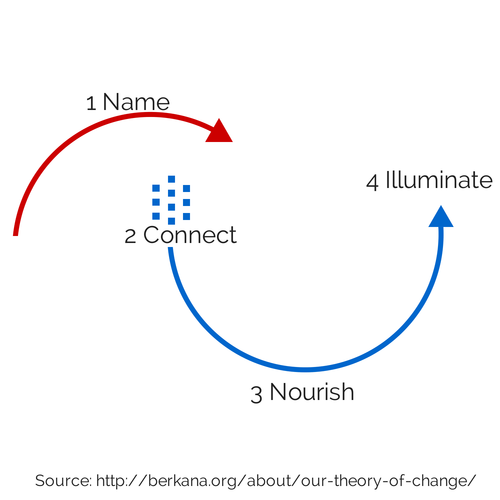
This week at the first meeting of the League of Social Intrapreneurs in Melbourne I was introduced to the Berkana Institute two loops theory of change. The model of change in complex systems resonated immediately.

When a system nears its peak, change agents identify the need for alternatives and drop out.  They connect and begin to explore alternatives nourishing a new system through experimentation. Eventually the stories of their success illuminates the change to those who remain in the old declining system.

A four step model with four simple verbs seems clear and straightforward. Why is it that the path of change is such a cold dark path?

Nobody Warns You about the Dip

Stepping out of a warm and comfortable ongoing system with its present day rewards is a daunting uncertain choice however bleak the future of that system may look. Those with most to gain will oppose the agents of change who name the issues and start to work on alternatives. Opposition will not always be fair or balanced.

//platform.twitter.com/widgets.js

Most difficult of all is that dip in the diagram above. The uncertainty and the need to build a new complex future means the alternative system starts along way back and with a great deal more risk. Selling another path even to yourself can be a challenge in this scenario.

All the discussions about collaboration, requests for advice and stories shared among change agents at the League of Social Entrepreneurs, in Responsive Organisation, in Change Agents Worldwide or in other conversations that I have with unreasonable people belong at the bottom of the loop where people struggle nourishing new alternatives.

We must embrace the fact that the road to change is a road with dips and uncertainties. Proceeding any other way does not prepare people for the work ahead.

Nourishing Change Takes Hard Work

Most change fails after the connect stage.  Declaring a need for change is initially easy and exhilarating. Manifestos are thrilling. Connecting with other like minded people has a wonderful effect for the spirits and is a great way to reinforce the need for change.

Then nothing happens for a really long time. It grows cold and dark on the path of change.

Lots of drudgery dogs those walking the cold dark path of change. Meetings need to be organised and venues found. Compromises need to be negotiated between people who are 99% aligned. Factions and fragmentation occurs and saps the energy of everyone. More change agents need to be recruited, especially for the work. Experiments need to be agreed, funded and run. Failed experiments need to be cleaned up. New experiments agreed, funded and implemented. Success needs to be found. Someone needs to find money or work out the details of the new model. Communication materials don’t write themselves. Just when success seems inevitable the dying system finds a way to set you back.

Change falls apart when the connected agents of change won’t work the experiments long or hard enough to nourish the success of the new system. If they won’t invest the time to build new connections, share successes, to solve the daily issues and to innovate a path forward then the nourish stage will never offer an opportunity to others to join in the change.

If the organisers of the first meet up about a change end up with all the actions, then a change initiative has work to do to find others to nourish the change. Engaging others in the work matters more than engaging them in the idea of the change.

Join in the Work

Lots of people want to join change at the exhilarating beginning and again at the celebratory end. Traditional management focus only on the beginnings and the endings but leadership is found in realising the collective potential of the journey.

The question is who is willing to walk the cold dark road. Those change agents who do the leadership work of nourishing new experiments shape the future. That path is hard but the work is the most purposeful and rewarding

Integrate at Goals, not at Process

image

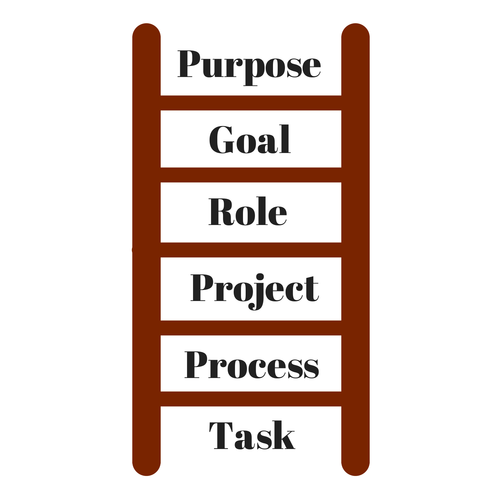
How do you integrate open network conversations into closed linear processes? Integrate social conversations by integrating at the purposes and strategic goals. No organisation wants its collaboration constrained by processes or systems.

Organisations, vendors and analysts are touting the advantages of integration of enterprise social networking into legacy processes in organisations. Enterprise social networking needs to be come a part of the everyday work in organisations as it is another set of tools to foster conversations and collaborations that create value. Without connection to the daily work of individual employees, enterprise social conversations won’t deliver the value we need. However, far too many of our existing work processes aren’t set up to accommodate creative, agile and productive social conversations. Patterns of allowed conversation in a process based integration rarely changes that.

Don’t Integrate through the Current Process

Existing legacy processing systems are designed for efficiency. They constrain choice. They automate steps and narrow discretions. The goal is to simplify tasks, remove errors and ensure repeatable activities can be achieved with the minimum in investment in human talent.

These systems achieve significant efficiency gains with a cost of human potential, agility and effectiveness. However, they are not designed for conversation about work. One only has to reflect on everyday poor customer experiences to see that these systems gain efficiency by handling poorly the exceptional, unusual case or situations requiring a response to change. Conversations, change and collaboration do not fit the industrial model of work that these process systems are designed to fulfil. They are not designed to leverage the potential of talented knowledge working employees connected in networks.

Collaboration is not a layer that can be integrated into existing fixed processes designed for efficiency. Collaboration offers the opportunity to enable people to change and improve the process and the work. Collaboration creates choices with a view to increasing agility, improving effectiveness and realising human potential.

A conversation that must integrate into a process system will become a conversation about the constraints of the system at some point.

Integrate by Creating a Purpose-oriented Conversation

Offer people autonomy, purpose and an opportunity to develop mastery and you will offer them an ability to fulfil their potential. If you want to integrate social conversations into your work, integrate the conversations at this level. The key to reinforcing human potential is to offer people a way to discuss how their work aligns and creates value for the purpose and goals of the organisation, not its processes.

image

An employee who is challenged to integrate his or her work at the level of the goals of the organisation has an opportunity to stop, change or transform the process. That employee can respond to the situation before them, use their discretion and use the talents of their colleagues. The employee can look to deliver greater value than the current process allows. That liberty reinforces their accountability and validates the organisations confidence in the potential of the employee. A key barrier to engagement in many organisations is that an employee can struggle to find the connection between their work and the goals of the organisation. Goal-oriented conversations can play a critical role to surface that connection.

Another advantage of reinforcing a connection at the level of enterprise-wide purpose and goals is that it acts as a reminder that collaboration is an enterprise-wide experience in work. Collaboration is not constrained to the customer management systems or work process systems. A collaborative ecosystem and the social conversations that support it should reach throughout the organisation to achieve its goals and purpose.

Leverage human potential to help realise goals

Telling people what to do and shaping how they might be allowed to have a discussion seems easy and seems efficient. However, it comes at a significant cost of human potential. Leadership in networks demands more of employees, leaders and their organisations. To maximise the opportunities for networked ways of working, allow people the opportunity to find integration of their social conversations at the level of the organisations purposes and strategic goals, not constrained by its processes.

If you would like to create greater value in your enterprise social network or discuss how the Value Maturity Model applies to assist your organisation to create strategic value through enterprise social networking and other forms of collaboration, please get in contact. I am available through @simongterry or Linkedin or www.simonterry.com

The Last Thing We Need is an Enterprise Social Network

Dear CEO

Re: The Last Thing We Need is an Enterprise Social Network

The purpose of this email is to explain why the last thing we need is an enterprise social network.

This email is in response to the conversation about enterprise social networking in the executive leadership meeting yesterday. We thought it best to summarise the position of the leadership team, because yesterday’s conversation got derailed by anecdotes about social media, technology terminology, fear of change and discussion of abstractions like collaboration, future of work and new organisational structures. Before you left the meeting, you remarked “Based on this discussion, I think an enterprise social network is the last thing we need”. We agree.

We don’t want faddish technology. We need execution of strategy.

As CEO, you’ve been rightly suspicious of all this discussion of social inside the organisation. It is bad enough that your teenage children never look up from using social media on their phones. Whatever that involves, it can’t be needed activity in our organisation. We are a place of work.

What made this country great was well-run organisations, hard work and increasing effectiveness in creating value for customers. That takes focused strategy, disciplined execution and a willingness to do the hard yards. Great organisations aren’t built by chasing technology whims. They come from executing strategy to create better value. When we need to create better execution on strategy, the latest fashionable technology is the last thing you need.

We need better strategic value creation

Times are tough. Industry is more competitive than ever and change keeps increasing. We know customer and shareholder value needs to go up and costs need to come down. We have a strategy that is about meeting these new customer & stakeholder expectations, improving the organisational efficiency and delivering the returns that shareholders demand. We all wonder from time to time whether everyone in the organisation gets the imperative of the new strategy and whether they are all working hard enough to find new ways to create value. We know that we perform better when we have better conversations to make sure that our employees are aligned to the strategy. What we don’t need are distractions when there’s doubt that people even understand the strategy.

When we need strategically aligned value creation, the last thing you need is an enterprise social network.

We need new more effective ways of working

To fulfil the strategy of the organisation, we know as a management team that we will have to start to work in new more effective ways. There has been too much wasteful duplication of work in the organisation. Too many of our processes & policies don’t line up across the silos, aren’t agile enough for the environment and don’t meet customer needs. Both our customers and our employees complain about how badly we do this. We need to start working in new and different ways to identify, solve and improve this on a continuing basis. We have to focus everyone on find and using better work approaches that help us to fulfil the strategy.

When we need working in new and more effective ways, the last thing we need is an enterprise social network.

We need to change management and leadership in every role

Working in more effective ways will likely require us to change the way management works. We are going to need to push decisions down to people closer to the customer and give our people the ability to fix problems. We will need our managers to move from command and control to a coaching and enabling role. We need to ensure that all our people are realising their potential and able to work to create new sources of value. Of course in this new role, middle management will need to be trimmed and the new flatter organisation will need to change more often as we respond to further changes driven by our customers. Employees will need to step up into a leadership role in these changes and with customers, the community and the organisation.

When we need to change the culture of management and asking every employee to play a bigger role in leadership, the last thing we need is an enterprise social network.

We need different conversations

Changing the culture of management is going to demand very different conversations in our organisation. We are going to have to find ways to make sure that conversations are efficient and effective. We need to leverage the contributions of more people from across the organisation. We won’t be able to rely on long meetings, workshops, speeches, video and emails. Did you see the budgets for communications, off sites & roadshows in the forecast for next year? We have to do something different. We will need to involve our people more in making decisions. If that’s going to happen our people will need to be better informed and better able to channel their contributions. Our people will need ways to inform themselves, learn by pulling what they need, share ideas of how to work better and collaborate to solve work problems. We are going to need to encourage our people to join conversations that use their capabilities to innovate, to create value for customers and create new forms of working.

When you need to change the conversations, collaboration and culture of an organisation, the last thing you need is an enterprise social network.

We need more from our people

We wrapped up the last executive leadership meeting reflecting on how big these demands will be on our people. We will be asking for a lot of change in them, their work and the way the organisation exists around them. We will be asking our people to play an increasing role in the success of the organisation. We will want them to lead new conversations to create the future for this organisation. We need our people to be more engaged because we will need much more from our people.

Conclusion: What we need

After you left the executive leadership meeting to catch up with the board, we realised that we are clear what we need as an organisation:

  1. we need to succeed by fulfilling our strategy to create greater value in a rapidly changing market; and to do that
  2. we need to be able to work in new & better ways that create a more effective, agile and responsive organisation; and to do that
  3. we need a new culture in management and more leadership from our people; and to do that
  4. we need new conversations that enable our people to discuss and act on creating better strategic value; and to do that 
  5. we need more engagement and a better ability to leverage the potential of our people to contribute to and lead this change; and to do that
  6. we need an enterprise social network to support the first 5 steps.

If you are surprised by point 6, think back through the needs again. After all you were the first to say that an enterprise social network is the last thing we need. We don’t want an enterprise social network because it is new technology or because it is good for some abstract goal. We need one to help our people to execute on the changes necessary to achieve the goals of our strategy. Enterprise technology only makes sense when it enables us to work in new ways that deliver strategic value. As your management team we can see that the value creation opportunity is compelling. We couldn’t see it when you made your remark, but we have come around to your perspective.

The paperwork required by our old process is already on your desk, but a number of our people have started experimenting with solutions to see what value we can create. (Interestingly, their first suggestion is a better procurement process.) When you get back from the board, your assistant will show you how to log-in and join us discussing how we implement in the new enterprise social network.

Thanks for challenging us to come up with a better way of working.

Please think of the environment and don’t print this email. We’d encourage you to discuss it on our new enterprise social network instead.

If this post sounds familiar or if you would like to create greater value in your enterprise social network or discuss how the Value Maturity Model applies to assist your organisation to create strategic value through enterprise social networking and collaboration, please get in contact. I am available through @simongterry or Linkedin or www.simonterry.com

Exploit Their Strengths

Turn your competitors strengths into a weakness.

History is full of example of how clever strategists turned an opponent’s strengths against them. A military strategy list includes Alexander at Gaugemela, Hannibal at Cannae, Marlborough at Blenheim and Napoleon at Austerlitz. Ali’s rope-a-dope in the Rumble in the Jungle and many martial arts disciplines use the strengths of an opponent. In a time of rapid disruptive change, there is a long list of ever changing business examples to add.

How do you make your enemy’s strength your opportunity?

Study their strengths: acknowledge your competitors have strengths and you will be better than many. Study them intently and understand their strengths well, if not better than they do. Don’t rely on your own views. Research their history. Ask others and get a rounded view. Their strengths are also your greatest risks. It is better to understand them well

Encourage overuse: a strength overdone can be a weakness. Overuse of a strength can blunt its impact and even become counterproductive. In many of the examples above the successful strategy was to encourage an opponent to overuse their strength either to create a moment of weakness or to constrains the impact of the strength on the result.

Weaken their focus on facts: a big danger comes from any organisation’s biggest past success. That big success and the strengths that drove success tend to become mythical. Myths are rarely bound to reality’s harsh competive landscape. Leaders can go on trying to recreate a past success leveraging myths when the strategy no longer applies to the situation at hand. Past strengths are often first used and the hardest things for organisations to give up.

Let your competitor be predictable: using strengths is often very predictable. Predictability doesn’t offer any strategic advantage.

Focus on the next competition. Let your competitor win the last competition: strengths are usually built for the last victory. An agile opponent who seeks to change the game can make those strengths a liability in the next competition. This is particularly true where the strength may take a big investment, involve big scale and limit an organisation’s ability to adapt to new competition.

Take calculated risks: every one of the examples above involve calculated risks to go head to head with an opponent’s strength. Many were ‘a close-run thing’. However given in most cases the underdog triumphed against more powerful forces a close competition was already a district improvement in strategic terms.

Persist and ignore doubters: make sure you don’t defeat yourself.

Plan an exit: because these battles involve risk, allow for mitigation. Be ready to flee and fight another day if need be.

If you want to disrupt an opponent, don’t run from their strengths. Focus instead on finding a way to use that momentum against them.

Actionable insight matters more than big data.

Don’t worry how big your data is. Focus on how actionable your insights are.

The only thing that delivers business value is turning insights into effective action. Big data can deliver new insights but they will only drive your business when they are put into action to create new sales, save money or create other ways delivering better value in line with your strategy.

Many companies forget to leverage the insights in their existing customer systems. Do your people remember to make a birthday call to a key client using data in your customer relationship management system? Do referrals, leads & other opportunities identified always get executed effectively? Are anniversaries, expiry dates and other retention triggers well managed? Before you launch into new insights make sure you have captured the low hanging fruit.

Big data is often celebrated with examples of counterintuitive insights. Counterintuitive insights are hard to predict and equally hard to action. People doubt the strategies that come from black boxes. Doubt is not a great enabler of action. Organizations often lack the capability to execute the counterintuitive strategy. For example, knowing that left handed plumbers are more likely to watch opera is not much use unless your opera company has a hardware partnership.

Big data is often sold as a source of new strategy. It is rare that a company changes strategy on one insight. Usually, insights enable you to better execute your current strategy. These insights will confirm the hypotheses you used to create the strategy and translate general plans into the right actions with specific customers. Start your focus on better insights with what you need to do to drive your current strategy and leverage your existing capabilities.

Before you boil the ocean in a battle of data completeness, decide what you need to know and can use to create value. Invest in the capabilities to better action insights. You might be surprised by the insights you already have that are opportunities. Focus your insights on driving your business, not the size of your data bill.