I throw a spear into the darkness. That is intuition. Then I must send an army into the darkness to find the spear. That is intellect. – Ingmar Bergman
Working out loud on your intuitions is critical to success of career transition. So is bringing your network to bear as an army of hunters and collaborators to help make the new role a success.
A bunch of friends, collaborators, and inspirational leaders were made redundant yesterday. At the end of a day of reaching out to offer help, I came across the quote above from Ingmar Bergman and it reminded me of each of my past career transitions. Enforced change is daunting and can be a time of doubts and confusion. We can be deeply unsure of what comes next.
When career change takes us by surprise we usually never quite know what we want next. We are deep in the realm of doubts and hopes. We need to trust our intuition as a signal of personal purpose. We need to throw some experimental spears. Working out loud is a great way to test the waters, refine your hopes and draw opportunities. Throw a few spears and see what happens.
However working out loud is just the beginning. The next challenge is to send out an army to help you find the next role, project or help you start the next business. There’s too much for one individual to do alone. Networks are the most powerful way to search for, find or even create the new role. Combinations of strong and weak ties will make things happen that you could never expect. Working out loud can make the network aware. You will need to work the network ongoing with all your intellect to turn ideas into opportunities to fulfil your purpose.
My friends are well placed for success in this game. They are highly talented and know how to work like a network. They have global networks. They have authority on the difficult challenges in change and adoption in the future of work. They are trusted experts and partners. They are ideally placed to leverage the wirearchy to their next success. The opportunity now is to work out loud and connect, share, solve and innovate with those who admire them.
For all of us who are pondering our next move, how are you leveraging working out loud and calling on the power of your networks? How are you helping others find their next horizon?
Blogging helped: all the ideas in my keynote had been explored out loud before on this blog. It is so much easier to put together a big presentation when you have ideas that you have worked up, shared and discussed with others. Where I saw gaps in the presentation, I even blogged them to make sure I had worked out what I wanted to say.
Networks helped: a fortnight out from the talk I lost confidence that what I had to say was worth saying. I asked my Change Agent Worldwide colleagues for advice. As ever they were wonderful encouraging me to speak to my passions, tell stories and be practical.
A Role Models helps:: Looking for a role model to emulate, I studied Nilofer Merchant’s TED talk. At once, I saw a way to connect quickly with the audience and to advance my presentation.
Structure helped:With days to go I had my content, but a mess of a presentation. I went back to first principles and used Barabara Minto’s pyramid principle to rebuild the presentation. I discovered my issue. I had forgotten to explicitly make & support my main point. It sounds obvious but your point can get lost in all the action & theatrics. Fixing that helped.
Practice helped: All the way along I had been practising and refining the pitch. There was one more glitch. The night before I delivered the talk I felt my stories were like a laundry list and not very practical. As I grappled with this I realised I needed to add a pattern to help the audience follow the stories. I settled on Idea>Story>So What>Extended Story. This pattern forced me to make the ‘so what’ real in another story of the same organisation. That was good discipline and helped the flow.
Preparation Helps:Because of all the changes I need not have time to commit my talk to memory. I created a bullet point list of key points, lines and transitions. This enabled me to iron out kinks and simplify again. I was very nervous when I woke but the preparation gave me confidence it couldn’t be too bad. Thankfully my nerves vanished as I began to speak.
The audience enjoyed the talk. I couldn’t have been more thrilled that the message connected and people had idea to take away and try.
In a summer job during university I was introduced to Barbara Minto’s Pyramid Principle as a structure for communication. I’ve used the logic ever since. The lessons of that approach dig me out of all sorts of presentation messes.
Here are the big lessons I’ve learned applying the Pyramid Principle approach to fix communication:
– Remember to have one message: it is surprising how often you see a presentation without a message. These presentations forget to make their point succinctly because they are overfilled with ideas and with elaborate introductions, narratives and evidence
– Structure promotes simplicity: Structure clarifies thinking. Structure clarifies for the listener too. Best of all understanding the structure also makes you more adaptable to change. Only got 5 mins for your half hour presentation? Knowing your key points will help you home.
– Support ideas with evidence: Others forget to support their assertions. In those that do use evidence, in many cases the charts usually tell a different story to the text. Make it easy for your audience to see your evidence.
– Pyramids beats chains: Many presentations are long fragile chains of logic. I’ve seen someone fly around the world only to have the presentation fail at the first question. That presentation depended on all of a long chain of premises. The failure of one idea left all the work bereft. Pyramids stand on other support when one element falls.
Every career choice is a hypothesis. Test yourself on your proposition and be prepared to pivot and adapt.
Starting Myself
When I left my corporate role, my initial plans were a little vague. I knew I wanted better balance in my life. I knew I wanted to have a bigger impact on my personal purpose and I was prepared to make changes. I was deliberately taking time off to reflect but I wasn’t yet sure of whether I wanted another job or to start a business.
Because I had been involved in a startup, I had followed the development of Lean Startup thinking with keen interest. I also had ongoing conversations, with founders using the approach. As I pondered what to do with my career, I realised I had a chance to do the lean startup of me.
Expand Your Hypotheses
I had a few ideas of what I wanted to be involved in as I searched for new work and roles. These were my initial hypotheses. Some of these have proved to be valuable. Many were ruled out quickly because nobody else was interested in my offer or because the circumstances didn’t deliver the returns or impact on purpose that I wanted.
A simple example was that I initially thought I had an opportunity to work with startups or medium sized businesses. Firstly, these proved to be two completely different hypotheses with little overlap. In both cases, I found when there was money to pay mostly they didn’t want advice, they wanted outsourced management, access to my networks or some other proposition.
Also, I quickly discovered my initial hypotheses were too narrow and limited. People also started to offer me opportunities to do things that I had never considered before. Some of those opportunities, like the chance to join Change Agents Worldwide, to go to Do Lectures Australia, or the opportunity to work on development of a corporate university helped me expand my sense of what was possible.
Working through the hypotheses and pushing myself to consider the widest possible impact on purpose changed the work I do and the organisations that I chose to target dramatically. Along the journey I stopped looking for a job and became a consultant actively working in the future of work, customer experience and leadership (and starting up the business of me).
Relentlessly Test Hypotheses
You don’t know until you do. The only way to determine whether a proposition you have offers value is if someone is prepared to pay you enough and consistently enough to do it. There’s two points there:
You need to do stuff
People need to pay you consistently
When you are starting yourself up, there is a phase of networking and building profile. The danger is that networking and profile can be all consuming. Coffee and conferences can become your job. Growing networks can become your only return.
Get in and do things. Think like a startup and push yourself to do work every day. If you need to create a project to work on it, then do so. I found the best sales tool was when I was suddenly unavailable due to the volume of work. People started calling with work because I didn’t have time for coffee.
It surprised me how many people expected me to do work without being paid for it. I have done a few of those activities, not for the much offered ‘exposure’ but to prove to myself & others the value I can bring in an activity. However, once that is proved once it is time to make money or move on. Continued offers to work for free is a failed test of a hypothesis. Some times people will only pay when you’ve said no several times first.
Be Lean
Invest small and widely. There will be lots of temptations to put all your eggs in one basket, but remember each opportunity is a hypothesis to be tested. You don’t want to over invest in a proposition that won’t continue. I have turned down investment opportunities, jobs and partnership opportunities for this reason. I ended up deciding the best current scale for my business is me supported by amazing networks of the best talent from around the world, Change Agents Worldwide.
When someone asks me to go all in, I work with them to start with a small test instead. That way we both get to work out what is working and how much we want to invest together.
Remember time is the commodity that you have in greatest scarcity. Allocate your time to investments in your future with care. When people are wasting your time or don’t value it, allocate your time elsewhere.
Build Platforms
The power of a platform, channels or a consistent community is the ability to run many tests at once. Startups use platforms to learn faster. You can do the same.
Your network is a platform. Strengthen it (remembering your network is not your job). Your thought leadership activities are another platform (remembering it rarely pays the bills). Work with people who have platforms to run better and faster tests on your propositions.
International Working Out Loud week was born out of some casual conversations and unmet needs. It was a fun experiment. As we work to develop the idea further, it offers a platform for additional experiments in the potential of working out loud as a proposition to help others.
Pivot or Persevere
Every day as you test your hypotheses you are going to adapt what you do. You will make small and large pivots. When things work you will persevere and work to scale them like mad.
Recognise also that somethings that work don’t scale. For example, I have put on hold plans to work with a range of startups in favour of working on a few businesses like Sidekicker where we share a view of what it will take to realise a big potential.
I don’t see my pivots as failures. They are just opportunities to wait for better timing, a better understanding of a client segment or a better proposition. I know I will do work with more organisations in healthcare or more medium sized businesses. It is just a matter of finding the right proposition. While I wait I work still, building capabilities that will help in that eventual proposition.
Be Uniquely You
When I started my work, I wanted to be like all the other successful people. Over time, I realised my unfair advantage was being me.
My skills and experiences are relatively unique at least in the markets that I am working in. That is a very good thing. Trying to make myself more like others dilutes my unique value.
Some people won’t like your uniqueness. You also won’t enjoy working for them. If being you is not good enough for some, that is a failed test and it is time to move on and find someone who wants you for you.
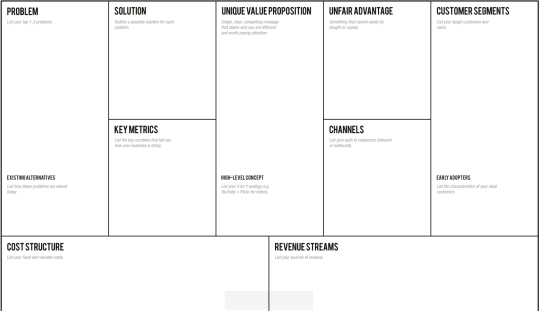
The Lean Startup of You
You don’t need to quit your job, start a business or to become an independent consultant to apply lean startup thinking to your career. Start asking yourself how you create the most value, how you can do more of that and experiment to make it possible. You might find it requires a change of job over time but a lot can be accomplished right where you are now.
The power of a lean startup mindset is accelerated learning. Make sure you are putting what you learn into new actions.
Tonight I started making a new loaf of bread. The one I made this morning is gone. As I began I reflected that what once terrified me as a mysterious challenge has become a practice I can tackle with confidence. Mastery is still a long way off, but the practice has its rewards.
Making bread is a simple practice but one with remarkable options for complexity. The simplicity begins with ingredients. There are only four required – flour, water, yeast and salt. However each of these is a natural product and yeast is a living organism. Variations in flour, temperature and vitality of the yeast interact with the practice of kneading, rising, shaping and baking to introduce complexity. Additional ingredients, processes and time spin bread off in other complex ways.
The complexity means there is a lot to learn and learning from the practice of masters is invaluable. My first loaves were flat and inedible. My own starter was weak, I lacked a grasp for developing the structure of the gluten and I was unaware of what to do when my following of recipes went awry, usually through some minor error of mine.
Here’s a few examples of how I learned from studying the practice of masters:
My master sourdough recipe came from the Fabulous Baker Brothers with accretions from all my reading.
A sourdough course at the Brasserie Bakery gave me a better hands on appreciation of kneading and a better starter.
I learned about letter folds to improve the dough from the recommendations of many recipe books.
The Bourke Street Bakery’s Bread and Butter Project cookbook introduced me to a new effective kneading technique for the amateur
No knead recipes helped me to understand time and wet dough was my friend and trained me in the ability to plan a loaf ahead.
I worked out how best to slash and steam loaves in my home oven from the advice of others and my own experiments.
I have become a keen watcher of bakers at work from my lock pizza store to videos online.
If you reflect on the diversity of these influences, you will understand that my loaves aren’t copies of anyone of these sources. They draw from each in different ways, often at different times.
Complexity means each person needs to develop their own unique practice to leverage their opportunities and meet their own needs. There isn’t always a simple to follow recipe when techniques need to be learned. Experimentation is required to make sense of the practice and to make our own changes to make those practices suit.
However, we don’t do that learning and experimentation alone. We stand on ‘the shoulders of giants’ if we connect and learn from those masters around us. However, I can only learn from others if they are prepared to work out loud and share their approach. That working out loud is not all a free gift. I have paid for courses, a library of books and bought a lot of bread in my quest to learn.
The practices of the Responsive Organisation are far more complex than bread making. They involve the purposes, concerns and perspectives of many people in pursuit of common goals with agility and an external focus on customers and community. Sharing and building from our shared practice will help all of us to develop success. Working out loud fuels this learning and connection.
“Happiness is not a reward – it is a consequence,” Robert Green Ingersoll
Happiness is personal. Happiness is created. Decisions must be made to achieve happiness. Be aware of the decisions you make.
Happiness does not come. Happiness cannot be bought. Happiness is not found in others. Happiness is our creation.
Time is the ultimate allocation of priority. Make happiness a priority. Spend your time where you can be happy. This may require difficult changes to work, lifestyle and income, but you may be surprised at the ease with which happiness comes.
Attitude is for many people a choice. The same circumstances approached with different attitudes produce different levels of happiness. Choose the attitudes that foster happiness. Generosity, forgiveness, openness and a little equanimity go a long way. Seeing yourself as an empowered and responsible actor with choices helps too.
Action brings happiness. Action has an intrinsic value but also leads to better outcomes. If you are not happy, what can you change to be happier? Make small changes. Experiment. Find a way to make things better step by step.
The greatest barrier to happiness is the feeling that things can’t change. We experience enormous change every day. We can find new ways to change those things blocking our happiness. Abandon hopelessness and start making change.
Finding a way forward takes awareness of what gives and takes from your happiness. Without focus on the choices we make they slip by feeling like the force of circumstances. Put a small step of reflection and find new paths to happiness.
Happy New Year
“I have come to the frightening conclusion that I am the decisive element. It is my personal approach that creates the climate. It is my daily mood that makes the weather. I possess tremendous power to make life miserable or joyous. I can be a tool of torture or an instrument of inspiration; I can humiliate or humor, hurt or heal. In all situations, it is my response that decides whether a crisis is escalated or de-escalated, and a person humanized or de-humanized. If we treat people as they are, we make them worse. If we treat people as they ought to be, we help them become what they are capable of becoming.” Johann Wolfgang von Goethe
Today I was talking to a former colleague who reflected that after a year our personal approaches to work had changed dramatically and the way we see the world had changed too. My response was that if you reflect on your work that outcome is inevitable.
The process of daily reflection identifies ways to change and to improve. Lots of daily changes driven by reflective practice accumulate. In pursuit of mastery your approach to work becomes barely recognisable to where you began. Reflection transforms you step by step.
Reflection is a key driver of the benefits of working out loud. The practice of working out loud will accelerate personal learning and transformation through:
– Purpose: Working out loud helps you discover the purpose behind your work and enables you to better focus your efforts. Things that bubble up to be shared are more likely to be purposeful for you. Purpose will also be near the things we choose to do most often. Understanding why you work is a key element of any transformation – Awareness: sharing your work sharpens awareness of what it is you do. Awareness is the beginning. As they say, knowing you have a problem is the first step.
– Sharing: framing your work to be shared can give you a new perspective too. Asking yourself what others will see and what tacit knowledge you rely on is a valuable reflection process.
– Engagement: the questions and observations of those with whine you share drive new insights and new lessons.
Work out loud and the connections and reflection will change you and your work for the better.
International Working Out Loud Week is 17-24 November. Get involved at wolweek.com.
Is it really December? Businesses and schools are winding down for the summer break. The cricket has started. Christmas is rapidly approaching. With that comes a quick close to 2013.
2013 has been a year of adventures, obstacles and challenges. More than anything else it has been a year of new momentum. I could not be more excited by the incredible opportunities that have arisen this year:
Leading the HICAPS business to great growth and transformation in the year its 15th anniversary
Sharing in many exciting activities in the broader NAB business and its Yammer network.
Seeing Spectra Training show the way forward in a rapidly changing Registered Training Organisation sector in Australia
Obstacles help us reflect on what matters. Pushback make us ask new or obvious questions. An orderly progression of success can be quite tedious and generate its own doubts. If success is that easy, are we missing something?
If there weren’t obstacles, our talents would not be required, we would not learn and not grow in the work. If there weren’t obstacles, we would not get the rewards of overcoming them. If there weren’t obstacles, we would not have the joys of collaborating with others to move forward around over, under or through.
Your Obstacles. Your Momentum. Your Year.
So next time you are considering a year of obstacles, remember the hard work proves that you are on the right track. Obstacles are proof of your momentum.
I bought this poster at the midpoint of this year. It has been a reminder ever since that every year is my year.
Every year is your year too. Move past challenges. Reflect on the successes.
Maintain momentum in doing whatever you need to do to make it your year. Your impact is up to you.
If you would like your own or other great posters, the source is The Poster List.
I have come to the frightening conclusion that I am the decisive element. It is my personal approach that creates the climate. It is my daily mood that makes the weather. I possess tremendous power to make life miserable or joyous. I can be a tool of torture or an instrument of inspiration; I can humiliate or humor, hurt or heal. In all situations, it is my response that decides whether a crisis is escalated or de-escalated, and a person humanized or de-humanized. If we treat people as they are, we make them worse. If we treat people as they ought to be, we help them become what they are capable of becoming. –
Keep following your heart and your biggest dreams, no matter how far away they might seem at times – Commander Chris Hadfield
Dealing with big career choices, or even little ones, can be a bewildering process. There are always too many pros and cons, there is lots of helpful and unhelpful advice, there is too much uncertainty and often we don’t even well understand our own thinking and preferences.
Mentors can play a critical role in providing an external perspective in these choices. They can also help straighten out tangled thinking and the influence of other’s views.
Most powerful of all is the question that a mentor can ask:
‘what does your heart tell you to do?’
For many people, when they put all the logic aside the answer is crystal clear. Their heart knows what choices they have to make to move forward on their passions, to realise their career ambitions and to live without regret.
The voice of the heart can be muddied by all the complexity and pressure of a big choice. Find the time or the help to listen to it, however quiet, and you will move forward with more confidence.