Leadership in Transformation

A common topic of debate in the Responsive Organization movement is whether an organization can become responsive or it must be born that way.

Undoubtedly many of the leading case studies of future of work organizations are organizations created or rebirthed from near death by charismatic founders. Some use this as evidence that the elements of a responsive organization must be present from the beginning. In a previous post, I pointed out that we cannot rely on transparency alone to make change occur for us. The power structures in a traditional organisation will prevent most radical change.

I am unambiguously in the optimist camp. I am not alone and the company in the optimist camp inspires me. I have seen organizations change enough to not recognise their former selves. Change to more responsive ways of working is possible. The question is how.

What gets in the way

Chris Argyris’ classic article Teaching Smart People to Learn is a rich source of observations of what gets in the way of a Responsive Organization transformation.  In particular, Argyris notes that:

… There seems to be a universal human tendency to design one’s actions consistently according to four basic values:

1. To remain in unilateral control;

2. To maximize “winning” and minimize “losing”;

3. To suppress negative feelings; and

4. To be as “rational” as possible—by which people mean defining clear objectives and evaluating their behavior in terms of whether or not they have achieved them.

The purpose of all these values is to avoid embarrassment or threat, feeling vulnerable or incompetent. In this respect, the master program that most people use is profoundly defensive. Defensive reasoning encourages individuals to keep private the premises, inferences, and conclusions that shape their behavior and to avoid testing them in a truly independent, objective fashion.

These hidden values in most organisation get in the way of the transparency-led transformation that many hope to see. The Responsive Organization poses a threat to control, a threat of losing and negative feelings. Importantly the delegation of authority in a Responsive Organization may cause people anxiety as to objectives and rationale for action.

The role of leadership is to act as a counterbalance these natural human values and shift the behaviours to that of a Responsive Organization. We need to create rationales for action more powerful than embarrassment. We need to create community to generate trust, support and connection. We need to enable learning through conflict and experimentation. 

Purpose:

Leaders must create a strong rationale for the transformation. In cases of crisis, startup or near death of organizations, this rationale can often be imposed by a charismatic individual. The external circumstances enable a threat based narrative to bind people together in a defensive rationale for change.

However, most organizations are successful to their own terms. As Argyris notes, we want to feel successful even if our results don’t pass external muster.  

Leaders need to leverage two elements to create a strong rationale for change in this context:  

  • The Purpose of the organization: a purpose is the ultimate rationale for why people come together in an endeavour. It defines the common impact the group of people wish to have on the world.  As a higher agenda, it is the perfect rationale for change for even the most successful organisations.  Purpose is a mastery quest. Very few organizations have the capability to completely fulfil their purpose. They can however strive to better realise it.
  • External orientation: No closed system will find a rationale for change. External orientation is where organizations find the challenges and opportunities that define the purpose into specific improvement opportunities. Leaders need to relentlessly focus the organization on its customers and community to see transparently the challenges and opportunities that exist for change. Well defined external impacts in this community will be what can drive the autonomy of teams in the organization.  Using customer and community data in line with Purpose, also enables change agents to overcome embarrassment-based resistance in the organization.

Community:

Individuals will need support to take on the risks of a Responsive Organization. The role of leaders is to create the sense of community that will support an individual through that change. At the heart of that community will be engagement with others and a growing sense of mutual trust.  Leaders set the tone for any community. They must also work hard to reinforce these key community behaviours

  • Engagement: Engagement begins with transparency and connection. I cannot truly care about the others in my community until I know who they are and understand their purposes, concerns and circumstances. Leaders need to create the conditions to enable people to be more social, to connect, to solve and to share their work challenges together.
  • Trust: Engagement will build trust as it builds understanding. Transparency will reinforce trust. However, leaders need to take on the role of fostering responsibility and accountability as engines of growing trust in the organization.  When people see that individuals and teams are accountable for driving change then they will have greater trust in the change agenda.

Learning:

This post is deliberately not titled like a listicle e.g. ’The 3 or 6 things to transform an organisation’. Even a basic familiarity with change highlights that formulas will work only up to a point. Leadership needs to be adaptive to enable any system to change in a sustainable way.

To be true to their purpose and stakeholders, to leverage the potential of their community, each organization will take an unique path through change.  The role of leaders is facilitate the individual and organizational learning required:

  • Experimentation: creating a culture of rapid iteration to address challenges and opportunities will accelerate the cycle of learning in the organization. Leaders must help this experimentation culture to overcome the resistance identified by Argyris and also to spread and have a wider influence in the organization. Lessons learned must become new truths which will take a sense-making role for leaders in the wider organization and mean leaders must champion new ways of working when they arise, whatever the personal costs.
  • Conflict: The biggest reason that organizational transformations fail is an unwillingness of the leadership of the organisation to allow uncertainty and conflict. Conflict will happen. The uncertainty associated with conflict is inevitable. Efforts to suppress this will either undermine transparency, the rationale for change, engagement or learning. Failure to embrace conflict takes many names: politeness, bureaucracy, politics, corporate speak, history, culture, etc. Failure to embrace conflict is an unwillingness to learn and improve. There will always be resistance when change comes and it must be addressed. Leaders need to create and sustain the right kinds of constructive conflict – driven by purpose, based in facts from an external orientation & experimentation, mediated through an engaged community. 

Change is Coming. Lead.

I have seen the potential of purpose, external orientation, engagement, trust experimentation and conflict to drive change. Supported by leadership these are the elements of each organization’s transformation. These elements are critical to a Responsive Organization.

Throughout this post I have referred to leaders and leadership. This need not be hierarchical leadership. Clearly it helps if leadership and power are aligned in an organization in reinforcing the need for change. However, the changes described above are not capable of being implemented by top-down edicts. These changes must come as individuals and groups discover their power and are influenced as a result, This kind of leadership relies on influence and can begin bottom up or even from the middle management so often scorned in organizations.

Change is possible. Change is coming. Smart people can learn. Your people and your organisation can better realise their potential and their purpose. A Responsive Organization transformation will occur if you are prepared to lead the change.

Lead.

Episode 6: Executive Engagement in Enterprise Social Networks / Work out Loud Week with Simon Terry | The Yaminade

Paul Woods and I discuss strategic value, leadership, authority, executive engagement and working out loud on the Yaminade podcast.

Episode 6: Executive Engagement in Enterprise Social Networks / Work out Loud Week with Simon Terry | The Yaminade

Celebrate Outcomes

The process is just a process. Often the process is one of many competing paths. Outcomes matter more.

In a recent conversation about customer experience, we were discussing the way people fixate on processes. Processes appeal to our industrial management mindsets. Processes are an engineering challenge of neat inputs and defined steps delivering an outcome in a mechanical fashion. Processes are so easy and alluring.

As a result we see troubling signs:

  • people compete for the beauty of their customer journey map. Have a look at Pinterest there are hundreds that are so gorgeous they reflect no real customer experience ever
  • organisations obsess about adoption over value creation because adoption is far more susceptible to a process
  • change management becomes an exercise of templates and measures rather than a series of changes in human relationships and mindsets
  • leadership is discussed an exercise in steps or processes to be managed rather than work to realise of the potential people in real complex circumstances 
  • measures, averages and other abstractions of the process mindset take precedence over human considerations.

Raising process to an exalted state devalues the complexity of humanity. The computer does not need to say no. Putting process over outcome leads to the outrage economy as people try to fight their way out of a narrow industrial mindset.

We need to focus on real human relationships. We need to allow for the mess and power of human emotions. We need to consider networks with learning, change and feedback, not just linear processes. Importantly, we can allow for human scales, learning and flexibility. Most importantly, we can allow for human conversations. That is the path to achieving the real messy and complex outcomes that we need.

Our organisations, our customer experiences and our relationships will be better for a broader more human approach.

Who Helps Creates Value in Your Organisation?

image

The difference between a network and community is a culture of collaboration. Collaboration doesn’t just happen. It is grown through the action of leaders.

Markets are Value Networks

The markets we use when we exchange financial value today are networks. Networks of connected agents exchange value in our stock exchanges, banks and risk markets. These networks did not arise simply because people connected. Financial markets are facilitated by practices that help transform connection into valuable interactions.

When the networks of merchants in coffee houses became stock exchanges, they relied on the role of brokers and market makers to help build a valuable marketplace. These roles helped people:

  • to build trust in the new market,
  • to create liquidity that enabled activity when demand and supply from participants was not perfectly matched,
  • to share information,
  • to develop new ways of working
  • to help the new markets to enforce the rules and standards of the exchange.

The same leadership work to build value, trust and new ways of working is found in the history of banking, insurance or other exchanges.  

The value created in these networks did not occur because the network existed. It occurred because of the work of people to build a collaborative culture in the network. People need to build a sense of how to use these new exchanges and to build trust in that they would deliver more value than risk.

Your Network Needs Market Makers

Any collaborative network will need leaders to help facilitate the creation of value in the network.  This leadership will be a combination of technical support from community managers and change leadership support from change champions in the organisation and the organisation’s senior management.

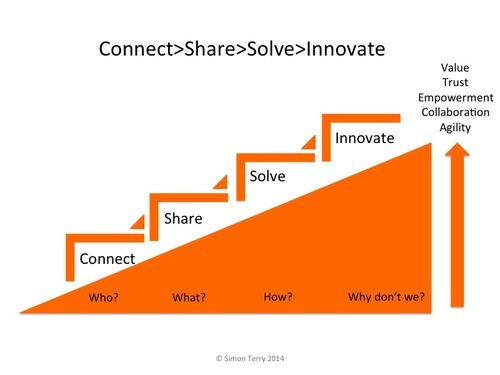
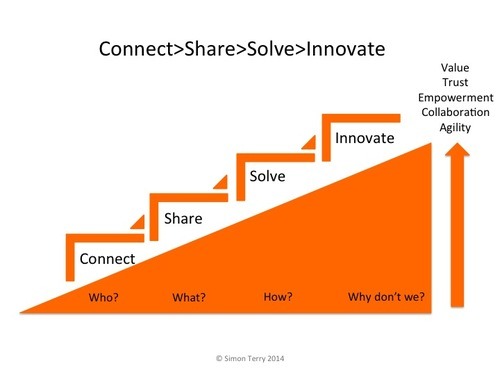
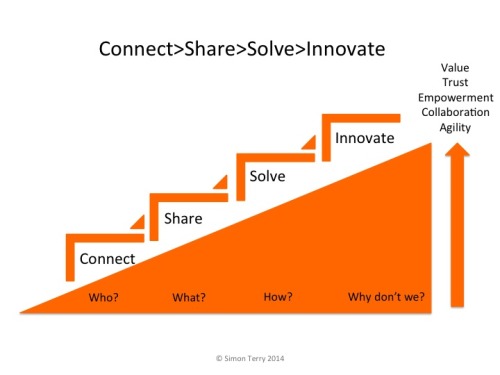
The Value Maturity Model highlights the way that collaboration’s market makers need to work to facilitate the value creation in your network:

  • Connecting relevant people to the network and into groups
  • Sharing information that may not have reached its necessary audience
  • Helping to solve issues by matching needs and capabilities, finding other resources or information and even holding a problem or information until there is a match of demand or supply.
  • Providing the systems and support to enable innovation experiments to be fostered until they are proven or fail.
  • Experiment and lead adoption of new ways of working
  • Helping lead the change in the culture of the organisation to allow the development of further cultural change.

To maximise the value of the networks in your organisation, you will need to develop the leadership capabilities that can take advantage of networks.

If you would like to create greater value in your enterprise social network or discuss how the Value Maturity Model applies to assist your organisation to create strategic value, please get in contact. I am available through @simongterry or Linkedin or www.simonterry.com

The Cold Dark Path

image

Two Competing Loops

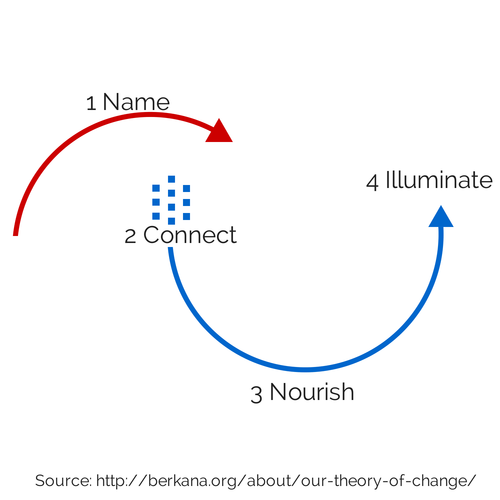
This week at the first meeting of the League of Social Intrapreneurs in Melbourne I was introduced to the Berkana Institute two loops theory of change. The model of change in complex systems resonated immediately.

When a system nears its peak, change agents identify the need for alternatives and drop out.  They connect and begin to explore alternatives nourishing a new system through experimentation. Eventually the stories of their success illuminates the change to those who remain in the old declining system.

A four step model with four simple verbs seems clear and straightforward. Why is it that the path of change is such a cold dark path?

Nobody Warns You about the Dip

Stepping out of a warm and comfortable ongoing system with its present day rewards is a daunting uncertain choice however bleak the future of that system may look. Those with most to gain will oppose the agents of change who name the issues and start to work on alternatives. Opposition will not always be fair or balanced.

//platform.twitter.com/widgets.js

Most difficult of all is that dip in the diagram above. The uncertainty and the need to build a new complex future means the alternative system starts along way back and with a great deal more risk. Selling another path even to yourself can be a challenge in this scenario.

All the discussions about collaboration, requests for advice and stories shared among change agents at the League of Social Entrepreneurs, in Responsive Organisation, in Change Agents Worldwide or in other conversations that I have with unreasonable people belong at the bottom of the loop where people struggle nourishing new alternatives.

We must embrace the fact that the road to change is a road with dips and uncertainties. Proceeding any other way does not prepare people for the work ahead.

Nourishing Change Takes Hard Work

Most change fails after the connect stage.  Declaring a need for change is initially easy and exhilarating. Manifestos are thrilling. Connecting with other like minded people has a wonderful effect for the spirits and is a great way to reinforce the need for change.

Then nothing happens for a really long time. It grows cold and dark on the path of change.

Lots of drudgery dogs those walking the cold dark path of change. Meetings need to be organised and venues found. Compromises need to be negotiated between people who are 99% aligned. Factions and fragmentation occurs and saps the energy of everyone. More change agents need to be recruited, especially for the work. Experiments need to be agreed, funded and run. Failed experiments need to be cleaned up. New experiments agreed, funded and implemented. Success needs to be found. Someone needs to find money or work out the details of the new model. Communication materials don’t write themselves. Just when success seems inevitable the dying system finds a way to set you back.

Change falls apart when the connected agents of change won’t work the experiments long or hard enough to nourish the success of the new system. If they won’t invest the time to build new connections, share successes, to solve the daily issues and to innovate a path forward then the nourish stage will never offer an opportunity to others to join in the change.

If the organisers of the first meet up about a change end up with all the actions, then a change initiative has work to do to find others to nourish the change. Engaging others in the work matters more than engaging them in the idea of the change.

Join in the Work

Lots of people want to join change at the exhilarating beginning and again at the celebratory end. Traditional management focus only on the beginnings and the endings but leadership is found in realising the collective potential of the journey.

The question is who is willing to walk the cold dark road. Those change agents who do the leadership work of nourishing new experiments shape the future. That path is hard but the work is the most purposeful and rewarding

Integrate at Goals, not at Process

image

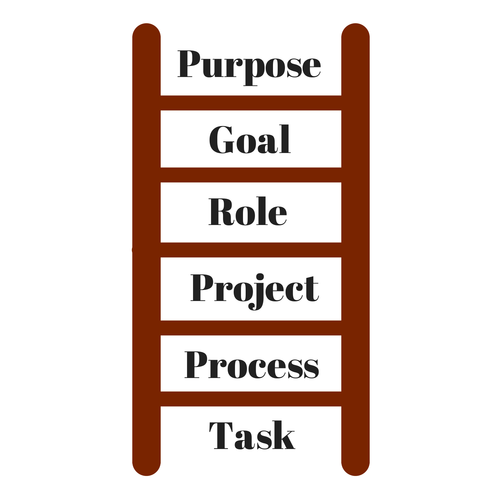
How do you integrate open network conversations into closed linear processes? Integrate social conversations by integrating at the purposes and strategic goals. No organisation wants its collaboration constrained by processes or systems.

Organisations, vendors and analysts are touting the advantages of integration of enterprise social networking into legacy processes in organisations. Enterprise social networking needs to be come a part of the everyday work in organisations as it is another set of tools to foster conversations and collaborations that create value. Without connection to the daily work of individual employees, enterprise social conversations won’t deliver the value we need. However, far too many of our existing work processes aren’t set up to accommodate creative, agile and productive social conversations. Patterns of allowed conversation in a process based integration rarely changes that.

Don’t Integrate through the Current Process

Existing legacy processing systems are designed for efficiency. They constrain choice. They automate steps and narrow discretions. The goal is to simplify tasks, remove errors and ensure repeatable activities can be achieved with the minimum in investment in human talent.

These systems achieve significant efficiency gains with a cost of human potential, agility and effectiveness. However, they are not designed for conversation about work. One only has to reflect on everyday poor customer experiences to see that these systems gain efficiency by handling poorly the exceptional, unusual case or situations requiring a response to change. Conversations, change and collaboration do not fit the industrial model of work that these process systems are designed to fulfil. They are not designed to leverage the potential of talented knowledge working employees connected in networks.

Collaboration is not a layer that can be integrated into existing fixed processes designed for efficiency. Collaboration offers the opportunity to enable people to change and improve the process and the work. Collaboration creates choices with a view to increasing agility, improving effectiveness and realising human potential.

A conversation that must integrate into a process system will become a conversation about the constraints of the system at some point.

Integrate by Creating a Purpose-oriented Conversation

Offer people autonomy, purpose and an opportunity to develop mastery and you will offer them an ability to fulfil their potential. If you want to integrate social conversations into your work, integrate the conversations at this level. The key to reinforcing human potential is to offer people a way to discuss how their work aligns and creates value for the purpose and goals of the organisation, not its processes.

image

An employee who is challenged to integrate his or her work at the level of the goals of the organisation has an opportunity to stop, change or transform the process. That employee can respond to the situation before them, use their discretion and use the talents of their colleagues. The employee can look to deliver greater value than the current process allows. That liberty reinforces their accountability and validates the organisations confidence in the potential of the employee. A key barrier to engagement in many organisations is that an employee can struggle to find the connection between their work and the goals of the organisation. Goal-oriented conversations can play a critical role to surface that connection.

Another advantage of reinforcing a connection at the level of enterprise-wide purpose and goals is that it acts as a reminder that collaboration is an enterprise-wide experience in work. Collaboration is not constrained to the customer management systems or work process systems. A collaborative ecosystem and the social conversations that support it should reach throughout the organisation to achieve its goals and purpose.

Leverage human potential to help realise goals

Telling people what to do and shaping how they might be allowed to have a discussion seems easy and seems efficient. However, it comes at a significant cost of human potential. Leadership in networks demands more of employees, leaders and their organisations. To maximise the opportunities for networked ways of working, allow people the opportunity to find integration of their social conversations at the level of the organisations purposes and strategic goals, not constrained by its processes.

If you would like to create greater value in your enterprise social network or discuss how the Value Maturity Model applies to assist your organisation to create strategic value through enterprise social networking and other forms of collaboration, please get in contact. I am available through @simongterry or Linkedin or www.simonterry.com

The Last Thing We Need is an Enterprise Social Network

Dear CEO

Re: The Last Thing We Need is an Enterprise Social Network

The purpose of this email is to explain why the last thing we need is an enterprise social network.

This email is in response to the conversation about enterprise social networking in the executive leadership meeting yesterday. We thought it best to summarise the position of the leadership team, because yesterday’s conversation got derailed by anecdotes about social media, technology terminology, fear of change and discussion of abstractions like collaboration, future of work and new organisational structures. Before you left the meeting, you remarked “Based on this discussion, I think an enterprise social network is the last thing we need”. We agree.

We don’t want faddish technology. We need execution of strategy.

As CEO, you’ve been rightly suspicious of all this discussion of social inside the organisation. It is bad enough that your teenage children never look up from using social media on their phones. Whatever that involves, it can’t be needed activity in our organisation. We are a place of work.

What made this country great was well-run organisations, hard work and increasing effectiveness in creating value for customers. That takes focused strategy, disciplined execution and a willingness to do the hard yards. Great organisations aren’t built by chasing technology whims. They come from executing strategy to create better value. When we need to create better execution on strategy, the latest fashionable technology is the last thing you need.

We need better strategic value creation

Times are tough. Industry is more competitive than ever and change keeps increasing. We know customer and shareholder value needs to go up and costs need to come down. We have a strategy that is about meeting these new customer & stakeholder expectations, improving the organisational efficiency and delivering the returns that shareholders demand. We all wonder from time to time whether everyone in the organisation gets the imperative of the new strategy and whether they are all working hard enough to find new ways to create value. We know that we perform better when we have better conversations to make sure that our employees are aligned to the strategy. What we don’t need are distractions when there’s doubt that people even understand the strategy.

When we need strategically aligned value creation, the last thing you need is an enterprise social network.

We need new more effective ways of working

To fulfil the strategy of the organisation, we know as a management team that we will have to start to work in new more effective ways. There has been too much wasteful duplication of work in the organisation. Too many of our processes & policies don’t line up across the silos, aren’t agile enough for the environment and don’t meet customer needs. Both our customers and our employees complain about how badly we do this. We need to start working in new and different ways to identify, solve and improve this on a continuing basis. We have to focus everyone on find and using better work approaches that help us to fulfil the strategy.

When we need working in new and more effective ways, the last thing we need is an enterprise social network.

We need to change management and leadership in every role

Working in more effective ways will likely require us to change the way management works. We are going to need to push decisions down to people closer to the customer and give our people the ability to fix problems. We will need our managers to move from command and control to a coaching and enabling role. We need to ensure that all our people are realising their potential and able to work to create new sources of value. Of course in this new role, middle management will need to be trimmed and the new flatter organisation will need to change more often as we respond to further changes driven by our customers. Employees will need to step up into a leadership role in these changes and with customers, the community and the organisation.

When we need to change the culture of management and asking every employee to play a bigger role in leadership, the last thing we need is an enterprise social network.

We need different conversations

Changing the culture of management is going to demand very different conversations in our organisation. We are going to have to find ways to make sure that conversations are efficient and effective. We need to leverage the contributions of more people from across the organisation. We won’t be able to rely on long meetings, workshops, speeches, video and emails. Did you see the budgets for communications, off sites & roadshows in the forecast for next year? We have to do something different. We will need to involve our people more in making decisions. If that’s going to happen our people will need to be better informed and better able to channel their contributions. Our people will need ways to inform themselves, learn by pulling what they need, share ideas of how to work better and collaborate to solve work problems. We are going to need to encourage our people to join conversations that use their capabilities to innovate, to create value for customers and create new forms of working.

When you need to change the conversations, collaboration and culture of an organisation, the last thing you need is an enterprise social network.

We need more from our people

We wrapped up the last executive leadership meeting reflecting on how big these demands will be on our people. We will be asking for a lot of change in them, their work and the way the organisation exists around them. We will be asking our people to play an increasing role in the success of the organisation. We will want them to lead new conversations to create the future for this organisation. We need our people to be more engaged because we will need much more from our people.

Conclusion: What we need

After you left the executive leadership meeting to catch up with the board, we realised that we are clear what we need as an organisation:

  1. we need to succeed by fulfilling our strategy to create greater value in a rapidly changing market; and to do that
  2. we need to be able to work in new & better ways that create a more effective, agile and responsive organisation; and to do that
  3. we need a new culture in management and more leadership from our people; and to do that
  4. we need new conversations that enable our people to discuss and act on creating better strategic value; and to do that 
  5. we need more engagement and a better ability to leverage the potential of our people to contribute to and lead this change; and to do that
  6. we need an enterprise social network to support the first 5 steps.

If you are surprised by point 6, think back through the needs again. After all you were the first to say that an enterprise social network is the last thing we need. We don’t want an enterprise social network because it is new technology or because it is good for some abstract goal. We need one to help our people to execute on the changes necessary to achieve the goals of our strategy. Enterprise technology only makes sense when it enables us to work in new ways that deliver strategic value. As your management team we can see that the value creation opportunity is compelling. We couldn’t see it when you made your remark, but we have come around to your perspective.

The paperwork required by our old process is already on your desk, but a number of our people have started experimenting with solutions to see what value we can create. (Interestingly, their first suggestion is a better procurement process.) When you get back from the board, your assistant will show you how to log-in and join us discussing how we implement in the new enterprise social network.

Thanks for challenging us to come up with a better way of working.

Please think of the environment and don’t print this email. We’d encourage you to discuss it on our new enterprise social network instead.

If this post sounds familiar or if you would like to create greater value in your enterprise social network or discuss how the Value Maturity Model applies to assist your organisation to create strategic value through enterprise social networking and collaboration, please get in contact. I am available through @simongterry or Linkedin or www.simonterry.com

Stop Magical Thinking

image

Magical thinking is any attempt to bend reality to the will or hopes of an individual. Whether by sleight of hand or genuine higher powers, magical thinking leads people into flights of fancy.

Many will remember the Magical Realist school of literature that delivered some extraordinarily captivating novels. Novels would move along telling an engaging story. Then suddenly they would swerve free of reality while magic transformed the world.

Sadly many business plans follow this swerving course at exactly the moment value needs to be created. Instead of exploring the human changes required they swerve into magical thinking. Magical thinking makes for engaging stories, but it makes for terrible plans for the future of work.

Stop Magical Thinking at Work

Let’s leave the magical thinking to creative arts and stop it in the future of work. Value in the future of work is hard work and we will need to create it together.

A really good indicator that magical thinking is creeping in to plans in business is the use of the passive voice. The human contribution to change slips away and magic takes over. Nobody need do anything because great stuff is about to happen suddenly entirely on its own.

The following things are all examples of magical thinking:

  • Adoption will be driven by the right launch, right features, etc.
  • Value will be created by adoption of the terminology, features, systems or processes.
  • Culture will be changed
  • Leaders will be changed 
  • Ideas, changes and new practices will be understood and adopted easily
  • Hierarchy, command and control, micromanagement, etc will be eliminated
  • The desired outcome will be delivered by new policies, processes, measures or systems.
  • More social/analytical/collaborative/cooperative/community-oriented/engaged/innovative work will occur and will be valued by management
  • New forms of value will be created
  • Great new jobs will be created
  • New efficiencies will happen
  • New performance metrics will be adopted

Change is not Magical. Change takes work

None of those things happen without the hard work of leading changes in the attitudes, behaviours and outcomes of the way people work. A real person needs to make that change happen. That special someone has to help others to:

  • Change attitudes about work so as to
  • Change behaviours at work so as to
  • Change the outcomes from work

Only those changes in outcomes create value. Value creation is critical because value creation determines what businesses do and keep doing. Sadly, value does not magically appear.

Before we see any value, at least one leader has to experience those changes in attitudes, behaviours and outcomes themselves. Then that special leader get to work hard to create the value for others through effort, influence and experimentation.

There is no passive voice in leadership. Let your actions speak louder than words.

So when do you start?