Writing

Moving to a Digital Organisation

Moving to a more digital organisation is about choosing the ways of working that will fulfil your strategy. As tempting as it may seem, there’s little to be gained copying the structures or models you have found elsewhere.

On Friday, I had a conversation with leading HR professionals about their organisations transformation towards more digital ways of working.  The conversation was focused on what steps HR professionals can take to help assist this transformation. A key first step was to understand what we meant by a more digital organisation.  Digital maturity is an ongoing process.

What are your goals?

Different organisations are competing in different markets and facing a wide range of challenges and opportunities.  Becoming a more digital organisation can mean a lot of things: radically transforming to digital only, becoming digital first, adopting services approaches, improving customer focus, speed and agility or even just managing a digital channel team more effectively.

The goals of any change should be to help accelerate or make more effective the organisations creation of value towards its strategic goals.  Each organisation has its own strategy and goals.

What does digital mean to you?

An outcome of that strategy will be where the organisation sees digital ways of working:

  • the digital team manages a channel to market
  • digital interactions are a way to engage and learn from customers and other stakeholders
  • We use digital product management approaches to manage digital products and channels
  • We use digital product management approaches to manage all products and channels
  • We use digital product management approaches to manage customer propositions
  • We see our business as a series of digital services and platforms
  • We are looking at new digital ways of working across the whole organisation

The model chosen will shape any changes to ways of working.

What are the dimensions of change?

Structure is the most obvious lever that HR can pull to make change in organisations. The temptation is to see the change to digital ways of working as a decision about structure.

While structure may be important for other reasons, particularly signalling changes in power or other elements of culture, there are a wide range of other dimensions that need to be considered in any change to digital organisation models.  These dimensions commonly include:

  • Strategy alignment and the strategy execution process in the organisation
  • Decision making, resource allocation and power
  • Work Practices and models
  • Cultural elements like psychological safety, autonomy,  growth mindset, risk appetites, etc
  • Capabilities to support the above

What’s the best model? Your Own

Many HR teams see the transformation to new digital ways of working as finding a different model that has been successful in an organisation and copying that.  The broken photocopier model doesn’t work because both:

  • the model is rarely copied in full or effectively; and
  • the culture and goals of the two organisations differ

Instead of moving from model A to a totally distinct model B. The challenge for HR teams is to start to iterate from model A to model A1.

HR must start to think digital in its ways of working too. HR can run a series of agile experiments to loosen the degrees of freedom on the dimensions above in pursuit of the organisation’s goals. Small iterative steps will deliver a new model that is consistent with the organisations purpose, allows employees to have agency in the changes and evolves the culture in constructive ways.  The outcome of the successful experiments will build the organisations own future model.


The Four Horsemen of the Organisational Apocalypse

The global networked economy presents new challenges for our organisations and brings about dramatic changes. We need to be clear that the tools of the past may not serve us well in the future. Four past tools are so deeply engrained in our thinking that they are carried into our organisations without discussion.  These four are the four horsemen of the Organisational Apocalypse.

I’ve been following the changing discussion in organisations for some time. I was a passionate supporter of the Responsive Organisation Manifesto.  I was at Disrupt Sydney when Adam Pisoni launched the concepts behind the Manifesto. In my own work and own practice I have seen the challenges traditional organisations face when adopting new ways of working to meet the needs of the digital economy. I have also been surprised at how many new practices, like agile, lean startup, design thinking, flat organisations, and so forth, are repurposed to suit the demands of the Four Horsemen of the Organisational Apocalypse.

The four horsemen of the organisational apocalypse are:

  • Obsession – Shareholder Value: Shareholder value is a measure of organisational performance. Make it the sole measure of organisational performance and you will have a negative effect on those that the organisation needs to survive: customers, employees and the wider community. Alienating these critical elements of success in the interests of shareholders opens the organisation to all kinds of threats and weakens loyalty and engagement in the networks around the organisation. The focus on shareholder value at all costs sets up organisations for short term thinking and creates the danger they will be disrupted by someone with new measures of success.
  • Efficiency – The Machine Mindset: Management has long strived to see the organisation as a machine and to manage it as a machine with a linear process of inputs leading to outputs. That machine focus has made people an uneasy fit and since FW Taylor we have worked to make people fit the machine model. People don’t work like machines. We need our organisations to recognise this and seek to leverage human capability not replace it.
  • Reductionism – Oversimplification: Data and Analysis is useful when it leads to new ways of understanding the world. Data and analysis for its own sake or for the the wrong goals creates risks and can limit our ability to understand the world. If we allow our simplification to interfere with a human engagement with our world, then our organisations will be more fragile.
  • Control – Hierarchy: Any management model where most of the people have no say, no power and no autonomy and people are divided into silos of goals, information and activity will be suboptimal. Even if the smartest and best people are at the top, a hierarchy will be at risk of being outperformed by the networks around it. The danger is that hierarchical power reinforces itself and reduces the responsiveness to threats.

Individually each of these approaches creates some risk for organisations.  Working together they create huge dangers for our organisations. The greatest danger is that when these values become unquestionable the organisations literally cannot see the risks that they create. Take for example shareholder value, how many organisations have dismissed a new competitor on the grounds that they were loss making?

Let’s examine some of these interplays:

  • Control + Reductionism: Organisations delivering the emperor’s new clothes of simplistic solutions where everyone has doubts it will work but nobody has the power to stop the project.
  • Shareholder Value + Efficiency: Value cost savings over revenue growth. Maximise the extractive nature of the organisation at the expensive of effectiveness, social value and purpose.
  • Efficiency + Reductionism: Ignoring systemic effects or wider complexity can cause widescale environment, social or even effectiveness issues. So much corporate policy is counterproductive because it fails to understand and influence systems.  These two values are also at the heart of much of our corporate obsession with speed.
  • Shareholder Value + Efficiency + Control: Humans are unpredictable because they have the potential to create their own change. Remove humans and replace them with controllable and predictable machines. We may have created corporations to harness the potential of collaboration between humans but for many the goal of the corporation is humanless, but fragile.
  • Shareholder Value + Efficiency + Control + Reductionism:  Dumb and fragile organisations that are out of touch with their systems and environments and often can’t see their way to a new way of working.

Most digital disruption is not solely the outcome of technology transformation. Most digital disruption is the result of new businesses being created that challenge these values with new business models and new economic models. Not every disruptor challenges every value but increasingly we are seeing new players who look to leverage wider measures of value, effectiveness, distributed leadership and systemic understanding of their organisation, its customers and its business. If you are clinging to the Four Horsemen of the Organisational Apocalypse in a traditional organisation you will not see what is coming. Resilience in a fast-moving digital and global economy requires us to question the values at the heart of our organisations.

Culture Isn’t Fixed in Reality

Many people treat their organisation culture as a historical legacy or some fixed reality. Your organisational culture isn’t mandated by history or by the present. Culture can be a real constraint to performance but it isn’t fixed or necessarily grounded in reality. Because culture is an expectation, it can definitely be changed when you give the community reasons to change their expectations.

Culture is a series of shared expectations of future behaviour of a member of a community. Expectations create and sustain your culture. These expectations are shaped by observation but they are more likely shaped by narratives, perceptions, biases and the expectations of others in the community. There are plenty of examples in history of where expectations have become widely divorced from the reality of the circumstances.

Expectations aren’t always real or founded in any history or present circumstances. Historical narratives in organisations are often carefully crafted myths that don’t reflect well on what really happened. The history has been developed to reinforce the current expectations, not record reality. In some cases, our assumptions and cognitive biases are so strong that we don’t even see the extent to which the organisational cultural expectations are inconsistent with what is going on right now.  How many senior executives relentlessly repeat that ‘people are our greatest asset’ while valuing other things more highly than their people. At times, you can wonder if the public discussion of culture is more performative than normative.  That discussion of culture better defines how things should appear to be than how they actually are manifested in behaviours in the organisation. Such a consequence can create an even greater disconnect from the cultural expectation as shared and behaviours as experienced.

The key point is that expectations can change. The people who change those expectations are the community of people in the organisation. Culture cannot be imposed, but it can change as these expectations adapt to different circumstances and to differing cultural values.  Nobody is fixed with a culture from history or present circumstances. The right leadership, narratives and conversations will enable new expectations.

The Vulnerability of Trust

If we are to trust, we are vulnerable.

In The Monarchy of Fear, discussing democracy in contrast with monarchy, Martha Nussbaum highlights that with the trust that is required to support an effective democracy comes a vulnerability to others.

Trust means being willing to be exposed, to allow your own future to lie in the hands of your fellow citizens.

Effectiveness in our newer patterns of work is increasingly dependent on greater trust. That also means we must all work at a higher level of vulnerability and dependence on others. That’s not a comfortable place for many people. Vulnerability is not a value that many organisations embrace.

If we don’t explicitly embrace the relationship between vulnerability and trust we are likely to engage in a cycle of counterproductive behaviours. Our rising discomfort at vulnerability leads us to implement systems to remove the discomfort. These systems, because they are controlling, unilateral or misaligned, in turn undermine the trust we are seeking to foster.

How do we grow trust?

To grow mutual trust we must recognised that it is a human characteristic, not a mechanical one. There are many definitions and drivers of trust but each individual makes a trust assessment in each moment individually. They are supported in this by the values of community but they make a decision alone. Some people will never trust others.

If we are to grow trust in our work communities, we must embrace its humanity first. That’s one reason that the Value Maturity Model starts with human trust building actions like connection and sharing. Understanding each other and our shared context is a foundation for trust.

Working out loud can play an important role to build this connection and shared context. It is also a chance to practice the vulnerability of trust.

We must act with reciprocity. Trust is reciprocal. To win trust, we must give it. This is one reason why we must allow degrees of freedom in our work. Command and control is not reciprocal and cannot build trust. It may be predictable, but inequality and control are not signs or facilitators of trust.

We must challenge the systems that undermine trust. This will challenge us to lean into our vulnerabilities and pull down some of the hallmarks of the mechanistic scientific management that we have created. That system is based in hierarchy, fear and control to maximise repeatability and predictability.

Lastly we must have a belief in human potential. We trust because we believe our colleagues have the potential to surprise us on the upside. It won’t be every time and they will often disappoint us. However the gains from the collective human potential of the organisation must outweigh individual achievement or we wouldn’t have an organisation. Our challenge is to trust in that outcome, trust in our peers and manage the balance of risks.

The power of new ways of working are to better leverage human potential. We must embrace trust and its vulnerabilities to achieve that outcome.

Fixes, Solutions and Services

plumbing-840835_1920

Digital technology has enabled business to operate at new levels of speed and deliver new levels of capability to address old challenges. However, it also makes it more important than ever that business understands what it is doing. There is a big difference in outcomes and ongoing costs between choosing a fix, a solution and a service.

Fixes, Solutions and Services are Different

Let’s take the example of a leaky pipe to draw the difference between the three categories:

  • A fix is anything that will stop water leaking now:  You might be able to block the whole by wrapping the pipe in tape.  It is quick and cheap and it will get the job done.  There is no guarantee it will last. You can get very wet and spend a lot of time taping pipes if all you rely on is quick fixes.
  • A solution is something that addresses the whole problem in a sustainable way:  Bring in a plumber to replace the pipe or rethread the join with some plumber’s tape. A solution is usually more expensive and a point in time action. The leak will stop and you have put in place a solution that will deliver no leaks ongoing.
  • A service is when you shift from fixing a problem to realising and opportunity by creating a sustainable and systemic solution to the underlying capability: Most of us aren’t experts in plumbing or water delivery. Just because pipes aren’t leaking doesn’t mean they are right. A pipe that doesn’t leak may have restricted flow, be poisoning the water or have other issues. We aren’t sure how best to manage water delivery but we could contract someone to do regular testing, maintain the infrastructure and upgrade as and when needed.

These Differences Have Implications

The differences between a fix, a solution and a service are significant and have important implications:

  • Organisations don’t ask themselves what they want between the three choices and what the business case justifies.
  • You don’t always need the most expensive or fanciest option: If you know the pipe is in a building that will be demolished next year, what is the point of a fancy solution or service? Tape works fine. You might even prepared to get wet.
  • Organisations confuse the cost, durability and outcomes of fixes, solutions and services.
  • Many clients buy a solution thinking it is a service, because they have confused the tool and the result. They are then perplexed why the solution has ongoing supplemental services, like adoption, maintenance and other costs.
  • Many vendors and the organisation’s internal specialists are unclear whether they are offering a fix, a solution or a service. It is common for them to sell the cheaper and promise the more expensive.
  • Most startups fail because what they think is a service is at best a fix or a solution.


Chat, Conversations and Collaborations: A Productivity View

We need to break some default practices at work to improve productivity. Stop making everything a meeting. Stop assuming the best interactions are in the same place. Both of these practice waste a great amount of time in our organisations.

Friday morning was one of those mornings where there was too much to do. As the saying goes, ‘if you want something done give it to a busy person’. The good news was that I had only two appointments: a physical inspection of an office for 15mins and an introductory meeting with partners for 30 mins. Having not locked my time into one hour blocks of meetings I was able to maximise my personal productivity. Even the travel time could be used to advance work.

Between 9 and 12, I managed to complete my two appointments, reshape two projects, answer a half dozen queries, plan a new project, have calls with colleagues and chat online with others. In 3 one-hour blocks, I achieved at least a dozen things.

Keys to Productivity

As noted in the tweet above there are some keys to improving personal productivity:

  • Understand the purpose of the interaction: What do you want out of each an every interaction?  That will help you assess how much time it needs and how best to conduct the interaction.  It will also help you assess when it is over or when to stop because the goal can no longer be achieved. It also helps you understand what should not be a meeting.
  • Separate Chats, Conversations and Collaboration: Each of these interactions has different time demands.  Make sure you allocate the right approach for each. If you just need to answer a quick query or exchange information, do it in a chat and you will be able to manage many chats asynchronously. For conversations the time is extended but usually less than you expect.  A lot can be discussed in 15 minutes if both parties are focused and prepared. Collaborations may not even need conversation. Perhaps you are best to jointly work on a document before getting together to have a conversation about open issues.
  • Move away from the 1-hour paradigm: Most conversations take an hour. Few take an hour exactly.
  • Use the tools to be convenient: If anyone has to travel to a meeting, then everyone loses time. The person who has travelled is going to get their value back by talking. Tools now offer a multitude of different ways to connect, to share and to shift between chats, conversations and collaboration. We need to pick the tool that best suits the result we are trying to achieve. One size does not fit all in interactions. At least one of my conversations on Friday, started as a chat thread and included two short Skype calls and an exchange of documents for shared editing. That was a very efficient way to manage the time of two busy people.
  • Use ‘in-between’ time: Weaving tasks around each other can enable you to use in-between time effectively if there are short and long waits in your work. To avoid the productivity penalty of multi-tasking each activity needs to be a complete unit of work.  However, managed well you can get a lot done ‘inbetween’ tasks, meetings and interactions.  Walking to the office inspection, I made quick calls, sent messages and answered emails, advancing a range of projects and learning more for my other meetings and conversations.

Personal productivity is personal. Because we each have different preferences and styles of work, collaboration and interactions, each of us will work most effectively in a different way.  The challenge we each face is to keep challenging the accepted way of working, to use the tools available to us to their best advantage and to keep learning better and more productive ways of working.

#NoOtherWay

The screaming voices surround us. Fingers point out the Other and invite us to alienate them. The only way to go forward is as a human being engaged in a diverse world of unique human beings. There is no Other way.

We are human. We make tribes. Social research tells us we can make tribes on the flimsiest of perceived differentiation. In a war of exclusion, some of the most fanciful boundaries are the most fiercely fought. Those outside our tribe run the risk of becoming Other, the alien enemy. The basis for the differentiation matters little the Creation of the Other, with its dehumanising violence is the first step.

We begin the violence when we define a line and put unique human beings on the other side. We back these imagined lines with all kinds of violence, physical, mental, systematic, casual and political. The Other becomes a group to blame, a dog whistle message to our tribe or a call to hate and violence.

The technology of global connection, whether it is transportation or communication, has made once distant Others more visible and accessible. These technologies have supercharged the advocates of the Other in all dimensions. The changes in society and our economies wrought by these technologies has created and promoted resentments and fostered fertile ground for the politics of the Other.

Unravel the stereotypes, the myths and the lies. Demask the Other and you will find a human being just like you. We must engage human to human as we go forward. Fictional Others do nothing to enable us to address real issues in our society, our economy, our planet or our polity. To begin to address issues we need to unravel the first act of violence, the creation of the Other. We must engage in human ways with the real diverse and unique individuals if we are to solve problems together and move forward. The Other defines everything and solves nothing.

There’s no Other way.

The Aching Amplitude of Change

Let’s begin at the beginning
We’re lovers and we’re losers
We’re heroes and we’re pioneers
We’re beggars and we’re choosers

Frank Turner ‘I knew Prufrock Before He Got Famous’

My shelves are full of books about artists, poets, politicians, entrepreneurs, rebels, change makers and revolutionaries. I am drawn to conversations with people making change happen in all facets of our world from the arts to zoology. The work that I want to do most and do most often is work that changes the world to make it more human. The company and community I keep is called Change Agents Worldwide. I am in more communities of change makers than I can count. Every business I am involved in is working hard to change the world for the better despite the complex and dreary challenges that change makers face. This morning, driving to work listening to music, an insight dropped .

Maybe, just maybe, there is a pattern in all this.

The pattern is that change is life. Change is the vitality of growth. Change is the everpresent battle against the decay that settles on the static and the passive. Change is the opportunity to see the unrealised potential, here and now. Change is what the living do.

Change makers see problems and know their job is to make things better. They don’t complain (much) and they don’t expect complaints to be an answer. If you want change, you get on with the challenge of bringing a better world into this one. Nobody will do your work for you.

Changemakers don’t expect perfection. They start where they can. You can’t accept dead history as an excuse when you demand life lives up to exacting standards and are prepared to exhaust yourselves trying.

There is an old phrase that we are the company we keep. I will happily keep leaning into my communities of rebels, change makers and entrepreneurs. Let’s hope their energy, passion and life keeps rubbing off on me. I’ve got a lot of change left to make and a lot of living left to do.

And I know I’m not the one who is habitually optimistic
But I’m the one who’s got the microphone here so just remember this
Yeah, well life is about love, lost minutes and lost evenings
About fire in our bellies and about furtive little feelings
And the aching amplitudes that set our needles all a-flickering
And they help us with remembering that the only thing that’s left to do is live
Yea, the only thing that’s left to do is live

Frank Turner, ‘I Knew Prufrock Before He Got Famous’

Thanks to Frank Turner for the song:

Thanks also to Helen Blunden for her discussion about art and architecture this morning that prompted this meditation.

Collaborating with Everyone

As collaboration platforms respond to the demands of C-suite executives for new tools for digital communication, two themes have risen to the forefront of debate. Everywhere we turn at the moment we have the twin topics of:

  • 100% Adoption
  • Collaborating with Everyone

Both targets are counterproductive illusions. They aren’t as attractive or as realistic as they seem despite the many people promising miracles to eager executives.

100% Adoption as a Measure

That we are even discussing adoption shows the growing maturity of the collaboration technology market. In the early days, there was too much expectation that the tool itself would deliver magic and users would automatically interpret how and when to use the tool as they change their work.

Now that we are focused on and measuring adoption, we are confronted with the inevitable race to 100% adoption or similar goals.  We have reached the point where the goal has taken over and the logic for the goal has been lost.

Increased purposeful use of a collaboration platform is valuable. However, much that is measured in measuring adoption is not purposeful use and has little business value for the organisation or for users.  Likes on the CEO’s live video or a post that gets no engagement does not guarantee any business value.

More importantly, the purpose of all this adoption is often vague. Big adoption numbers make community managers feel great when performance measures are often uncertain.  They provide marketing for tech companies. They also stroke senior executive egos as they falsely correlate adoption to engagement. As I have repeatedly stressed, we need to move beyond adoption for its own sake to creating value for the business and in line with its strategy. A cavalcade of GIFs, likes and chatter can be the exact wasteful time suck that many executives fear. Pointless activity driven by platform features or campaigns will ultimately drive rational users away. Employees are sensible enough that they will choose to spend their time creating value for the business or their own work instead of delivering work to a meaningless metric.

Collaborating with Everyone

As a passionate advocate for working out loud, many people may assume that I would encourage collaborating with everyone. I don’t because you can’t collaborate with everyone and it is generally counterproductive.

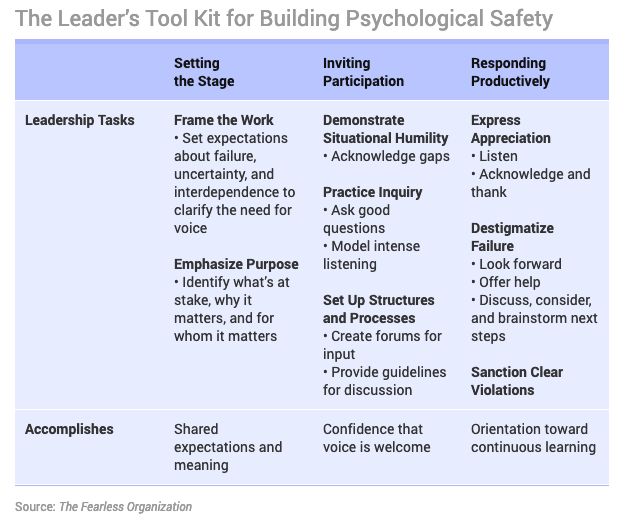
Research has consistently shown the value of psychological safety in high value collaboration. We just aren’t safe if the network universe must be everyone. This is a key reason why I stress that working out loud is ‘Sharing work in progress with a relevant audience’ (emphasis added).

Relevance is also a key element for the ability for a collaboration opportunity to find someone who can help or learn from that message. Messages in bottles send out into large expansive networks often struggle to find relevant partners and responses without the support of community manager and other champions to guide them to relevant parties. Smaller groups closer to a team or a clan scale are much more useful launching pads. People can assume that a message sent to everyone is not relevant to them. It gets less attention in the fast flow of broadcast communication.

Another key reason is that much of the focus on ‘collaborating with everyone’ is really about communication, not collaboration.  There are real human differences between chatting, communicating messages, having a conversation and getting down to the task of working together. If you are focused on broadcast communications then you can target everyone but expect to get the usual low engagement that you see on any other broadcast communication channel. Forcing broadcast messages into the streams of people busy doing work is not a solution. It is counterproductive because it either disrupts the flow of employee’s work, they miss the messages or they disengage from the communication channel. Worse establishing that broadcast is the leaderships’ preferred mode of engagement encourages others to model that behaviour too. Collaboration is far more effective when people check egos and listen.

If the digital era has taught us anything, it should be that perfection is overrated and learning and adaptation is a far better approach to work. We don’t need 100% adoption of a tool. We need the adoption of the collaborative work that will help realise our business goals. We don’t need collaboration with everyone. We need collaboration of the specific groups and teams that will realise our desired forms of new business value. Collaborative teams learn by doing and learn from the role modelling of others. If the strategy is not clear now, then the work of the community will be to learn and adapt their way to fulfilling these objectives.