Writing

Lead Culture Change From the Outside-in

Leaders need an external perspective to change culture in organisations.

There are these two young fish swimming along and they happen to meet an older fish swimming the other way, who nods at them and says “Morning, boys. How’s the water?” And the two young fish swim on for a bit, and then eventually one of them looks over at the other and goes “What the hell is water?” – David Foster Wallace

In a recent twitter chat, the question was asked “Why do organisations decide to change their culture?”  At first I thought that was obvious, but on deeper reflection I realised the answer wasn’t always clear cut.

Culture, which is a pattern of predictable behaviours in a group of people, can be like water to fish. The patterns are so predictable we often can’t see them. Inside a culture, all the pressures are to conform.

Leaders who see the need for change in culture in an organisation do so because they are connected to and embrace external perspectives. Through their exposure to the world around the organisation, they can see:

  • externally pressures for a change such as the feedback of competitors, analysts, customers, community, regulators, etc
  • the organisation has to respond to new norms that are being adopted in society, the industry or other organisations
  • better practices are in use by other managers externally and could be leveraged
  • the attractive aspects of other cultures to the talented people leaving to other organisations or to the disgruntled people in your own organisation; or
  • the different mindsets an externally appointed CEO or group of managers might bring.

If your small group of executives want to build a movement for change in culture, you will need to start by connecting to an external perspective that can help them and others see the need for change. You can’t change if you can’t see the behaviour or the need for it to change.

A critical role for change leaders is to help foster an outside-in perspective in an organisation. Social collaboration is an important way to surface and share new views and create new accountability & energy for change.

Start bringing in and sharing customer views. They are usually easiest to incorporate into your company conversation and often quite disruptive. Then broaden your perspectives to competitors and other industries. Ultimately you will want to engage a diverse range of stakeholders to understand where your settled patterns of behaviour might need disruption.

Engaging critics and supporters will not tell you what you need to do. However, Each of these disruptions are an opportunity to reflect on how you want people in the organisation to behave consistently differently to build new and better patterns.

Because culture is like water to a fish, we are often unaware of its impacts unless an external perspective makes us stop and reflect. Leaders must help create the conversations with an external orientation to remind us continually that:

‘This is Water’

For if we say that we lack authority to give credence to our testimony, we speak beside the point. For in my opinion, from the most ordinary, familiar and commonplace things, if we see them properly, we could construct the greatest miracles in nature and the most wonderful examples, especially on the subject of human actions.

Michel de Montaigne on experience, anticipating working out loud and design innovation

The One Success Secret to Social Collaboration in the Future of Work

image

There is a lot of advice out there for organisations trying to achieve success in social collaboration and new ways of working. The future of work is very popular now so there is a lot of effort to sell the newness, the complexity and its special nature. Much of that advice makes efforts at social collaboration sound difficult to achieve or alien, if you are working today in a traditional organisation.

Despite all that discussion, there is one practice that helps make initiatives in social collaboration successful and increases the value that is created in the future of work. That practice is simply:

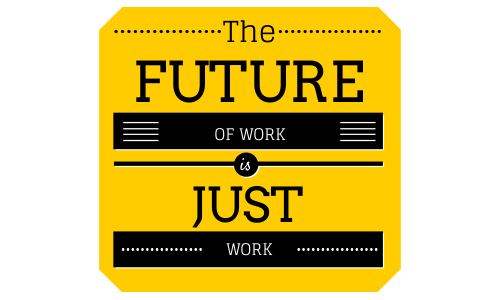
Treat it as just work

We work collaboratively every day

Every day people collaborate at work. Mostly they don’t call it collaboration. Instead, it is seen as having a conversation, sending an email, persuading someone, getting advice, getting help or working together on a task or project.

Social collaboration extends the opportunities of who can engage in this collaboration. Social collaboration tools enable this kind of work to be done with more people, faster and with better ability to leverage the knowledge created. If social collaboration tools don’t make it easier or better to do this kind of work, then users won’t and shouldn’t use them.

Treating social collaboration as a special activity distinct from work confuses people. They debate when they should use this special collaboration. They question the value of collaboration. They can’t see the point. And each time they go back to their work and start collaborating with others again.

Work is why we share information

Many people can immediately see the value of social collaboration as a way to share information. Your enterprise social network looks like Facebook. Your corporate blogs look like the ones in the public domain. Your wikis and knowledge management systems may even be familiar too.

However, this familiarity makes people uncomfortable at work. Clearly we don’t usually share the same information at work as we do in Facebook.  Many people ask: What should I share? What do I have that is worthwhile to share? What will happen if I share the wrong thing?

However in any organisation the best reason to share information is to work. People share information to do work together and to create value. Connecting with work colleagues, working out loud, solving work problems collaboratively and innovating with others are the reasons we share information at work.

Work isn’t special

Treating social collaboration as work addresses other issues that organisations face as they move into the future of work.

You have the policies, processes or campaigns to do your work. You don’t need special approaches to start social collaboration. Your normal work rules and processes should cover your social collaboration too, including rules on privacy & confidentiality, behaviours and performance processes.  If these approaches break, constrain or prevent new forms of social collaboration, there is a good chance they don’t work for other forms of collaborative work and should be changed. Don’t create special rules.

Do you gamify your daily work processes? If you don’t gamify everyday work, don’t gamify engagement with a social platform. Remember it is the work that creates the value, not the adoption. Don’t confuse the tool with the result.

Don’t start with special things. Start by helping your people to do their work better. If your organisation has never ever sought any input to its product development processes, doing a special product ideation session can be valuable, but it is a terrible way to start a social collaboration journey (especially if you fail to follow through on the ideas). You don’t want people building an idea that a social collaboration tool as something for special, rare & unique events. You want people realising its potential to do work and solve work problems each day.

Treating social collaboration as work also addresses why senior executives and other leaders should participate. This is not a special domain. This is where the work gets done. If you want to lead, lead here too. 

Work Creates Value

Most importantly, considering social collaboration as work drives our attention to the question of the value that the work adds.  When we work, we know we need to work more efficiently and find ways to make our work add value. That is part of the deal with work.

Focusing on social collaboration as work also reminds us that we should work to realise our strategy as an organisation. The collaboration must realise the organisation’s goals and the goals of the individuals who need to work.  Collaboration for its own sake is a waste.

Start Working to Work Better.

Social collaboration is the same. We shouldn’t focus on the tools. We should focus on the value of the work we do and how we can do better.

If you want to create value from social collaboration and new ways of working, start by treating it as work. Then ask people to improve their work. Experiment and make changes to make work more productive and effective each day. You will need to change processes, policies and organisational structures over time, but you will be guided by the collaboration of your people. That is the way to realise the human potential in your organisation.

The journey won’t be easy. There will be setbacks and lessons to be learned. People will need to learn new ways and adapt to change but an engaged group of people working together will create greater value for your organisation over time.  

That sounds just like work too.

—-

The Connect>Share>Solve>Innovate maturity model assists organisations to accelerate the value of the work their people do in social collaboration tools in practical ways.  Accelerating the progress of collaborative work from Connection to Innovation significantly increases the returns to individuals and the organisation from new ways of work.  Importantly it also engages people in shaping the future of work in their organisation. If you would like to learn more, please get in touch.
The Learning Potential of Discomfort

image

When you become a leader, success is all about growing others – Jack Welch

Leadership is how we realise human potential. To realise potential great leaders help people to step out of their comfort zone. As a leader, you will need to get used to being out of your own comfort zone.

The friction of capabilities against a bigger challenge

A match doesn’t realise its potential until you strike it against a surface. The friction brings out the flame.

Developing the potential of people takes learning. We need to learn the limits of their capabilities. We need to learn how far their capabilities will stretch. This learning only occurs when people are out of their zone of comfort.

Great leaders excel at getting people acting outside of their comfort zone. Getting outside our comfort zones is where we can feel the friction of their capabilities against bigger challenges. That action to stretch ourselves is how we learn.

Leaders don’t make action safe. Leaders give people the confidence, purpose and support to do unsafe things to learn, to improve or to make change happen. This means guiding people into action, shaping the feedback and reflection to grow learning and helping people back up when they fall short to try again.

Leaders enable people to realise a potential that they might not fully accept or understand. These leaders never confuse competency with capability. They look for the upside. Great leaders help create the achievements that people describe later as “i never thought I could do that but I just did.”

Leadership can’t play safe

Before people take a risk for you, they want to know you are taking a risk too. If you build in too many failsafes, fallbacks and protections, then you will take the stretch, the risk and the learning away from the team. If you believe in others and take a risk on their capabilities the results & gratitude can be extraordinary.

Great leaders know they are realising the potential of their teams outside the comfort zone because they feel that friction in their leadership too. They push themselves to improve and realise their potential as well. Great leaders know they need to learn new approaches, build capability and improve to make things better.

Leaders can’t play safe to realise the potential of others.

Leaders and their Tools

image

Leadership is the technology of realising human potential. In practice, leaders need to use different tools in different contexts. The use of a new tool does not change who they are.

Many leaders use the same approaches to leadership in every context. They either call it a best practice or their best style. They define themselves by their leadership tools. These leaders repeat phrases to themselves like ‘I am collaborative’, “I create accountability’, ‘I am powerful’, or ‘I am inspiring’. These phrases become constraints on their freedom of action. When the situation demands a different style of leadership, they find it hard to work against their self-created identity. These leaders have confused the tool with the result.

Leadership depends on context. The needs of others are different in every situation. Leaders need to adapt their styles to the needs of their situation and their people if they are to realise the potential of others. That means leaders need to choose different tools and have different conversations.  If it is time to demonstrate power, then a leader must demonstrate power regardless of their natural style. Importantly, they still choose the values that they show in their use of power.

The best leaders have a dynamic toolkit of styles that they apply as the situation demands. They don’t define themselves by anyone one tool. What matters to the best leaders is the purpose they are seeking to achieve and the values that shape how they use a leadership tool.

Don’t define your leadership by a tool. Define your leadership by your purpose, your values and your impact.