Orderly Processions are Over

Hierarchy likes order. Networks manage complexity.
Hierarchy walks in an orderly procession. Networks hustle.
Hierarchy wants projects to go from a through to z. Networks experiment across the alphabet.
Hierarchy wants a clean status. Networks solve for problems & mess.
Hierarchy reinforces status. Networks value results
Hierarchy manages stocks. Networks manage flows.
Hierarchy likes secrets. Networks share.
Hierarchy approves, authorises and allocates. Networks learn, enable and do
You can wait for your spot in the orderly procession. However the orderly procession might never reach you or might pass you by blind to your talents to walk in lockstep.

Join the network of doers instead.

Are You Leading for the Quarter or the Future?

image

No rational person would jeopardise their future to meet an arbitrary 90 day milestone. Too many corporate incentives are structured exactly this way.

There are many eloquent complaints about the danger of the short term focus of corporations, especially publicly listed ones. My concern is that this short term focus stands in the way of more human and more responsive organisations. This short term focus divides accountability.

Time is short

One force driving the pathology of traditional management approaches is short time frames & arbitrary division of time. Results are fragmented down to hourly, daily, weekly, monthly and quarterly targets. We engage in the division of time as much as we divide work.

Incentives and management processes are tied to these short term results. Dividing time in this way values values the present quarter or time period to the exclusion of almost all else. As a consequence the arbitrariness of the short time frame becomes an invitation to treat the entire process as a game and to push the future far from consideration.  

Getting the number

When a decision is made with the sole objective of delivering a number, we enter a realm of dangerous ethics and considerable risk to the future. Purpose, customer relationships, employee engagement and community reputation are immediately in jeopardy, as everyone focuses to deliver the certainty of the financial outcome required.

The pressure of a short time frame immediately eliminates activities:

  • that may require upfront investment, time or effort
  • that may involve uncertain returns like experimentation, new product development, enabling customers, employees or other stakeholders, etc
  • that involve thought, analysis, research, input or consultation
  • that deliver large benefits beyond the time period
  • that have any form of initial dip in performance

This remaining options usually come down to one or more of the following:

  • bringing forward returns, usually at a significant discount
  • grabbing more value in the relationship with another stakeholder without regard to longer term consequences in the relationship (for example by raising prices without regard to impacts on loyalty or market position, demanding rebates from suppliers, etc)
  • arbitrary cost cutting, especially employees or ‘discretionary expenses’ like marketing, training, maintenance, support, etc where effects are not immediate 
  • accounting treatments, particularly relating to the recognition or allocation of revenue or costs and the valuation or recognition of assets and liabilities
  • outright fraud and deception

Waste

Some of these changes may cut waste or realise value, largely by accident. In many cases, the organisation responds to the changes with innovations that ameliorate the longer term impact or at a minimum defer them for another quarter. Pressure can inspire creativity and efficiency. The negative future effects and ongoing pressure can also generate a treadmill of even greater pressure.

We must be clear that this activity is waste. Playing the numbers game is wasteful effort. It risks the future and compromises the core value creating relationships in the business. The demands of the ‘numbers game’ work to unravel any efforts to become a more responsive organisation. The ask to meet numbers always pushes for planned outcomes, maximum control and a lack of transparency in decision making.

No Division of Accountability

Accountability for outcomes is core to the future of any organisation. Ending number games does not mean an end to accountability. It means greater accountability.

  • Let’s be accountable to make every decisions in line with purpose and values.
  • Let’s ensure all employees are accountable to deliver now, for a better future and to realise people’s potential.
  • Let’s ensure that the accountability is an accountability to all stakeholders.
  • Let’s also work to deliver each day in a realistic manner to our long term goals, not just scrabble to manage an arbitrary day that we choose to report.

We need to end the division of accountability.

A Little Bit of Rebel

image

Most rebels start small.

At the end of Richard Martin’s wonderful discussion of the power of rebel within organisations there is a reference to starting small. It reminded me that ‘from little things, big things grow’  

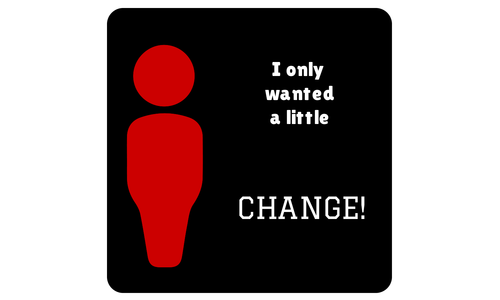
Many change agents start out in a small and quite compliant way. They only want to make a little change for the better. They see something that needs fixing and try to fix it. These rebels start out making change for the system. They want to make the system work just a little better.

Systems don’t like little changes. Systems push back. Small fixes are crushed.

At this point, many people seeking change stop discouraged. The rebels go on. Rebels move from a small change to making bigger changes to the system. They start to see that their small problem is a symptom and that changing the system is part of the solution. Now they want to make changes to the system.

Systems don’t like changing. Systems push back. Big changes are opposed.

Many first-time rebels stop at this point. They don’t like the ostracism, the opposition and the risk. Only the dedicated rebels go on. Now the rebels want to fundamentally change the way that the systems in the organisation handles change. They want their organisations to have a better culture, to be more responsive, to be more human and to pursue bigger and more important purposes than purely financial return. These rebels are working for a change of system.

Systems don’t like change. Systems push back. Transformative change is fought. 

The few remaining rebels just keep aiming bigger. Now they step outside the system and connect with others from other systems trying to make similar change. They start to work across organisations, industries and society to learn how to be more effective and more influential in creating responsive and human organisations.

These rebels are changing the world.

image

How do you help your rare and precious rebels grow faster?

  • Do you have a culture of continuous improvement based on external performance measures that helps your people start the journey of change?
  • Do you have the room for experimentation to try new approaches?
  • Do you have a culture that fosters challenge to the big systems and processes and that supports and rewards the rebels?
  • Do you take time to discuss the culture and systems that lie behind the symptomatic problems that you face repeatedly?
  • How do you connect and engage your rebels, internally and externally, to help them stay the distance in the face of opposition?

Management Practice Lags Culture

image

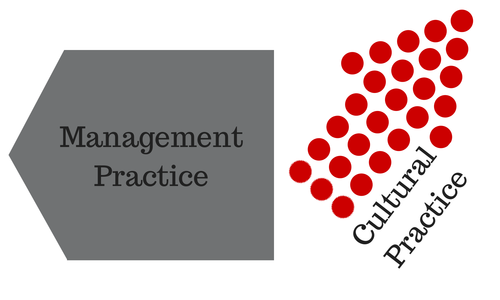
Management practice is influenced heavily by hierarchy, tradition and risk aversion. As a result our practice as managers lags the changes in culture in the society around us. Leaders need to work to close the gap between management practice and social expectations.

Management Practice is a Lagging Indicator

The way we manage our organisations is defined by practices that often trace back to the industrial era. The consequences of this are evident in many ways:

  • the diversity of our organisations does not reflect the diversity of our communities. Gender is just one diversity dimension in which management practices lag that the practices and views of society as a whole.
  • organising activity using networks and leveraging the potential of people to contribute is another way in which organisations are only beginning to address opportunities that communities, our personal relationships and the innovative organisations have already embraced
  • resistance to give up hierarchy, planning and demands for predictability and certainty when even the political structures based in these models have surrendered to approaches that operate far more adaptively and responsively.

Art is a Leading Indicator of Changing Society

Our cultural products adapt far more quickly to changes in society than our management practices.  Film, television, music and other forms of entertainment rapidly embrace changes in the way society operate and reflect that in the protagonists of the stories, songs and other art forms.

An example can be seen in the role of the detective in arts like novels, film and television.  In the birth of the industrial era, the detective was a logician, like Sherlock Holmes unravelling facts and relying on expertise in predictable processes, By the early 20th century the detective was a master of the human elements of relationships, like Simenon’s Maigret.  The uncertain times of the mid century introduced the detective in a much more ambiguous role. Richard Martin has documented how the changing nature of the detective film reflects our changing society.

Cultural products appeal to our need to be entertained, connect and engage with each other. Therefore they must be relevant to our society as it is today. Art is an experimental market where failure is common and success is usually defined only by audience acceptance. Someone is always seeking a better way to express the zeitgeist.

Why does management practice lag changes in the culture of society?

Management practice lacks these same pressures. Too much of our management practice is assumed to be canonical and confirmed only by inward looking assessment:

  • Focus on best practice: Best practice is historical and often particularly contextual. However, managers are often reluctant to move beyond accepted best practice.  As Harold Jarche has argued we should look instead to practice to be best and look to be more social leaders.
  • Risk Aversion: Avoidance of failure is a core tenet of management practice. Managers stick with practices that have worked safely for them, often in face of evidence that newer practice is better. Safety is valued.  There are real costs to this risk aversion.
  • Hierarchical & Internal: Managers who are more hierarchically senior set the bounds of acceptable management practice and control the HR processes that reinforce acceptable practice. Without an external & learning mindset, these leaders can inadvertently reflect management views and mindsets of a previous generation that were handed down to them during their early career.

Change

Responsive Organisations will have a culture and a set of management practices that reflect the needs of our society now. These organisations will experiment, test and measure the effectiveness of their practices in the marketplace and in their organisation. They will not rely on canon, hierarchy or accepted opinion.

The benefits of organisations using management practices that better reflect the changing culture of our communities are clear. These organisations will be more human and better able to realise the potential of all people.

Bringing this change about is the work of leaders and change agents. 

Shapes, Guides, Decides: on Structure

In leadership we are starting to see the need to pull apart our obsession with jobs. We are realising that what matters more than a job is the roles that leaders play and their authority to play them.

A similar need exists in the structures we form from those jobs. In organisational design, we have a tendency to focus overly on structure as if it is the determinant of how the organisation functions.
The structure of an organisation is important. However, we know that all structures perform in different ways because of the networks of relationships that weave through them and the resulting culture that is created.
A focus on structure can be of little value to a manager looking to respond practically to the challenges of a networked economy. That manager often well knows that while changing structure can require as little as a new powerpoint slide, but the way things get done changes far less frequently and with a great deal more difficulty
Why?
  • Structure: A collection of status relationships between individuals. Shapes
  • Decision Process: The commonly accepted series of stages by which decisions are made in the organisation, including what information is expected, who is aware, who participates and who is consulted. Guides
  • Decision Rights: Who & how the final call gets made on any decision. Decides 

Structure influences decision processes and decision rights. However structure does not determine them and at times can work at cross purposes to the intended goals of the organisation. You can have a hierarchy where decision rights are delegated and there is a high level of autonomy. You can have a network that is paralysed by an insistence on consensus before anyone acts on a decision. 

The process used for decisions and what exercise of decision rights are accepted in an organisation is a function of the network of relationships more than the structure. Control by structure is often an illusion.

We need to spend less time focused on our structures and spend more time on how our relationships work and how we make choices.

The Choice: Two Roads or Promises?

image

Two roads diverged in a yellow wood,
And sorry I could not travel both
And be one traveler, long I stood
And looked down one as far as I could
To where it bent in the undergrowth;

Then took the other, as just as fair,
And having perhaps the better claim,
Because it was grassy and wanted wear;
Though as for that the passing there
Had worn them really about the same,
Robert Frost

At times, we can reduce the challenges in leading organisations to a greeting card: There are two paths in management, a traditional one and now a better one. Pick the wrong one and your organisation will fail. The reality of modern leadership is more complex.

However, the glorification of the ‘road less travelled by’ is not the meaning of Frost’s poem. ‘The road less travelled by’ is hardly an appealing option for managers who must make decisions every moment of every day about how to lead their organisations and respond to the challenges before them. “The road less travelled by” is usually a road out of the organisation.

Frost’s subtle poem reminds us that many choices are obscure and evenly balanced when made. That obscurity is rarely resolved. We are left to define ourselves by the choices we have made and see the outcomes as results when the connection between choice and outcome is often remarkably complex.

Two Roads

Faced with the challenges of a rapidly changing networked economy many managers choose the path of efficiency. In a time of crisis, they redouble their efforts to deliver certainty, control and secrecy. Seeing threats in a digital economy these manager seek to take greater control and shore up the traditional defences that seem to offer certainty. Rather than deal with complexity, it is easy to declare a new simplicity.

Others are increasingly experimenting with experimentation, autonomy and transparency. They are seeking to create new forms of organisation from responsiveness and adaptation. However, as the use of new models increases there are real challenges to be resolved and new cultures and practices to be built.  It is a brave middle manager who chooses to introduce this approach into an existing organisation of any size. At times, the Responsive Organisation can feel more discussed than delivered.

Some times the two approaches are mixed and we don’t even realise. Our traditional ways can be so deeply ingrained that we can’t see the irony of ordering autonomy and experimentation. For a manager considering how to respond to a situation in the moment, considering new ways of working can seem like a luxury. After all, wasn’t the point of all our experience and training to give us tacit knowledge on which to rely when things get challenging?

Not Simple, Complex

Managers don’t struggle with organisation and choice in the simple or even the complicated domains of choices.  In these cases, traditional approaches work with some predictable degree of success. Recommending a responsive strategy in these examples is as wasteful as managers embedded in traditional management mindsets would see it.

However, the challenge of the modern organisation is rarely bringing complexity to simple choice. Bureaucracy may make simple management choices feel complex to implement, but the choice remains straightforward. The challenge for organisations is pretending there are simple choices when the domain becomes increasingly complex.

Complex choices are where we need learning, experimentation and new ways of working. This is the where we need to sense and respond. This is the domain in which managers see the networks around us change the nature of our traditional considerations.

Promises to keep

The nature of the complex environment in which we operate as managers is that we rarely know in advance what path will be the best choice. This can be a tough pitch to sell to your executive committee.  Worse as Roger L Martin has argued even a ultimately superseded business model may be successful long enough to make you look stupid.

We are trained as managers to define our journeys by their outcomes, just like the narrator of Frost’s Two Roads poem. This consequentialist logic is often used to justify the triumph of abstract organisational goals over personal, human or community outcomes in the process.

Perhaps instead we should define our journeys by the path.  Focusing on the process of walking the path changes our questions:

  • What management path values our personal purpose and delivers the greatest personal rewards?
  • What management path values the potential of others and seeks to maximise that potential?
  • What management path delivers on the promise to customers and the community inherent in our organisation and its people?
  • What management path maximises the net positive impact and contribution from all in the organisation?

Asking new questions is an act of leadership. The answers to these questions will help define better ways of working and new models of social leadership that can carry us through the management journeys ahead.

When we cannot know the journey’s destination, perhaps the better challenge is to walk the road well. We can run our organisations to deliver better answers to these questions.  A first step is freeing our people to contribute to their potential to these answers. We may yet find that all our roads lead to the same place, but we will arrive in better shape as managers, organisations, communities and as a planet, if we do so.

This reflection brings to mind another equally beautiful Robert Frost poem, “Stopping By Woods on a Snowy Evening”.  As we go forward into the dark and cold challenges ahead, this reflection challenges us as managers to consider the miles to go and the promises we must keep:

He gives his harness bells a shake 
To ask if there is some mistake.
The only other sound’s the sweep
Of easy wind and downy flake.

The woods are lovely, dark and deep, 
But I have promises to keep,
And miles to go before I sleep,
And miles to go before I sleep.
– Robert Frost

Picture credit: http://pixabay.com/en/tree-stump-forest-environment-283218/
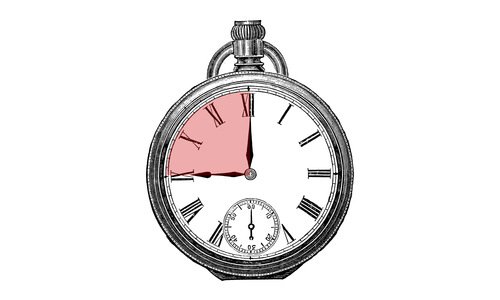
At the #responsivecoffee in Sydney on 20 June 2014, we discussed how management practice often sits in conflict with the goals of an organization to respond to network disruption by becoming a more responsive organization.

In this brief one-minute one-take video, I demonstrate with the Responsive Organization discussion scales (or RODS), the irony of this management approach.  We need responsive management for a responsive organization. 

Thanks to Luke Grange, Angus Florance, Kai Riemer and cinematographer Mark Woodrow.