Every Conversation Counts

Leadership is how we realise human potential. Leadership is conversation. Every conversation counts. Don’t miss your chance.

Maya Angelou: …I mean, I mentor you. Everything I have learned, everything I’ve done, is at the ready when I talk to you. And in a way, you will never forget me.

Interviewer: Believe me, I won’t.

Maya Angelou: What I mean is you may forget how and where you got it, but in a few weeks, a few months, years from now, you will say something and think, Oh, I’m glad that came to me.

from a Maya Angelou interview in the Harvard Business Review

Leadership occurs or fails to occur in every interaction we have with others. Either we contribute to enabling that person to find purpose, to take action or to build capability or we miss an opportunity. Opportunities missed do not recur. The interaction that happens leaves a mark for good or leaves the other person with a query over the relationship

Realising human potential takes many conversations. You can’t impose purpose, commitment to action or learning on another. Talking at someone is the surest way to lose any opportunity to for any of these three critical elements of human potential. The fastest, simplest and most effective ways to undermine your leadership are failing to engage fully, having a surface level discussion or failing to authentically share all of your ability to assist.

In networks, where communication may be bound by looser ties of relationship and mediated by technology, mindful, purposeful and authentic conversation is an even more important practice. Leading in networks demands influential and insightful conversations to draw out and realise human potential. Human potential and the value it can create will only be realised where your conversations lead another person to learning, trust and commitment to act differently. You need to bring your whole self to have a chance of achieving that kind of change.

Follow Maya Angelou, bring everything to your next conversation and every conversation thereafter. Help another find a path to their potential. The impact of each conversation is the mark of your leadership.

How are you going to bring everything to your next conversation?

Everything Meaningful Happens in a Network

Leaders need to realise human potential in networks.

In our pursuit of efficiency in an industrial management mindset, we can become very linear in our thinking. Inputs create outputs. People have a job to make things happen. People are therefore production inputs with variable quality and productivity. These inputs can be automated away to reduce waste, deliver better consistency and improve efficiency.

This linear thinking runs the risk of unintended consequences and a massive loss of human potential.  Human potential properly engaged with leadership offers exponential opportunities.

More importantly, nothing significant in our organisations happens in a linear process.  Everything meaningful that we do in our organisations happens in a network.

Performance Incentives: An example of the significance of networks

The most straight forward example of linear thinking in organisations is performance incentives.  Organisation after organisation has invested huge effort and dollars in design of performance incentives as a linear process. More incentive should generate more of the desired outputs and more engaged people.

Oddly the outcomes of linear performance incentives are often mixed. Extrinsic motivation doesn’t always work as intended. Intrinsic motivations often matter more to people and those intrinsic motivations are more often concepts that related to our human place in networks, like status, impact on others or sense of belonging in a group.

Some times your linear incentive program is even counterproductive. If you want to find the flaws in any incentive program give it to a group of employees who can share their insights and intelligence. They will quickly identify and exploit any flaws as a collective and enforce group norms on individuals who don’t follow along.

Incentive programs are a key issue disrupting group working behaviours like collaboration destroying value & output. People don’t deliver their performance as an atomised input.  They act and share as part of larger groups.

Our Brains are Networks

As we better understand our human brains, we start to see that their function is less the outcome of linear processes and more the result of networks of neural processes. We don’t evaluate decisions simply on purely financial criteria. In addition to financial benefits, humans consider issues like status, certainty, autonomy, relationships and fairness.

These concepts which come from the network in our brain also reflect our need to function and place ourselves in networks in society.  Mechanistic management processes leave these network functions in our brains out to their detriment.  They are leaving out the meaning that makes for human potential. 

Our Organisations are Networks

Thinking of our organisations as atomised individuals acting in linear processes simplifies our management challenges.  However, our leadership challenge remains to engage the network to realise its human potential.

No matter what the process the official process is in your organisation, you know that networks are the way to influence decisions and get stuff done.  Hierarchies are just a part of the network in the organisation and people are more likely to use the human network than the process hierarchy.

Why else would meetings about meetings even happen? They are never required by the process; they meet the needs of the human network, needs such as increasing certainty, reducing threats to status or increasing relationships with others. If you want to get rid of these wasteful occurrences in corporate life, the answer is not tighter compliance with the process. The answer is better engaging the human meaning in the network in the organisation. Working out loud in a social network is a great alternative to meetings about meetings. People can build their comfort by learning about and engaging a leader working out loud informally before the decision point.

Our Network Relationships Create Value and Meaning

The networks that leaders must manage to create value go well beyond the organisation. The only real value in our organisation is created in external networks.  We only create meaning and value when we interact with customers, partners, suppliers and the community.  Everything else is internal accounting.

As organisations now increasingly can see, these relationships are no longer linear. A salesforce can no longer view as a sales funnel as a series of linear outward pushes to convert a customer. In a social & networked world, it is more evident than ever that the network of influences is what pulls a customer into a sale.  The customer’s every interaction with the organisation, its competitors and influencers is a part of that decision.  The value and the meaning created with customers comes from the network, not your linear sales process.

Community engagement is an even richer network conversation that depends deeply on human engagement, real conversation and the purpose and values that your organisation lives.  Whatever your process for a community sponsorship, it creates no value without the human network effects. 

Choose Human Potential. Look to the Network

Simplifying people to a fungible input measure like number of full time employees (FTE) and treating FTE as inputs in a linear process may be of value for the measurement and control of management. However, the challenge of leadership is to enable our organisations to realise human potential in a network. Whether with employees, customers or the community, the real value and meaning of an organisation happens in the network.

Governance is a Leadership Conversation

image

Governance best practice requires a vibrant conversation that shares the diverse insights & experience of directors so that organisations can make better decisions. We need to focus as much on the quality of the conversations and the networks of the directors as we do their experience and expertise.

Directors are chosen for their experience, insights and expertise. The role of a director participating in a governance process is to bring their personal capabilities to bear helping the management of the organisation to make better decisions. However, experience, insights and expertise will go to waste if the directors are not part of an effective conversation and if their networks are not keeping them up to date.

Focus on the conversation at board level

A vibrant conversation is one with rich and relevant contributions from all parties. A vibrant conversation is engaging because it is an exercise in joint learning. Directors and management working together to understand how best to proceed leveraging their collective insights and experience. Both the chair and management need to help facilitate this process of learning and encourage an engaging and effective conversation.

If a board conversation is predictable, agenda driven, runs to only the papers or dominated by a few voices, particularly those of management or a chair, then there is a good chance that the governance process is failing. Disrupting a comfortable board to improve its function takes leadership, tact and courage.

Questions matter as much as expertise. Questions are also a powerful source of disruption to patterned thinking. While a director brings expertise, that capability is more engagingly used to frame provocative questions for the board and management to consider. Great questions prompt reflection, draw out new perspectives and can change the understanding of all involved in the conversation. Well framed questions respect others ability to contribute and to learn.

Questions also highlight the potential of conflict to frame and define an issue. If everyone is in agreement all the time, then nobody is required around the table. The role of a governance process is to interrupt this experience with relevant pushback. One of the benefits of a diversity in a governance process is it is more likely to surface other relevant questions and perspectives to be considered.

The learning nature of any governance conversation should extend to the effectiveness of the conversation. Double-loop learning that looks at the process as well as the content accelerates effectiveness. The best question to finish any discussion at board level should be “How can we have a better conversation next time?”

Broaden the Conversation with Networks

The second way to improve the governance process is to broaden the inputs to the conversation at board level. The networks of the directors and other stakeholders around the organisation can be a critical source of other views and considerations.

If a board is considering a highly technical issue, they may well reach out to engage experts, peers or friends who has deeper expertise in that area. Board processes should encourage this leverage of the networks around directors and the organisation as a regular exercise. In our rapidly changing networked era, the networks from which directors may gather insights can stretch globally mediated by technology. Leveraging and improving this flow of knowledge will help directors and organisations stay current on latest thinking and also diversify their thinking. Being well networked as a director is an antidote to disruption.

Stakeholders around an organisation are also an important network for directors to consider in the governance process.  How often do directors engage with customers, suppliers, communities and other key stakeholders of the organisation? Do directors have access to critical information from these conversation?  For example, reading verbatim customer complaints can be a rich source of insight for a board that is not captured in metrics of customer satisfaction. Stakeholder engagement also creates new awareness of accountabilities that can be critical to improving performance in an organisation.

Governance is a Leadership Conversation

Playing a governance role should not be easy or risk free. All participants in a governance process need to be helping make conversations more effective for the organisation. Governance is a leadership role and as leaders boards need to consider the effectiveness of their conversations and the value of their networks.

The Network Navigator

image

The power of a networked world is shifting the emphasis of work from expertise to navigation. Are you ready to move from expert to network navigator?

From Expert to Navigator – a financial services example

Research into perceptions of an advice relationships in financial services consistently often comes up with a common theme. Usually, the financial services organisation is keen to build a trusted relationship with the client as an advisor and to demonstrate its depth of expertise in the advice process. 

However, these goals are rarely what the client is looking to achieve. The client is often more interested in building a relationship with someone who is responsive to their needs and who can to help them navigate the complexity to find their own answers. The complexity the client needs to navigate is not just the financial decisions; it includes the organisations own advice and service processes. In times of complexity, uncertainty & change, clients are reluctant to be dependant on someone else’s expertise. They want control. They want to be guided across the map of choices and find an easier way through the process.

The Network Navigator

Networks and the increasing pace of change that they bring about are having a similar disruption for the traditional model of expertise-based advice.

Relying on a proprietary stock of knowledge is no longer enough to justify an advice proposition. Knowledge is increasingly a flow. Stocks of knowledge are out of date too quickly as the network learns more faster by sharing.  If clients want access to stocks of knowledge, they can find the information themselves (& access a greater diversity of insight and experience) if they are prepared to put in the time and effort.  Doing that work for them on an outsourcing basis is a low value task.

The challenge of a networked era is no longer gathering a stock of knowledge. The challenge is leverage rapid flights of knowledge and guiding others through networked knowledge creation. The skills that rise to the fore are no those of hoarding a stock of knowledge. The skills are those of being able to connect people, share capability and create new knowledge together.

The 8 Skills of a Network Navigator

A network navigator does not need to know the answer. They do not even need to know the whole way to the solution. They need to be able to lead others, to leverage the knowledge of the network and to find a way forward in collaboration to create new value: 

  • Setting a course: In a complex world often the purposes, goals and questions are as unclear as the answers. Helping people clarify their objectives and questions before and during their engagement with the network is a critical role that the network navigator can play.
  • Seeing the big picture map: Navigators are people who can hold the network system in view and manage the micro detail to guide people forward.  A navigator creates new value with an understanding the broader map and new & better paths that others may not have considered.
  • Make new connections: Increasing the density of networks can be critical to creating new knowledge and value from network interactions.  Bridging weakly connected groups is another role that navigators can play to realise new insights and value.
  • Recruiting a crew and local pilots:  Building community matters in new network ways of working.  Community takes connection to a deeper and more trusted level and begins to accelerate learning and change.  Network navigators know how to recruit crew to their travelling community and add local pilots as they need to learn faster in new parts of the network.
  • Translating strange cultures: Connecting diverse groups often means that there are differences of context, language and culture to be bridged before conversations can create new knowledge. Network navigators have the skills to understand and share diverse inputs.
  • Logging the journey: A network navigator works out loud to record their journey and let others contribute and benefit from the record.  A network navigator nows there are many others seeking the same answers or looking for better paths forward and makes that possible by sharing their work and inviting others to contribute.
  • Weathering storms & avoid shoals: Journeys through networks are not linear and often unpredictable.  The navigator has the experience and the confidence to see others through the storms and to sustain others in their journeys. Most importantly, when the storm is darkest, they have the passion to keep pushing and keep experimenting.
  • Navigating where there is no map: Network navigators need to be able to embrace uncertainty and ambiguity.  They need to be able to lead others forward to learning even if it is dark and there be monsters.

Acknowledgements:  This post is in large part inspired by conversations with a wide range of participants that occurred during John Hagel’s recent visit to Melbourne for the Doing Something Good dinner and Centre for the Edge workshops that I attended.  It is also informed by ongoing conversations about new networked ways of working among all members of Change Agents Worldwide.  

The New-to-Social Executive: 5 Mindsets

Your mindset matters to how you are perceived and connect in social media. Whether internal or external to your organisations, the way you think and the way you lead play a critical role in your ability to influence others.  As a senior leader atop the hierarchy, you have power and influence in your organisation (Admittedly that’s rarely quite as much as you would like). When you take your leadership position into the realm of social collaboration whether internal to your organisation or externally, there are a few key shifts in mindset from traditional models of leadership.

Keep these in mind these five key phrases:

  1. Be the real human (& sometimes flawed) you”: Nobody is looking to get to know your communication manager’s idea of you. People don’t need you to be the perfect model executive. You can’t have a conversation with a corporate cardboard facade or get help from a PR bot. This is an opportunity to be more human and to use deeper connection and communication. It will demand that you share more of you. If there is more than one of you, one for work and others, then social collaboration will test your ability to maintain the curtain of separation. Using social media works best when you bring your whole self to the activity. You will learn new ways to demonstrate your strengths and authenticity in the process.
  2. Think networks”: Social media flattens out the playing ground. Your current fame, power and fortune won’t deliver worthwhile connections or influence immediately. In this environment, your voice competes with many others and those that are better connected and more trusted will have greater influence than you regardless of their status. Your voice & authority is much more easily challenged and even mocked. Influence works along networks of trust and connections. Valuable business traction comes from deepening connections to stakeholders and influencers in your own world. Start there and build your influence over time as new connections join in to the valuable interactions that you help create.
  3. ListenEngage others”: Listen first. The network doesn’t need to hear you. Mostly it won’t. The network doesn’t need another opinion; it needs your response to and your engagement in the conversations already going on. If you want to deliver on your strategy, the path is through helping others to better align, understand and deliver that strategy with you. How you engage with others is more important in building influence in your network than who you are or what you have to say.
  4. Be helpful”: Make connections & help others find those who can help them. Set context. Guide others. Enable others. Share stuff to help others solve problems for themselves. Ask great, thoughtful & challenging questions. Work aloud and let others prove their value by helping you. Connect with people to deliver them value. People are looking to learn more and help themselves. As a senior leader you can play a critical role
  5. Experiment, learn & change stuff”: The value of human networking is to learn, connect with others and change things. Embrace difference & the chaos that many opinions and desire for change creates. After a while you will recognise the appeal of ‘being permanently beta’, always evolving to better value as you experiment test and learn. If you want to hear your own views, build your personal brand, increase your control or resist change, don’t start in any form of social collaboration. That attitude doesn’t show much respect for the efforts of the others in the network. 

This is the first of two short posts on tips for the senior executive looking to move into using social collaboration tools inside and outside the enterprise. This post deals with mindsets. The next post will deal with how to start engaging.

Increase the density of your organisation

When you increase the density, you increase the likelihood of collisions. Collisions of diverse people and ideas are a fertile source of creativity and innovation. Increasing the density of the ideas flowing in networks in your organisation will deliver a creative dividend.

Vibrant cities are rich sources of innovation because they bring together people and act as nodes in global transportation and knowledge networks. Into these cities pour people and ideas that collide to create new ideas, ventures and new activity.

The best teams that I have seen have this same dense, diverse and frenetic level of interaction. They are also equally creative. The constant collision of ideas and new interactions of people drives the growth of the organisation. These are organisations where people actually want more meetings and more talk because of the creative potential and the ability to leap forward in solving shared challenges. Creative interactions help people to do more, better or faster.

Through Change Agents Worldwide, I am currently experiencing the incredible creativity of a dense network of interactions, even though I am the most remote member of this global network of Change Agents focused on helping organisations transition to the future of work. Every day, there is a firehose worth of insight, interaction & creativity. In February we will publish an e-book of contributions of the members of the network that was only conceived in the last month. The same level of creative collaboration and inspiration powers work for clients and the creative output of the whole network. The first face to face meeting of this network has not even happened yet.

Increasing Density

Teams with dense idea networks and great creativity have a few things in common that can guide anyone seeking to increase the creative density of their organisation. Here are a few steps you can take:

  • Strengthen common purpose: purpose pulls people together and gives them reasons to connect and engage more. Purpose underpins the creation and sharing of ideas.
  • Increase connections: the more connected the organisation the more chance of a creative exchange. Knit your organisation together and ensure everyone is well connected.
  • Increase energy: the more energy, the more ideas move; the more ideas move, the more collisions will occur. The energy of meeting a challenge together will create dense connections. Don’t go for energy for its own sake. Create purposeful intent, energy in collaboration and willingness to collide in pursuit of a goal.
  • Be open: if you want interactions of people and ideas then the default should be open and transparent work. Put more ideas in flight and tear down barriers to the flow of knowledge. Openness also helps everyone to contribute and the group to pick up connections that might otherwise be missed.
  • Be diverse: more experiences and background means more inputs more ideas in flight, more conflict and less groupthink.
  • Orient outwards: there will be far more ideas in your conversations if you are drawing them in from outside. Let ideas out to return redoubled. New external provocations can help fire the creativity in a team.
  • Value learning if you know everything, you are an endpoint. You are choosing to sit outside others’ efforts to learn and grow. You are no longer connecting and building on others’ ideas.
  • Embrace chaos: a dense network of people connecting over ideas and action is never going to be neat and orderly. Bring order to the outputs if you need but don’t constrain the inputs or process in flight.

You can achieve these effects face to face in your organisation or you can use a tool like an enterprise social network to help your organisation increase creative density. Whatever you do, increase the flight of knowledge in the organisation and the creative collisions will follow.

From Safety to Safer: Middle Management’s Dangerous Transition

image

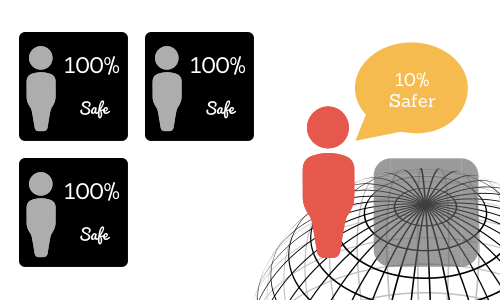
Safety is a common conversation, explicitly or implicitly, in the halls of middle management. Change agents among the ranks of middle managers experience conversations about the need for safety and the dangers of change on a daily basis. Safety is the focus because there are many for whom safety means the preservation of status, roles and resources. We need to move from safety to making our organisations safer for a world of rapid networked change.

The Wrong Kind of Safety

Ask enough middle managers and you will find that there are definitions of safety which involve elements of the following:

  • Ownership: a clearly defined area of responsibility and resources that can be controlled tightly
  • Knowledge is Power: a set of skills, capabilities or knowledge that is closely guarded and relatively unique in the organisation
  • Hierarchical Power: relationships of dependence with management above dependent on the department’s functional expertise and the team below dependent on sponsorship of their careers in the domain
  • Comfortable Accountabilities: Accountabilities should be designed with reference to achievable measures, preferably internal measures related to the discipline.
  • Limited Stakeholders: A few internal stakeholders often from similar functions with similar ideas and ideally few customer or community stakeholders who may introduce different perspectives and diverse issues. 
  • Few Dependencies: Trusting others reduces control and introduces risks, so collaboration and cooperation are avoided by controlling as much of processes and projects as possible 
  • Limited Transparency:  With utmost politeness, share little and participate little in the concerns of the rest of the organisation to preserve the comfort of your domain.
  • Stability: Ensure there is minimum change in business environment, even if this includes refusing to acknowledge market changes.
  • Minimum Risk: Avoid any change that offers risk. Why jeopardise an environment under close control?

The core of these definitions of safety is the idea that the threats to middle managers are internal. The biggest threats comes from other managers or senior management. The external world is not a cause for concern. Safety comes from building an walled fortress within the organisation and focusing internally.

Unsafe at any Speed

In the rapid change of our current business environment, the greatest risk to middle management is not internal. The need for change, the pace of change and its impacts are being driven in the networks around the organisation. Middle management has much more to fear from changing consumer and social behaviour, disruptive technologies and networked ways of working. 

The classic middle management definition of safety makes nobody safer. By turning inward, by resisting accountabilities, stretch and change, these managers guarantee that their organisations are exposed to much more wrenching changes than need be the case. Each of these elements of safety stand in the way of an open, agile and responsive organisation. When middle managers choose to act as barriers to change, the forces of change risk sweeping whole layers and organisations of managers away.

By focusing on a misguided view of individual safety, these managers make the organisation more unsafe as a collective.

Leaders who do not challenge a culture of safety in their organisation are putting their whole organisation at risk. Leaders need to be working to make the organisation more responsive. The safer organisation adapts.

From Safety to Safer

Leaders, change agents and forward thinking middle managers need to disrupt this misguided culture of safety in organisations. The conversation must not be about safety but how to make the organisation safer through adaption. This disruption must involve conflict with traditional views. However, that disruption will help the organisation adapt to a safer culture that opens the organisation up to its internal and external networks.

Here are some simple steps that any leader in an organisation can take to drive a responsive culture:

  • Push for external accountabilities: Raise the bar on performance. Measure customer outcomes. Consider end-to-end process performance to cut across siloed walls. Look externally for measures of success (and not just in the same industry).
  • Bring in external stakeholders: If customers, community, employees and other partners are not stakeholders in the organisations decisions then gather their perspectives and bring them into discussions across the organisation.  There is enormous power in real external views of the organisation, its purposes and performance.
  • Network the organisation: Focus on increasing the flow of information and knowledge within the organisation. Demonstrate the value of collaboration and cooperation in greater efficiency, innovation and engagement in the way work is done. Foster diverse perspectives on the way forward. Most importantly of all delegate outcomes and enable people to make change to adapt without reference to the hierarchy.
  • Experiment: The new definition of safety needs to be a well-run experiment to improve performance. The absence of well-run experiments is a sign of major concern. If you are not testing the way forward in changing times, then you are taking big risks.

You don’t need to be CEO to drive these changes to make a more responsive organisation. (Undoubtedly, it helps). You will need to effectively manage your role & influence in the organisation. However, effective change agents and middle managers can begin to ask the questions and start new conversations leveraging external perspectives. Most importantly of all they can build a network of others frustrated by the culture of safety and work together for change.

From Safety to Safer: Middle Management’s Dangerous Transition

image

Safety is a common conversation, explicitly or implicitly, in the halls of middle management. Change agents among the ranks of middle managers experience conversations about the need for safety and the dangers of change on a daily basis. Safety is the focus because there are many for whom safety means the preservation of status, roles and resources. We need to move from safety to making our organisations safer for a world of rapid networked change.

The Wrong Kind of Safety

Ask enough middle managers and you will find that there are definitions of safety which involve elements of the following:

  • Ownership: a clearly defined area of responsibility and resources that can be controlled tightly
  • Knowledge is Power: a set of skills, capabilities or knowledge that is closely guarded and relatively unique in the organisation
  • Hierarchical Power: relationships of dependence with management above dependent on the department’s functional expertise and the team below dependent on sponsorship of their careers in the domain
  • Comfortable Accountabilities: Accountabilities should be designed with reference to achievable measures, preferably internal measures related to the discipline.
  • Limited Stakeholders: A few internal stakeholders often from similar functions with similar ideas and ideally few customer or community stakeholders who may introduce different perspectives and diverse issues. 
  • Few Dependencies: Trusting others reduces control and introduces risks, so collaboration and cooperation are avoided by controlling as much of processes and projects as possible 
  • Limited Transparency:  With utmost politeness, share little and participate little in the concerns of the rest of the organisation to preserve the comfort of your domain.
  • Stability: Ensure there is minimum change in business environment, even if this includes refusing to acknowledge market changes.
  • Minimum Risk: Avoid any change that offers risk. Why jeopardise an environment under close control?

The core of these definitions of safety is the idea that the threats to middle managers are internal. The biggest threats comes from other managers or senior management. The external world is not a cause for concern. Safety comes from building an walled fortress within the organisation and focusing internally.

Unsafe at any Speed

In the rapid change of our current business environment, the greatest risk to middle management is not internal. The need for change, the pace of change and its impacts are being driven in the networks around the organisation. Middle management has much more to fear from changing consumer and social behaviour, disruptive technologies and networked ways of working. 

The classic middle management definition of safety makes nobody safer. By turning inward, by resisting accountabilities, stretch and change, these managers guarantee that their organisations are exposed to much more wrenching changes than need be the case. Each of these elements of safety stand in the way of an open, agile and responsive organisation. When middle managers choose to act as barriers to change, the forces of change risk sweeping whole layers and organisations of managers away.

By focusing on a misguided view of individual safety, these managers make the organisation more unsafe as a collective.

Leaders who do not challenge a culture of safety in their organisation are putting their whole organisation at risk. Leaders need to be working to make the organisation more responsive. The safer organisation adapts.

From Safety to Safer

Leaders, change agents and forward thinking middle managers need to disrupt this misguided culture of safety in organisations. The conversation must not be about safety but how to make the organisation safer through adaption. This disruption must involve conflict with traditional views. However, that disruption will help the organisation adapt to a safer culture that opens the organisation up to its internal and external networks.

Here are some simple steps that any leader in an organisation can take to drive a responsive culture:

  • Push for external accountabilities: Raise the bar on performance. Measure customer outcomes. Consider end-to-end process performance to cut across siloed walls. Look externally for measures of success (and not just in the same industry).
  • Bring in external stakeholders: If customers, community, employees and other partners are not stakeholders in the organisations decisions then gather their perspectives and bring them into discussions across the organisation.  There is enormous power in real external views of the organisation, its purposes and performance.
  • Network the organisation: Focus on increasing the flow of information and knowledge within the organisation. Demonstrate the value of collaboration and cooperation in greater efficiency, innovation and engagement in the way work is done. Foster diverse perspectives on the way forward. Most importantly of all delegate outcomes and enable people to make change to adapt without reference to the hierarchy.
  • Experiment: The new definition of safety needs to be a well-run experiment to improve performance. The absence of well-run experiments is a sign of major concern. If you are not testing the way forward in changing times, then you are taking big risks.

You don’t need to be CEO to drive these changes to make a more responsive organisation. (Undoubtedly, it helps). You will need to effectively manage your role & influence in the organisation. However, effective change agents and middle managers can begin to ask the questions and start new conversations leveraging external perspectives. Most importantly of all they can build a network of others frustrated by the culture of safety and work together for change.

Your Future Talent is in Your Networks

Focus on your networks. Your future talent is in your organisation’s networks.

Few organisations have all the talent they want or they need to cope with future changes. If you are lucky and have managed your people well, you will have enough talented people to get by. When you start to focus on talent, you quickly realise that the answer to managing talent is not to manage within hierarchy. Managing talent within a hierarchy will only get you so far.  The answer to great talent lies in managing the talent in your network and draw them closer to your organisation. 

Manage your network, offer your organisation as a network knowledge hub and you can attract the talent needed to develop new capabilities for your organisation.

No Hierarchy Has Enough Talent

Great organisations invest in developing their people for the future. But rapid change makes that an exercise of great challenges. Just as organisations can no longer keep up with the change of the network economy, they can no longer keep up with the network’s ability to build new capabilities:

  • New information: Your network knows what your organisation does not. Opening your organisation to its network allows you to learn and share more information with your people. This learning is critical in filling blindspots and generating insights.
  • Diverse Experiences: Your organisation does what it does best. That experience must be less rich than the networks around your organisation. The rest of the networks are developing richly diverse experiences with new learning.  Some small part of that experience might be of value in future. Think of rich diversity of experience as experiments you don’t have to pay to run. However, you will want to watch the outcomes carefully to know where to look when you need.
  • Diverse Capabilities: New strategies demand new capabilities that differ from those of the past. These can be learned slowly. Often it is hard work for them to be bought or borrowed when needed urgently to meet the pace of change.
  • Rich Interactions: Your organisation may need new information, new customers, new distribution channels or new suppliers for its new strategy. Who is building those networks and connections now? How can you leverage their work rather than rebuild it all yourself at a cost of money and time? Even if you are going to build it, who can do that for you?

Your Network is a Rich Source of Talent

The talent to propel your business can be found in many places around your organisation.

  • Competitors, Suppliers and Partners: Do you know who is helping others with the capabilities that you need to succeed? Individuals with the critical capabilities for your business can be found in your organisation’s competitors, suppliers and partners.
  • Other leaders: In times of change, it is likely that the capabilities are best found in leaders from other industries or individuals with different & unique sets of experiences. Have you gone looking in new and different places?
  • Employees: Your employees often know people with the right skills and experience.  Their friends and networks will often be talented people just like them. Do you engage these people?
  • Customers: Passionate customers intimately understand your products, processes and experiences. They can be the ultimate advocates and champions for your business. When did you last consider hiring or exchanging talent with a customer?
  • Community: If your business has a physical location, then there is a good chance that the attractiveness of that community plays a large part in the appeal of your organisation to potential employees. Play a role in that community to make it a better place to live.  Help make your comment a knowledge hub.  Through those interactions will also get a change to understand the talent in your local markets.

Now the talent is there. What have you done about it?

From Acquisition to Attraction

In the hierarchical model of talent, the language is that of command and control:

  • talent is acquired (often at great cost and temporarily)
  • talent is owned (though the talent likely disagrees)
  • talent is deployed (often over the career goals of the talent)
  • talent is managed (but the talent may or may not participate fully)
  • talent is developed (when the talent engages in learning anything)

The parentheses highlight the choices that talented have in a highly networked economy. That choice does not favour command and control. The barriers to information, choice and change for talented people continue to fall. Organisational change has broken traditional loyalty-career trade-offs.  New models of organisations and new flexibility of working make a traditional hierarchical organisational career highly unlikely.

In a networked model of talent, the focus needs to be attraction – Can we access the required talent when we need for as long as we need? This opens new focuses in the management of talent:

  • Knowledge: Do we know where that talent is in our networks?
  • Connection: Have we made a connection with our target talent now for the future?
  • Exchange: How have we shared value with those talented people in our networks we might need in future? How do we make our organisation a hub?
  • Attraction: What can we do to draw them closer to our organisation? How can we encourage them to share with us and enhance our attraction as a hub of the network? How can we accelerate the rate of this sharing?

When we shift to a network model, we may never own the talent we need. There are all sorts of flexible models that may allow the organisation to buy, borrow or partner with individuals to use their capabilities to meet the goals of the organisation. The best talent for the job may only be available or needed on a temporary basis.

Make your organisation an attractive knowledge hub and you can benefit form the dynamic talents of a vibrant network.

The Season for Giving

image

Christmas is the season for giving.  A time when we celebrate sharing with others. 

Here’s my gift to you:

You have extraordinary potential and you share an even greater potential with the rest of the people in your organisation.

Ok, you might be a tad disappointed. I’ll admit the gift is a little used. I am only giving you back something you already own, but it is one of the most important things you possess.  This potential is misplaced too easily in the hurly burly of daily work. I found yours waiting for you in a desk drawer.

Take back the gift of your potential

You do what you do for a purpose.  Your potential is how you will achieve your personal purpose.

Unshackle yourself. Leverage the roles you can play.  Let go of the thoughts, the doubts and the risks holding you back. Ask yourself new questions. Invest in your networks, your capabilities and your learning. Build your influence.

Help others take back the gift of potential

Unshackle your organisation. Leverage its capabilities and potential. Embrace a little chaos, a little humanity and the power of networks.  You are together for a reason. If you didn’t believe in the potential of the people and the purpose you pursue together, you wouldn’t be there.

Let people show you what they can do as they take risks, take up new roles, network and create amazing new capabilities together.  Build that community of potential and the understanding of common purpose. Invest in helping others to do more, to learn and realise their potential too. Experiment and adapt.

Used well this gift of your potential and your organisation’s potential is what is going to make 2014 a very special year.

Merry Christmas.  I hope you use the gift.  Sorry I didn’t have more elegant wrapping.