Everyday habits for Transforming Australian HealthCare

        waking themselves up to

habits which collapse
on every block
like a tidal wave
of Hokusai’s sketches
Forest Gander, Kata: Bus Stop

Life is full of curious coincidences. Late last week, I discovered that I had missed publication last November of the report by AIDH and Oracle on drivers of change in the Future of Digital Health. That report was the outcome of facilitation work I did with my colleague Mirinda O’Gorman in mid 2024. This week, I was lucky to be able to participate in a discussion with Adam Kahane on his new book, Everyday Habits For Transforming Systems. Two deep conversations about the drivers of transformational change resonated deeply. I wish now I had Adam Kahane’s book as we summarised the discussions in the report, but I thought in this blog with 20/20 hindsight I would draw out the connections and how Kahane’s work might contribute to Australian digital health practices.

Everyday Habits

And they call again, "It's simple," they say,
 
"and you too have come

into the world to do this, to go easy, to be filled

with light, and to shine."
Mary Oliver - When I am among the trees

I read Every Day Habits for Transforming Systems over the last month since its publication. My initial reaction was one of validation. The Every Day Habits felt like old friends that I have worked with often. It was powerful to have them called out explicitly and drawn together in conversation. Like many longstanding relationships, the discussion in the book also prompted me to reconsider the application and use of each. I realised my practice of the habits can improve if I take each at greater depth and also consider them more as a system of practice.

With a long discussion of transforming the Australian healthcare system at the forefront of my mind I realised I had a case study with which to review the book in practice. The book describes seven habits that facilitate transformation in systems. I will look at the relationships of the seven habits in the context of the ongoing transformations described in the Future of Digital Health work. Adam Kahane’s habits are:

  • Habit 1: Acting Responsibly
  • Habit 2: Relating in 3-Dimensions
  • Habit 3: Looking for What is Unseen
  • Habit 4: Working with Cracks
  • Habit 5: Experimenting a way forward
  • Habit 6: Collaborating with Unlike Others
  • Habit 7: Persevering and Resting

The workshops in 2024 were interactive thought leadership discussions with a wide range of practitioners and participants across the Australian healthcare systems. Habit 1 of understanding and leveraging your role in systems was at the forefront of the participants in the workshop as they were all chosen for their active engagement and contributions in digital health. The rooms of high powered system-oriented change-makers represented healthcare practitioners, institutions, government, vendors, academics and more and put that representation into their work driving change.

Many people in the room naturally understood and practised elements of Habit 2, particularly balancing the system as a whole and self-interest in relationships. Extensive discussion of the importance of user-centred design, consumer preferences, capability and social equity began to draw in the other elements of Habit 2, in the capability to understand wider and more nuanced relationships across the system, those that Kahane refers to as relations of kin, drawing on First Nations perspectives.

Habits 3, 4 & 5 were the bread and butter practices that had much of the discussion in the rooms through the facilitation. As learning oriented leaders, the AIDH guests were used to looking deeply at systems and taking new perspectives in pursuit of their changes. The report calls out some of these whether it is understanding the oft-ignored implications for system users and consumers of healthcare systems, focus on risks, regulation and the critical role of trust. We discussed at length the kinds of painpoints that drive tension in the system and are insights for future transformation leverage – conservatism, safety regulation, bureaucracy, funding models, adoption issues, unnecessary hierarchy or power structures.

Habit 5 of experimentation was a key refrain. A lot of the discussion was also about taking experiments forward beyond their test bed and generalising them across the system. In healthcare this can be surprisingly slow and hard to achieve. Some of the simplest experiments, like a NZ experiment in paying specialists differently around GP referrals delivered huge benefits in wait times, abandoned appointments, patient outcomes, cost and system outcomes but were struggling to be adopted more widely given the changes required in technology, practitioner and payment systems to accomodate it.

A key frustration in the room was around the many agendas in healthcare, its regulators and funders. Habit 6 of Collaborating with Unlike Others was an essential part of many of the changes being pursued in the room. Adoption of AI solutions involved technology, regulation, privacy, safety and even the capabilities to appropriately leverage both the data and the outcomes of such a process. One technology that everyone in the room was pursuing for value demanded almost all the participants of the system to realise value and came with huge cost and complexity as a result. Separating simple experiments like producing patient guides to be reviewed by expert specialists were practical but large scale projects like application of AI in imaging demanded much more significant investments of time and expertise across the healthcare system.

I have already touched on the frustration in the room that things were not going faster. Habit 7 of persevering and resting was a theme. Change makers can’t do everything that they want to do. Many people in the room were already wearing multiple hats as practitioner, administrator, educator and more. That is exhausting, demands perseverance and careful husbandry of resources. In an environment where talent is scarce and budgets are inadequate we all need to take care of our projects and people.

Gathering the Friends

One day, I will write you a letter
after I have gathered enough words
and enough courage
Maria Luisa Arroyo Cruzado, gathering words

Elements of all seven habits were present in this facilitation work across the Australian healthcare system. I suspect any healthcare change maker could point to such old friends in their work. In hindsight what was not as consistent was the breadth of application of all seven habits and the depth of work.

Habits that are simple to describe are deceptively hard to do. Some of the habits fully adopted like Habit 2 and Habit 6 overturn existing relationships, power structures and understandings. They demand change at a fundamental level to the point, purpose and process of the systems in question. Truly great digital transformation that tackles the needs and opportunities in Australian healthcare demands this level of work and willingness to be overthrown.

Improving any everyday habit is an exercise in mastery. Kahane’s book gives us the simple steps to start this journey, but also highlights how far we have to go and how long change truly takes. As the old adage goes, “the best time to plant a tree was twenty years ago and the next best time is today”. While the habits can be challenging, their consistent and integrated practice helps us with tools to break logjams in our work in transformation and reflecting on the system of the habits brings new insights to shape the next phase of our work.

As we move beyond arguments about data and integration in Australian healthcare, we start to tackle real challenges of equity, capability, and sustainability. Addressing these issues will demand coordinated collaboration across government, industry, practitioners and consumers as we seek to leverage new digital technologies, particularly AI, without deepening social divides and breaking the system financially. That’s where the value lies and it will demand us to implement the recommendations of the report but also to tackle the consistent everyday practice of Kahane’s Seven Habits on a wider scale across the system.

And thus, with you believing me, I made
My prophecies, rebellious, unafraid . . . .
And that was foolish, wasn’t it, my dear?
Sterling A Brown, Challenge
Simple Visuals of Where Digital Transformation May Go Next

Prediction is very difficult, especially about the future – traditional Danish saying often attributed to Nils Bohr

image

The interest in A Simple Visual History of Digital Transformation prompted some to ask about where do we go next. Make any predictions on digital transformation and you can be sure that someone is currently working to undermine your credibility. The following suggestions for the future of digital transformation are offered on the basis that these are ideas that exist “but are not yet widely distributed” to borrow an idea of William Gibson.

image

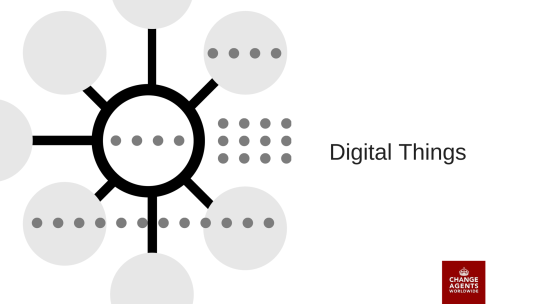
As the costs of digital connectivity and computing power fall, these capabilities are being added to more and more devices. The internet of things has reached our homes and our workplaces. The increased ability to gather and use information in real time will drive new innovations in our businesses and our lives.

image

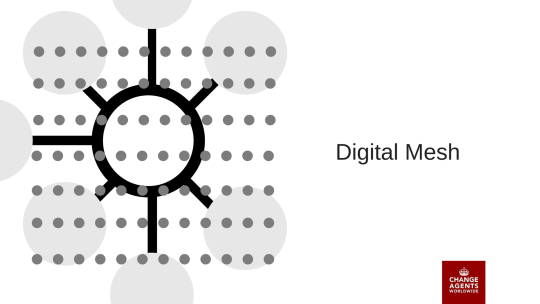
Add enough digital connectivity and computing power and you have created the potential for a mesh of sensors, connectivity and processing power to fill our environments. Now our digital things and our communication devices can be in constant contact and new applications will be developed to take advantage of the rich digital environment.

image

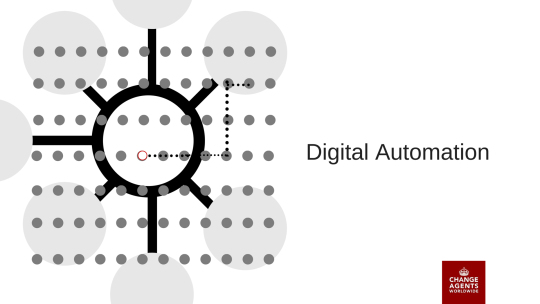
The digital mesh will help accelerate digital automation as many traditional roles of knowledge workers, such as the gathering, digesting and processing of information now flow from an ambient mesh and are managed through algorithms and their managers.

image

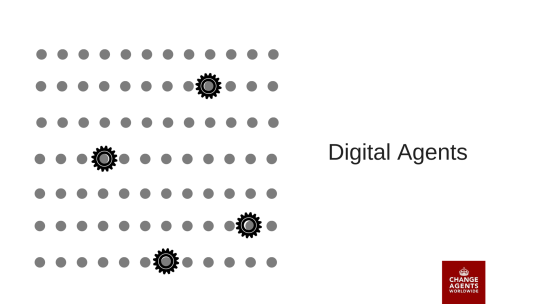
A digital mess also enables the greater leverage of bots, digital agents that can navigate the mesh and achieve outcomes for their owners, clients and masters. These algorithms take on the role of making local decisions or acting as advisers or facilitators across the breadth of the networks. Digital Agents help manage the scale of information and the real time demands of the mesh.

image

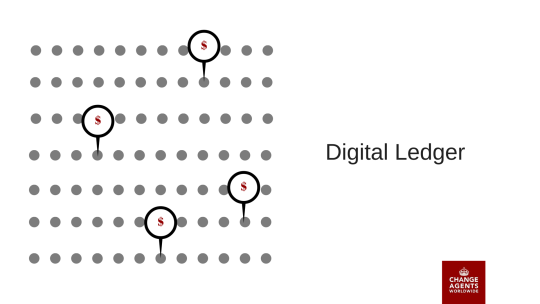
Distributed and connected computing power also enables us to revisit concepts of how we record, store and share information on concepts like ownership, identity and history of transactions.  Instead of a single ledger located in one location, the transaction history can be distributed and validated across the network, as in blockchain. Innovations will build on these capabilities into new domains.

image

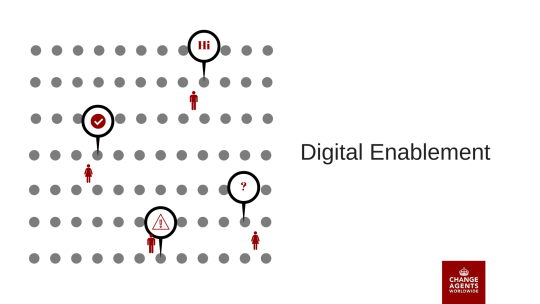
The digital mesh increasing can enable individuals by supplying capabilities need for individuals to have greater awareness, connection or to do work that was previously beyond the capability of a single individual. If an organisation is a solution to transaction costs as Coase suggest, there are new implications for the role and future of our organisations and the growing capabilities of the digital systems will shape the work individuals will do (or don’t do).

image

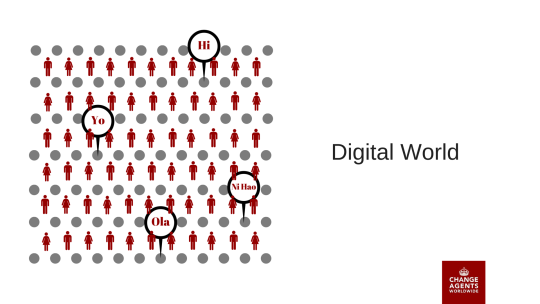
We have not yet begun to explore the potential of extending this digital mesh and its capabilities to the entire world. We can already see new approaches, such using e-commerce villages in China, video in education in India, market pricing data for farmers in the third world or mobile payments in Africa. As the costs of digital technologies fall and reach expands new entrepreneurs will solve new problems for those beyond the reach of this technology today. Perhaps then we will truly experience the power of the Internet of Humanity.

A Simple Visual History of Digital Transformation

image

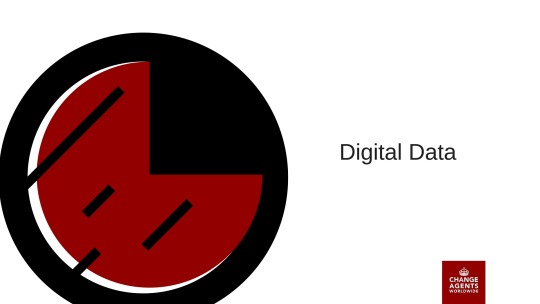
Since the Mosaic Browser helped introduce the internet to the world, we have experienced a digital transformation of business. We had digital activities in our organisations before. We had already spend almost 50 years computerising processes. However, the digital connectivity of the internet began more radical change. Here’s an overly simple graphical reminder of elements of that journey.

image

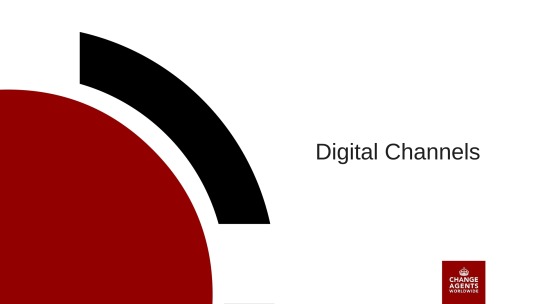
We began by creating digital channels to connect our organisations to their customers.  The website began with simple digital brochures and basic contact information. Very quickly our websites became richer and more valuable.  Innovation began outside the organisation that showed the way for all subsequent phases of digital transformation.

image

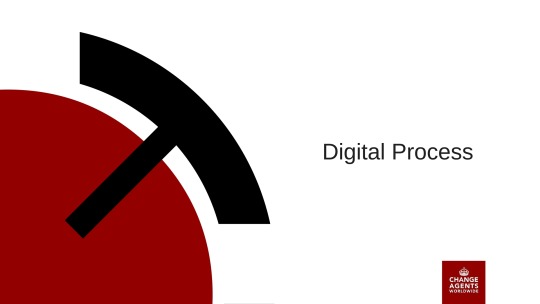
We added processes to support the customer interactions. In many cases these processes were new, partial and designed solely to support the new digital channels.

image

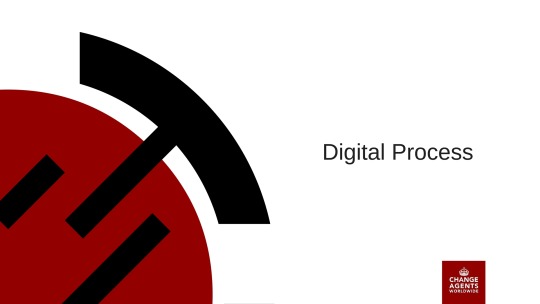
We saw potential in these digital processes and started to apply them more widely. These processes worked in the midst of our legacy process and often in unconnected ways.

image

As the breadth of our digital channels expanded and we needed to manage new social and mobile channel needs, we needed a dedicated digital team to manage the expanding offering and to help integrate the core digital processes and infrastructure required to support growing digital ambitions.

image

With a digital team to advocate and lead the way on growing digital opportunities, we saw digital interaction takeover much of the electronic communication in the organisation and new integrated digital processes develop in supply chains, shareholder & community management and other forms of stakeholder engagement. APIs began to standardise digital communication formats in an increasing way for organisations. Organisations could leverage vast amounts of data on interactions and increasingly on activity across the organisation. 

image

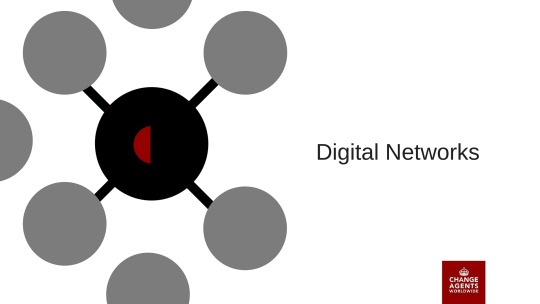
With digital interactions dominating & pressure to focus on core business activities, organisations began to become more aware that they operated in digital networks, connected to customers, suppliers and other stakeholders. Importantly, it became increasingly obvious that these networks connected all stakeholders reducing transaction costs and increasing transparency. Most dangerously these networks & data flows gave competitive advantage to those most able to leverage digital technologies in disruptive ways.

image

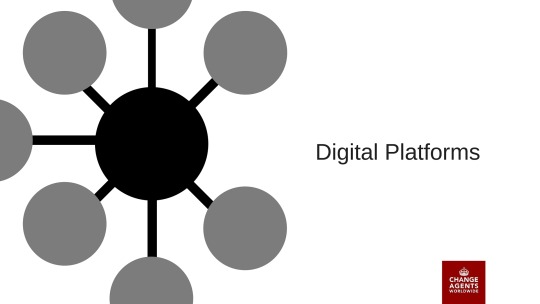
Seeing potential in connectivity, new and existing organisations saw the ability to focus on platforms that connected system players, creating new value and disrupting the traditional business of intermediaries. These platforms were increasingly agnostic of whether they ran on a computer, a phone or another device, giving them greater geographic and temporal reach.  We began to connect all processes & devices into networks to leverage the power of information. Concepts like employee, contractor, supplier and customer had less secure meaning in a networked world as chains of connectivity ran in all directions & right through the organisation.

image

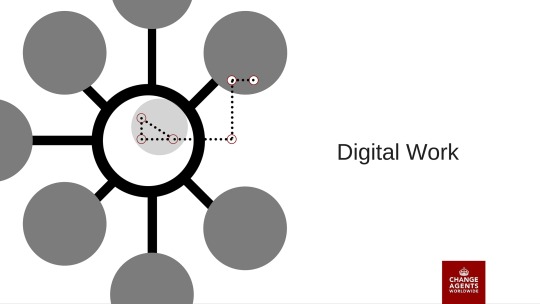
With platforms and networks running through and beyond the organisation, people began to explore the opportunities in new ways of working using digital. The boundaries of organisations no longer constrained the boundaries of work.  Seeking to retain talent, leverage information more effectively and create greater agility, organisations experimented with new digital ways of working and organising work.

This digital transformation has only just begun. There are many more phases ahead. The innovations and experiments of organisations will take us even further into exploring the potential of globally connected digital networks.

Not Quite Digital

You lost customers over your service migration. 

The fax machine is always busy. 

The CEO prints emails. 

Internet access requires a paper form. 

All of the product information on your site is available in easily downloadable pdf. 

Your digital consultant has 39 followers. 

Your digital strategy is 150 pages of PowerPoint in a binder on a shelf in the archive. 

Everyone is too busy preparing for performance reviews to collaborate.

Everyone wants to know the ROI. 

Your office isn’t visible on Google Maps. 

You routinely save documents to USB drives because of the capacity limits on your desktop and server drives.

It takes 90 days to get through the approval process to deploy in a release window.

The Transformation project has produced more video than code. 

Design thinking happens in the creative department. 

Investment committee meetings go for 3 days. 

The head of product always tells a story about the launch of the iPod. 

Only the complaints department sees customer feedback and they are too busy to share it. 

You had an API but shut it down because people were using it. 

Your mobile strategy is to migrate to SMS because WAP adoption has been disappointing. 

The coffee table book in your foyer celebrates your centenary, 25 years ago.

The only scrum occurs when the fruit basket is delivered each week. 

Your app has a manual. 

Your big data strategy begins with some offshoring of data entry. 

You have multiple single sign-ons. 

Everybody in the leadership team has visited Silicon Valley (at least once).

End-to-end processes is a vision. 

Calls to your call centre are directly correlated to communications you send your customers. 

The whiteboard in your head of transformation’s team area says ‘do not erase’ 

It has only a drawing of a cloud on it 

Change is what you get from the vending machine

And you just sent an analyst out to buy sticky notes.

Use Digital Capabilities to Build Digital Capabilities

Our traditional management models die hard. 

Many organisations are starting to consider how they build new digital capabilities like agile, hypothesis-based experimentation, design thinking, analytics and collaboration. Yet when they start to plan these changes to more digital ways of working, they use management models from pre-digital management:

  • transactional approach to interventions
  • solutions defined by expertise
  • linear implementation approaches
  • waterfall project plans
  • push compliance and competency models focused on supply of new skills to employees
  • narrow delivery models using only learning and classroom learning
  • limited if any measurement of the changes

These approaches seek to make organisations ready for more digital management using the methods of traditional management.

Digital Dog Food

We can do better than this. We can start by asking projects to build digital capabilities to eat their own dog food. If nothing else, they will learn on behalf of the organisation the challenges and opportunities of new digital ways of working. 

New Digital Capability Building

Projects to build digital and responsive capabilities in organisations can be role model projects for those capabilities. Taking a leaf from the digital tool suite challenges those building capability to consider capability building that offers:

  • many paths on the learning journey as part of career paths and achievement of learner goals
  • mobile options, social learning and performance support to sustain learning in the digital work place and wherever is convenient for employees
  • offers people pull and push options across the range of 70:20:10 learning with options also for the depth of content and timing of learning experiences
  • encouraging people to seek out and share learning options from the depth of learning available in their personal networks 
  • engaging programs built from deep insights into the change and capability challenges for employees in working in new ways

New Digital Delivery

The projects to build new digital capabilities themselves can adopt digital approaches by shifting to:

  • agile delivery
  • minimum viable solutions
  • hypothesis-led test and learn iteration
  • considering needs for adaptive change and related changes on the wider organisational system
  • encouraging learners to act as a community to support successful delivery of the project goals.
  • strong analytics supporting not just the delivery of learning but also the strategic contribution of the capability building  
  • leveraging collaboration and networks in and outside the organisation to build capabilities, particularly in making smart decisions on what to build and what to buy.

More Effective

Working on transformation projects in these new ways won’t always be efficient.  It definitely won’t be easy. However, using the tools and approaches of digital management enables organisations to learn and evolve their goals through the process of transformation. This learning will be the path to step changes in effectiveness and a better match to employee and organisational needs.  At a minimum, it helps ensure that the project creates a team of highly capable change agents to help drive the next phase of the journey.

Metrics Change

“You can’t bank a percentage” – entrepreneurial wisdom

Disruptive businesses change the metrics that measure success by focusing on more effective outcomes.  How are you rethinking the measures in your business?

Your Metrics Weren’t Always Thus

Metrics are one area where we can easily form views that they ‘have to be this way’.  Metrics are often driven by prior year plans, industry standard comparisons or by the expectations of analysts and investors. It is taken as gospel for businesses and industries to have standard growth rate, cost to income and other metrics. 

If you want to get a sense for the changing dynamic of metrics read back in the history of business to completely different eras. Here we can see innovation in metrics changes the fundamental understanding of business activity.

If you read the biographies of early industrialists and railroad barons in the US you will find a very different perception of shareholder value and company performance.  Shares in the late 19th century in the United States traded like subordinated bonds. The questions of valuation were how large was the dividend the company might pay and how close the shares traded to par. Innovations like consistent approaches to value accounting practices and models of cashflow valuation were introduced to sustain the modern approaches to valuations.

Metrics Illuminate and Create Blindspots

Metrics are how businesses see. As they say, if you want something done, measure it. However, the light that measures cast also creates shadows and blindspots. What doesn’t get measured, doesn’t get done.

A fixed view of metrics makes them a fertile ground for entrepreneur change.  The traditional competitors will struggle to see and understand the performance of new businesses because they will be trapped judging the new threat by old metrics. 

There are many examples of innovations that change the metrics.  Here’s a small sample:

  • Craig McCaw built up and sold huge businesses in both cable television and mobile telephony by having a more effective view of valuation to that prevalent in each industry when he started
  • Online display advertising was sold by effectiveness (cost per click) rather than (cost per thousand). New measures that made it hard for traditional media to see a way to respond to the changes
  • Many industries are dealing with competition that does not value the unit of content or service, but instead values the community of users that is created by giving away the content or service.
  • The taxi industries around the world are faced with moving from the value of a licence and a cost per km to the utilisation of and returns to a driver as a measure of effectiveness
  • Changing the unit of measurement of delivery effectiveness to time enabled courier services to change the game in parcel delivery

Traditional businesses with their measures of success will often miss these changes initially or see them as unsustainable. If you are assuming the irrationality of your competitors, look again at their metrics. Ultimately, new valuation models and new investor expectations develop around the new metrics provided that they prove more effective.

The worst outcome for the future of your business is that you are happily delivering your plan as the value erodes away.

Don’t accept as gospel the returns, growth rates and margins that you have inherited in your business. You can’t bank a percentage. Focus instead on exploring with new metrics to measure the effectiveness of your business in creating sustainable value.