Purpose is not who you are.
Purpose is why you are.
Better, it is why you do.
Your purpose is in your work.
Purpose begins within, but moves out through work,
Out through the impacts of your work, and
Out through the others who you touch.
Each interaction builds on those before,
Multiplying the power.
Networks carry your purpose out to the world and back,
Grown, refined and reinforced –
Strong enough to carry you away.
Out in the world, through work,
Purpose is exponential.
Category: Uncategorized
From Safety to Safer: Middle Management’s Dangerous Transition
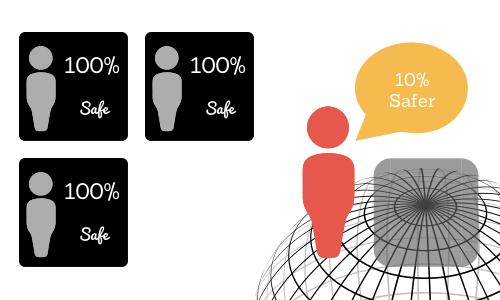
Safety is a common conversation, explicitly or implicitly, in the halls of middle management. Change agents among the ranks of middle managers experience conversations about the need for safety and the dangers of change on a daily basis. Safety is the focus because there are many for whom safety means the preservation of status, roles and resources. We need to move from safety to making our organisations safer for a world of rapid networked change.
The Wrong Kind of Safety
Ask enough middle managers and you will find that there are definitions of safety which involve elements of the following:
- Ownership: a clearly defined area of responsibility and resources that can be controlled tightly
- Knowledge is Power: a set of skills, capabilities or knowledge that is closely guarded and relatively unique in the organisation
- Hierarchical Power: relationships of dependence with management above dependent on the department’s functional expertise and the team below dependent on sponsorship of their careers in the domain
- Comfortable Accountabilities: Accountabilities should be designed with reference to achievable measures, preferably internal measures related to the discipline.
- Limited Stakeholders: A few internal stakeholders often from similar functions with similar ideas and ideally few customer or community stakeholders who may introduce different perspectives and diverse issues.
- Few Dependencies: Trusting others reduces control and introduces risks, so collaboration and cooperation are avoided by controlling as much of processes and projects as possible
- Limited Transparency: With utmost politeness, share little and participate little in the concerns of the rest of the organisation to preserve the comfort of your domain.
- Stability: Ensure there is minimum change in business environment, even if this includes refusing to acknowledge market changes.
- Minimum Risk: Avoid any change that offers risk. Why jeopardise an environment under close control?
The core of these definitions of safety is the idea that the threats to middle managers are internal. The biggest threats comes from other managers or senior management. The external world is not a cause for concern. Safety comes from building an walled fortress within the organisation and focusing internally.
Unsafe at any Speed
In the rapid change of our current business environment, the greatest risk to middle management is not internal. The need for change, the pace of change and its impacts are being driven in the networks around the organisation. Middle management has much more to fear from changing consumer and social behaviour, disruptive technologies and networked ways of working.
The classic middle management definition of safety makes nobody safer. By turning inward, by resisting accountabilities, stretch and change, these managers guarantee that their organisations are exposed to much more wrenching changes than need be the case. Each of these elements of safety stand in the way of an open, agile and responsive organisation. When middle managers choose to act as barriers to change, the forces of change risk sweeping whole layers and organisations of managers away.
By focusing on a misguided view of individual safety, these managers make the organisation more unsafe as a collective.
Leaders who do not challenge a culture of safety in their organisation are putting their whole organisation at risk. Leaders need to be working to make the organisation more responsive. The safer organisation adapts.
From Safety to Safer
Leaders, change agents and forward thinking middle managers need to disrupt this misguided culture of safety in organisations. The conversation must not be about safety but how to make the organisation safer through adaption. This disruption must involve conflict with traditional views. However, that disruption will help the organisation adapt to a safer culture that opens the organisation up to its internal and external networks.
Here are some simple steps that any leader in an organisation can take to drive a responsive culture:
- Push for external accountabilities: Raise the bar on performance. Measure customer outcomes. Consider end-to-end process performance to cut across siloed walls. Look externally for measures of success (and not just in the same industry).
- Bring in external stakeholders: If customers, community, employees and other partners are not stakeholders in the organisations decisions then gather their perspectives and bring them into discussions across the organisation. There is enormous power in real external views of the organisation, its purposes and performance.
- Network the organisation: Focus on increasing the flow of information and knowledge within the organisation. Demonstrate the value of collaboration and cooperation in greater efficiency, innovation and engagement in the way work is done. Foster diverse perspectives on the way forward. Most importantly of all delegate outcomes and enable people to make change to adapt without reference to the hierarchy.
- Experiment: The new definition of safety needs to be a well-run experiment to improve performance. The absence of well-run experiments is a sign of major concern. If you are not testing the way forward in changing times, then you are taking big risks.
You don’t need to be CEO to drive these changes to make a more responsive organisation. (Undoubtedly, it helps). You will need to effectively manage your role & influence in the organisation. However, effective change agents and middle managers can begin to ask the questions and start new conversations leveraging external perspectives. Most importantly of all they can build a network of others frustrated by the culture of safety and work together for change.
From Safety to Safer: Middle Management’s Dangerous Transition
Safety is a common conversation, explicitly or implicitly, in the halls of middle management. Change agents among the ranks of middle managers experience conversations about the need for safety and the dangers of change on a daily basis. Safety is the focus because there are many for whom safety means the preservation of status, roles and resources. We need to move from safety to making our organisations safer for a world of rapid networked change.
The Wrong Kind of Safety
Ask enough middle managers and you will find that there are definitions of safety which involve elements of the following:
- Ownership: a clearly defined area of responsibility and resources that can be controlled tightly
- Knowledge is Power: a set of skills, capabilities or knowledge that is closely guarded and relatively unique in the organisation
- Hierarchical Power: relationships of dependence with management above dependent on the department’s functional expertise and the team below dependent on sponsorship of their careers in the domain
- Comfortable Accountabilities: Accountabilities should be designed with reference to achievable measures, preferably internal measures related to the discipline.
- Limited Stakeholders: A few internal stakeholders often from similar functions with similar ideas and ideally few customer or community stakeholders who may introduce different perspectives and diverse issues.
- Few Dependencies: Trusting others reduces control and introduces risks, so collaboration and cooperation are avoided by controlling as much of processes and projects as possible
- Limited Transparency: With utmost politeness, share little and participate little in the concerns of the rest of the organisation to preserve the comfort of your domain.
- Stability: Ensure there is minimum change in business environment, even if this includes refusing to acknowledge market changes.
- Minimum Risk: Avoid any change that offers risk. Why jeopardise an environment under close control?
The core of these definitions of safety is the idea that the threats to middle managers are internal. The biggest threats comes from other managers or senior management. The external world is not a cause for concern. Safety comes from building an walled fortress within the organisation and focusing internally.
Unsafe at any Speed
In the rapid change of our current business environment, the greatest risk to middle management is not internal. The need for change, the pace of change and its impacts are being driven in the networks around the organisation. Middle management has much more to fear from changing consumer and social behaviour, disruptive technologies and networked ways of working.
The classic middle management definition of safety makes nobody safer. By turning inward, by resisting accountabilities, stretch and change, these managers guarantee that their organisations are exposed to much more wrenching changes than need be the case. Each of these elements of safety stand in the way of an open, agile and responsive organisation. When middle managers choose to act as barriers to change, the forces of change risk sweeping whole layers and organisations of managers away.
By focusing on a misguided view of individual safety, these managers make the organisation more unsafe as a collective.
Leaders who do not challenge a culture of safety in their organisation are putting their whole organisation at risk. Leaders need to be working to make the organisation more responsive. The safer organisation adapts.
From Safety to Safer
Leaders, change agents and forward thinking middle managers need to disrupt this misguided culture of safety in organisations. The conversation must not be about safety but how to make the organisation safer through adaption. This disruption must involve conflict with traditional views. However, that disruption will help the organisation adapt to a safer culture that opens the organisation up to its internal and external networks.
Here are some simple steps that any leader in an organisation can take to drive a responsive culture:
- Push for external accountabilities: Raise the bar on performance. Measure customer outcomes. Consider end-to-end process performance to cut across siloed walls. Look externally for measures of success (and not just in the same industry).
- Bring in external stakeholders: If customers, community, employees and other partners are not stakeholders in the organisations decisions then gather their perspectives and bring them into discussions across the organisation. There is enormous power in real external views of the organisation, its purposes and performance.
- Network the organisation: Focus on increasing the flow of information and knowledge within the organisation. Demonstrate the value of collaboration and cooperation in greater efficiency, innovation and engagement in the way work is done. Foster diverse perspectives on the way forward. Most importantly of all delegate outcomes and enable people to make change to adapt without reference to the hierarchy.
- Experiment: The new definition of safety needs to be a well-run experiment to improve performance. The absence of well-run experiments is a sign of major concern. If you are not testing the way forward in changing times, then you are taking big risks.
You don’t need to be CEO to drive these changes to make a more responsive organisation. (Undoubtedly, it helps). You will need to effectively manage your role & influence in the organisation. However, effective change agents and middle managers can begin to ask the questions and start new conversations leveraging external perspectives. Most importantly of all they can build a network of others frustrated by the culture of safety and work together for change.
The Great Unbundling of Work
People want a purposeful challenge and an ability to earn a living. We have bundled these into choices that at times make it impossible for people to get either. We face an era when an unbundling will create new choices & challenges in work. Preparation for these choices is key.
The Great Unbundling
Early apprenticeships and clerkships offered little chance of progression or change. Employees were contractually bound for long terms of service. Career progression depended on a vacancy due to retirement or death. Rewards if there were any were the ability to earn one’s keep & practice a craft.
Careers in the long boom of last century were based on an evolution of this model. Instead of indenture, loyalty & security bound people to navigating one organisation and its hierarchy. Careers bundled up a succession of jobs to gain security of remuneration with occasional challenges.
We unbundled jobs from organisational careers. People now can expect to change jobs, organisation and discipline many times over their life. Increasingly career choice & the responsibility of managing a career are in the hands of the individual.
We are beginning to unbundle work from jobs. Side projects, portfolio careers, tasks, freelancing and other flexible working are new and more viable options for many. Networks and digital business models expand the reach, capability and connection of everything we do. New business models are springing up to take advantage of the demand and supply. Purposeful work can be the focus because of the extent of choice possible. However, a fragile and fragmented market means security is less. Many sources of remuneration are under competitive pressure or at least highly variable.
Our next challenge may well be a further unbundling of remuneration from our primary purposeful work where required. This is more likely to be the work of digital markets than a redistributive welfare state. We will see a renewed focus on creating sources of non-personal income or secondary income sources from side projects to help fund a life of purposeful work. Many artists must manage this model already, pursuing secondary work as their primary income. There are already signs of this change in the maker movement and the many discussions of lean entrepreneurship.
Unbundling
Industries that face competitive pressures to unbundle products often experience dramatic change and innovation in the process. Often the social outcomes are mixed with an increased efficiency of choice offset against the social protections of cross-subsidies, lower returns and new risks. The future of work is likely heading down a similar path.
Reflecting on unbundling work is not a purely theoretical exercise. The future of work will demand new networks and capabilities. We can each prepare ourselves for this future. Consider the following questions:
- What work fulfils your purpose?
- Does your job offer this work?
- How are you leveraging the networking, project and digital capabilities in your job, work and career now?
- What capabilities can you leverage for new choices of purposeful work or new income in future?
- What capabilities & networks do you need to build for purposeful work or new income in future?
- How would you use reputation, experience and other indicators to demonstrate the quality and value of your skills and capabilities if they were not tied to a job?
We cannot predict the future of an unbundled world of work for anyone one individual. All we can say is both choice and risk are likely to be higher. However in a world of greater choice than ever we each need to consider our own plans and be prepared. Answers to these questions can guide what we do today and the value that is placed on our work in our jobs, organisations and careers.
Change the World. Why? Because it is You.
Nobody escapes being a change agent. Every day every thing that we do makes some change to the world. Cumulatively these changes are our legacy, whether from indifference, for good or for bad. The best change agents are intentional – focusing their efforts on their personal purpose.
At the intersection of your many daily activities, you will find a common point of your personal purpose. That purpose is the urgency at the heart of the changes that you want to make in the world. That purpose determines the impact you will have and how others know and remember you
What do the following have in common?
- customer experience, sales & marketing
- leadership & change
- design thinking, innovation & strategy
- knowledge, learning, capability and careers
- purpose & potential
- social change, social value, & community
- communication, interaction & social networking
- digital transformation
- the future of work
This list is a selection of the recurrent themes of my work and my blog. So why have I spent my career working in these areas? Why do I keep coming back to these topics?
My personal answer lies in this commonality:
Doing well in these fields demands that you respect others, work constantly to better understand others and your work must help create a world that is a little more human
This insight drives me and focuses my interest and activities. This insight help shapes what I do next and the impact I seek to have on the world. Knowing why is powerful.
Understand the insights into your purpose found at your own personal intersection. That critical insight is invaluable to guide your future actions. That insight will help provide energy, motivation and resilience for what you do.
When you understand why, you will want even more to change the world in your own unique way. You will want to take control of your impacts. Why is the engine of how.
Why? Because changing the world your way is realising the best potential you have.
Your Future Talent is in Your Networks
Focus on your networks. Your future talent is in your organisation’s networks.
Few organisations have all the talent they want or they need to cope with future changes. If you are lucky and have managed your people well, you will have enough talented people to get by. When you start to focus on talent, you quickly realise that the answer to managing talent is not to manage within hierarchy. Managing talent within a hierarchy will only get you so far. The answer to great talent lies in managing the talent in your network and draw them closer to your organisation.
Manage your network, offer your organisation as a network knowledge hub and you can attract the talent needed to develop new capabilities for your organisation.
No Hierarchy Has Enough Talent
Great organisations invest in developing their people for the future. But rapid change makes that an exercise of great challenges. Just as organisations can no longer keep up with the change of the network economy, they can no longer keep up with the network’s ability to build new capabilities:
- New information: Your network knows what your organisation does not. Opening your organisation to its network allows you to learn and share more information with your people. This learning is critical in filling blindspots and generating insights.
- Diverse Experiences: Your organisation does what it does best. That experience must be less rich than the networks around your organisation. The rest of the networks are developing richly diverse experiences with new learning. Some small part of that experience might be of value in future. Think of rich diversity of experience as experiments you don’t have to pay to run. However, you will want to watch the outcomes carefully to know where to look when you need.
- Diverse Capabilities: New strategies demand new capabilities that differ from those of the past. These can be learned slowly. Often it is hard work for them to be bought or borrowed when needed urgently to meet the pace of change.
- Rich Interactions: Your organisation may need new information, new customers, new distribution channels or new suppliers for its new strategy. Who is building those networks and connections now? How can you leverage their work rather than rebuild it all yourself at a cost of money and time? Even if you are going to build it, who can do that for you?
Your Network is a Rich Source of Talent
The talent to propel your business can be found in many places around your organisation.
- Competitors, Suppliers and Partners: Do you know who is helping others with the capabilities that you need to succeed? Individuals with the critical capabilities for your business can be found in your organisation’s competitors, suppliers and partners.
- Other leaders: In times of change, it is likely that the capabilities are best found in leaders from other industries or individuals with different & unique sets of experiences. Have you gone looking in new and different places?
- Employees: Your employees often know people with the right skills and experience. Their friends and networks will often be talented people just like them. Do you engage these people?
- Customers: Passionate customers intimately understand your products, processes and experiences. They can be the ultimate advocates and champions for your business. When did you last consider hiring or exchanging talent with a customer?
- Community: If your business has a physical location, then there is a good chance that the attractiveness of that community plays a large part in the appeal of your organisation to potential employees. Play a role in that community to make it a better place to live. Help make your comment a knowledge hub. Through those interactions will also get a change to understand the talent in your local markets.
Now the talent is there. What have you done about it?
From Acquisition to Attraction
In the hierarchical model of talent, the language is that of command and control:
- talent is acquired (often at great cost and temporarily)
- talent is owned (though the talent likely disagrees)
- talent is deployed (often over the career goals of the talent)
- talent is managed (but the talent may or may not participate fully)
- talent is developed (when the talent engages in learning anything)
The parentheses highlight the choices that talented have in a highly networked economy. That choice does not favour command and control. The barriers to information, choice and change for talented people continue to fall. Organisational change has broken traditional loyalty-career trade-offs. New models of organisations and new flexibility of working make a traditional hierarchical organisational career highly unlikely.
In a networked model of talent, the focus needs to be attraction – Can we access the required talent when we need for as long as we need? This opens new focuses in the management of talent:
- Knowledge: Do we know where that talent is in our networks?
- Connection: Have we made a connection with our target talent now for the future?
- Exchange: How have we shared value with those talented people in our networks we might need in future? How do we make our organisation a hub?
- Attraction: What can we do to draw them closer to our organisation? How can we encourage them to share with us and enhance our attraction as a hub of the network? How can we accelerate the rate of this sharing?
When we shift to a network model, we may never own the talent we need. There are all sorts of flexible models that may allow the organisation to buy, borrow or partner with individuals to use their capabilities to meet the goals of the organisation. The best talent for the job may only be available or needed on a temporary basis.
Make your organisation an attractive knowledge hub and you can benefit form the dynamic talents of a vibrant network.
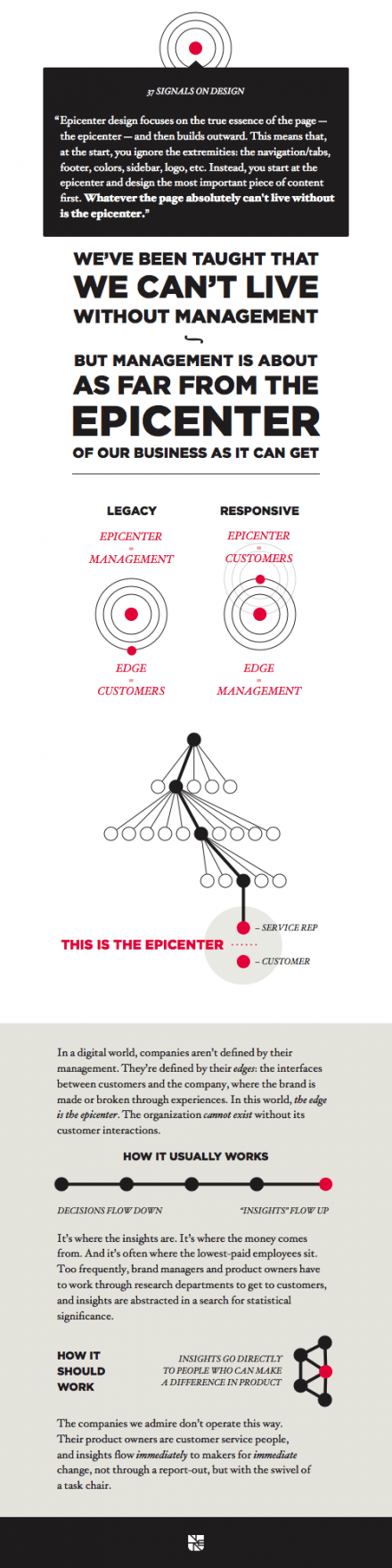
Move the weight of your organisation to the customer.
The Broken Photocopier in HR. Buy a Scanner Instead.

Human Resources best practices are often widely copied. Best practices are contextual and the future of work will require us to carefully revisit past practices.
If there’s a broken photocopier in HR, you might want to order a new scanner instead.
The HR Copier is Broken
Much of what we think of as modern HR practices is copied from long ago. Often these copies are from remarkably few organisations. To name a few examples:
- General Foods was the first client of the Hay Group one of the leading proponents of role sizing and remuneration schemes.
- General Motors pioneered much of the best practices of the divisional corporation.
- GE under Jack Welch was renowned for practices like force ranking of employees, high potential talent management and structured leadership development.
- Even, Google had a widely copied run with its opportunity for engineers to spend a percentage of their time on personal and hopefully innovative projects. (Perhaps Google should rename itself General Intelligence for this practice to be more widely copied.)
The HR photocopier continues to churn out the same best practice recommendations for widely divergent organisations. Jon Husband has pointed out that many of our core HR role design practices traced back to the 1950s and shape our thinking about roles, hierarchy and knowledge. In the first CAWW webinar, Harold Jarche made the point that best practices in networks are often highly contextual, depending upon the situation of the organisation, its culture and its environment. Often these practices are applied as tools without reference to the culture and entire system of practices that made them successful in the first place. Applying best practices blindly can result in unintended and even perverse consequences. For example, the diverse results of the application of forced ranking of performance is evident in any search on the term.
Copying any of these practices carries into your organisation assumptions and values that may not reflect those you would choose on your own. Implicit assumptions, like distrust of employee motivation and capabilities, can have widespread impacts and hold back the ability to leverage employee engagement, creativity and innovation. Worse still your culture is likely to subvert the process to suit the normal pattern of interactions. People make their own unique sense of new HR practices, particularly if they requires actions that are uncommon or uncomfortable in your organisation like hard conversations, transparency of performance and conflict. Perfecting the tool alone will not deliver the promised outcomes in this case.
Disruptive change makes blind copying even more dangerous. Copying competitors and past practices is no guarantee of success in a changing environment. Even the organisations above have reconsidered practices and seen variations in performance over time. The pace of change around organisations, the threats to their talent and the need for people to respond have all changed greatly.
Copying practices from the pages of business publications, recommendations of consultants or piles of management books leads to focus internally on implementation and management. HR skillsets become dominated by the skills to manage these borrowed practices. There becomes a real danger that the practices once implemented will ossify and become barriers to agility and performance improvement.
Buy a Scanner instead
Swap the copier for a scanner. Scan the system, test improvements & learn.
Human Resources can play a critical role in helping an organisation be more responsive to its environment. Few of the practices above are tailored to a digital, social and network era. An organisation needs constantly to be tuning the interactions, practices and conversations of the organisation to meet needs for agility, capability and performance. To play this role, the function will need to both look outwards to the networks around the organisation, contribute perspectives on capability and performance alignment to strategy and deeply understand the interactions, barriers to success and drivers of performance internally. This activity is a critical strategic enabler and major source of intelligence for managers looking for the next competitive advantage.
In an era when continuous improvement of processes and practices is the norm, human resources needs to be seeking ways to drive critical daily improvements in the systems inside the organisation that manage a critical component of performance, people. HR’s scanners should be leading that process. Because people are not just cogs in a process, we also have the opportunity to engage them deeply in the design, implementation and improvement of the practices that directly impact them.
Most importantly of all HR needs to understand the diversity of the research into new practices and conduct its own experiments, measurement and innovation. After all, a unique culture of HR practices ideally suited to the culture of one organisation is the hardest competitive advantage to replicate.
The Broken Photocopier in HR. Buy a Scanner Instead.

Human Resources best practices are often widely copied. Best practices are contextual and the future of work will require us to carefully revisit past practices.
If there’s a broken photocopier in HR, you might want to order a new scanner instead.
The HR Copier is Broken
Much of what we think of as modern HR practices is copied from long ago. Often these copies are from remarkably few organisations. To name a few examples:
- General Foods was the first client of the Hay Group one of the leading proponents of role sizing and remuneration schemes.
- General Motors pioneered much of the best practices of the divisional corporation.
- GE under Jack Welch was renowned for practices like force ranking of employees, high potential talent management and structured leadership development.
- Even, Google had a widely copied run with its opportunity for engineers to spend a percentage of their time on personal and hopefully innovative projects. (Perhaps Google should rename itself General Intelligence for this practice to be more widely copied.)
The HR photocopier continues to churn out the same best practice recommendations for widely divergent organisations. Jon Husband has pointed out that many of our core HR role design practices traced back to the 1950s and shape our thinking about roles, hierarchy and knowledge. In the first CAWW webinar, Harold Jarche made the point that best practices in networks are often highly contextual, depending upon the situation of the organisation, its culture and its environment. Often these practices are applied as tools without reference to the culture and entire system of practices that made them successful in the first place. Applying best practices blindly can result in unintended and even perverse consequences. For example, the diverse results of the application of forced ranking of performance is evident in any search on the term.
Copying any of these practices carries into your organisation assumptions and values that may not reflect those you would choose on your own. Implicit assumptions, like distrust of employee motivation and capabilities, can have widespread impacts and hold back the ability to leverage employee engagement, creativity and innovation. Worse still your culture is likely to subvert the process to suit the normal pattern of interactions. People make their own unique sense of new HR practices, particularly if they requires actions that are uncommon or uncomfortable in your organisation like hard conversations, transparency of performance and conflict. Perfecting the tool alone will not deliver the promised outcomes in this case.
Disruptive change makes blind copying even more dangerous. Copying competitors and past practices is no guarantee of success in a changing environment. Even the organisations above have reconsidered practices and seen variations in performance over time. The pace of change around organisations, the threats to their talent and the need for people to respond have all changed greatly.
Copying practices from the pages of business publications, recommendations of consultants or piles of management books leads to focus internally on implementation and management. HR skillsets become dominated by the skills to manage these borrowed practices. There becomes a real danger that the practices once implemented will ossify and become barriers to agility and performance improvement.
Buy a Scanner instead
Swap the copier for a scanner. Scan the system, test improvements & learn.
Human Resources can play a critical role in helping an organisation be more responsive to its environment. Few of the practices above are tailored to a digital, social and network era. An organisation needs constantly to be tuning the interactions, practices and conversations of the organisation to meet needs for agility, capability and performance. To play this role, the function will need to both look outwards to the networks around the organisation, contribute perspectives on capability and performance alignment to strategy and deeply understand the interactions, barriers to success and drivers of performance internally. This activity is a critical strategic enabler and major source of intelligence for managers looking for the next competitive advantage.
In an era when continuous improvement of processes and practices is the norm, human resources needs to be seeking ways to drive critical daily improvements in the systems inside the organisation that manage a critical component of performance, people. HR’s scanners should be leading that process. Because people are not just cogs in a process, we also have the opportunity to engage them deeply in the design, implementation and improvement of the practices that directly impact them.
Most importantly of all HR needs to understand the diversity of the research into new practices and conduct its own experiments, measurement and innovation. After all, a unique culture of HR practices ideally suited to the culture of one organisation is the hardest competitive advantage to replicate.

The National Department of Poetry – another brilliant (tragi)comic by Grant Snider. Pair with James Dickey on how to enjoy poetry and Coleridge on what poetry is, and Edward Hirsch on how to read a poem.
Great poetry references