Category: Uncategorized
Driving home from Do Lectures Australia I stumbled across this White Stripes song, Little Acorns.
What could be better than a song about taking all our problems and breaking them into little pieces?
(Source: https://www.youtube.com/)
The Formula for Awesome
The Formula for Awesome
(A greater purpose + Urgency to act +
Humility to learn + Generosity to share openly)
x
(Persistence + Collaboration in Community)
=
Awesome
The theme of Do Lectures Australia was the many emotional reactions to the stories of the speakers. Over and over I was touched personally by the stories of the changes that people made happen. The power of the personal impact was played out in the elements of the formula above
Get Started
Purpose: Nobody starts working on change without a reason why. The stronger the purpose the more powerful the story.
Urgency to Act: Again and again stories began with a simple decision to do something. Now. They continued when people decided to do something. Again.
Improve Effectiveness
Humility to Learn: Nobody is perfect. Nobody knows everything. Everybody makes mistakes. An openness and a humility to learn and to take advice matters to effectiveness and influence.
Generosity: Every Doer gives of themselves in creating their work. Many give generously beyond that as well. The more people shared and gave of themselves the greater the power.
Multiply the Power of Action by Sustaining the Work
Persistence: Things don’t go right. Opposition is eternal. Things take time. The more effort over time the greater the power of all the work.
Collaboration in Community: Nobody is an island. Being engaged with and supported by a community is critical to ensuring the work matters and that it benefits from the exponential potential of a network.
1000 Little Dos
Towards the end of the handful of days I spent at the Do Lectures Australia, I was feeling a little anxious. Attending Do Lectures was for me an important part of my transition to working more effectively in creating change.
Do Lectures had more than met my goal. I had seen great talks that will be shared with others online. I learned a lot that I will share in coming weeks. I had met an extraordinary community of change makers and collaborators. I had found new inspiration to share and many little things to do. I had new perspectives and new energy to make change happen.
But I didn’t have a defining action. My one Big Do wasn’t clear in my own head. I know the purpose of that Big Do, but I didn’t have a clear plan.
The anxiety welled that faces everyone who wants to start making change. With anxiety came questions: What if I can’t? What if this is the wrong step? What if…
What if kills action.
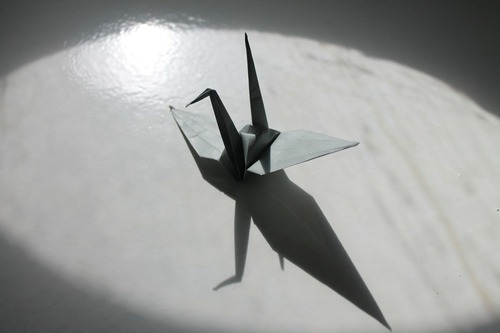
I cleared my head of what ifs. I reflected on the weekend. A clear mind always manages to supply the needed inspiration. An image came to me of the 1000 origami paper cranes that one of Carly Heaton’s team had made as a project. It was a tiny story shared almost in passing in a much greater story of encouraging people to have fun, enjoy work, enjoy life and do more.
1000 Cranes. Each a small but mindful gesture. Repeated. To fulfil a wish. To bring peace to the world.
In that moment, I knew I could release a little pressure on myself to go big now. The big Do will come. The real pressure needed to be the pressure to act. While I refine the Big Do. I will start on small mindful acts of change. Each one a little Do.
1000 little Dos. Each a small but mindful gesture. Repeated. To bring change to the world.
I don’t have to do all this work alone because I am connected. These 1000 little Dos are magnified by a 1000 connections. These connections have begin with the extraordinary community of passionate people that I met at the event and reaches out to all those that they touch.
I am simply adding my little Dos to the flow of activity. Another paper crane added to the chain.
You didn’t need to be at any one event to lead change. You simply need to remind yourself of the change you want to make. Release yourself from what ifs. Find a little Do. Connect. Repeat.
So what is your little Do today?
–
My opportunity to attend the first Do Lectures Australia was provided by Yammer. I want to thank them again for their support.
Why network
You can’t know everything.
You can’t do it all.
You can’t have all the skills all the time.
There are limits on our time, our capabilities and our efforts.
Others know more.
Remarkable talent surrounds you.
Wise people will guide you, answer questions and solve problems.
Others aren’t a threat.
They are the way to get more done.
Connection by connection you reach
deeper human relationships and
an exponential human potential.
Lead Culture Change From the Outside-in
Leaders need an external perspective to change culture in organisations.
In a recent twitter chat, the question was asked “Why do organisations decide to change their culture?” At first I thought that was obvious, but on deeper reflection I realised the answer wasn’t always clear cut.
Culture, which is a pattern of predictable behaviours in a group of people, can be like water to fish. The patterns are so predictable we often can’t see them. Inside a culture, all the pressures are to conform.
Leaders who see the need for change in culture in an organisation do so because they are connected to and embrace external perspectives. Through their exposure to the world around the organisation, they can see:
- externally pressures for a change such as the feedback of competitors, analysts, customers, community, regulators, etc
- the organisation has to respond to new norms that are being adopted in society, the industry or other organisations
- better practices are in use by other managers externally and could be leveraged
- the attractive aspects of other cultures to the talented people leaving to other organisations or to the disgruntled people in your own organisation; or
- the different mindsets an externally appointed CEO or group of managers might bring.
If your small group of executives want to build a movement for change in culture, you will need to start by connecting to an external perspective that can help them and others see the need for change. You can’t change if you can’t see the behaviour or the need for it to change.
A critical role for change leaders is to help foster an outside-in perspective in an organisation. Social collaboration is an important way to surface and share new views and create new accountability & energy for change.
Start bringing in and sharing customer views. They are usually easiest to incorporate into your company conversation and often quite disruptive. Then broaden your perspectives to competitors and other industries. Ultimately you will want to engage a diverse range of stakeholders to understand where your settled patterns of behaviour might need disruption.
Engaging critics and supporters will not tell you what you need to do. However, Each of these disruptions are an opportunity to reflect on how you want people in the organisation to behave consistently differently to build new and better patterns.
Because culture is like water to a fish, we are often unaware of its impacts unless an external perspective makes us stop and reflect. Leaders must help create the conversations with an external orientation to remind us continually that:
‘This is Water’
For if we say that we lack authority to give credence to our testimony, we speak beside the point. For in my opinion, from the most ordinary, familiar and commonplace things, if we see them properly, we could construct the greatest miracles in nature and the most wonderful examples, especially on the subject of human actions.
Michel de Montaigne on experience, anticipating working out loud and design innovation
Advice for a network era
You don’t need to be first
You don’t need to be best
You don’t need to be richest, loudest or most powerful
You don’t need to be more connected, more famous or smarter
You need to be more engaging, more empowering and more effective
The network does the rest.