Access, Reach & Transparency

Networks of people working together are not new. Networks run through all our relationships at work. The access, reach and transparency of our networks is what helps change the future of work.

Humans are Connected. Humans are Social

Networks were social before social networks. Being social in networks of relationships is what defines humanity. We sit around campfires. The first call on a telephone network was between colleagues. We tell jokes in the pub and send jokes by email. We share cat pictures by mail, email and on the internet.

Ordering products for delivery by mail existed before Amazon. Linkedin did not invent business networking. Instagram did not create the sharing of photos. Airbnb did not create the lodger. Data was big before we could manage it. Yo existed as an exclamation before the Yo app.

Access, Reach & Transparency

Digital and social networks have changed the game by radically expanding the access, reach and transparency of human networks. We can reach more people with greater ease than ever and our interactions are recorded to be accessed by others.

The changes in access, reach and transparency enable us to better see the wirearchies that weave through our hierarchies. They offer us new ways to seek information, to make sense of the world and to share our learnings. These changes offer new ways of working, collaborating and cooperating.

We must remember that all that has changed is the access, reach and transparency. Our new networks must support human endeavour and human relationships. Together we connect, we share, we solve challenges and we innovate. There is no magic other than the magic of human creativity.

Let’s keep human potential at the heart of our work in networks.

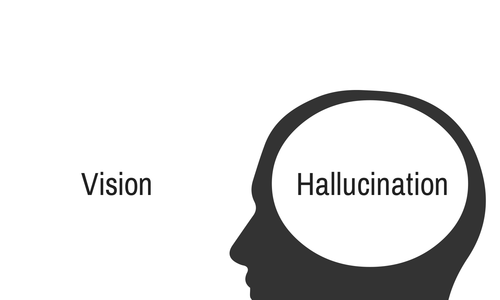
A Vision that is Yours Alone is an Hallucination

Steve Case once said ‘Vision without execution is hallucination’. Before you get to execution, a vision goes awry if it isn’t shared by the others who must do the work.

Read most standard texts on leadership and they will begin with the leader setting the vision of a team. ‘Leader [insert verb] the vision’ defines much leadership training. As a result the focus become crafting a compelling vision and communicating it in the most persuasive way. Leaders are then expected to ensure the team delivers to that vision. Case’s comment highlights the need to ensure delivery.

There is one flaw in this approach to leadership:

An hallucination is something you think is real but others cannot see. The fact you can see it is not enough. The team cannot see what you see no matter how good your communication skills. People cannot deliver what they cannot see.

Team visions are far more effective when created by the team rather than the leader. Allowing others to contribute to shaping the vision leverages their potential to find personal purpose, to contribute more and to improve the picture. It deepens their understanding of the situation and the drivers of change. People who co-create make their own sense. The work of building a vision engages and enables others to own the vision and lead adaptation over time. The full passions, expertise and experience of the team can contribute to shaping the outcome. That work is the best guarantee the vision is seen and well understood by all.

Imposing a vision and sustaining that imposition is really hard work and largely counterproductive. No amount of telling conveys the richness of the leaders vision in a busy age of continuous partial attention. In complex scenarios the leader’s vision may be partial or too simplistic. Confusion and misinterpretation are likely. In networks there will be competing visions and competing alternatives for work. Critically an imposed vision is always the leader’s and often a compromise of purpose and passion for the team. Abundance has been replaced with compromise.

A leader’s vision is rarely seen as open for improvement even if the leader seeks input. Power differences discourage feedback. The worst outcome for organisations seeking to respond to changing markets is to be stuck thoughtlessly delivering a dated vision imposed by a now out of touch leader. Pushing the vision through will disengage others, destroy the leader’s influence and jeopardise the business.

Next time you need a vision to guide the work of a team think ‘Team [insert verb] vision’. The leader should be the facilitator not dictator of that process.

Execution is far easier when a vision is co-created. We all need fewer hallucinating leaders.

The Flying Wedge

Speak to any generalist and you hear the same frustrating cry “Everyone wants to know my speciality”.  A generalist needs to see the diversity of their experience as a source of differentiation, not the core proposition. Begin by meeting the specific needs of a situation.

The Challenge of Generalists

With more changes of role, career, technology and capability demanded of individuals, there are more and more people who have chosen to follow the diverse career path of the generalist. For many individuals the diversity itself is an attraction.

However, with diversity of experience and opportunity comes a challenge. How do you sell yourself in a job search or other work opportunity? When you can do many things, how do you answer the common question “What do you want to do?”  An attempt to explain your general capabilities and many future paths usually results in a confused repeat of the question.

A generalist needs to position their capabilities as a flying wedge, a specific capability supported by a wedge of general capabilities.

Problems are Specific

Whenever someone is looking to engage you, wether you are talking to a hiring manager or a client, that individual will focus on a specific problem or opportunity that needs to be addressed. They want to know first of all that you can solve that specific problem. Start by explaining how your capabilities address that need. 

Remember you are competing with specialists. Specialists will endeavour to prove they are the best in the world at some capability. They do this because that is all that they can do. The specialist sells a match between the one thing they do incredibly well and the need. If their speciality does not solve the specific need, the specialist misses out completely.

The leading point of the proposition of a generalist must be focused to compete with specialists to solve a specific need. Sell the most relevant pointy end of the flying wedge first, because it earns the right to further attention.

Meet the Situation then Differentiate

Meeting the need of the buyer is only a ticket to the next stage of the conversation. Everyone who is shortlisted can meet the needs. The challenge to win the job or work is to differentiate.

At this point, the diversity of the generalist becomes an advantage because you can follow through on your focused point by sharing your broader capabilities. Differentiating on the breadth of capabilities enables you to highlight your unique ability to:

  • better meet related challenges 
  • apply innovative solutions using other capabilities
  • deliver a better overall outcome

Specialists will need to compete on who has the most expertise. Instead you can use the flying wedge of your capabilities to widen the conversation to better sell the need for your generalist experience.

Every action writes your autobiography

image

I came across this quote today in an exhibition of the work of the photographer Sue Ford.

We can learn from artists

For an artist it is clear that each work even a representation of another is an expression of their own potential as an artist. To make a work is to put the best of your talents on display.

We can learn a much about the future of our work from the edges explored by artists.

One of the reasons art demands this challenge is the arts is an arena of the long tail. Harold Jarche has discussed the implications of the long-tail for the future of work. We are increasingly engaged in knowledge work in a networked economy as content creators, sharers or remixers and facing the same economic effects as artists.

Every action writes your autobiography

The insight from Sue Ford’s quote above is to recognise that every action we take is an opportunity to put the best of our talents on display. We express ourselves through the big and small actions we take every day. Often the actions we don’t take are even more important when we give up the opportunity to realise our potential or to learn and grow.

We will be judged by our actions. Networks are demanding and will route around the inactive, those who fail to lead or those who fail their potential. Our reputation will be built and quickly shared through our networks. We write an autobiography in action and we are judged not for our words but the actions we take.

What do you want your autobiography to say? What potential is yours to realise? Your next action will provide an answer.

Why not make your next action a work of art?

The Art of the Unreasonable

image

Every day I deal with unreasonable people. I wish there were more of them.

Unreasonable clients

The unreasonable people I meet are those executives, entrepreneurs and other change makers who are trying to change their organisations, to create new products or who are trying to make the world more human. These individuals don’t want to hear that it is hard, or that success is unlikely or that they are unlikely to see rewards.

These individuals are purposeful and all they want is help to bring their unreasonable visions into being. Willingness to persist is what ensures that they will succeed. They want to know they are not alone and that there are people to help them deliver their visions of the future.

Unreasonable partners

In addition to conversations with my clients and prospects, I am exposed to the unreasonableness of Change Agents Worldwide.  It is entirely unreasonable to believe that you could form an effective consulting and thought leadership network full of smart, highly capable and rightfully busy people without any traditional forms of central coordination.  However, Change Agents Worldwide delivers, constantly challenges itself to do better and the community is prepared to engage because the purpose of a better future of work is unreasonable, but necessary.

My respect for that group and others like it is huge because the network views spreading unreasonableness as part of the mission.  You only have to look at the extraordinary Executive Change Agents who are trying to make change in some of the largest corporations in the world, often solely on their personal authority.

If your organisation does not have people like these, why not? What are you doing to champion them, enable them or hire more?

Unreasonable inspiration

Unreasonableness inspires me. Do Lectures Australia was full of people willing to believe that they could deliver the extraordinary if they just started small and they started now. Social enterprises are another haven of the unreasonable as people seek to use the levers of business to address the challenges of the world. Social movements, like Change Day, inspire me, because they ask people to seek to make a difference and are led by unreasonable people, like Helen Bevan and Mary Freer. Artist are another inspiring source of an unreasonable view of the world.

What is inspiring you to be more unreasonable? What in your organisation shows others that more is possible, new thoughts are allowed and that more can be done?

Unreasonable change

We can’t change settled management practices without unreasonableness.  We can’t create more customer centred organisations within the bounds of what we define internally as acceptable or our accountabilities. We can’t make our organisations better for customers and society on the sensible practices of the past. If we want to be more responsive, we need to be a little unreasonableness.

If we want to lead, we need to be a little unreasonable in our expectations and actions.

There are more than enough forces in our world to encourage the normal, the static, the secure and the stable. Most people find it hard enough to win the support of their boss. Let’s foster the unreasonable.

Go find someone who wants to be unreasonable. Help them. Spread the contagion. That unreasonable purpose is the best engine of change.

//platform.twitter.com/widgets.js

Note: GBS = George Bernard Shaw. 

//platform.twitter.com/widgets.js

Networks have Feelings Too!

In enthusiasm for our ability to connect people in networks and to see the potential of new ways of working, we can lose sight of an important element. Networks are composed of human beings.  The rules of human relationships still apply and there is no magical technology that allows us to escape these fundamental rules.

Networks need to Form, Storm & Norm to Perform too

The process of forming a group dynamic in a networked community follows that of a team. Because a network is a mix of strong and weak ties the process of reaching community norms may well be a difficult and extended one.  

In a network, each individual forms a sense of the community, its purpose and the practices that prevail. At times for some individuals or groups in the community this sense of meaning can be quite out of alignment with the broader consensus.  However, in some cases the interactions in the community do not surface the differences or do not make that misalignment obvious to those in the community.

If each participant proceeds on and does not meet a conflict with their sense of meaning, then they will not discover the need to revisit their view. Often this failure to develop common meaning and norms will create major challenges for the network later when conflicts arise. People who feel that their sense of the norms ‘are obvious’ and have been acting on expectations of the same from others may experience a deep breach in trust at this moment. 

A key role of social leaders is to foster the meaning in a network and alignment of norms and value creation.  Leading these conversations early in a network’s life will help accelerate the community development and avoid later issues.

Remember weak ties means limits

One danger of the weak ties found in large networks is weak accountability. Without a strong connection to you, I can easily engage in the avoidance of conflict and the hard work of leadership. Rather than deal with a difficult situation it is human nature to see if we can’t ignore it or pretend that it is someone else’s responsibility to respond. See a conversation in a network that disturbs you and you can let it go or worse filter it out, if there is no accountability to engage.

Equally weak ties can mean that there is little cost to me for the snide remark, the cutting comment or even troll activity. Personal accountability for our actions through strong ties to others cuts down on this behaviour. I may not have accountability to the individual but I have a reputation to maintain with others and so I moderate my behaviour.

Leaders need to foster an environment of accountability in networks. Encouraging all participants to engage, to challenge and to clarify understanding helps accelerate the value in the network.

Build a network up from a single conversation

In this wonderful video on innovation by Sylvain Carle from Creative Mornings Montreal, there is a description of Unix and the need to build up complex systems from smaller systems that work beforehand. Networks are complex systems composed of smaller connected systems. 

The smallest systems of a network is two people in conversation. The conversations in your networks should work as great stand alone conversations.  If those conversations don’t work the way they work in the rest of your life, then something is wrong.

This week I was asked ‘why can’t we just let the network do its job to create a community virally?’ Networks don’t create a community. They only connect people. Conversations create communities. Conversations help people understand the purpose of the network and the personal and collective value that will be created. Those conversations are the work of leaders. Engaging movements of people in sharing and spreading ideas is the work of leaders through stories and conversations, not the networks themselves.

Start your leadership work by focusing on creating effective, valuable and engaging conversations.  Build your network back from there.

Management Practice Lags Culture

image

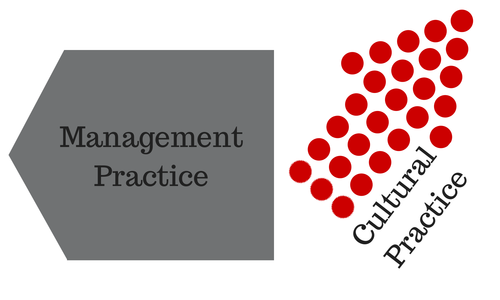
Management practice is influenced heavily by hierarchy, tradition and risk aversion. As a result our practice as managers lags the changes in culture in the society around us. Leaders need to work to close the gap between management practice and social expectations.

Management Practice is a Lagging Indicator

The way we manage our organisations is defined by practices that often trace back to the industrial era. The consequences of this are evident in many ways:

  • the diversity of our organisations does not reflect the diversity of our communities. Gender is just one diversity dimension in which management practices lag that the practices and views of society as a whole.
  • organising activity using networks and leveraging the potential of people to contribute is another way in which organisations are only beginning to address opportunities that communities, our personal relationships and the innovative organisations have already embraced
  • resistance to give up hierarchy, planning and demands for predictability and certainty when even the political structures based in these models have surrendered to approaches that operate far more adaptively and responsively.

Art is a Leading Indicator of Changing Society

Our cultural products adapt far more quickly to changes in society than our management practices.  Film, television, music and other forms of entertainment rapidly embrace changes in the way society operate and reflect that in the protagonists of the stories, songs and other art forms.

An example can be seen in the role of the detective in arts like novels, film and television.  In the birth of the industrial era, the detective was a logician, like Sherlock Holmes unravelling facts and relying on expertise in predictable processes, By the early 20th century the detective was a master of the human elements of relationships, like Simenon’s Maigret.  The uncertain times of the mid century introduced the detective in a much more ambiguous role. Richard Martin has documented how the changing nature of the detective film reflects our changing society.

Cultural products appeal to our need to be entertained, connect and engage with each other. Therefore they must be relevant to our society as it is today. Art is an experimental market where failure is common and success is usually defined only by audience acceptance. Someone is always seeking a better way to express the zeitgeist.

Why does management practice lag changes in the culture of society?

Management practice lacks these same pressures. Too much of our management practice is assumed to be canonical and confirmed only by inward looking assessment:

  • Focus on best practice: Best practice is historical and often particularly contextual. However, managers are often reluctant to move beyond accepted best practice.  As Harold Jarche has argued we should look instead to practice to be best and look to be more social leaders.
  • Risk Aversion: Avoidance of failure is a core tenet of management practice. Managers stick with practices that have worked safely for them, often in face of evidence that newer practice is better. Safety is valued.  There are real costs to this risk aversion.
  • Hierarchical & Internal: Managers who are more hierarchically senior set the bounds of acceptable management practice and control the HR processes that reinforce acceptable practice. Without an external & learning mindset, these leaders can inadvertently reflect management views and mindsets of a previous generation that were handed down to them during their early career.

Change

Responsive Organisations will have a culture and a set of management practices that reflect the needs of our society now. These organisations will experiment, test and measure the effectiveness of their practices in the marketplace and in their organisation. They will not rely on canon, hierarchy or accepted opinion.

The benefits of organisations using management practices that better reflect the changing culture of our communities are clear. These organisations will be more human and better able to realise the potential of all people.

Bringing this change about is the work of leaders and change agents. 

Shapes, Guides, Decides: on Structure

In leadership we are starting to see the need to pull apart our obsession with jobs. We are realising that what matters more than a job is the roles that leaders play and their authority to play them.

A similar need exists in the structures we form from those jobs. In organisational design, we have a tendency to focus overly on structure as if it is the determinant of how the organisation functions.
The structure of an organisation is important. However, we know that all structures perform in different ways because of the networks of relationships that weave through them and the resulting culture that is created.
A focus on structure can be of little value to a manager looking to respond practically to the challenges of a networked economy. That manager often well knows that while changing structure can require as little as a new powerpoint slide, but the way things get done changes far less frequently and with a great deal more difficulty
Why?
  • Structure: A collection of status relationships between individuals. Shapes
  • Decision Process: The commonly accepted series of stages by which decisions are made in the organisation, including what information is expected, who is aware, who participates and who is consulted. Guides
  • Decision Rights: Who & how the final call gets made on any decision. Decides 

Structure influences decision processes and decision rights. However structure does not determine them and at times can work at cross purposes to the intended goals of the organisation. You can have a hierarchy where decision rights are delegated and there is a high level of autonomy. You can have a network that is paralysed by an insistence on consensus before anyone acts on a decision. 

The process used for decisions and what exercise of decision rights are accepted in an organisation is a function of the network of relationships more than the structure. Control by structure is often an illusion.

We need to spend less time focused on our structures and spend more time on how our relationships work and how we make choices.