Chair and Non-Executive Director, Advisor, and CEO helping healthcare, finance, and educational organisations drive growth, leverage technology innovation, and realise the strategic value of transformation
We like to think we have control, that we can plan and that our plans are executed. Nothing is further than the reality of our lives at work and at home. We are stuck living in an interplay of forces. Rather than cling to an illusion of control we need to embrace the work of play.
Management gurus specialised in simple catchy easy to execute recommendations, Five key steps or the One Thing you need to do. These ideas look great in a book, an infographic or a Ted Talk. Yet they never quite work out. In a networked world of real humans we live in a series of nested ‘if then’ statements. We don’t act. We react. Our first intentions rarely hold beyond the first ‘punch in the mouth’.
Throw away the lights, the definitions, And say of what you see in the dark
That it is this or that it is that, But do not use the rotted names.
We can try to fight for our sense of control with ever more elaborate plans. We still lose out consistently to the dynamic, fickle, and emotional world of people. Only when we embrace that we are dealing with humans do we begin to understand that everything is interplay. The forces are many and varied. We should plan for open options and the creativity of our response. The better we respect and react to a context, a conversation or a curiosity the better we will perform. Paths outperform plans. Options have value. Conversations communicate and inform us.
Because we accept interplay, we can start to see the power of play. What you set out to achieve in a complex networked and dynamic world of humans is far less than is possible. The worst you could possibly do is achieve it alone. Embracing play brings forth the creative potential of people pushing against each other. By playing in the moment with another we must respect their intentions, contributions and their efforts as peers. The game demands it.
So much of the richness of life and relationships comes from the power to surprise, the interplay of forces beyond our control to create the unexpected. By accepting that our human peers are not inert widgets we can leverage all their contributions. We can explore the new options created and surfaced through interplay. Lean into the play and enjoy the messy beauty of what might be.
…in Italy, for thirty years under the Borgias, they had warfare, terror, murder, and bloodshed, but they produced Michelangelo, Leonardo da Vinci, and the Renaissance. In Switzerland, they had brotherly love, and they had 500 years of democracy and peace. And what did that produce? The cuckoo clock.
Where is our new renaissance? A recent comment by Helen Blunden on my post on the hidden damage of the pandemic reminded me of our overdue post-pandemic renaissance. We have the inequity, the warfare and the monsters of Harry Lime’s quote, what will it take to bring on the new renaissance?
Talk of a new renaissance is not new. I remember the early days of the pandemic and discussion of Isaac Newton’s plague years and his breakthroughs in optics, gravity and calculus. We also had the optimistic forecasts of renewal of our cities and economies, even the contribution of lockdowns to the recovery of nature, mitigation of global warming and reductions in pollution. Our embrace of working from home, delivery services and digital life was a transformative breakthrough.
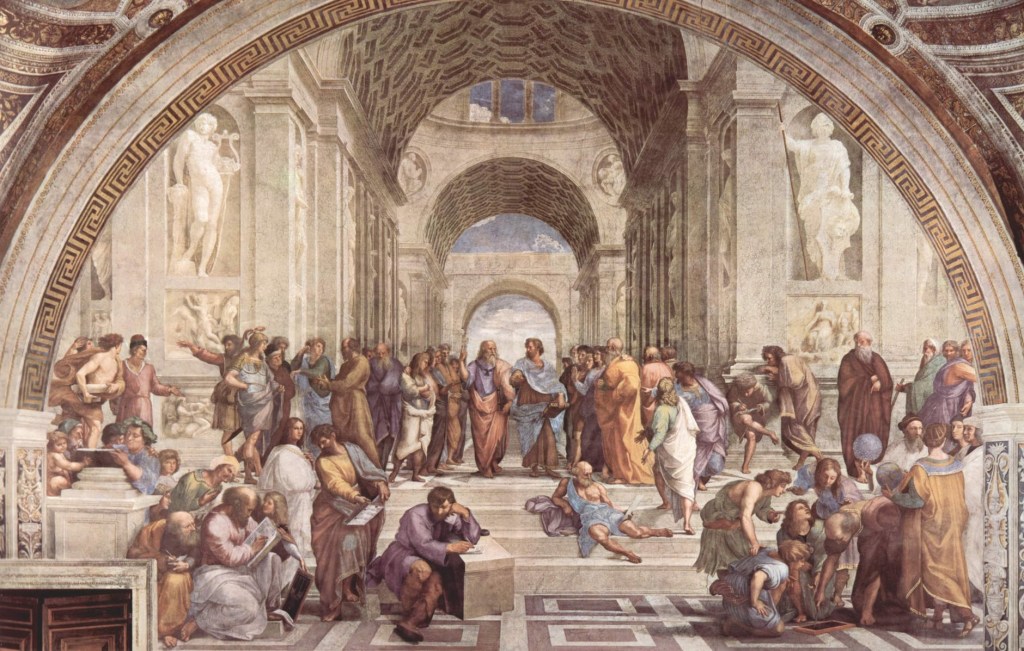
The disappointment that these have not generated a radical change yet ignores both the shortness of the time since 2020 in terms of cultural changes and that the adjustment to the pandemic is very much ongoing. As much as our world is globalised and rapid in change now, change in worldview still takes time. The Renaissance was not a Davos-style conference that changed the world in a few days or weeks. The influence developed across generations, disciplines, and multiple countries. Perhaps one could argue that its significance is more for the influence it had on the subsequent secular Enlightenment and its consequences in revolution and societal liberation. The humanism of the Renaissance and the rise of scientific methods helped set the stage in a religious society.
It is new, always, no matter what it says above the doorway, cracked by the usual irony; it’s new anyway.
The Renaissance was also inspired by the rediscovery of ancient ideas enhanced and developed through the Arab world. Translating ancient classical works lost to Europe back from Eastern sources inspired changes, as did the healthy borrowing from the development of those ideas by Oriental philosophers, mathematicians, scientists and society as a whole.
Willingness to challenge the prevailing cultural ideas did not arise simply because of the existence of new ideas. Those ideas needed to land in fertile minds exploring changes under the sponsorship of wealthy and powerful city states and political rulers seeking to use soft power as part of wider political, economic and even military power battles. One needs only to consider the ongoing debates about Machiavelli’s meaning, intent and influence in writing The Prince to see the complexity of the time. Massive wealth, absolute power, religious absolutism, a lack of social mobility, violence, and incredible inequity provided the prevailing cultural environment in which the seeds of the Renaissance took root.
Today we tend to treat those concepts like abstract nouns capitalised for our amusement. In past eras, they had deadly and specific meanings that were unchallengeable by most. The miracle of the Renaissance and the subsequent Enlightenment is that they happened at all. Forces today still fight for their repeal.
Our governments today are hardly havens of social change or funding new research and ideas. The great contest of ideas seems largely abandoned post the ‘End of History’. Governments are trapped between neoliberalism and resurgent neo-fascism while trying to survive a daily news cycle. Our extraordinarily wealthy billionaires seek political influence and for a few male billionaires their scientific research funding is mostly funding a phallic space race as a way for themselves off a dying planet. The expenditure of their wealth as patrons for social purposes, arts and sciences come predominantly from the efforts of their partners, ex-wives and widows. Our intellectuals and elites have lost the credibility and connection to the world to advocate for new ideas and to drive change. Thought leaders, charlatans, and mob leaders are not a path to a better world. Many work tirelessly as a force for good but they feel isolated and unsupported. There is too much to do for the few.
What Needs to be New?
He was not there to accommodate anyone’s prepackaged expectations—he was there to discover the direction of his own thinking.
In this vexed context, the question arises as to what needs to be new, renewed, or newly embraced to found our new renaissance? The Renaissance offered a dazzling escape from stultifying cultural and religious uniformity in the pursuit of new ways of seeing the world. For us in this time, it is unclear to many that anything is agreed enough to be a restraint on our ways of seeing the world. Our problem is not a unifying ideology but a hyper-personalisation of reality and an abdication of the idea that government and economic society will benefit the individual.
Late stage capitalism has no obvious competitor, despite its inequities. It is hardly collapsing, even facing a harsh climate reality, and the contradictions lie with its foes. Democratic government has absorbed the themes and recommendations of its competitors. Both fit the model of being ‘the worst form but better than everything else that has been tried.’ There are no easy alternative .
I have no personal answer or I would not be exploring my thinking in this post. I doubt that there are a simple set of steps, a single rallying cry, or a piece of magical science or technology. The disappointment of much recent innovation has been its focus on getting rich quick or simply capturing attention for advertising. Where is the work to meet the world’s challenges?
Over and over again Wittgenstein frets the problem of translucence.
Why is there no clear white?
He wants to see the world through white-tinted glasses,
The frustrations of our time call for new sense making. We need to look beyond the mainstream and seek novelties and innovations growing shoots at the edges. Just as the Renaissance found ideas beyond its historical sources so can we. The Renaissance was a specifically narrow European phenomenon. My concerns and perspectives may be to large extent shaped by a similar narrowness of context. Innovations are out there in a diverse world and we need to embrace that capacity to make sense and innovate.
I may not have the answer, but I have faith in the creative potential of people supported and liberated to make change in systems for the betterment of all. I have faith that on a diverse planet we can come together around better ideas and better ways. Two and a half years ago when a pandemic loomed I called for focus on our need to foster and build our agency to tackle the challenges confronting us. Two and a half years later, we still need work on those challenges but there are promising signs that change can occur when people come together to work for something better.
More recently Power and Love have risen to the forefront of my consideration. We need more time examining and discussing power dynamics and our capacity to support others to achieve. Many of the great themes of our working life from engagement, to inclusion, to collaboration, innovation and performance fall in those considerations. Perhaps the next political and social revolution lies beyond these considerations.
If I add anything to our next Renaissance it is our sense of shared Belonging. In many dimensions our society, our organisations and our lives are fractured. We have lost a widely shared sense of belonging. Nationalism threatens even a shared global community. We can find our own small cliques and engage more intensely than ever. Is our lost belonging the result of fifty years or more of ‘bowling alone’?
If we are seeking a new Renaissance in agency, love, power and belonging then it feels to me that we are seeking a renaissance of civil society. Civil society defines our relations and how we come together as a society, a community and a nation. Perhaps that is where we must focus our new revival.
This post remains an exploration. Let me know your ideas and thoughts.
Last weekend in the supermarket, as I stood in queue of five people waiting to pay, the woman in front of me became visibly agitated. She began to offer advice to everyone on how they could complete their shopping faster. When she reached the front of the queue she was furious with the staff that she had been held up and demanded they fix the queue that had formed. All in all her experience from agitation to being served took less than five minutes.
Still standing
When the simple act of queuing briefly gives rise to anger and frustration, I begin to wonder if this pandemic has not caused deeper and more longstanding damage. This experience is replicated in so many contexts – the rudeness of drivers on the road, anxieties and frustrations in the workplace, fights and anger in families and relationships. There are so many stories of friendships lost and dissatisfaction with work is on the rise. So many people report feelings of exhaustion. The fatigue we experienced a year ago has begun to surface agin in the form of a deeper and wider damage.
I hugged her, and I said We were scared, weren’t we?
The longer we live with Covid 19 in our communities, the clearer it becomes that it has enduring health consequences. Long Covid is incredibly prevalent and damaging health and wellness. But beyond the physical impacts of this viral infection is the damage done socially and psychologically by our personal and public efforts to protect our health. These latter actions have undoubtedly saved lives and will continue to do so. Yet they are not without consequences on our relationships, our lives and our mental health. Only by examining these carefully can we support ourselves and others forward.
So many of the everyday rituals of 2019 have been disrupted – radically and permanently. We can all cite the obvious changes of increased work from home, the businesses that closed in our cities and the ongoing public health activities like masks and distancing. What we reflect on less often are the other changes that came along with the pandemic response.
These include:
The lost lunches, coffees, drinks and casual work and friend conversations because we don’t share a working precinct
The lost context that comes from casual chatter, higher bandwidth communication, proximity and observation
The transactional nature of high velocity digitally mediated communications which mean the loss of relationship development and trust building
The volume of interruptions, distractions, misapprehensions, conspiracies, and overreactions circulating in our digital environments
The lost pauses, transitions, and rituals of physical movement, gathering and community
These impacts and more flow through to our worldview, our sense of self, our mental health and our daily interactions with others. Too many people I know are struggling with the feeling that the problems of the world are on their shoulders. Overwhelming anxiety is widespread. Sadly, some feel that they have no support or nobody to whole they can turn given all the pressures and isolation we experience.
I look for omens everywhere, because they are everywhere
to be found. They come to me like strays, like the damaged,
something that could know better, and should, therefore—but does not:
a form of faith, you’ve said.
Carl Phillips, Custom
Bandaging us back together
If we are to remedy the damage, we need to begin by acknowledging it. Digital Utopianism is not enough for us now. Equally, we cannot pretend the pandemic is over and return to as before. We must start with a stocktake of our gains and losses before we consider what next. This stocktake should include consideration of our emotional, social, mental, and relational health.
When we can see where we, our families, our friends, and our organisations stand, we can start to make the changes that will remedy the damage done. Those changes will include:
Focusing on the building of shared community with those isolated or disconnected
Re-establishing shared context through conversation, storytelling and the osmosis of shared experiences
Repairing relationships that are worth repairing through restoring them their priority, time, and care
Grieving those relationships that will not come back and eventually accepting those losses
Engaging ourselves again the world as presented to us here and now, letting go of the dreams, wishes and desires that are frustrated and resting those for these new times.
Overcoming alienation by re-engaging with our purpose, our agency and the value of our efforts
Developing new routines, rituals and events that reinforce our new world and relationships
Most important of all is that we don’t need to go through these changes alone. Our digital modern post-pandemic lives may at times be isolating and alienating, but together we will support each other to better lives. In friends, family, colleagues and community is the comfort for any injuries we may carry. Healing is as much a social as it is a personal process in this context.
Please stop there. Read no further. It is a ridiculous question. It deserves a blunt response.
Another metaverse hype piece was promoted into my feed recently with the title of this post. It has to have been click bait to even consider the question on those terms. No matter how much more attractive it might be for corporations to monetise reality in a digital landscape with many human users living, working and interacting, the metaverse isn’t taking over.
How do smell a flower in the metaverse? How do you feel the warmth of the sun? How do you hold a hand, feed a hungry friend or share an unplanned spontaneous moment? The context of interactions in a metaverse may be richer than on a 2D screen. However, it will not be rich enough to be anything but an entertainment or a compromise. Much will be lost.
Most of all we might just lose the random spontaneous poetry of human experience. I’m sure the metaverse will forget to code that in as they maximise the advertising, services and digital asset purchases.
The advocates of these ideas might be surprised by the consequence of trying to gather everyone in a shared ‘real world’ too. Between social separation, exclusion, financial barriers, nations, languages, culture, and more, we aren’t well adjusted to sharing one space. The social media experience has been just a small introduction.
The Viva Engage hot-takes are in. The two prevailing themes are excitement and confusion. Viva Engage is the future of engagement right in the heart of Microsoft Teams. Viva Engage is a new Facebook clone. Once again this signals the death of Yammer, even though it is Yammer. Yammer will be renamed, deprecated or otherwise mysteriously be second class. It’s the beginning of a premium licensing offering. We are living a Shakespearean Comedy of Errors. As promised in my own hot-take, I will now dig deeper on my thoughts on the strategic potential and possible roadmap for Viva Engage and Yammer.
The TL:DR is it’s a positive step to enabling discovery of knowledge and human relationships in the context of work, but the big question remains ‘what next?’ The short answer is ‘Next is up to us to embrace and facilitate change, not wait for the technology.’
Time For Something New
For reasons of sales model, philosophy, and proposition, Yammer started on the wrong foot in the Microsoft ecosystem. Despite many efforts, Yammer has never quite recovered from its outsider status. Yammer initially made many enemies among Microsoft IT pros as a product that sold itself to people outside your organisation’s technology organisation – grey-market IT that sat outside the carefully managed IT stack.
Yammer also focused on personal relationships and a capability to tame the chaos of human nature into useful discovery. If you were raised in a world of tightly controlled access, carefully managed metadata, and a preference for information over knowledge, and especially data over people, then Yammer was disliked. Add to that misunderstanding that Yammer’s potential to reduce emails, especially distribution lists, meant that it was somehow going to replace email and the dislike was intense.
Do not regard me only as a winter-wife, A peddler of homely comforts. Indeed I am also your girl of spring – Dreams possess and inhabit me.
With time and greater M365 integration, Yammer has found a sustainable spot on the agenda for many in the Microsoft ecosystem. Years of Yammer have delivered important capabilities connecting Yammer into the Microsoft ecosystem, but emotions are emotions and resistance remains however much intellectual arguments are made to the contrary. This becomes a challenge when employee engagement could not be more important as we grapple with this part-hybrid, part-office, dynamic workplace.
At the same time as Yammer has grappled with its place in the Microsoft ecosystem, the frustration with enterprise social solutions like Yammer has been rising and some of the fiercest advocates have been moving on. Too many clients believed utopian dreams of organisation transformation. Too many advocates became frustrated when people would not support the necessary change and adoption work or thought change could be forced.
Microsoft Viva Engage in Microsoft Teams is a new start. It is still Yammer under the hood, just surfacing the capabilities in a new context and with a new name. The same features are available outside of Teams in Yammer on web and the app. The two will have the same groups and same conversations. For now, they will have the same feature set. Another name is a moment of confusion. So why is this a moment of potential?
Share a short demo of Microsoft Viva Engage with your colleagues! Did you know, sharing your knowledge & experience strengthens your connections with people at work? You’ve just experienced one of the benefits of Viva Engage! #MSFTVivapic.twitter.com/6HhpJ6RBh6
How is your work enabled by discovery? Photo by Rachel Claire on Pexels.com
All our work depends on context. Context is critical to the way we understand what we do, how we interact with others, and what we achieve. There is no context-free work. However, in many Microsoft Teams Groups and channels you would struggle to see context. Every message, document and interaction is immediate and self-contained. We struggle to discover the point of what is being shared, the critical context. We struggle because often these environments are stripped of the human capacity for discovery and relationships. They are task- and data-centric. That can be as simple as the group is closed, the conversations is all shorthand, or all the information is structured to a logic that makes sense to others in the flow, but not a new person. In a busy hybrid work day, do we have time to hunt for context? Or do we move on disappointed that we are left out?
Our work communities are where that enabling discovery of context occurs. Discovery in and through human relationships at work (not all technology enabled) is how we create the environment, context, and culture around our work. Viva Engage is a chance to bring that deeply into the single pane of glass work experience that is Microsoft Teams. Leveraging the Viva platform employee experience branding makes sense because it gives discovery in those communities a new context and a new meaning that Yammer with all its history may not always deliver.
Yammer too often and for too many has been seen as another place away from work. We have all heard the “why do I need another place to check?’, but we have also seen the frustration of those who say “It’s just people I’m not interested in sharing messy conversations and pets”. There is nothing wrong with Yammer as a place for you to discover your fellow employee’s thinking as it evolves, whether pets or other complicated displays of humanity. Nothing is gained by pushing the human chaos and diversity of our organisations away or pretending it doesn’t exist. We should be interested in our colleagues as work is a collaborative endeavour. We don’t manage information better in a sterile world, we just lose the chance to learn value of the diverse human knowledge and experience that creates important context. As Melanie Hohertz, a Yammer MVP and legend of the Yammer community, said to me in a private conversation:
“Yammer can help us make sense of change and even grieve together. Don’t we need that more than ever? I need to see colleagues’ smol dogs, okay? The world is stressful and I want to feel at home in my workplace.”
Mel has a great point. Microsoft Teams is explicitly designed as a context of work, if not the context of work. It is a workplace. Let’s bring employee engagement, new work relationships, and greater discovery into that context through Viva Engage. If organisations are going to invest in creating new employee experiences through Viva, then let’s ensure discovery from and with our fellow colleagues is part of our target employee experience. Let’s embrace the strategic value that employees can bring through discovery. Discovery is at the heart of the Value Maturity Model, which is framed around connection, sharing, solving, and innovation. I am excited too that the move with Viva Engage opens a new roadmap to think differently of how we supply the context from colleagues in our work.
Thinking Systems, Loops & Scaffolding
When I look at the Viva Engage announcement, I don’t fear Yammer going away as a product or a brand. What I see is the potential to start changing the systems of our work, which is the only enduring way to make change in organisations and to better realise our potential. When you invite and empower discovery, you open the opportunity for your employees to become more curious, to work in much more agile ways and ultimately to take ownership and shape of the ongoing changes to their work. The best outcome of Yammer, and now Viva Engage, is that discovery, and its attendant human curiosity, leads to scaled agency and change.
Just as Microsoft Loop hints at the potential of the dynamic creation of work canvases to support new and different ways of working, I can see a potential for Viva Engage to bring the discovery potential of work relationships, work communities, and knowledge into and around the flow of work. Most people work who use Microsoft365 work with Outlook and Microsoft Teams open all day – the inner loop of work was always available to hand. Dedicated Yammer uses have always done the same because discovery is a continuous process before during and after each task of the day – being able to call on collaboration’s outer loop is a productivity superpower. Viva Engage offers the opportunity to ease the transition from inner loop to outer loop work. Whether we are gaining information, capability or resources through Viva Engage interactions they will now be at our fingertips in Microsoft Teams and Outlook. Perhaps like Microsoft Loop, we will see these features even further afield in the Microsoft365 stack in future.
Scaffolding new ways of work. Not fitting them into containers Photo by Igor Starkov on Pexels.com
I wish for a splintering of the one-size-fits-all app or website for community because it was always a forced limitation. We just don’t interact with other humans that way, if we are given a choice. Remember Yammer’s web and app experience was born in the same year as modern smartphones. There are so many more contexts for work now. Making people go to a one-sized solution for discovery, collaboration, and community meant that for too many people the noise outweighed the signal. Teams, groups, communities of interest, advocacy groups, business units, specialisations, and communities of practice are all different things.
One response is to accept that it doesn’t suit all and focus only on the small cohort of power users. Yammer has always done that exceptionally well and the power users, the Yammer family, are infinitely loyal as a result. However, there has always been a bigger potential to bring discovery to those who don’t automatically get the potential, to help more people to be more curious about their peers, to connect, share, solve, and innovate. In our part-hybrid and part-office world, this is more important because to borrow a Donald Rumsfeld line “we don’t know what we don’t know”. If you don’t know how or where to start looking, how can you find anything?
One-size-fits-all collaboration fails because work, collaboration, discovery, and community don’t come in standard sizes. More was lost than was gained by fitting things into the single site, a single group structure and one feature set. Let’s hope, as Viva Engage evolves, the focus is more on scaffolding work, collaboration, discovery and community than fitting it into a template on a webpage.
Unrealised Potential
Discovery matters in our new mode of work, because it is the vehicle through which people align themselves with purpose, come to a practical understanding of the organisation’s strategic intent, learn, change and adapt their way through work, not just as individuals, but as teams, groups, and ultimately a whole organisation. I have said before that Yammer (and hence now Viva Engage) is a strategic tool for coordination of talent and capability. For organisations to optimise their performance in this environment of distributed work, shortage of context and rapid change, this discovery and coordination capability is ever more important.
Microsoft will continue to invest in AI, data, and the power of information solutions to make information accessible and easily leveragable in work. However, if you believe that human skills, human knowledge, and human potential reaches beyond the ones and zeros of the information age, then you will want to match that Microsoft investment with the development, coordination and expansion of your organisation’s capabilities to connect, to share, to solve, and to learn and innovate. You will want a team of curious, connected and change-owning people. Viva Engage and Yammer will be the foundations of that investment. However, the technology will only take you so far. The technology will surface interactions to your employees. Supporting the technology with investment in change, community management, and the development of new ways of working and process changes is essential to achieve the potential value of Yammer and Viva Engage. To start, your people need to understand the strategic value and purpose of their work, the value of sharing, and it needs to be psychologically safe to participate. You will then need to foster a system of work that supports increased transparency, accountability, and change agency. That level of performance at work demands more of your leaders than it demands of your employees, because it will confront your leaders with interactions that they have never before encountered and take them beyond the domain of the safe familiar traditional hierarchical management skills. A little servant leadership goes a long way in the future of Viva Engage.
Viva Engage is Yammer rebadged and promises an exciting potential of ongoing investment by Microsoft to realise new ways of engaging and supporting your employees to do better in their work. Realising that potential will demand more of organisations, employees and their leaders to embrace change to the systems, processes and capabilities of work. We will see if we are up to the test or Viva Engage remains an intriguing curiosity within Microsoft Teams.
Day by Day They travelled emptier of the things that they knew They improvised new habits on the way, but lost the occasions, and then lost them too.
The Scene opens on a graveyard. A serious grey haired man with spectacles, a brow worn by the battles of community management, sits beside a graveyard contemplating a skull. There is a look of madness in his eyes:
‘Alas, poor Yammer, for I knew her well, Horatio. A platform of infinite jest, of most excellent fancy: she hath borne me on his back a thousand times. Thy death was oft foretold. Why, even for Facebook have you been mistaken. Yet each time you have escaped Death’s clutches. Can it yet be again that you have escaped? Can it be this time that the employees see your power to connect, to share, to solve and to innovate? A rose is a rose by any other name, but does the engagement become far sweeter?’
Act 2 Scene 2
‘You are on mute’
‘Yes. We can now see the Viva Employee Engagement Platform Strategy deck.’
‘The audio from the Viva Engage launch video isn’t playing in the Teams call. You will need to turn on audio from computer in your sharing options. There’s a help article in the Hybrid Work group in the Communities app about that’
Act Three Scene 4
In the finale of the scene the star-crossed employees rip the mask from the face of the evil villain Duke Teams to discover that it is really the lovable fool SharePoint all along (except in Act 2 when the forest nymph Skype impersonated the Duke to much confusion and cries of ‘You’re on mute’)
The caring Matron Viva Engage is actually the fool’s fiancé Yammer who also played the Wise Shepherds Topics and Connections who had been guiding the young employee experience lovers all along. At which point much eloping occurs and a feast of employee experience breaks out. The Elizabethan songs are always pretty ordinary so will skip that part.
Yammer is not dead and its closer-still integration into the Viva Employee Experience platform through Teams bodes well for many more people to benefit from connecting, sharing, solving and innovating. If you haven’t leveraged the power of Yammer to date to engage employees now is a great time to start as even more capability surfaces through Yammer itself and through the Viva platform.
I will post a longer strategic assessment of this new Yammer direction after the time for hot takes has passed. For now enjoy the new investment in the Yammer roadmap and the stories feature.
PS for the literalists out there and those struggling with humour, a comedy of errors is a comedy of mistaken identities. I do not believe this announcement by Microsoft is an error. I am in fact enthusiastically celebrating what I think is the future of Yammer’s community capability. Anything that invests in this to better bring it to employees is to the benefit of all organisations and is to be celebrated. More to come on that.
So much of life is devoted to doing the obvious, expected and usual things. Our passion for the obvious flows into work where we do the things that everyone recommends and everyone else is doing. Doing the obvious is what is considered normal. We are often so consumed by doing the obvious we have little time to reflect.
We are so focused on the usual expected obvious solutions we either can’t hear or can’t see when someone proposes an alternative more unusual path. Divergence is opposed and discouraged because the social proof of the obvious is so strong. Quite often we are all so resistant to anything other than the obvious that we refuse to listen and refuse to understand. We make people go and show us there is a better way, provoking our surprise and frustration in equal measure.
When you ask the people who did something different what inspired them to make all that effort against the norms they say ‘I saw a better way’. When you follow up and ask ‘But why did you pursue it?’ They look at you blankly at first and if you persist at last they admit ‘But isn’t it obvious?’
We live in a world of poles, of contrasts and conflicts. We are brought up to make choices, thousands of choices each day. no wonder one of the hardest concepts to embrace is AND. In a world offering OR, choose AND.
Tick another box. Go on!
AND is not easy. OR is far easier. The choices are right there before you. Trade them off. Pick one and you are done. AND demands work. AND demands you look beneath the surface of all the dichotomies. There’s no magic abundance that takes away the need for choice but there are ways with work, effort and smarts to expand what is possible.
AND forces you to look to a wider community. We have no need to trade off one person’s success or wealth or health or happiness for another’s, but that is how so many debates are framed to intensify the conflict and polarise the issue. ‘They will win. You will lose’ is othering plain and simple. Effective but empty and manipulative. Those who rely on it usually expect all to lose but them.
Before you accede to the obvious choice look for ways to achieve more, to include more, to give more and to be more. Many time just under the surface of a quandary is a massive AND, especially if the choices are not from the same set, but only appear related or are t commonly treated as trade offs. Who knows what really goes on in the complex world of second and third order effects. Perhaps the surface trade off is no trade at all.
To deal with an increasingly complex world we need more inclusion, more innovation and more effort. We will only get that if we embrace AND. If we are driven back to OR then let that be a failure of our efforts to achieve more.
Given the choice between looking good or doing good at work choose the latter. Always. Life benefits those who do good far more.
Many organisations are obsessed with appearances. Good news flows up. Bad news is hidden or manipulated. There is so much attention on managing appearances that there is no attention to actually doing the work, let alone doing it well or for the wider benefit.
I came across a wonderful story on Twitter today of a business doing good for its own sake and benefiting the community. Ultimately that flowed back to benefit them in a surprising way.
You can grow your business and grow everyone’s capability at the same time. You will always be part of a wider community. Make contributions to that community and good things flow. https://t.co/rTpcIBPJbo
Again and again in my career I have found that doing good for others and focusing on the long term delivers the better outcomes. Gaining at the expense of others or reality is rarely worthwhile or sustainable. All the short term trade offs and image management costs in long term performance. Images shatter eventually when they have no real foundation.
More than anything it costs in reputation, trust and your own self-esteem. People do repay kindness and good work. People do tell others about it. So many unique opportunities flow from those two things that are inaccessible otherwise. If you want to look yourself in the mirror, leave aside the corporate posturing and focus on doing good work well.
We only get one shot at this. Do your best work for others every chance you get. Leave the spinning and shenanigans to those who want to spend their time that way. The rewards of power or status alone are shallow. These advantages will be also be far too short-lived.
We tend to think we have a choice between love and power. We need more of both.
Adam Kahane’s book Power and Love was a revelation to me when I read it years ago. Kahane highlights that effective social change relies on both power and love. We fall short if we rely only on our idealist tendencies to focus only on love or its many other related manifestations, compassion, empathy, generosity and more. Power is always in the room and must always be engaged, if only to be acknowledged. Importantly, denying our own power weakens advocacy.
We are deeply engrained to see power and love as alternatives. From the fickleness of childhood memory, a parent is either harsh or loving. We fail to appreciate that the harshness might have been out of love, an attempt to protect and preserve. There will always be bad and abusive parents, but the many are those who express their love both in tenderness and in a fierce form of protection.
In a world of digital separation, we need more power AND more love if we are to create the change we desire. We cannot increase autonomy without increasing both support for individuals to grow capability and increasing accountability. Both sides of that support can be scary: acknowledging how much you need to grow to succeed and owning your own power to do so.
The standard metaphors of power all invoke distance and uncaring. We need new models that acknowledge we can exercise our power for the love of others, for their betterment and for their realisation of potential. Power need not be extractive. It can be generative and compassionate. For it to do so will take more power and more love.
Trickle down of power, wealth and prosperity is failing us with greater inequality, greater division and a slide to populist autocracy. Reality is that’s not how power, wealth and equality have ever been created. Each have risen from the bottom up by those who embrace more love of their fellows and more exercise of their personal power. If we follow them, perhaps we have a chance to turn the tide.