Writing

Not Quite Digital

You lost customers over your service migration. 

The fax machine is always busy. 

The CEO prints emails. 

Internet access requires a paper form. 

All of the product information on your site is available in easily downloadable pdf. 

Your digital consultant has 39 followers. 

Your digital strategy is 150 pages of PowerPoint in a binder on a shelf in the archive. 

Everyone is too busy preparing for performance reviews to collaborate.

Everyone wants to know the ROI. 

Your office isn’t visible on Google Maps. 

You routinely save documents to USB drives because of the capacity limits on your desktop and server drives.

It takes 90 days to get through the approval process to deploy in a release window.

The Transformation project has produced more video than code. 

Design thinking happens in the creative department. 

Investment committee meetings go for 3 days. 

The head of product always tells a story about the launch of the iPod. 

Only the complaints department sees customer feedback and they are too busy to share it. 

You had an API but shut it down because people were using it. 

Your mobile strategy is to migrate to SMS because WAP adoption has been disappointing. 

The coffee table book in your foyer celebrates your centenary, 25 years ago.

The only scrum occurs when the fruit basket is delivered each week. 

Your app has a manual. 

Your big data strategy begins with some offshoring of data entry. 

You have multiple single sign-ons. 

Everybody in the leadership team has visited Silicon Valley (at least once).

End-to-end processes is a vision. 

Calls to your call centre are directly correlated to communications you send your customers. 

The whiteboard in your head of transformation’s team area says ‘do not erase’ 

It has only a drawing of a cloud on it 

Change is what you get from the vending machine

And you just sent an analyst out to buy sticky notes.

Working out loud on Career Transition

I throw a spear into the darkness. That is intuition. Then I must send an army into the darkness to find the spear. That is intellect. – Ingmar Bergman

Working out loud on your intuitions is critical to success of career transition. So is bringing your network to bear as an army of hunters and collaborators to help make the new role a success.

A bunch of friends, collaborators, and inspirational leaders were made redundant yesterday. At the end of a day of reaching out to offer help, I came across the quote above from Ingmar Bergman and it reminded me of each of my past career transitions. Enforced change is daunting and can be a time of doubts and confusion. We can be deeply unsure of what comes next.

When career change takes us by surprise we usually never quite know what we want next. We are deep in the realm of doubts and hopes. We need to trust our intuition as a signal of personal purpose. We need to throw some experimental spears. Working out loud is a great way to test the waters, refine your hopes and draw opportunities. Throw a few spears and see what happens.

However working out loud is just the beginning. The next challenge is to send out an army to help you find the next role, project or help you start the next business. There’s too much for one individual to do alone. Networks are the most powerful way to search for, find or even create the new role. Combinations of strong and weak ties will make things happen that you could never expect. Working out loud can make the network aware. You will need to work the network ongoing with all your intellect to turn ideas into opportunities to fulfil your purpose.

My friends are well placed for success in this game. They are highly talented and know how to work like a network. They have global networks. They have authority on the difficult challenges in change and adoption in the future of work. They are trusted experts and partners. They are ideally placed to leverage the wirearchy to their next success. The opportunity now is to work out loud and connect, share, solve and innovate with those who admire them.

For all of us who are pondering our next move, how are you leveraging working out loud and calling on the power of your networks? How are you helping others find their next horizon?

Your Purpose in a Network

“All the value that we create is delivered for others and negotiated with others. We cannot escape the networks in our work. We are not an island widget producing output in a process. We are humans tackling increasingly complicated problems in webs of relationships that stretch through our organizations and out to the network where our purposes have their effects.”

We can’t escape networks as individuals and as organisations. We are embedded in a wirearchy that is far more powerful than we are aware. When avoidance is no longer a strategy we must engage. What is the purpose of your work and leadership in the networks around you?

There is no Island

Let’s say you were a traditionalist manager and you saw social communication as a distraction from the perfect order of your process driven life and neatly structured hierarchical silos. You can ban any form of networking in your organisation. You can ensure that employees never get together physically across the boundaries of teams. You can turn your organisation into closed cells in the name of efficiency. You can replace employees with robots to make the more compliant.

Except:

  • You still have customers and they are organised into networks that reach around into your organisation
  • Your competitors are leveraging networks to reach new customers, to learn, to solve challenges and to create new innovations
  • Your suppliers are using networks that involve your employees and customers to understand how best to create value too
  • Your employees still have phones & internet connections, friends (some of whom are customers), connections in the real world that may want to influence your organisation or even their own thoughts on what your organisation should be doing from their external community activity.
  • Even your robots will be networked in an era of the internet of things

Even if you wanted to ignore the network and focus solely on the performance of a hierarchical process driven organisation, you no longer can. The network has subverted the hierarchy.  The networks have always been there disrupting your efforts at perfection. They are just more visible and more capable than ever. Your employees, competitors, suppliers, customers and community have always been networked into groups large and small by human interaction. Now those conversations are global, mobile, persistent, transparent and real time.

Purpose in a Network

Welcome to the wirearchy. It doesn’t replace the hierarchy. It works with it, shaping your actions and the actions of others in your organisation with its ‘dynamic two way flow of information, trust and authority’. 

The wirearchy challenges you to consider your purpose. Your purpose guides how your actions reach out into the networks around you and have an effect on others.  That effect on others is what determines the information you receive, the authority you are given and the trust you earn. Improving these things takes work. It cannot be delivered by management fiat or a great personal or corporate brand campaign in the era of networks.

In a wirearchy, we each have the opportunity to improve our information, authority and trust. We each have the opportunity to lead. Unlike traditional management this is an opportunity, not a requirement. Fail to use it when required and the network will route around you taking away your hard won gains. The network doesn’t require your participation; it simply values it.

The Purpose is in the Work

The purpose is in the work. You won’t find it in a job, a manager’s opinion or in a book. Choose the work that you like to do and go have an impact in your networks doing that. Your role in the wirearchy will be surfaced by action. You will also get a better sense of the value that you create for others, helping you to better appreciate your performance in the network. 

The simplest purposeful actions that each of us can take are those that create value for others in our networks:

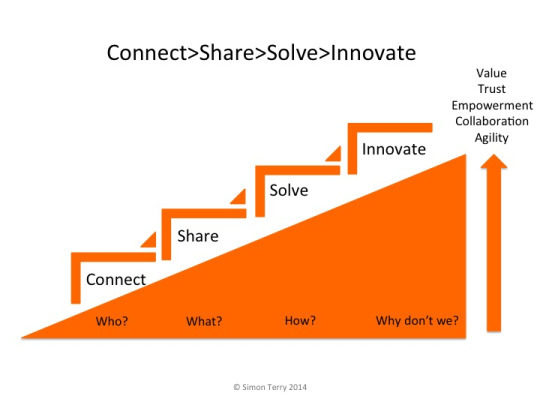
  • Connect People: Help others find their path & communities in the network
  • Share our Work and our Passions: work out loud on the activities going on in your life to let others learn and help
  • Solve Challenges with and for others to share your expertise, experience and capabilities
  • Innovate and Experiment to create new value together

Start where you feel comfortable. Start where you feel you can make a difference. Your networks and your purpose will guide your leadership work from there.

Manage Your Performance (in A Network)

“Keep away from people who try to belittle your ambitions. Small people always do that, but the really great make you feel that you, too, can become great.” – Mark Twain

Organisations are moving away from traditional performance management. Expensive managers are being removed from organisations as they explore ways to be flatter and more responsive. More people are working freelance. 

Managing your own performance is more important than ever. However, managing your own performance involves real challenges both in terms of personal and network value.

A Story of Doubt

Late in 2015 I lost my way. 2015 was a good year measured on my set of measures and most objective measures. I was busy on work that mattered to me and my clients. The work was purposeful, rewarding and recognised so by clients and others. However as the year came to an end after a few needed weeks of rest, I found myself doubting my performance and my momentum into 2016. With distance from my work, I wasn’t sure how well I was actually going to do in the new year.

Quite late in December I found out I was being considered for a Microsoft Most Valuable Professional award to be announced on 1 January. Until this occurred, I wasn’t even aware the award existed. In a matter of days, winning an award had become an important external benchmark to how I saw my performance. This need was an emotional, not a rational process. I slept terribly on the night of the 1 of January (due to timezones the award was announced early 2 January in Australia) and awoke to find no email from Microsoft. I was disappointed and resigned to the outcome as confirmation of my doubts. Dejected, I began reading the comments of winners on social media and congratulating those I know who had won. An hour later discovered an email in my junk mail and I realised a great insight into my personal limits of performance management.

Performance is Personal

Performance management is a personal process that happens between our ears, not on paper. We have already made the personal investment of our time and our efforts when the evaluation begins. We pretend it is rational and objective but we know that we are human with doubts, ego & emotions to manage. The SCARF model from David Rock highlights many ways that performance management can go wrong, by violating our sense of status, certainty, autonomy, relatedness or fairness. Anyone who has been through a corporate performance management process knows that an external opaque process of evaluation of feedback can trigger all sorts of reactions. What looks simple on paper rarely works that way in real human conversations.

Moving from performance management once a year by others to continuous self-management makes the process no easier and far more personal. The movement from an external accountability to a personal responsibility improves autonomy and can reduce relationship stress but it still leaves challenges and removes many external benchmarks. It also creates hard new responsibilities to fairly assess ourselves relative to others. We still have the same doubts and challenges but in many cases we can now struggle to accurately and consistently measure the true value of our work.

Valuing Yourself Accurately

In the era of self-management, workers need the capability to accurately value their work and their performance. From pricing your work, to negotiating your responsibilities, to managing the performance and reward process are all founded on the ability to accurately value your work and be able to communicate this value to others. New ways of working give us new processes to manage performance but fundamentally these processes still rely on our ability to accurately assess our own value and to negotiate that with others. 

When I lost confidence in my own measures of success, I found myself outsourcing these to a partial external event of benchmarking. That made little sense as a process of evaluation. There was only some overlap between the award criteria and how I deliver value to my clients and what I value. The most valuable part of the process was it was a partial measure of reputation in one community (see below). The process was more akin to grasping for a lifeline than genuinely seeking to understand how much value I had created.

This demand for accuracy in valuation challenges us all to tackle the reality of our performance in new ways. Traditionally we both under and over estimate different elements of our performance. Many traditional self-assessment process take advantage of this using benchmarks to knock off our over assessments but leaving our undervaluations. Just like my experience, they work as partial measures of the value we create, over reliant on benchmarks and competitive assessment on narrow criteria. 

Managing our responsibility to be accurate demands we test our self-perceptions continuously, focus on creating greater value and shake those crises of self-confidence that hold us back. We need to genuinely learn from failures and not reposition or hide them. We need to overcome our triggers to hold a true growth mindset. We need to become our own performance leaders, helping ourselves to become as great as we can be.

We also need to start to value ourselves far more as players in a complex system rather than a widget in a mechanistic process. 

Your Value in a Network

The most underutilized resource still waiting for discovery may be our ability to cooperate much more deeply than the systems of work have so far envisioned. – Esko Kilpi

All the value that we create is delivered for others and negotiated with others. We cannot escape the networks in our work. We are not an island widget producing output in a process. We are humans tackling increasingly complicated problems in webs of relationships that stretch through our organisations and out to the networks where our purposes have their effects.

Creating this network value is the key challenge and as Esko Kilpi highlights in the article above this depends more on cooperation and collaboration than competitive mindsets. Most performance management is competitive, dividing a scarce pool as an incentive. Network performance management is abundant, encouraging collaboration and cooperation to create new innovative value for individuals and for the stakeholders who benefit from the organisations purpose. Network performance management starts to bring us back to elements very similar to those of the SCARF model directly:

  • How we gain status (in the form of authority, reputation & influence) in our networks
  • How we react to and embrace uncertainty as a source of value creation through learning and experimentation
  • How we manage our autonomy and translate our opportunities for personal agency into value creation and fulfil our purpose
  • The breadth and depth of our relationships through our ability to broker connection, coordinate activity and access necessary information and capabilities
  • The fairness of our network exchanges in terms of reciprocity and mutual value creation.

Leadership in networks is a critical capability for all of us in the future of work. As Harold Jarche has noted, this kind of leadership is less controllable than traditional management, which presents its own issues for the management of collaboration. Leadership matters because it is the critical element to creating and sustaining value creation in networks as Dion Hinchcliffe has eloquently explained.

Managing performance in networks requires us to focus on both the need for new accuracy in our personal assessments and leadership of collective aspects of the abundant opportunities for greater performance through collaboration & cooperation. Individually and collectively we will need new measures, new confidence and to learn as we go on better ways to work.
Sell Aggression. Buy Relationships

image

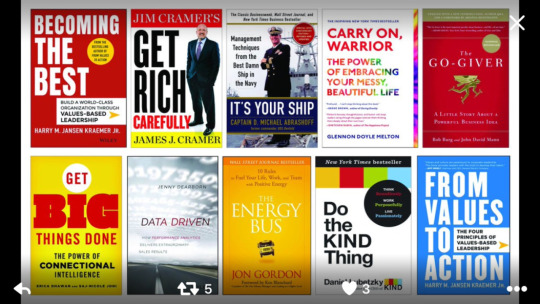
I saw a list shared on twitter of 25 books for CEOs from 2015. The above image was attached to the tweet. I reacted immediately to the macho impression of the attached image of the covers. Then I looked more closely and realised many of the subtitles run contrary to the general image of the cover. These books look like the typical aggressive competitive advice for CEOs to outcompete, outperform and to go big. However, the actual advice within the aggressive red or yellow cover is far more nuanced. Human relationships matter.

Sell Aggression

This is an old game. Strong leadership sells. We sell aggression. Alpha males rule the chimp pack. Wear red and yellow. Stand in a power pose. Be the best. Be simple. Know the right answer. Do one thing better than anyone else on earth and rule the whole damn thing.

Except this is the cheap shot. Aggression primes our primate brain and gets our attention. Aggression makes us pick up the book. Aggression isn’t what makes change happen and isn’t what delivers results. Aggression is the empty wind of a loud shouting exploitative push economy. Aggression is the bait in a leadership bait and switch.

Buy Relationships

Any successful leader knows that relationships is where the real work gets done. Collaboration and cooperation drive progress, not force. Nothing gets done alone. You don’t want anything done by the coerced. You want commitment not compliance.

Humanity triumphs again and again against the forces of power. Force an outcome and passive resistance will undermine its effectiveness. Bureaucracy rules. For every blustery threat, the real deal gets done in a quiet conversation as power is traded for persuasion.

Win commitment and you will see people’s capabilities blossom. The messy beautiful work of leveraging the capabilities of people happens in rich, complex and unpredictable networks of oh so human relationships. That far less saleable work, but it is the work of value. Relationships are where leaders seal the deal when they switch away from the bait of aggression.

Portfolio for the Future of Work

As our economies become more connected, faster and more complicated, these human relationships will only increase in value. Relationships bring information, trust & authority, critical differentiators, cost-lowering capabilities and fundamental elements of effectiveness.

The portfolio strategy for leaders in the future of work is to be long relationships. Those relationships will make your work far richer and more human. Buy now.

Leadership is a gift given and received

You aren’t invited to lead because of what it will do for you. You aren’t invited to lead because of what you have done. You aren’t invited to lead because of your role.

People follow because of the value you create for & with others. Leaders help people build shared purpose, vision and understanding, create new capabilities and find paths to action. The action generated from leadership helps people to create new value together.

Anyone who works to help others create value can lead. Give the gift of your talents at this collaborative work and others will recognise your actions with the gift of leadership.

What an abyss of uncertainty whenever the mind feels that some part of it has strayed beyond its own borders; when it, the seeker, is at once the dark region through which it must go seeking, where all its equipment will avail it nothing. Seek? More than that: create. It is face to face with something which does not so far exist, to which it alone can give reality and substance, which it alone can bring into the light of day. – Marcel Proust

The Madeleine

The madeleine is a delightful cake and an ideal inspiration for Proust’s great remembrance. Each madeleine depends on a series of transformations. There are many variations on the basic recipe but they all involve these changes to achieve the final result.

First sugar and eggs are beaten until pale and doubled in volume trapping air.

Then butter and flour are gently folded in to form an airy batter.

The batter rests. This is the step that takes confidence and daunts the beginner. However waiting to the right time thickens the batter to the consistency of a fine mousse.

Lastly the heat of the oven sets the batter into light & fragrant cakes.

The Transformations of Innovation

When we confront uncertainty and seek to create innovation whether in knowledge, a product or a business, we must follow similar series of transformations. We must create new ways forward ourselves by taking the uncertainty and transforming it.

We must add volume: if we don’t know then we need to seek, explore and learn. We need to add to our uncertainties before we can resolve them. We need more context and bigger systemic view to form new knowledge, new services or paths forward for a business.

We must create structure: when our expanded ideas begin to collapse under their weight and we doubt anything useful will come we need to start adding structure. Hypotheses, examples, principles, systems and process to support our new ways.

We need to use time as an ally: Not every new idea should be tested immediately. Many do. Some need to mature. Some need more work. Some need to meet the right circumstances. We need to use this time with confidence to enable our ideas to strengthen. This is not passivity. This is the work. We need to be ready to act when the ideas are ready to test.

We must test our innovation in fire: Testing is the only way to discover the flaws. We may fail and need to start again. The obstacles are the work. We might succeed and be able to continue testing all the while to ensure we remain on track to something better.

These transformations of innovation are not easy. These transform us as much as our innovation. They make us ready for success. They are the work we must do to surface great new ideas, products and businesses. We can’t skip steps. We can’t race ahead. We must just stay at our work of creating the future.

Ten times over I must essay the task, must lean down over the abyss. And each time the natural laziness which deters us from every difficult enterprise, every work of importance, has urged me to leave the thing alone, to drink my tea and to think merely of the worries of to-day and of my hopes for to-morrow, which let themselves be pondered over without effort or distress of mind.

And suddenly the memory returns… – Marcel Proust

You Can’t Live A Cliché

Mr. McGuire: I want to say one word to you. Just one word.
Benjamin: Yes, sir.
Mr. McGuire: Are you listening?
Benjamin: Yes, I am.
Mr. McGuire: Plastics.
Benjamin: Exactly how do you mean?
Mr. McGuire: There’s a great future in plastics. Think about it. Will you think about it?
– Dialogue from The Graduate. Directed by Mike Nichols. Written by Charles Webb, Calder Willingham and Buck Henry.

A cliché like any other meme appeals at first because of its comfortable familiarity. However we soon discover that overuse has robbed it of its meaning or worse drawn in a the dark side of platitudes, cynicism and other unwanted resonances. We can’t live a cliché. We must choose our own new path.

Many people stress that they can’t live the life of a comfortable cliché. Either they don’t want one of the well trodden paths or they have met an accident on the way that changes their trajectory. They think that their path should be the same as others, the same as the expectations of their society or even safer, easier or more comfortable, like the nodding response to a cliché.

Every cliché begins as a novelty – an unique choice. It becomes tired when others fail to exercise their choice and just repeat it unthinkingly. The lack of choice and consideration opens up the path to dullness and darkness.

A cliché usually disguises a much more complicated reality. Life is much more complicated and the real paths that others take have many hidden vicissitudes. Trying to force thinks to meet a template of success is usually an exercise of much frustration and little value.

We cannot escape choice. The paths of others can be a guide and an inspiration. However we still need to choose our own way. We must embrace the novelty of our own choices & circumstances. Our desires and accidents are guidance to our own unique path, not a delay or a distraction from the cliché.

We can’t live in the light plastic emptiness of a cliché. Our daily choices push us into something far more valuable.