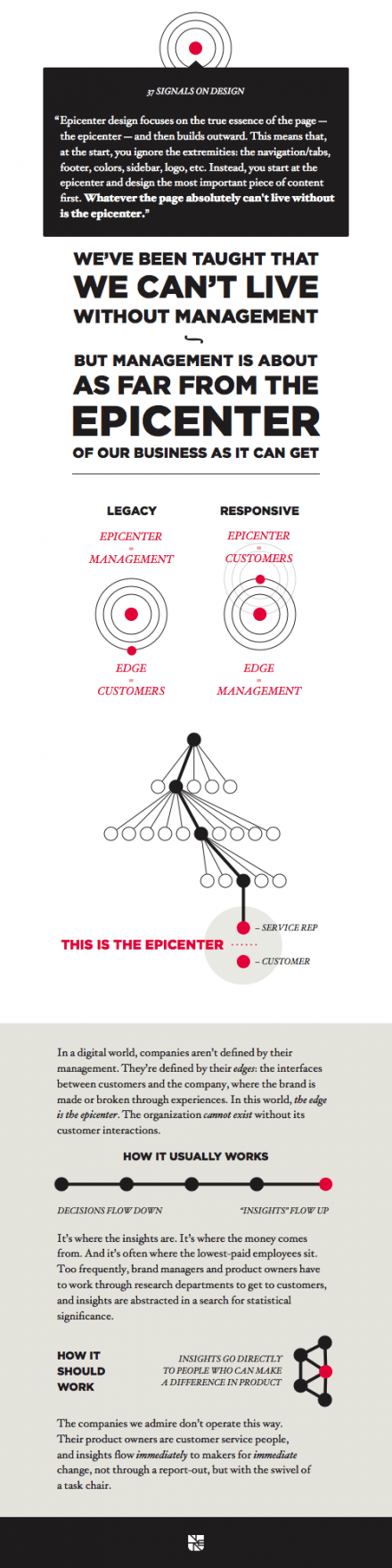
Move the weight of your organisation to the customer.
Innovation, Collaboration, Learning & Leadership
Move the weight of your organisation to the customer.

Human Resources best practices are often widely copied. Best practices are contextual and the future of work will require us to carefully revisit past practices.
If there’s a broken photocopier in HR, you might want to order a new scanner instead.
The HR Copier is Broken
Much of what we think of as modern HR practices is copied from long ago. Often these copies are from remarkably few organisations. To name a few examples:
The HR photocopier continues to churn out the same best practice recommendations for widely divergent organisations. Jon Husband has pointed out that many of our core HR role design practices traced back to the 1950s and shape our thinking about roles, hierarchy and knowledge. In the first CAWW webinar, Harold Jarche made the point that best practices in networks are often highly contextual, depending upon the situation of the organisation, its culture and its environment. Often these practices are applied as tools without reference to the culture and entire system of practices that made them successful in the first place. Applying best practices blindly can result in unintended and even perverse consequences. For example, the diverse results of the application of forced ranking of performance is evident in any search on the term.
Copying any of these practices carries into your organisation assumptions and values that may not reflect those you would choose on your own. Implicit assumptions, like distrust of employee motivation and capabilities, can have widespread impacts and hold back the ability to leverage employee engagement, creativity and innovation. Worse still your culture is likely to subvert the process to suit the normal pattern of interactions. People make their own unique sense of new HR practices, particularly if they requires actions that are uncommon or uncomfortable in your organisation like hard conversations, transparency of performance and conflict. Perfecting the tool alone will not deliver the promised outcomes in this case.
Disruptive change makes blind copying even more dangerous. Copying competitors and past practices is no guarantee of success in a changing environment. Even the organisations above have reconsidered practices and seen variations in performance over time. The pace of change around organisations, the threats to their talent and the need for people to respond have all changed greatly.
Copying practices from the pages of business publications, recommendations of consultants or piles of management books leads to focus internally on implementation and management. HR skillsets become dominated by the skills to manage these borrowed practices. There becomes a real danger that the practices once implemented will ossify and become barriers to agility and performance improvement.
Buy a Scanner instead
Swap the copier for a scanner. Scan the system, test improvements & learn.
Human Resources can play a critical role in helping an organisation be more responsive to its environment. Few of the practices above are tailored to a digital, social and network era. An organisation needs constantly to be tuning the interactions, practices and conversations of the organisation to meet needs for agility, capability and performance. To play this role, the function will need to both look outwards to the networks around the organisation, contribute perspectives on capability and performance alignment to strategy and deeply understand the interactions, barriers to success and drivers of performance internally. This activity is a critical strategic enabler and major source of intelligence for managers looking for the next competitive advantage.
In an era when continuous improvement of processes and practices is the norm, human resources needs to be seeking ways to drive critical daily improvements in the systems inside the organisation that manage a critical component of performance, people. HR’s scanners should be leading that process. Because people are not just cogs in a process, we also have the opportunity to engage them deeply in the design, implementation and improvement of the practices that directly impact them.
Most importantly of all HR needs to understand the diversity of the research into new practices and conduct its own experiments, measurement and innovation. After all, a unique culture of HR practices ideally suited to the culture of one organisation is the hardest competitive advantage to replicate.

Human Resources best practices are often widely copied. Best practices are contextual and the future of work will require us to carefully revisit past practices.
If there’s a broken photocopier in HR, you might want to order a new scanner instead.
The HR Copier is Broken
Much of what we think of as modern HR practices is copied from long ago. Often these copies are from remarkably few organisations. To name a few examples:
The HR photocopier continues to churn out the same best practice recommendations for widely divergent organisations. Jon Husband has pointed out that many of our core HR role design practices traced back to the 1950s and shape our thinking about roles, hierarchy and knowledge. In the first CAWW webinar, Harold Jarche made the point that best practices in networks are often highly contextual, depending upon the situation of the organisation, its culture and its environment. Often these practices are applied as tools without reference to the culture and entire system of practices that made them successful in the first place. Applying best practices blindly can result in unintended and even perverse consequences. For example, the diverse results of the application of forced ranking of performance is evident in any search on the term.
Copying any of these practices carries into your organisation assumptions and values that may not reflect those you would choose on your own. Implicit assumptions, like distrust of employee motivation and capabilities, can have widespread impacts and hold back the ability to leverage employee engagement, creativity and innovation. Worse still your culture is likely to subvert the process to suit the normal pattern of interactions. People make their own unique sense of new HR practices, particularly if they requires actions that are uncommon or uncomfortable in your organisation like hard conversations, transparency of performance and conflict. Perfecting the tool alone will not deliver the promised outcomes in this case.
Disruptive change makes blind copying even more dangerous. Copying competitors and past practices is no guarantee of success in a changing environment. Even the organisations above have reconsidered practices and seen variations in performance over time. The pace of change around organisations, the threats to their talent and the need for people to respond have all changed greatly.
Copying practices from the pages of business publications, recommendations of consultants or piles of management books leads to focus internally on implementation and management. HR skillsets become dominated by the skills to manage these borrowed practices. There becomes a real danger that the practices once implemented will ossify and become barriers to agility and performance improvement.
Buy a Scanner instead
Swap the copier for a scanner. Scan the system, test improvements & learn.
Human Resources can play a critical role in helping an organisation be more responsive to its environment. Few of the practices above are tailored to a digital, social and network era. An organisation needs constantly to be tuning the interactions, practices and conversations of the organisation to meet needs for agility, capability and performance. To play this role, the function will need to both look outwards to the networks around the organisation, contribute perspectives on capability and performance alignment to strategy and deeply understand the interactions, barriers to success and drivers of performance internally. This activity is a critical strategic enabler and major source of intelligence for managers looking for the next competitive advantage.
In an era when continuous improvement of processes and practices is the norm, human resources needs to be seeking ways to drive critical daily improvements in the systems inside the organisation that manage a critical component of performance, people. HR’s scanners should be leading that process. Because people are not just cogs in a process, we also have the opportunity to engage them deeply in the design, implementation and improvement of the practices that directly impact them.
Most importantly of all HR needs to understand the diversity of the research into new practices and conduct its own experiments, measurement and innovation. After all, a unique culture of HR practices ideally suited to the culture of one organisation is the hardest competitive advantage to replicate.

The National Department of Poetry – another brilliant (tragi)comic by Grant Snider. Pair with James Dickey on how to enjoy poetry and Coleridge on what poetry is, and Edward Hirsch on how to read a poem.
Great poetry references

Poster: The Purpose is in the Work

Photo: The hospital experience – empty of design but full of mismatched furniture.
Recently I visited a hospital accompanying someone through registration for a day procedure. The striking thing about this healthcare experience was that it was engineered for the hospital to achieve outcomes but had a complete absence of any design in the patient experience.
Everyone of the staff were concerned and caring. Yet the healthcare experience felt confusing, difficult, alien and uncomfortable. Everything you encounter is engineered for the hospital’s view of that step in the process. The patient experience in each step or across all the steps was not as well considered.
How the Patient Experience can Improve
Here are some examples:
I have been involved in lots of work improving customer experiences. This experience is typical when services have been fractured into individual steps. The model people have is Adam Smith’s pin factory with a focus purely on specialising and optimising productivity in each discrete step for organisational outcomes. However modern factories are no longer run on this basis. Competitive pressures have meant factories constantly improve, removing waste with focus on coordination of the whole production system, continuous improvement and lean manufacturing.
A poor patient experience not only creates unnecessary issues for a patient, it is wasteful & counterproductive for the organisation and demoralising for all the people involved. Patients want the experience to be quick and effective so give them information and a role in the process. Better patient experiences will reduce the cost and improve the quality of care and the environment for everyone.
Making the Patient Experience Better
The steps for change are simple:
In the future of work, we are going to talk a lot about trust.
We will need to consider trust deeply because it is a critical underpinning to success in our new ways of working. We need to recognise the trust that we choose to grant is a design choice. We are likely to need a new precision in our understanding of trust.
Most of all we need to ensure that the distrust that pervades our hierarchies is not a barrier to building new trust in networks.
Our hierarchical organisations often hide an assumption of deep distrust. Organisational structure, role design, silos assume people must be separated to generate clear performance measures. Performance management and reward schemes assumes people will not perform without extrinsic motivations. Management, monitoring and compliance are often set to treat 100% of employees poorly against a tiny risk of failure. People are assumed incompetent unless proven otherwise. If your processes allow no variations, discretion or exception handling, then there is likely little trust in your organisation. If messages are consistently spun and the real news is on the grapevine, not the intranet, then there is no trust in communication.
Trust will emerge in effective networks. However, trust is reciprocal. If your hierarchy is telling people that they can’t be trusted, then it is getting in the way of the emergence of trust in the networks in and around the organisation.
Remember how you treat your people plays a large part in how they will treat each other and their networks, including your customers and communities.
Don’t expect your people to give and build trust over your distrust in them.
In the future of work, we are going to talk a lot about trust.
We will need to consider trust deeply because it is a critical underpinning to success in our new ways of working. We need to recognise the trust that we choose to grant is a design choice. We are likely to need a new precision in our understanding of trust.
Most of all we need to ensure that the distrust that pervades our hierarchies is not a barrier to building new trust in networks.
Our hierarchical organisations often hide an assumption of deep distrust. Organisational structure, role design, silos assume people must be separated to generate clear performance measures. Performance management and reward schemes assumes people will not perform without extrinsic motivations. Management, monitoring and compliance are often set to treat 100% of employees poorly against a tiny risk of failure. People are assumed incompetent unless proven otherwise. If your processes allow no variations, discretion or exception handling, then there is likely little trust in your organisation. If messages are consistently spun and the real news is on the grapevine, not the intranet, then there is no trust in communication.
Trust will emerge in effective networks. However, trust is reciprocal. If your hierarchy is telling people that they can’t be trusted, then it is getting in the way of the emergence of trust in the networks in and around the organisation.
Remember how you treat your people plays a large part in how they will treat each other and their networks, including your customers and communities.
Don’t expect your people to give and build trust over your distrust in them.