
If you needed a sign, this is it.
Innovation, Collaboration, Learning & Leadership
If you needed a sign, this is it.

Working out loud is an important practice to escape the sense of social media as a challenging exercise of pitching yourself.
Many people struggle with the feeling that blogging and other forms of social media is self-promotion, bragging or a claim to expertise. Reluctant to pitch themselves publicly these people sit on the sidelines. As a result they and their networks miss the value of their contributions.
John Stepper has made the point that everybody works so working out loud is accessible to all of us. There is a humility that is essential to joining in the process of sharing partially completed work. There is no need to pitch when the process is a simple as:
Working Out Loud = Narrating your work + Observable work
The work need not be perfect. It should not be finished. Working out loud is a process of learning and collaboration. The idea that you would share work in progress to invite discussion presupposes you don’t know everything and don’t have all the answers.
The benefits of working out loud don’t always arise from a single post. However, working out loud is an application of the the Formula for Awesome. Working out loud supplies the humility, generosity and collaboration.
All you need to add is some purpose, urgency and persistence. Your daily work challenges should give you more than enough for these three. If you sustain the practice of working out loud, you will learn more approaches to working out loud, you will gain comfort in social collaboration and you will build trust with your colleagues.
A side benefit of working out loud is that you will develop an authentic reputation for both the work you do and the generosity of your collaborative style. That’s far more powerful than a sell job that everyone views cynically. Build a reputation for doing, not talking.
So here’s your next challenge. Work out loud each day for 99 days. Don’t worry about the Pitch. Just share and reap the rewards of collaboration.
PS With apologies to Jay-Z. Thanks to Ross Hill and the many Do Lectures conversations about social collaboration for the inspiration.
An ongoing project of documenting the inspirations from Do Lectures Australia.

Mindfulness was a common theme of discussion at the first Australian Do Lectures. Many of the speakers referenced the importance of their practice in some way. Many of the attendees were practitioners of one technique of mindfulness or another.
In one discussion, we explored the many mindfulness techniques that people did not even consider a practice. These ranged from a deep breath at frustration, to a long morning walk or the powerful time alone with your thoughts when swimming.
Why would an event of doers be so focused on discussion of meditation, yoga, reflection and the other practices of mindfulness and reflection?
Mindfulness is a precondition to presence and focus. A mind that is not present and that is cluttered with thoughts and emotions will struggle to focus on the opportunities for change. Irrelevant thoughts, distractions and doubts eat at the capability to deliver and create change.
The simple practice of being mindful can help you to help make the world a better place. Importantly, it will change you in the process too.



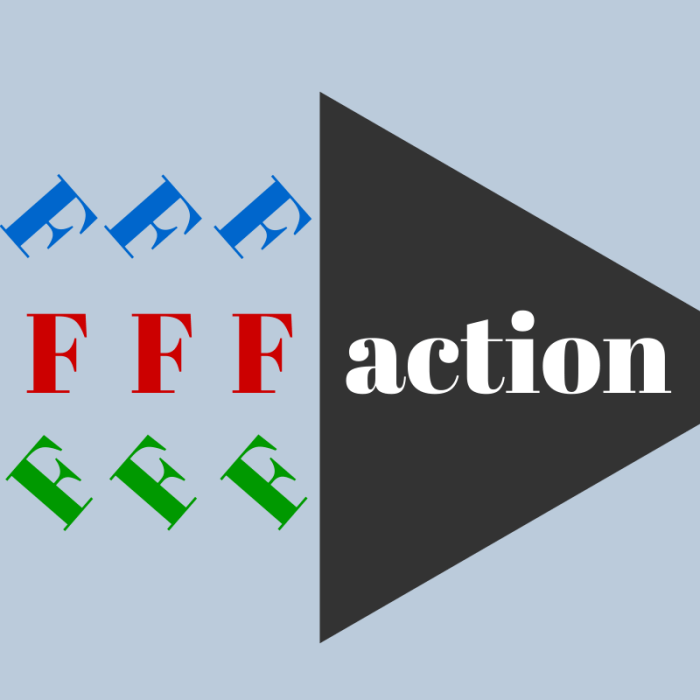
Unite factions in one common action. The only factions that matter are differences in action.
Thanks to Richard Martin (@indalogenesis) for the inspiration
The Tools of New Sense
Every man is made a fool through his own wisdom – Erasmus
Humour plays with our ability to make meaning from our circumstances. The best humour involves a deliberate misdirection of meaning before dropping us into a new insight with the punchline.
The tools of humour are the same tools as leaders, change agents and entrepreneurs need to use to find and share new meaning. At the heart of how we make and share meaning are three key tools of our sense-making:
Change the Context, Categories and Narrative
When I hear any man talk of an unalterable law, the only effect it produces upon me is to convince me that he is an unalterable fool – Sydney Smith
An adept fool, as a master of humour, can play with each of these tools. Humour makes us fools through what we know. Great fools leveraging our settled patterns to send us in the wrong direction before showing their ability to make us laugh as we are switched away to another insight.
Change leaders need to both understand and change their own contexts, categories and narratives. This activity is at the heart of finding new insights to drive their changes and actions.
Critically, change leaders need to be able to share these new insights which requires the ability to help others to hear new narratives, shift categories and change their frames. This is the work leaders need to do to drive change in meaning.
Next time you need to drive change consider:
Conversations correcting errors are an important part of any enterprise social network. Learning begins in these discussions and that learning is widely shared.
Many organisations are concerned to have a ‘single source of truth’. Often the discussion of an enterprise social network will be seen as offering a conflict with an enterprise single source of truth. If anyone can answer a question in the network, how do we know their answer is right?
The answer is because it will be public. A public source of error is one that can be identified and corrected by others with better access to the source of truth or better ability to answer the question.
Most organisations are filled with small private errors that circulate widely. We learn from gossip. We are taught our jobs by our colleagues. We help others to understand. We make our own meaning as we translate the top-down one-way communications in the organisation into something relevant to our roles.
Myths and errors accumulate and circulate easily in the private social interactions in an organisation. Because there is little conflict in a group who all share an error, there may never be a call to check the information against a source of truth. This is one reason while enterprise knowledge repositories become dull and quiet places.
The minute someone shares one of these errors in an enterprise social network in answer to a question or discussion there is an opportunity for it to be corrected. Once an error is public it can be checked and a better answer shared. The experts in charge of the source of truth and anyone else with a perspective can add their own insights. The discussion alone can draw attention to areas of common misunderstanding or issues requiring further education.
A failing of many single sources of truth in organisations is that they are not updated when things change. It can be hard keeping all the truths up to date in a timely manner in times of rapid change. In this case, the single source of truth becomes the single source of error. The power of a public conversation in an enterprise social network is that these errors can be highlighted too. Even the source of truth can be corrected when it needs to be.
Transparency has a disinfectant quality in organisations. Make sure that your single source of truth is supported with a public discussion of error. Seeing errors in public is far better than them circulating in private.

Fools & Leaders Question Meaning
Life is far too important a thing ever to talk seriously about. Oscar Wilde
When it comes to serious challenges in life, Oscar Wilde & Neil Gaiman have a point. A key advantages of humour is that it allows for the lightheartedness and irreverence that lets us reconsider our understanding of our circumstances. The fool in a medieval court was the one who could speak new truths because he could play with meaning and context.
Great insights and opportunities for change come when people rethink the meaning of their circumstances and their actions.
Philosophical issues like meaning and sense are not popular topics in the halls of business. Ask a manager to unlearn some common practice and you will get a blank stare. Often those who start conversations that question the sense of commonly accepted practices and beliefs are quickly categorised as fools.
Managers find it hard enough to embrace the time for reflection in the midst of the pressures for constant action. However, we need leaders to go further and find new meaning to realise the value for their businesses and the potential of the future of work. Creating change and new value depends on the ability to make new sense out of circumstances and opportunities and translate that new sense to new behaviours.
New Thinking Needed
Research is to see what everybody else has seen, and to think what nobody else has thought. – Albert Szent-Gyorgyi
Spend time with the creative, the innovators, the entrepreneurs and the change agents and you discover that they specialise in looking beyond typical thinking. Making new sense of their circumstances and translating that to new action is a speciality of those who create change. The inspirations from a new sense of possibility is where they find the opportunities to act in new ways and to break through the perceived limits and institutions that have constrained others.
In some cases, this new meaning is a denial of constraints. Roberto Unger described what he called ‘negative capability’ as ‘denial of whatever in our contexts delivers us over to a fixed scheme of division and hierarchy and to an enforced choice between routine and rebellion’. Many entrepreneurs and change agents refuse to accept the currently accepted options presented for a problem or practice.
Finding another creative way beyond the frustratingly constrained choice between insider (who is constrained, muzzled & influential) and outsider (allowed to be unconstrained, confrontational & excluded) is critical if we are to see greater change. What matters in many organisations is not the loudness of the talk, what matters is meaning and action.
In his book Opposable Mind, Roger L Martin described one positive capability to break the accepted meaning as integrative thinking, a capacity to take a wider view of the systems and outcomes and find new paths forward. We need to ensure that the creation of new sense is a valid management activity if we are to leverage its creative potential in the future of our work and our organisations.
Lead Sense-Making
A pile of rocks ceases to be a rock pile when somebody contemplates it with the idea of a cathedral in mind.- Antoine Saint-Exupery
As managers adapt to a rapidly changing world, they are going to need to accept new uncertainties. We will need to help build the capability to still manage.
The best way for managers to deal with the rapidly changing circumstances we find in the new networked economy is for them to lead the process of making new sense of why organisations exist, the value that they can create and how. The future of work is the future of leadership and human potential.
This change in leadership will require managers to break with the comfort of current approaches to the understanding of their organisation and roles. Incrementalism which is by definition grounded in current meaning will not deliver transformative changes. Managers will need to explore new meaning, experiment with its application and convey that meaning to others through stories and action.
Sense-making is a critical foundation for a responsive culture. We already see sense-making as a characteristic of success in the use of new forms of collaboration. Sense-making is also a critical component of personal knowledge management in an era with an abundance of information and stimulation. Instead of a once-and-done exercise in understanding leaders will need to embrace a continuous learning and sense-making to find new and better opportunities for change. This ongoing process will need to be a part of people’s work widely across the processes and interactions in the Responsive Organisation.
People make new sense of themselves, their roles and their position in the world as they choose to adopt new behaviours and create new value. We need to explicitly design our processes and roles to allow for sense-making. Only through leadership of this work will we find the new ways to change the culture & practices of our organisations
Revolution doesn’t happen when society adopts new technologies – it happens when society adopts new behaviors – Clay Shirty