There is too much emphasis on methods and tools, and not enough on the people using them.
Otto Scharmer (via toddhoskins)
Chair and Non-Executive Director, Advisor, and CEO helping healthcare, finance, and educational organisations drive growth, leverage technology innovation, and realise the strategic value of transformation
There is too much emphasis on methods and tools, and not enough on the people using them.
Organisations often treat compliance with policy as an outcome. This approach confuses the tool and the result. Policy is guidance, should allow for exceptions and should change to deliver the best results.
When I began my career as a banker, an experience colleague introduced me to Lending Policy 100. Numbered to sit at the beginning of a long list of lending and credit policies, the purpose of Lending Policy 100 was to remind bankers that policy is merely a guideline for action and people should always exercise judgement. To put it in simple terms, Lending Policy 100 was a policy to explain that policies are only policies.
This was bureaucratic absurdity but a useful tool. Lending Policy 100 came in handy when you needed to ask someone to exercise judgement. Appealing to another policy gave people the wriggle room to escape the strictures of another policy that would otherwise be poorly applied. Lending Policy 100 enabled you to turn the conversation away from the tool and back to the result.
Policies are just tools. They are guidelines to help people do their job in an efficient and compliant way. Tools require application to specific circumstances and employees need to make judgement calls to interpret and apply the policy in each circumstance. No tool is always effective. What matters is how it is applied.
When organisations mandate policy compliance they have confused the tool and the result. Organisations fail to achieve their outcomes when they refuse to acknowledge that you can’t anticipate every circumstance, that things change and that employees need to be trusted to exercise discretion in cases to get the right outcome.
Focusing on perfection in policy compliance leads directly to your employees saying “But that is our policy” the next time they need to explain a bad decision to a customer, employee or other stakeholder. Zero tolerance for exceptions is zero tolerance for the reality of your customer’s world. There is no better way to show indifference to customers.
Responsive organisations accept that policy must work to achieve the desired outcomes. They focus on employees commitment and capability to achieve these outcomes, not compliance with policy. They allow for exceptions and they allow for people to ask for changes in policies when required. Policies can be a useful tool in organisations (even if only for legal reasons), but they must be applied as an agile and responsive tool.

If you needed a sign, this is it.

Working out loud is an important practice to escape the sense of social media as a challenging exercise of pitching yourself.
Many people struggle with the feeling that blogging and other forms of social media is self-promotion, bragging or a claim to expertise. Reluctant to pitch themselves publicly these people sit on the sidelines. As a result they and their networks miss the value of their contributions.
John Stepper has made the point that everybody works so working out loud is accessible to all of us. There is a humility that is essential to joining in the process of sharing partially completed work. There is no need to pitch when the process is a simple as:
Working Out Loud = Narrating your work + Observable work
The work need not be perfect. It should not be finished. Working out loud is a process of learning and collaboration. The idea that you would share work in progress to invite discussion presupposes you don’t know everything and don’t have all the answers.
The benefits of working out loud don’t always arise from a single post. However, working out loud is an application of the the Formula for Awesome. Working out loud supplies the humility, generosity and collaboration.
All you need to add is some purpose, urgency and persistence. Your daily work challenges should give you more than enough for these three. If you sustain the practice of working out loud, you will learn more approaches to working out loud, you will gain comfort in social collaboration and you will build trust with your colleagues.
A side benefit of working out loud is that you will develop an authentic reputation for both the work you do and the generosity of your collaborative style. That’s far more powerful than a sell job that everyone views cynically. Build a reputation for doing, not talking.
So here’s your next challenge. Work out loud each day for 99 days. Don’t worry about the Pitch. Just share and reap the rewards of collaboration.
PS With apologies to Jay-Z. Thanks to Ross Hill and the many Do Lectures conversations about social collaboration for the inspiration.
An ongoing project of documenting the inspirations from Do Lectures Australia.

Mindfulness was a common theme of discussion at the first Australian Do Lectures. Many of the speakers referenced the importance of their practice in some way. Many of the attendees were practitioners of one technique of mindfulness or another.
In one discussion, we explored the many mindfulness techniques that people did not even consider a practice. These ranged from a deep breath at frustration, to a long morning walk or the powerful time alone with your thoughts when swimming.
Why would an event of doers be so focused on discussion of meditation, yoga, reflection and the other practices of mindfulness and reflection?
Mindfulness is a precondition to presence and focus. A mind that is not present and that is cluttered with thoughts and emotions will struggle to focus on the opportunities for change. Irrelevant thoughts, distractions and doubts eat at the capability to deliver and create change.
The simple practice of being mindful can help you to help make the world a better place. Importantly, it will change you in the process too.






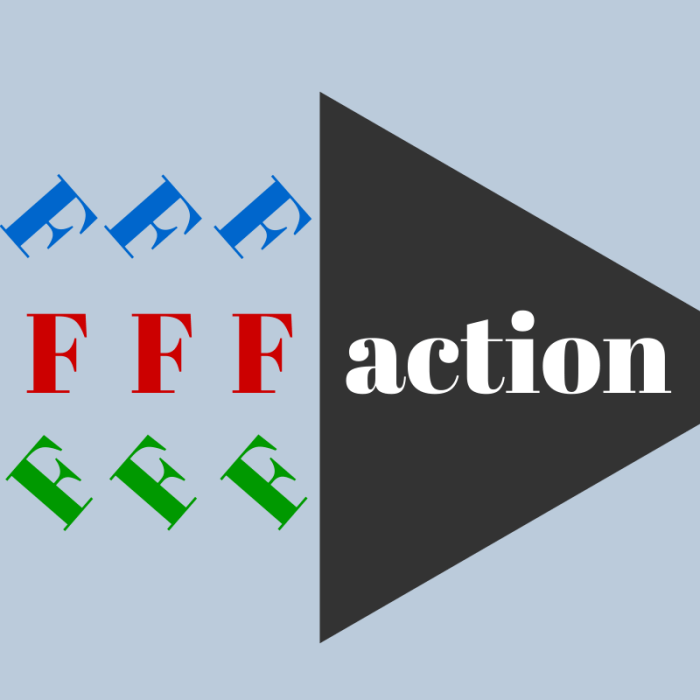
Unite factions in one common action. The only factions that matter are differences in action.
Thanks to Richard Martin (@indalogenesis) for the inspiration
The Tools of New Sense
Every man is made a fool through his own wisdom – Erasmus
Humour plays with our ability to make meaning from our circumstances. The best humour involves a deliberate misdirection of meaning before dropping us into a new insight with the punchline.
The tools of humour are the same tools as leaders, change agents and entrepreneurs need to use to find and share new meaning. At the heart of how we make and share meaning are three key tools of our sense-making:
Change the Context, Categories and Narrative
When I hear any man talk of an unalterable law, the only effect it produces upon me is to convince me that he is an unalterable fool – Sydney Smith
An adept fool, as a master of humour, can play with each of these tools. Humour makes us fools through what we know. Great fools leveraging our settled patterns to send us in the wrong direction before showing their ability to make us laugh as we are switched away to another insight.
Change leaders need to both understand and change their own contexts, categories and narratives. This activity is at the heart of finding new insights to drive their changes and actions.
Critically, change leaders need to be able to share these new insights which requires the ability to help others to hear new narratives, shift categories and change their frames. This is the work leaders need to do to drive change in meaning.
Next time you need to drive change consider: