#EductechAU Workplace Learning – Building Strategic Capability for Change

Photo: Shannon Tipton (@stipton) votes to change the status quo at #EdutechAU.

As our organisations look to adapt to a connected world, learning will need to play a far more strategic role. Learning functions need to move from being order takers to change agents in the transformation of leadership, culture, work and organisational structures. After all, we won’t achieve our strategic goals if people don’t have the capabilities we need.

Changing the Learning Game

Change was at the forefront of the agenda of the EdutechAU workplace learning congress this week. There wasn’t a speaker or a panel that did not seek to address how organisations were using learning to manage change. These changes were hardly minor. For example, in the case studies alone we had examples of:

  • Medibank building capability for workplace culture and wellness issues in an activity based workplace through experiential & mobile learning
  • the Australian Electoral Commission rethinking its entire employee development cycle between elections with a goal of focusing more on the why and how than the what.
  • Coca Cola Amatil building the capability of its operations teams to learn for themselves and from each other without training
  • AT&T using the scale of MOOCs to retrain its global workforce into strategic capabilities and out of declining roles
  • using learning and the learning function to change culture at Northern Lights

In all the talks were the key drivers of transformation for businesses and that learning is seeking to better leverage.  All our work is becoming:

  • more connected and social
  • more open and transparent
  • more automated
  • more flexible
  • more complex
  • more knowledge based
  • more dependant on culture
  • more demanding in terms of speed, quality, efficiency, effectiveness, etc

These changes present an opportunity and a threat to learning function everywhere. Learning has opportunities to be more strategically valuable, reach more people than every and in far more engaging ways. Learning has the potential to do and control less but achieve far more by moving from design and delivery to facilitating learners to pull what they need. At the same time, the threat to learning is that both learners and management has far more available from social channels external to the organisation and the participatory culture available in those networks often more agile and even more engaging.

To leverage these challenges for opportunity, learning needs to move from an order taker for training programs to a strategic agent of change. The new challenge for learning is to rethink how they set about enabling the network of people in the organisation to build key capabilities, to help people build constructive culture and to change the way managers manage and leaders lead. The answer will be less about control and specific training programs and tools and more about how learning works in a system of capability building that reinforces the organisation’s goals and uses the best of what is available in learning, in the social capital of the organisation and its networks.

Becoming More Human

Speaker after speaker highlighted another key element of this transformation.  As work becomes more personal and more human, there is also a need for learning to lead that change too. Learning functions need to consider how they design human experiences, faciltitate human networks and realise human potential, even anticipate human emotions. The future of work puts a greater demand on design mindsets, systemic approaches and the ability to weave together networks of experiences and people in support of capability building in the organisation.

This human approach extends also to how learning works. These kinds of programs need experimentation, learning from failure and adaptation over time as the people and the organisation changes.  Learning will need to role model and shape leadership as a vehicle for realising the human potential of each individual, organisation and each network.

The Obstacles are The Work

EdutechAU was not an event where people walked away with only a technique to try on a new project. There were undoubtedly many such ideas and examples from social learning, to MOOCs, to experience design & gamification, to networked business models, to simulations and other tools. However, the speakers also challenged the audience to consider the whole learning system in and around their people. That presents immediate challenges of the capability of the learning team and their support to work in new ways.  However, those very challenges are part of helping the system in their organisation to learn and adapt. The obstacles are the work.

Thanks to Harold Jarche, Alec Couros, Marigo Raftopoulos, David Price, Ryan Tracey, Shannon Tipton, Emma Deutrom, Joyce Seitzinger, Con Ongarezos, Peter Baines, Amy Rouse, Mark L Sheppard and Michelle Ockers for their contributions to a great event.
Coach the Community to Create Value

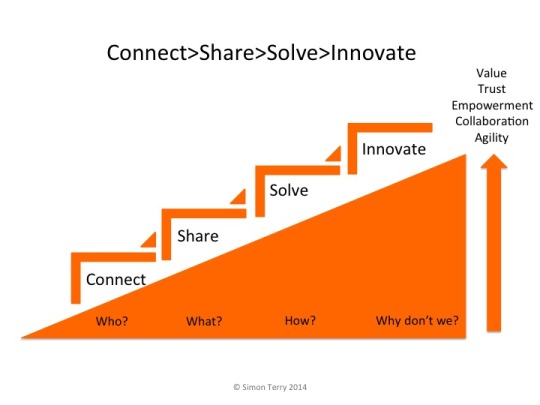
We may have begun to move from an adoption conversation to a value conversation. However our hierarchical mindsets can still hold us back. A responsive organisation needs to shape how value arise from collaboration, not try to specify it top down.

Embrace Value

More and more organisations are focusing on how to create strategic business value in their organisation through the use of collaboration. They are seeing the value that can be created as a community journeys from Connection to Innovation. They recognise that adoption & use should reinforce the strategic goals of the organisation and is not an end in itself.

The Temptation to Specify

When an organisation identifies the way that it can create value in a community, our hierarchical tendencies begin to kick in. We start to specify how a community shall work to create value. This is how most organisation’s strategy planning processes usually work. We end up with a plan of what other people have to do. 

Some guidance can be useful at the beginning of a community’s life when people are sense making. However, too much instruction will become a constraint on the value creation if the goals of value creation remain externally imposed on the community.

The best value comes when a community can use its knowledge, capabilities and ideas to create value in new ways. That won’t happen if the community has specified usage cases and a limited focus on the value that it can create.

Coach the Community to Create the Own Value

A large part of the difference between management and leadership is the difference between direction and coaching. Responsive organisations demand leaders who can coach teams managing highly adaptive situations, rather than direct.

Organisations need to coach the members of their communities to create valuable new ways of working using collaboration:

  • Coaching begins by clarifying goals: How do you help your communities understand the alignment between organisations strategic goals and the goals of their own work? 
  • Coaching should enable action & experimentation: How do you help people to translate the opportunities that they can see into work that they can do alone or with the support of others?
  • Coaching should build capability: What skills do people need to manage this process for themselves? What barriers need to be cleared? How can they learn to create, deliver and coach themselves going forward?

The Value Maturity Model Collaboration Canvas is a coaching framework to help community leaders, champions and managers to shape the creation of value through collaboration. The tool asks members of the community to think through the questions that will enable them to create their own value. Spreading this coaching mindset through your organisation is the most powerful way to transform the value created by collaboration & communities. Spreading a coaching mindset through your organisation builds capability as it builds alignment and creates value.  Enabling people to coach themselves helps your organisation become more responsive. It is the only way that you will get the value you didn’t plan and to adapt to the challenges you did not forecast.

The Normative Value of Failure Comes from Your Next Act

Embrace failure. Fail fast. Fail small and early. Everyone has failures. Few failures are fatal. 

Despite all the good advice about failure, people find it very hard to sit comfortably with failure. When outcomes matter and achievements are celebrated failure is often a disappointment regardless of the amount of official imprimatur. Failure attracts a whole lot of personal and cultural baggage. This is a significant issue when willingness to risk failure is a large part of an organisations ability to adapt.

Reading The Pirate Organization by Durand and Vergne gave me a somewhat different perspective on failure. Noting that many pirate organisations were short-lived and easily defeated by the forces of the state, Durand and Vergne still noted that pirate organisations helped establish new norms for international trade and even the way organisations worked. Pirates showed where states were weak, where trade was broken and where traditional organisations needed to become more agile and adapt. Their thesis is these fragile and often failing pirate organisations are a critical part of the process by which sovereign states and capitalist organisations adjust to new territories of economic endeavour.

Failures Create Norms Too

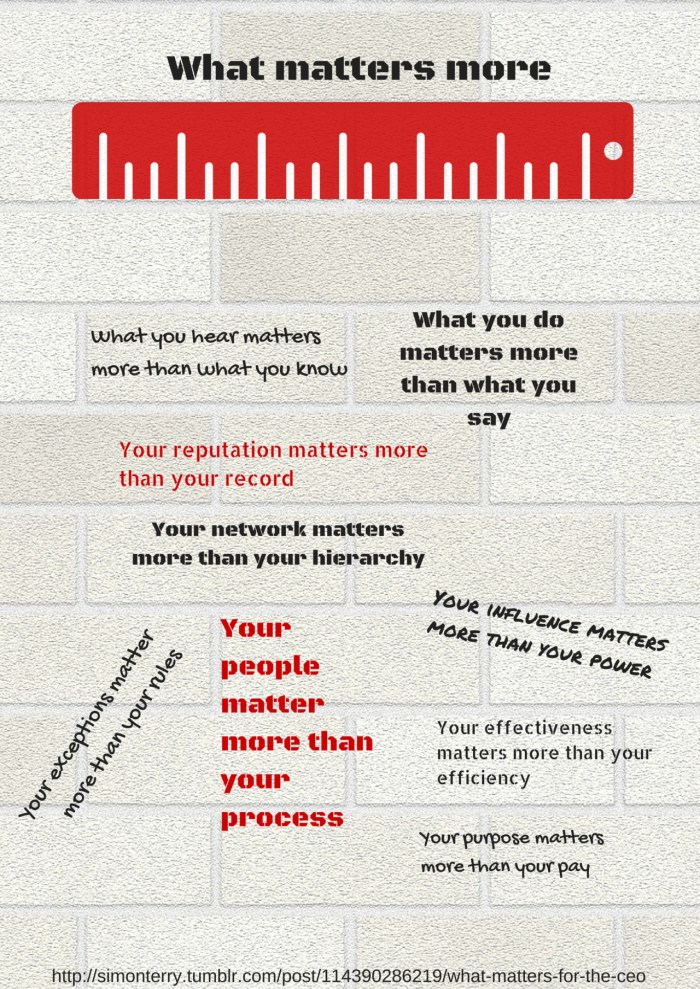
Projects that end in failure can play a critical role in defining norms in an organisation in a similar way. They also set norms that shape future activity as well. Failure draws human attention and with that attention there is a chance to influence the way that people perceive culture – the how we work around here expectation. Critically culture is an expectation of how we will interact. It is shaped more by what you do about failure than what you say.

Failure has a big influence because the activity that follows failures sends signals that shape people’s perspective on a few key elements of organisational activity:

  • People worth supporting: How do you treat those whose projects fail. Give them the plum choice of the next project. Support them to learn what they need to learn to make their next efforts more successful. Whatever you do, don’t pretend the failure didn’t happen. They know it did. Hiding it loses the lessons and the uncertainty of silent treatment can be worse for people involved than blame. 
  • Purposes worth achieving:  The surest way to signal that a purpose is important, is shared and is worth achieving is that people persist after a failed attempt and start developing new ways to achieve the goal based on the lessons from the failure.
  • Problems needing fixes: Failures often highlight problems in supporting areas, systems or processes that need attention. This is how lessons are revealed by a chaos monkey. Whether or not people are prepared to learn and adapt to remedy these problems following failure is a major signal of the culture of an organisation. Do nothing and you can’t expect anyone else to care for those issues.
  • Ways worth working: Failures often take down more than just a specific objective or a specific project. Small specific failures in organisations can be used as a weapon to sabotage wider transformations, particularly ones that change the way an organisation works. We’ve all heard some version of the refrain of the cynics “How can they succeed in the whole organisation if they can’t get their first pilot to work?” Whether an organisation persists, adapts or abandons a new way of working following a related failure sends a critical signal.

Norms Come From Actions. Not Posters.

You are going to struggle to convince people that you love and desire failure. The achievement orientation in your organisation culture will work against you all the way. Hiring a few change agents will help show tolerance and foster some adaptation but it won’t necessarily make failure acceptable.

Take down the posters encouraging people to risk failure. Show them instead how you act after failures happen. That moment is when you get to signal what matters to your organisation in terms of purposes, people and processes.

Corporate Chaos Monkeys

The resilience of your organisation depends on the people willing to risk breaking things.

Bringing Chaos

Chaos Monkey is an open source application created to test the resilience of web services. By intentionally creating failures in random ways, chaos monkey helps engineers discover where there are shortcomings in their systems.

Many organisations have business continuity tests to help them learn how to manage failures. These exercises can be valuable learning experiences when done well. However, many are also predictable, formal and artificial.  (If your business continuity test isn’t allowed to fail you won’t learn anything) Further many of these tests don’t go far enough because they test the continuity of defined current systems and processes internally, not the resilience of these in a wider dynamic ecosystem. 

Chaos at the Centre and the Edge

How do create a corporate chaos monkey that helps your organisation learn how to improve its resilience in a rapidly changing environment? 

Experiment.

Creating a way for your people to run small scale tests of new ways of working, new processes, new products and services acts as a chaos monkey in your corporate environment. Lots of change and experimentation will expose your weaknesses and keeps you engaged with the dynamic environment around your organisation. This is the usually reason that wide scale experimentation is resisted in large organisations. However, experimentation lets you learn and build capability to fix issues when they are still small. Experimentation builds resilience.

In most complex systems, the traditional approach of defence from failure will fail anyway. Building the capability to learn and adapt to failure is far more valuable than a Maginot line of corporate defence. Experimentation will help supply the needed chaos at the centre and the edges of your organisation.

Once you accept that a little chaos is required you need your own monkeys to bring chaos. Find and embrace your Change Agents. In every organisation there is someone willing to risk breaking something to make the world better. Change Agents are the corporate chaos monkeys.

Every responsive organisation needs its Change Agents to bring just the right amount of chaos, adaptation and learning.

The Pack Called Sentiment

Are you running with the pack called sentiment?

Zappos is an amazing exemplar of new styles of organisations. Zappos is implementing Holocracy. Holocracy is the future. Zappos is losing staff over Holocracy. Holocracy isn’t what you think it is. Zappos is damaging its culture. New organisational models are flaky and cultish. New organisational models can’t deliver. – 3 months of recent opinions.

Sentiments in a networked world change quickly. In our reinforcing bubbles of information, we can see views accelerate rapidly down directions and reverse direction quickly on the slimmest pieces of news.

Who knows?

I am not sure what is going on with Zappos. If I had been to their offices I could claim to be an expert. No matter how many visits people have had to Zappos’ offices I am not sure many of the commentators know a lot more about their current transition. Given the changes going on and the implementation of a very different way of working, I am not sure Zappos do either. What I do know is that I would like to give them room to experiment and solve the obstacles of change for their sake (and our sake). We know there can be upsides in the downsides of change.

Running Against

The pack called sentiment can make it very hard to experiment. No manager likes to engage their stakeholders in an environment of negative sentiment. Staying the course and making big choices is hard when you are behind. Disappointments are rarely learning experiences in the maelstrom of public opinion. Even successes can burn you when outcomes fail to meet expectations that have raced ahead. When everyone has to stake a view and when many build on collective opinion for support and distribution, it can intimidate everyone from taking a chance.

Because Zappos has been lionised as the one big transformation, many others seeking to make change have become dependant on its success. Just think of the change agents in organisations who shared Zappos’ example with their colleagues who are now fielding the push back. We need a diversity of examples, opinions and approaches to help change happen and to ensure that the ecosystem of change survives adverse outcomes. We need lots of people to leverage others but also go their own way.

Of course, managers and organisations need to manage their communities when change is high profile. Emails will leak. The commentariat you leverage on the way up needs to be fed all the time, even when news isn’t as comforting. However, the level of engagement is ultimately a choice for each manager and organisation. People outside the system of the organisation can find it hard to judge the needs of changes in process. We can’t always require people to disclose more of hard change simply through shifting sentiment.

Diversity helps

We need people to take different choices. We need people to state different views. We need people to go a different way. Some will work. Some won’t. Lets judge the outcomes when there are outcomes to judge, not by the pack called sentiment. Our ecosystem of innovation in ways of organising will be richer for the diversity.

Why Hierarchal Management Survives – Institutional Filter Failure

We like to believe hierarchical management survives because those in power won’t surrender it. More likely it survives because we have not yet developed better management practices for handling excess of information. Our hierarchies make us intentionally dumb to avoid the challenges of networked information flows. We rely on hierarchy to remain unresponsive.

The Power but No Glory

Ask most frustrated change agents about why management is not changing faster to new ways of working and conversation eventually turns to the lack of incentive for managers to surrender their power.  After all when the rewards, power and prestige of senior management is so great, why would any organisational leader jeopardise these benefits by moving to new models of management.  In this view a senior management cartel stands in the path of change.

Ask senior managers about the needed changes in organisations and they will list the same issues as the change agents – too many meetings, too many emails, not agile and responsive enough, bad decision making, not enough innovation, and poor execution. Senior managers recognise that power is not what it once was. Fiat power is declining, engagement is low and threats must give way to influence.

However, when you ask about moving to new network and self-organising ways of working, the first response is usually not about a loss of power. The first response is some form of “I barely manage my emails. How would I cope if everyone could contact me directly?”  This complaint may take the form of social channels as a new method of two way communication, the need to respond to new issues from customer or community networks, new performance measures, managing autonomous experimentation or the being exposed to incomplete work in progress through working out loud.

Institutional Filter Failure

Consider for a minute the shared list of the sins of a hierarchical organisation: meetings, email, narrow internal views, partial data, bad decision making and limited ability to act.  These aspects of the system are not symptoms of the hierarchy.  They are its reason for being.  They are the system.

In an age of an increasing overload of information, management more than ever needs filters. Clay Shirky famously said: 

‘There’s no such thing as information overload – only filter failure’

Our management systems are full of these ways to reduce and control the spread of information to make management life more manageable. They aren’t flaws, filtering is the system. The system is working perfectly as we designed it.  We have these process to make our organisations less responsive. We want to exclude lots of information to make managers’ lives easier.

Managers resist giving up these flaws of the hierarchy because we have not yet offered them alternative filters in which they can have confidence.

Responsive Organisations Use Information

Responsive Organisations don’t exclude information. They work it. Instead of trying to pass it around through series of filters, these organisations seek to enable people to make use of the information they have, to share it on a pull basis and to create new and valuable information to assist their work.

Think for a minute of the key elements of responsive organisations:

  • External orientation: Opening up the organisation to its environment and orienting it this way pushes the traditional hierarchical approach of information management to breaking point. When the ‘facts are outside’ to quote Steve Blank, management must embrace different ways of managing information.
  • Transparent Network structures: Network models of working are pull structures unlike hierarchies traditional push models of communication. In a network people have the ability to find the information that they need.  We don’t need to push it around we just need to make it findable through approaches like working out loud. This transparency contributes to trust and shared context, critical elements to reduce the decision making overhead.
  • Autonomy to employees: If employees have autonomy they don’t need to share their context and rationale with their boss to get a decision.  They just make the one that they think best.
  • Experimentation: Experimentation further shifts the burden of information and decision making. When the right answer is the one that survives a test, we don’t need meetings up the chain to get an OK.
  • Purpose: As most managers know communicating strategic intent down a hierarchy is hard work. Either the strategy doesn’t survive translation or the application in a different frontline context is a challenge, particularly balanced with the rules and regulations that must come with it.  Purpose is easier to get. Purpose comes from within an employee and can be a richer and stronger guide to their action.  Purpose reinforces autonomy.

Responsive Organisations adopt new approaches to filter and use information. Instead of relying on the decision making of a few overwhelmed managers in the hub of the network. Responsive Organisations enable every node to filter and to act on the information. That approach accelerates both learning and action.

Don’t Know, Learn

Hierarchical management is obsessed with what is known. (This is both the appeal and the failure of ‘big data’) Managing what is known is the objective of the system. Instead of knowledge the system becomes an information filtering system and critical insights are lost. However, you don’t need to know as much if you can learn.

Knowledge is not worth much as a stock. It value comes from use in a flow. Insightful analysts like Dion Hinchcliffe and John Hagel are already describing a new information platform view of the next phase of our connected lives

Responsive Organisations will be those that develop the approaches and practices to best use information in new ways to achieve the purposes of the organisation and realise the potential of its people. That’s called learning.

Responsive Retail Experiences Required

Retail stores must be as responsive as their digital competitors. The days of excuses are over.

I needed to buy a specific item today at a retail store in Hong Kong. I looked up the store address online and confirmed its opening hours. I went to the store at opening to be told it was closed for 30 minutes more. When I returned 30 minutes later I was told they wouldn’t open for 10 minutes. The staff were casually cleaning the store and decided to let me in anyway.

When I was finally admitted they were out of stock, their stock ordering system was down for its second day and there was no chance of them getting stock this week. The staff in store were full of excuses and very apologetic.

I ordered what I wanted online walking out of the store on my phone. I bought it from a digital retailer. It will be delivered to my hotel same day.

This experience was in a luxury goods retailer. Their store for out is incredibly expensive. Their rent is high. There were lots of staff waiting around. However all the money invested is wasted when the systems and employees are not responsive to customers.

The store lost any opportunity to add more to my basket. Worse, I’m unlikely to shop that brand of stores again.

If a retail store is not organised to be as responsive as its digital competitors, then it will lose more than business. Unresponsive retail stores inconvenience customers and lose their support.

What’s your minimum scale?

What’s your minimum scale of operation? Disruption means businesses often have to survive declines in revenue as they change business model. Are you able to adapt to the future disruptions or will your business model be a barrier to change? Remember that the capabilities of your people will be a key element of any transformation.

Focusing on Minimum Scale of Operations

Clay Shirky wrote a telling account of the challenges facing printed media in the NY Times The insight is that inherent in any business model is a minimum scale of operations.  We are used to thinking of overhead.  However, Shirky points out that falling volumes can turn the infrastructure of operations into overhead. At a given scale, there’s no point continuing. The need to operate above that scale becomes a barrier to responsiveness and even survival in times of disruptive change.

We don’t pay much attention to the minimum scale when we are growing. We look for investments to make to grow the business. Our myopia only becomes an issue when we need to make changes to our business models.

Turning Growth Investments into Overheads

Often the investments in growth we make on the way up are the overheads we struggle with as we change the business model to respond to disruption:

  • Need national sales offices or store network to grow? It will be overhead as you shrink. Ask any bank about the challenges of keeping branches economic as transactions, sales and advice move elsewhere. 
  • Need a custom built IT system? It will be overhead when competitors adopt agile solutions in the cloud. 
  • Need a warehousing, distribution or manufacturing operation to cater to growth? It will determine the minimum number of units your need to sell. 
  • Need a fancy office for your growing workforce? At least you can probably sublet this overhead as your workforce shrinks or works from home.

The business cases for each of these investments would be based on steady business volumes and predictable growth. These assumption mean that the business has ruled out the ability to handle exponential growth or any significant decline in activity. Few investment plans consider the need for agility or the impact of the investment on future changes in business model. Requiring greater consideration of optionality in an organisations approach to growth would change the business model to a more responsive one at the outset.

Investing in the Agility of People 

Many organisations respond to their failure to create a responsive business model by aggressively cutting their personnel costs. Undoubtedly, disruptive change will mean a loss of jobs as business models change. In this process organisations need to take care that they don’t lose the human capital critical to the potential to respond to change.

People can be cut far more quickly than writing off one of the growth investments above. Announcing a personnel cut, often has a far more acceptable hit to the profit and loss statement for the share market. Cutting personnel can become a substitute for a strategy to respond to change in the market.

To avoid this outcome organisations need to consider on the way up that talented people can be redeployed more easily than an investment in infrastructure. Instead of investing to deskill people with infrastructure that become overhead in times of disruption, we can invest in agility and the capability of our people. Organisations also need to chose their activities to maximise the value that their people create. People can learn, adapt and create new ways to work and create value for customers. A responsive business will have at its heart a team of people working both in the business and on the business model, constantly learning new ways to be more effective, to respond to customers and to grow.

Struggling to maintain their growth, businesses facing disruption can face surprising new challenges in their scale of operations. Organisations need to plan for optionality as they develop a more responsive business model. They also need to consider the role of our employees as the engine of responsiveness. 

Share the Rules, Not the Outcome, & Realise Potential

One of the remarkable discoveries of the field of study called complex systems is how order, or what physicists call a lack of entropy, can be created out of seeming randomness by individuals or agents following a small number of very simple local rules. Such systems are said to be self-organising or self-assembling, and often have so-called emergent properties that were not part of any of the rules. The study of these emergent properties teaches us that it is the local rules themselves, not the finished product, that natural selection or some other selective products sculpted to make the finished product. – Mark Paget, Wired for Culture

Management loves order.  That desire for order translates to efforts to plan and specify all the outcomes in the system. Instead, we need to leverage the potential of our organisations by allowing autonomy with simple rules.

The Deadly Entropy of Specifications

Specifying everything in a complex system calcifies the ability of the system to adapt to change. This is when management becomes bureaucracy. If there is only one predetermined process and one predetermined outcome, then individual employees are just cogs in a machine of work to achieve that outcome. However, we rarely find the expected efficiency in that machine. To start, the complexity of the machine prevents us from specifying our outcomes as clearly as we would like. 

In addition, people are not machines and the world is not static or predictable. People can do more. They want to help and they want to respond to their environment. They learn more, change things, interpret, and reorganise things locally. However, our fixed system of outcomes won’t allow it. We find other people and a changing environment rarely enable us to execute the outcomes as simply as we believed.

All our effort to impose order accelerate chaos. Disconnected employees, disconnected processes, silos, poor design and mismatches to the environment accelerate entropy. Our system is not broken. It is working exactly as we intended it just doesn’t prove to be effective enough for a changing competitive environment.

The chaos of disruption is just the force of our environment selecting another organisation that is more effective. The chaos of decay sets in as our predetermined outcomes fall short of the require effectiveness of those who make the selection decisions: 

  • our employees who can work elsewhere
  • our customers who can buy elsewhere
  • our communities who can support other businesses (with infrastructure, regulation, licenses to operate and valuable reputation); and 
  • our investors who can seek better returns elsewhere.

An Alternative: Share Simple Rules & More Potential

Most managers use a few simple pragmatic rules (or heuristics) to do their job. The challenge in organisations is that these heuristic rules aren’t discussed. Manager’s rules are all slightly different in their effectiveness. Some of these rules will survive by promotion and be shared by role modelling, but many won’t surface, simply becoming the mystery of high performance. If nobody shares their rules, there is little ability to learn from more effective rules.

Managers should focus on fostering discussion around these simple rules and encouraging people to adopt the more effective ones.  Working out loud is a great vehicle to foster these discussions as it surfaces the how of work in progress.  More formally, organisations are experimenting with approaches like holocracy that force the organisation to surface these conversations about the effectiveness of rules, responsibilities and approaches.  In time, as these experiments continue we will discover better ways to work and to manage.

Allowing people to operate within the bounds of simple rules enables them to exercise their potential, their local information and the judgment to make the organisation more effective. Simple rules tested for effectiveness are a great bureaucracy killer. For years, Nordstrom had an enviable reputation for customer service by having the simple guideline of “Use your good judgement in all situations.” 

Importantly, focusing on simple local rules allows each part of a system to play its role as it sees fit without needing to align to a fixed objective or a higher set of instructions. Employees are challenged to bring their best potential and to be more human, not cogs in a machine.

The focus of this approach is to create enduring effectiveness and a competitive advantage in the organisation based in some simple expectations of the local rules of behaviour. Culture like that represents a critical competitive advantage.