What Matters for the CEO

Looking up the hierarchy employees can believe that being CEO must be a game changing experience. However, the reality is that the imagined power comes with its own constraints. Here are a few words for the new CEO (or any new manager) on what matters. This is where the reality and the illusion diverge:

What You Hear Matters More Than What You Know: You have plans and agendas. You know the place & the ropes. You have great skills, knowledge and wisdom. Show it by going and listening to the people who matter most – those doing the work, your customers and your community. Ask their views and change your own. Let what you hear guide what you do.

What You Do Matters More Than What You Say: You are surrounded now by people who want to listen to you. You are supported by teams of professional communicators. You can order an expensive new brand campaign if you want. You have a soapbox but the smartest way to roll is to get down off the soapbox and go to work. Let others work out who you are by what you do.

Your Reputation Matters More Than Your Record: You must have a great record or you wouldn’t have the job. Nobody cares about what you did now. They only care about how you did it. The how determines your reputation internally and externally. Everything you do is added or subtracted from your reputation. Everybody wants to discuss your reputation because they want to predict what you will do next. Your reputation has more influence on what you will get done than you think.

Your Influence Matters More Than Your Power: Congratulations on being top of the hierarchy (excepting of course for your accountability to the board, the chair, shareholders, analysts, community activists, politicians, your family, and anyone who ever had a view about your company, etc). You have the power now, but mostly you can’t use it. You can’t sack everyone. You can’t survive a revolt. You can’t do the work yourself. You can’t answer every question. Accept that with all your power the best way to get anything done is still with influence, the same way you climbed the ladder.

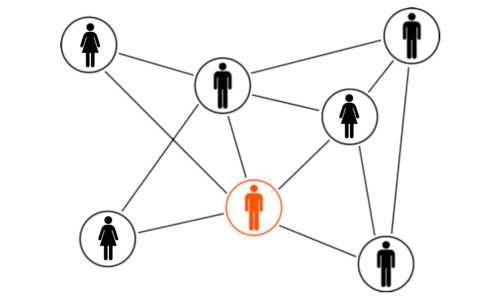
Your Network Matters More Than Your Hierarchy: The hierarchy mutes your influence. A hierarchy is only one part of your network. Some of your direct reports are openly campaigning for your job. You’ve been there and you know they won’t wait long. The further down the hierarchy you go the less your voice is heard and understood. Importantly, you are now the face of the organisation to customers and the community. Looking down the hierarchy won’t help you deal with those critical stakeholders. Start leveraging the networks through and around the organisation. Those networks helped you on the way up and they will help you now. That’s where you should use your influence. The network magnifies your influence. That’s where you do your best work.

Your People Matter More Than Your Process: Nothing in the organisation gets done without people. The best processes, technology and organisations will fall apart without the right people. Start focusing on building their capabilities and changing the processes to adapt where required. Your customers and community will appreciate the immediate increase in your organisation’s responsiveness.

Your Exceptions Matter More Than Your Rules: If everything was predictable, great people wouldn’t be required. Focus on how you identify, manage and adapt for exceptions, anomalies and surprises. Don’t let your team explain them away. Many exceptions hide insights, risks, threats or breakdowns that your current processes can’t handle. Exceptions are where the disruptive innovations lurk and where reputations are won or lost. See exceptions as a chance for you to lead make changes, especially to help your people and your customers.

Your Effectiveness Matters More Than Your Efficiency: Your new staff are going to make your life extremely efficient. They will quickly create a schedule, cut access and manage a protective bubble of carefully selected information. That’s the best way for them to make their life easy and predictable again. However, obstacles are the work, exceptions hide insights and you will need to experiment on your personal effectiveness. Without slack, freedom to connect and thinking time you won’t be able to do this. Incidentally the need to focus on effectiveness of purpose goes for the whole organisation too (see ResponsiveOrg).

Your Purpose Matters More Than Your Pay: You’ve spent a lot of the crazy pay already and here I am saying it doesn’t matter. What matters is the impact you have on the world. The internal motivator called purpose pushed you so hard to get here. You wanted to make a mark, not cash. Delivering on purpose is what makes the role worth doing and will be how your tenure is judged. Years from now you will barely remember the money but you will see the faces of those in the network around the organisations whose lives you changed. Which way do you want to influence their lives? Let’s hope they are smiling later. 

The Job Matters More Than You: Unless you are a founder or a complete failure, the role you play existed before you came along and will exist afterwards. That role means a lot to the hopes and dreams of all the employees, customers and community. Those dreams deserve your respect. The role is not yours. You are no better because you have it. You are just the current steward. Leave it better for the next person and make sure that you have the influence to choose them wisely. That may be the best legacy you can leave.


The Inefficiency of Relentless Efficiency

Any efficiency measure applied relentlessly ultimately becomes inefficient

Business loves too much of a good thing. Relentlessness is a characteristic widely admired in business leaders. Efficiency is a classic area where the impact of a relentless focus on a single practice can be self-defeating. Engineers know this, but managers have not yet learned the lesson.

The first clue to this outcome is the Pareto principle which is widely misunderstood. Pareto highlighted that in many phenomenon a small part of the population has the largest impact i.e. 20% achieves 80% of the impact. Applied to efficiency it highlights that the cost of achieving incremental efficiency using the same measure will increase over time. 

Nicholas Taleb has highlighted in Antifragile that slack in a system is often the source of its Antifragility.  Slack is what enables systems to effectively respond to shocks. We can’t remove the shocks but we can ensure the system does not collapse when a shock hits because it has no capacity to change and respond.

Business practices are widely copied. People develop expertise in a single practice and become like those described by the phrase “to a man with a hammer every problem looks like a nail”. We over-apply efficiency measures because they worked before or they worked elsewhere. We rarely consider their systemic impact on effectiveness

Consider a few of the efficiency measure applied relentlessly in the corporate world that have created new inefficiencies and damaged effectiveness:

  • Time Management: ever waited for a meeting to start because someone is so scheduled that they keep everyone else waiting? Our relentless focus on managing the efficiency of time at an individual level creates collective inefficiency. 
  • Outsourcing and Offshoring: the labour arbitrage and other efficiencies of these measures are often overwhelmed when pushed too far by the inefficiency of the system with fixed processes, misaligned performance standards and poor communication and collaboration. Too many organisations have discovered they no longer can respond effectively to customer needs when they overstepped the efficiency measures.
  • Expense control: Organisations that ruthlessly manage employee ability to spend in a low trust approach often discover employees are far more creative and also spend what they can to retain budgets. New constraints and processes just create new wasteful behaviours because trust has broken down.
  • Specialisation: Similar to outsourcing and offshoring, removing people from connection to customers and fragmenting processes unnecessarily in the name of efficiency creates its own lack of accountabilities and inefficiencies
  • Scale: We live in a world where big likely means too big to sense, decide and react.
  • Performance Management: Employees can calculate expected average returns too. Even with that purpose, autonomy, mastery and relationships are more likely to shape their effort than a relentlessly redesigned reward scheme. The relentless focus on efficiency of performance management schemes and the sense that the rules will be changed to suit the corporate is ultimately ineffective. 

Responsive Organisations recognise that efficiency is not the only goal. Efficiency does not deliver on the purpose of the organisation. It merely ensures resources are well applied. Effectiveness delivers the purpose of the organisation and needs to be a greater part of the management toolkit.  Efficiency measures need to be tempered to reflect their effectiveness and their impact on the effectiveness on the organisation as a whole.

Away or Towards

Success is not avoiding an outcome that you fear. Success is moving towards fulfilment of your purpose.

I caught myself this week defining success on a challenge as avoiding an outcome that I feared. I had tricked myself and hidden the fear in layers of other goals. I knew immediately that I needed to change the way I approached the challenge.  

Running away from a fear is no guide. If all you are doing is running away how will you get where you want to go?

This is a common enough approach to work. For many people, the measures of success have a strong avoidance flavour:

  • achieving their targets to avoid losing their job
  • making enough money to avoid financial difficulty
  • comfortable relationships to avoid loneliness and conflict
  • keeping up with peers to avoiding embarrassment
  • minimising risk to avoid failure

Avoidance is a poor guide to what to do. Targeting safety and security often creates the exact outcome that you feared. 

Avoidance is not particularly fulfilling. The absence of a risk having been realised still leaves the fear.

Having found the hidden fear, my challenge was to redefine success in terms of my purpose. When I know that I am moving towards my purpose I am more engaged. I know that I will have measurable progress somewhere that matters to me. All of a sudden the vicissitudes of the journey matter less.

Challenge your goals to ensure that they are really moving towards purpose. There are lots of places to escape fear, but you don’t want to be in most of them.

Value creation in networks

The old way industrial of creating value is well understood and commonly implemented. Develop a unique proposition with a discrete market. Create a simple linear process to deliver the proposition by turning inputs into outputs with value creation at each carefully delineated step. Maximise control at the choke points in the process to maximise returns. Manage efficiency and throughput of the process to minimise waste. Reduce risk. As easy as that sounds we have spent over 200 years perfecting the process and still have much to learn.

We know far less about creating value in the massively scaled digital networks that we face today. Mostly we know what doesn’t work. Failure is accelerating. A focus on efficiency will kill a company competing with disruptive competitors. Networks specialise in routing around control points. Parallel disaggregated processes disrupt the linear, particularly if relentlessly focused on key opportunities to create value. Transparency across the process and rapid exchange of information changes the organisation-customer-employers-supplier- community dynamic in radical ways.

Value creation in networks to date has defaulted to the nearest analogies of the industrial model. Build a platform with a unique global scale that you can control. Strip the value creating process back to customer acquisition and platform development. Control advertising revenues ( or less commonly enterprise sales) as the principal form of monetisation. Experiment and acquire relentlessly. Be transparent internally and leverage networked models of organisation internally, but behave like industrial peers to the external market, except for carefully structured communities of co-creation and innovation.

The latest clues in the Cluetrain Manifesto are a reminder that this model is not guaranteed. At the same time, the lessons of the last Dotcom bust documented in Seely-Brown and Duguid’s ‘The Social Life of Information’ are a reminder that we have not yet reached our disaggregated and disinter mediated ‘markets are conversations’ utopia.

What is clear is that we need new ways of working. We will build new practices using our new global networks and relationships to exchange what works and to discard what does not. The key to success will be effectiveness. Effective organisations will mobilise their potential, connections and capabilities to pursue the ever-changing network opportunities, to learn together with their customers and community to realise a meaningful purpose. Embracing the new network economy and networked ways of working is fundamental for any organisation seeking to make this shift. Any organisation that takes this leap is on the path to becoming a Responsive Organisation.

Value has never been created around a board table. That is where value and the resources to create value have historically been acquired or allocated, often poorly. Value has never been created by data alone. People transform the data into hypotheses, insight, decisions and actions. Value has always been created by that action in networks, even if those networks are the crippled relationships of hierarchy. Those are network of people, not data. The organisations that reap the potential will be led by Network Navigators who can help their organisations through the journey.

The network must do the work to create value led by Network Navigators. As Esko Kilpi put it ‘the time for reductionism as a sense making mechanism is over’. The way forward will emerge through practice, interaction and learning in the network. We will need Network Navigators to help us to work on the whole system.

Harold Jarche reminds us ‘the work is learning and learning is the work’. We have entirely new systems and practices of organisations to develop, to test and to share. Like our efforts to date we will begin with fixes and variants to the systems we have. Over time we will make more new sense of the future of work. We will need to learn to trust and enable people to leverage their networks and experiment. Then we have the journey of change advocacy to spread the successful practices. The widespread use of enterprise social networks is just one such step and even it has not addressed the potential of adoption, let alone value.

The fun of value creation in networks has only just begun. Our job is to make that fun a very human and purposeful experience.

Leadership in Transformation

A common topic of debate in the Responsive Organization movement is whether an organization can become responsive or it must be born that way.

Undoubtedly many of the leading case studies of future of work organizations are organizations created or rebirthed from near death by charismatic founders. Some use this as evidence that the elements of a responsive organization must be present from the beginning. In a previous post, I pointed out that we cannot rely on transparency alone to make change occur for us. The power structures in a traditional organisation will prevent most radical change.

I am unambiguously in the optimist camp. I am not alone and the company in the optimist camp inspires me. I have seen organizations change enough to not recognise their former selves. Change to more responsive ways of working is possible. The question is how.

What gets in the way

Chris Argyris’ classic article Teaching Smart People to Learn is a rich source of observations of what gets in the way of a Responsive Organization transformation.  In particular, Argyris notes that:

… There seems to be a universal human tendency to design one’s actions consistently according to four basic values:

1. To remain in unilateral control;

2. To maximize “winning” and minimize “losing”;

3. To suppress negative feelings; and

4. To be as “rational” as possible—by which people mean defining clear objectives and evaluating their behavior in terms of whether or not they have achieved them.

The purpose of all these values is to avoid embarrassment or threat, feeling vulnerable or incompetent. In this respect, the master program that most people use is profoundly defensive. Defensive reasoning encourages individuals to keep private the premises, inferences, and conclusions that shape their behavior and to avoid testing them in a truly independent, objective fashion.

These hidden values in most organisation get in the way of the transparency-led transformation that many hope to see. The Responsive Organization poses a threat to control, a threat of losing and negative feelings. Importantly the delegation of authority in a Responsive Organization may cause people anxiety as to objectives and rationale for action.

The role of leadership is to act as a counterbalance these natural human values and shift the behaviours to that of a Responsive Organization. We need to create rationales for action more powerful than embarrassment. We need to create community to generate trust, support and connection. We need to enable learning through conflict and experimentation. 

Purpose:

Leaders must create a strong rationale for the transformation. In cases of crisis, startup or near death of organizations, this rationale can often be imposed by a charismatic individual. The external circumstances enable a threat based narrative to bind people together in a defensive rationale for change.

However, most organizations are successful to their own terms. As Argyris notes, we want to feel successful even if our results don’t pass external muster.  

Leaders need to leverage two elements to create a strong rationale for change in this context:  

  • The Purpose of the organization: a purpose is the ultimate rationale for why people come together in an endeavour. It defines the common impact the group of people wish to have on the world.  As a higher agenda, it is the perfect rationale for change for even the most successful organisations.  Purpose is a mastery quest. Very few organizations have the capability to completely fulfil their purpose. They can however strive to better realise it.
  • External orientation: No closed system will find a rationale for change. External orientation is where organizations find the challenges and opportunities that define the purpose into specific improvement opportunities. Leaders need to relentlessly focus the organization on its customers and community to see transparently the challenges and opportunities that exist for change. Well defined external impacts in this community will be what can drive the autonomy of teams in the organization.  Using customer and community data in line with Purpose, also enables change agents to overcome embarrassment-based resistance in the organization.

Community:

Individuals will need support to take on the risks of a Responsive Organization. The role of leaders is to create the sense of community that will support an individual through that change. At the heart of that community will be engagement with others and a growing sense of mutual trust.  Leaders set the tone for any community. They must also work hard to reinforce these key community behaviours

  • Engagement: Engagement begins with transparency and connection. I cannot truly care about the others in my community until I know who they are and understand their purposes, concerns and circumstances. Leaders need to create the conditions to enable people to be more social, to connect, to solve and to share their work challenges together.
  • Trust: Engagement will build trust as it builds understanding. Transparency will reinforce trust. However, leaders need to take on the role of fostering responsibility and accountability as engines of growing trust in the organization.  When people see that individuals and teams are accountable for driving change then they will have greater trust in the change agenda.

Learning:

This post is deliberately not titled like a listicle e.g. ’The 3 or 6 things to transform an organisation’. Even a basic familiarity with change highlights that formulas will work only up to a point. Leadership needs to be adaptive to enable any system to change in a sustainable way.

To be true to their purpose and stakeholders, to leverage the potential of their community, each organization will take an unique path through change.  The role of leaders is facilitate the individual and organizational learning required:

  • Experimentation: creating a culture of rapid iteration to address challenges and opportunities will accelerate the cycle of learning in the organization. Leaders must help this experimentation culture to overcome the resistance identified by Argyris and also to spread and have a wider influence in the organization. Lessons learned must become new truths which will take a sense-making role for leaders in the wider organization and mean leaders must champion new ways of working when they arise, whatever the personal costs.
  • Conflict: The biggest reason that organizational transformations fail is an unwillingness of the leadership of the organisation to allow uncertainty and conflict. Conflict will happen. The uncertainty associated with conflict is inevitable. Efforts to suppress this will either undermine transparency, the rationale for change, engagement or learning. Failure to embrace conflict takes many names: politeness, bureaucracy, politics, corporate speak, history, culture, etc. Failure to embrace conflict is an unwillingness to learn and improve. There will always be resistance when change comes and it must be addressed. Leaders need to create and sustain the right kinds of constructive conflict – driven by purpose, based in facts from an external orientation & experimentation, mediated through an engaged community. 

Change is Coming. Lead.

I have seen the potential of purpose, external orientation, engagement, trust experimentation and conflict to drive change. Supported by leadership these are the elements of each organization’s transformation. These elements are critical to a Responsive Organization.

Throughout this post I have referred to leaders and leadership. This need not be hierarchical leadership. Clearly it helps if leadership and power are aligned in an organization in reinforcing the need for change. However, the changes described above are not capable of being implemented by top-down edicts. These changes must come as individuals and groups discover their power and are influenced as a result, This kind of leadership relies on influence and can begin bottom up or even from the middle management so often scorned in organizations.

Change is possible. Change is coming. Smart people can learn. Your people and your organisation can better realise their potential and their purpose. A Responsive Organization transformation will occur if you are prepared to lead the change.

Lead.

Give Purpose, Autonomy & Mastery, Not Direction

image

Last night I came across a reference to A Message to Garcia by Elbert Hubbard, which was once an influential essay describing a model of personal leadership. The essay reflects its origins at the turn of the 19th century, particularly in its description of manager & employee relations. However, a determined & talented employee who displays personal leadership and asks no questions is the goal for many organisations.

The essay contrasts between Rowan’s personal leadership & responses of other hypothetical examples. In describing these examples there is one difference that Elbert Hubbard missed. This missed difference highlights why so many employees might still disappoint when assigned tasks. The difference is the leadership involved in assigning the task.

President McKinley’s request is not the assignment of a mere task. His actions are far more powerful as acts of a leader than Hubbard’s own examples. McKinley allows Rowan to complete the task with purpose, autonomy and mastery:

  • McKinley assigns Rowan a whole & heroic task to deliver a message to an uncontactable General in unknown terrain. This is done where the purpose of this task is extremely clear to all involved – his country needs his unique talents to achieve an important goal in a difficult war.
  • Rowan is given autonomy. There is no direction on how to achieve the task, because he knows he is best placed to achieve it. There is no request for progress updates and no expectation that Rowan do more than achieve it. Once Rowan accepts the message, the outcome it is his to achieve (or to fail). 
  • Mastery is inherent in the selection of Rowan. He knows he has been chosen for his talents, his ability to improvise, to perserve and to improve to achieve a purpose beyond the capabilities of others. Rowan asks no questions because he knows it is his mastery that the others need.

Consider in contrast, Elbert Hubbard’s example of asking a clerk to write a memorandum on the life of Correggio. The task is arbitrary and hence purposeless. The only reason it is being done is that the employer asked for it. The lack of purpose also limits the autonomy. The memorandum fits in some plan not shared with the employee, rightly creating an expectation that further instruction or steps will be forthcoming. Unless the clerk is a scholar of Italian Renaissance painters, of writing or of biography, the memorandum is unlikely to match some arena of personal mastery.

Leadership in every role is a key refrain in the future of work. The world cries out for someone who can ‘get a message to Garcia’. More importantly, the world cries out for leaders who knows how to ask in ways that allow purpose, autonomy and mastery.

Standing In: The Future of Work

image

What are you doing to cut through the challenges of attention in the future of work?

Attention Discriminates

Yesterday a client found me in a busy activity-based workspace by my colourful socks. There were too many dark suited males sitting at desks but only one was wearing loud socks. A distinctive trademark cut through the challenges of attention.

Our attention discriminates. We deliberately focus to exclude distractions. When humans lived on the African savannah there was already too much information and attention was a way to economise.

When we enter the future of work that issue of attention explodes. Streams of updates, flat networks of relationships to follow and complex rapidly changing environments create a load on our attention. If you want to be recognised for your efforts in this environment you will need to stand out.

Wearing colourful socks won’t cut it. Socks don’t scale. The traditional response of the extroverts among us just adds to the noise. One pair of colourful socks is a discriminator. Many are noise. We see the same with the ‘look at me’ cries on social media.

The future of work might not be about standing out. Perhaps it is about standing in.

Standing in

The way to get noticed in a network is to be a valuable node. Your goal is not to push yourself to isolation at the edges, it is to contribute to value creation at the core. In short, you need to stand in (networks).

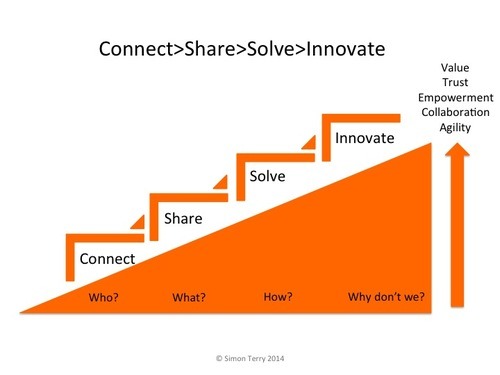
How can we stand in more effectively? The Value Maturity Model offers us a guide:

  • Work for a purpose and gather those around you who share that purpose
  • Make connections between people to improve the efficiency of the network
  • Share relevant information, add new information to your networks and don’t pass on the dross. Working out loud is a great practice that helps others and John Stepper has described how working out loud works for introverts.
  • Help solve problems of others in your network
  • When you see an ability to make a unique difference, take that chance. Innovative opportunities don’t happen often. Take a risk and leverage your network to make something unique happen.

To fight the discrimination of attention in the future of work, focus on standing in (networks).

image

You know the moment

image

You know the moment.

You know the moment when someone showed you what you were capable of achieving. That moment when another person helped you to see as possible achievements that you doubted yourself.

Someone helped you find your purpose, inspired you to tackle a challenging goal, refocused you on your strengths or helped you to find the missing piece of capability to reach new levels of performance. In that moment, someone helped you realise your potential.

That moment is a moment of leadership.

The person who led you in that moment may not have had a position of authority. It could be a colleague, a team member, a customer, a teacher, a storyteller or a stranger. Whoever demonstrated leadership did so from an interest in developing your potential, not from a position of power.

The conversation in that moment most likely did not feel like a ‘leadership’ conversation. It could have been a question, praise, a concern, feedback, mentoring, coaching, advice, suggestions, ideas, a chat or a story. Whatever the conversation in that moment, you knew they were genuinely interested in helping you to achieve what you were capable of achieving and because it would help fulfil your purpose. Whether or not, that conversation fulfilled a purpose of the other was secondary.

Leadership is the art and technology of realising human potential.

Every moment is a moment to help others find their purpose or their potential. Every moment could be one of those conversations. Everyone can make a difference.

So, how are you using this moment?