Birthdays come around once a year. They are a repeating milestone. This year I have a small gift for myself – an absence of expectations. Instead I am focusing on what I am and what I do.
There is much discussion these days on the unrealistic expectations we place on ourselves. Every day’s to do list is a reminder to me that I fall easily for creating these expectations. Much of my life’s experience has taught me that most of the time we are neither quite as bad or as good as we think.
So this birthday, I am changing my expectations. I am.
On previous birthdays I have reflected on what I wanted to be. I set myself all kinds of milestones. I challenged myself to do more. Some I achieved but far too many became part of the overhang of what might have been. That overhang was mine alone, an unreal fiction and entirely unconstructive. Nothing more gets done because I once thought that I would have done more by now.
The last two years of working for myself has been a wonderful lesson in the importance of being & doing. I wondered what I might become when I began this process. I didn’t become anything. I am and I do. However, along the way I discovered:
I am helping people & organisations with collaboration, leadership, learning and the future of work, because it interests me and I work at improving my capabilities & connections every day
I am a baker because I bake whenever I can and I learn new techniques and approaches
I am a writer because I write whenever I have something important to say and I seek to get better with feedback.
I am enjoying a different life, because every day I am making new and better choices
I am happy. I just am. If I wasn’t, I would do something about it.
When other people want to hire your expertise, it is a solid reminder you are growing more every day. When people admire your baking, or your writing or some other activity, it is a reminder that those skills are growing too. If nobody else notices, then you still know you are growing. When you ask yourself what made you happy today and there is always an answer, you are happy.
What you are now doesn’t matter. It just is.
What you want to be doesn’t matter now. What matters is what you do today.
Many organisations are starting to consider how they build new digital capabilities like agile, hypothesis-based experimentation, design thinking, analytics and collaboration. Yet when they start to plan these changes to more digital ways of working, they use management models from pre-digital management:
transactional approach to interventions
solutions defined by expertise
linear implementation approaches
waterfall project plans
push compliance and competency models focused on supply of new skills to employees
narrow delivery models using only learning and classroom learning
limited if any measurement of the changes
These approaches seek to make organisations ready for more digital management using the methods of traditional management.
Digital Dog Food
We can do better than this. We can start by asking projects to build digital capabilities to eat their own dog food. If nothing else, they will learn on behalf of the organisation the challenges and opportunities of new digital ways of working.
New Digital Capability Building
Projects to build digital and responsive capabilities in organisations can be role model projects for those capabilities. Taking a leaf from the digital tool suite challenges those building capability to consider capability building that offers:
many paths on the learning journey as part of career paths and achievement of learner goals
mobile options, social learning and performance support to sustain learning in the digital work place and wherever is convenient for employees
offers people pull and push options across the range of 70:20:10 learning with options also for the depth of content and timing of learning experiences
encouraging people to seek out and share learning options from the depth of learning available in their personal networks
engaging programs built from deep insights into the change and capability challenges for employees in working in new ways
New Digital Delivery
The projects to build new digital capabilities themselves can adopt digital approaches by shifting to:
agile delivery
minimum viable solutions
hypothesis-led test and learn iteration
considering needs for adaptive change and related changes on the wider organisational system
encouraging learners to act as a community to support successful delivery of the project goals.
strong analytics supporting not just the delivery of learning but also the strategic contribution of the capability building
leveraging collaboration and networks in and outside the organisation to build capabilities, particularly in making smart decisions on what to build and what to buy.
More Effective
Working on transformation projects in these new ways won’t always be efficient. It definitely won’t be easy. However, using the tools and approaches of digital management enables organisations to learn and evolve their goals through the process of transformation. This learning will be the path to step changes in effectiveness and a better match to employee and organisational needs. At a minimum, it helps ensure that the project creates a team of highly capable change agents to help drive the next phase of the journey.
Photo: Shannon Tipton (@stipton) votes to change the status quo at #EdutechAU.
As our organisations look to adapt to a connected world, learning will need to play a far more strategic role. Learning functions need to move from being order takers to change agents in the transformation of leadership, culture, work and organisational structures. After all, we won’t achieve our strategic goals if people don’t have the capabilities we need.
Changing the Learning Game
Change was at the forefront of the agenda of the EdutechAU workplace learning congress this week. There wasn’t a speaker or a panel that did not seek to address how organisations were using learning to manage change. These changes were hardly minor. For example, in the case studies alone we had examples of:
Medibank building capability for workplace culture and wellness issues in an activity based workplace through experiential & mobile learning
the Australian Electoral Commission rethinking its entire employee development cycle between elections with a goal of focusing more on the why and how than the what.
Coca Cola Amatil building the capability of its operations teams to learn for themselves and from each other without training
AT&T using the scale of MOOCs to retrain its global workforce into strategic capabilities and out of declining roles
using learning and the learning function to change culture at Northern Lights
In all the talks were the key drivers of transformation for businesses and that learning is seeking to better leverage. All our work is becoming:
more connected and social
more open and transparent
more automated
more flexible
more complex
more knowledge based
more dependant on culture
more demanding in terms of speed, quality, efficiency, effectiveness, etc
These changes present an opportunity and a threat to learning function everywhere. Learning has opportunities to be more strategically valuable, reach more people than every and in far more engaging ways. Learning has the potential to do and control less but achieve far more by moving from design and delivery to facilitating learners to pull what they need. At the same time, the threat to learning is that both learners and management has far more available from social channels external to the organisation and the participatory culture available in those networks often more agile and even more engaging.
To leverage these challenges for opportunity, learning needs to move from an order taker for training programs to a strategic agent of change. The new challenge for learning is to rethink how they set about enabling the network of people in the organisation to build key capabilities, to help people build constructive culture and to change the way managers manage and leaders lead. The answer will be less about control and specific training programs and tools and more about how learning works in a system of capability building that reinforces the organisation’s goals and uses the best of what is available in learning, in the social capital of the organisation and its networks.
Becoming More Human
Speaker after speaker highlighted another key element of this transformation. As work becomes more personal and more human, there is also a need for learning to lead that change too. Learning functions need to consider how they design human experiences, faciltitate human networks and realise human potential, even anticipate human emotions. The future of work puts a greater demand on design mindsets, systemic approaches and the ability to weave together networks of experiences and people in support of capability building in the organisation.
This human approach extends also to how learning works. These kinds of programs need experimentation, learning from failure and adaptation over time as the people and the organisation changes. Learning will need to role model and shape leadership as a vehicle for realising the human potential of each individual, organisation and each network.
The Obstacles are The Work
EdutechAU was not an event where people walked away with only a technique to try on a new project. There were undoubtedly many such ideas and examples from social learning, to MOOCs, to experience design & gamification, to networked business models, to simulations and other tools. However, the speakers also challenged the audience to consider the whole learning system in and around their people. That presents immediate challenges of the capability of the learning team and their support to work in new ways. However, those very challenges are part of helping the system in their organisation to learn and adapt. The obstacles are the work.
Thanks to Harold Jarche, Alec Couros, Marigo Raftopoulos, David Price, Ryan Tracey, Shannon Tipton, Emma Deutrom, Joyce Seitzinger, Con Ongarezos, Peter Baines, Amy Rouse, Mark L Sheppard and Michelle Ockers for their contributions to a great event.
We like to believe hierarchical management survives because those in power won’t surrender it. More likely it survives because we have not yet developed better management practices for handling excess of information. Our hierarchies make us intentionally dumb to avoid the challenges of networked information flows. We rely on hierarchy to remain unresponsive.
The Power but No Glory
Ask most frustrated change agents about why management is not changing faster to new ways of working and conversation eventually turns to the lack of incentive for managers to surrender their power. After all when the rewards, power and prestige of senior management is so great, why would any organisational leader jeopardise these benefits by moving to new models of management. In this view a senior management cartel stands in the path of change.
Ask senior managers about the needed changes in organisations and they will list the same issues as the change agents – too many meetings, too many emails, not agile and responsive enough, bad decision making, not enough innovation, and poor execution. Senior managers recognise that power is not what it once was. Fiat power is declining, engagement is low and threats must give way to influence.
However, when you ask about moving to new network and self-organising ways of working, the first response is usually not about a loss of power. The first response is some form of “I barely manage my emails. How would I cope if everyone could contact me directly?” This complaint may take the form of social channels as a new method of two way communication, the need to respond to new issues from customer or community networks, new performance measures, managing autonomous experimentation or the being exposed to incomplete work in progress through working out loud.
Institutional Filter Failure
Consider for a minute the shared list of the sins of a hierarchical organisation: meetings, email, narrow internal views, partial data, bad decision making and limited ability to act. These aspects of the system are not symptoms of the hierarchy. They are its reason for being. They are the system.
In an age of an increasing overload of information, management more than ever needs filters. Clay Shirky famously said:
‘There’s no such thing as information overload – only filter failure’
Our management systems are full of these ways to reduce and control the spread of information to make management life more manageable. They aren’t flaws, filtering is the system. The system is working perfectly as we designed it. We have these process to make our organisations less responsive. We want to exclude lots of information to make managers’ lives easier.
Managers resist giving up these flaws of the hierarchy because we have not yet offered them alternative filters in which they can have confidence.
Responsive Organisations Use Information
Responsive Organisations don’t exclude information. They work it. Instead of trying to pass it around through series of filters, these organisations seek to enable people to make use of the information they have, to share it on a pull basis and to create new and valuable information to assist their work.
Think for a minute of the key elements of responsive organisations:
External orientation: Opening up the organisation to its environment and orienting it this way pushes the traditional hierarchical approach of information management to breaking point. When the ‘facts are outside’ to quote Steve Blank, management must embrace different ways of managing information.
Transparent Network structures: Network models of working are pull structures unlike hierarchies traditional push models of communication. In a network people have the ability to find the information that they need. We don’t need to push it around we just need to make it findable through approaches like working out loud. This transparency contributes to trust and shared context, critical elements to reduce the decision making overhead.
Autonomy to employees: If employees have autonomy they don’t need to share their context and rationale with their boss to get a decision. They just make the one that they think best.
Experimentation: Experimentation further shifts the burden of information and decision making. When the right answer is the one that survives a test, we don’t need meetings up the chain to get an OK.
Purpose: As most managers know communicating strategic intent down a hierarchy is hard work. Either the strategy doesn’t survive translation or the application in a different frontline context is a challenge, particularly balanced with the rules and regulations that must come with it. Purpose is easier to get. Purpose comes from within an employee and can be a richer and stronger guide to their action. Purpose reinforces autonomy.
Responsive Organisations adopt new approaches to filter and use information. Instead of relying on the decision making of a few overwhelmed managers in the hub of the network. Responsive Organisations enable every node to filter and to act on the information. That approach accelerates both learning and action.
Don’t Know, Learn
Hierarchical management is obsessed with what is known. (This is both the appeal and the failure of ‘big data’) Managing what is known is the objective of the system. Instead of knowledge the system becomes an information filtering system and critical insights are lost. However, you don’t need to know as much if you can learn.
Responsive Organisations will be those that develop the approaches and practices to best use information in new ways to achieve the purposes of the organisation and realise the potential of its people. That’s called learning.
Every career choice is a hypothesis. Test yourself on your proposition and be prepared to pivot and adapt.
Starting Myself
When I left my corporate role, my initial plans were a little vague. I knew I wanted better balance in my life. I knew I wanted to have a bigger impact on my personal purpose and I was prepared to make changes. I was deliberately taking time off to reflect but I wasn’t yet sure of whether I wanted another job or to start a business.
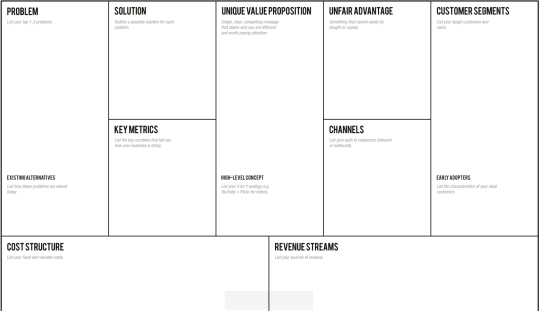
Because I had been involved in a startup, I had followed the development of Lean Startup thinking with keen interest. I also had ongoing conversations, with founders using the approach. As I pondered what to do with my career, I realised I had a chance to do the lean startup of me.
Expand Your Hypotheses
I had a few ideas of what I wanted to be involved in as I searched for new work and roles. These were my initial hypotheses. Some of these have proved to be valuable. Many were ruled out quickly because nobody else was interested in my offer or because the circumstances didn’t deliver the returns or impact on purpose that I wanted.
A simple example was that I initially thought I had an opportunity to work with startups or medium sized businesses. Firstly, these proved to be two completely different hypotheses with little overlap. In both cases, I found when there was money to pay mostly they didn’t want advice, they wanted outsourced management, access to my networks or some other proposition.
Also, I quickly discovered my initial hypotheses were too narrow and limited. People also started to offer me opportunities to do things that I had never considered before. Some of those opportunities, like the chance to join Change Agents Worldwide, to go to Do Lectures Australia, or the opportunity to work on development of a corporate university helped me expand my sense of what was possible.
Working through the hypotheses and pushing myself to consider the widest possible impact on purpose changed the work I do and the organisations that I chose to target dramatically. Along the journey I stopped looking for a job and became a consultant actively working in the future of work, customer experience and leadership (and starting up the business of me).
Relentlessly Test Hypotheses
You don’t know until you do. The only way to determine whether a proposition you have offers value is if someone is prepared to pay you enough and consistently enough to do it. There’s two points there:
You need to do stuff
People need to pay you consistently
When you are starting yourself up, there is a phase of networking and building profile. The danger is that networking and profile can be all consuming. Coffee and conferences can become your job. Growing networks can become your only return.
Get in and do things. Think like a startup and push yourself to do work every day. If you need to create a project to work on it, then do so. I found the best sales tool was when I was suddenly unavailable due to the volume of work. People started calling with work because I didn’t have time for coffee.
It surprised me how many people expected me to do work without being paid for it. I have done a few of those activities, not for the much offered ‘exposure’ but to prove to myself & others the value I can bring in an activity. However, once that is proved once it is time to make money or move on. Continued offers to work for free is a failed test of a hypothesis. Some times people will only pay when you’ve said no several times first.
Be Lean
Invest small and widely. There will be lots of temptations to put all your eggs in one basket, but remember each opportunity is a hypothesis to be tested. You don’t want to over invest in a proposition that won’t continue. I have turned down investment opportunities, jobs and partnership opportunities for this reason. I ended up deciding the best current scale for my business is me supported by amazing networks of the best talent from around the world, Change Agents Worldwide.
When someone asks me to go all in, I work with them to start with a small test instead. That way we both get to work out what is working and how much we want to invest together.
Remember time is the commodity that you have in greatest scarcity. Allocate your time to investments in your future with care. When people are wasting your time or don’t value it, allocate your time elsewhere.
Build Platforms
The power of a platform, channels or a consistent community is the ability to run many tests at once. Startups use platforms to learn faster. You can do the same.
Your network is a platform. Strengthen it (remembering your network is not your job). Your thought leadership activities are another platform (remembering it rarely pays the bills). Work with people who have platforms to run better and faster tests on your propositions.
International Working Out Loud week was born out of some casual conversations and unmet needs. It was a fun experiment. As we work to develop the idea further, it offers a platform for additional experiments in the potential of working out loud as a proposition to help others.
Pivot or Persevere
Every day as you test your hypotheses you are going to adapt what you do. You will make small and large pivots. When things work you will persevere and work to scale them like mad.
Recognise also that somethings that work don’t scale. For example, I have put on hold plans to work with a range of startups in favour of working on a few businesses like Sidekicker where we share a view of what it will take to realise a big potential.
I don’t see my pivots as failures. They are just opportunities to wait for better timing, a better understanding of a client segment or a better proposition. I know I will do work with more organisations in healthcare or more medium sized businesses. It is just a matter of finding the right proposition. While I wait I work still, building capabilities that will help in that eventual proposition.
Be Uniquely You
When I started my work, I wanted to be like all the other successful people. Over time, I realised my unfair advantage was being me.
My skills and experiences are relatively unique at least in the markets that I am working in. That is a very good thing. Trying to make myself more like others dilutes my unique value.
Some people won’t like your uniqueness. You also won’t enjoy working for them. If being you is not good enough for some, that is a failed test and it is time to move on and find someone who wants you for you.
The Lean Startup of You
You don’t need to quit your job, start a business or to become an independent consultant to apply lean startup thinking to your career. Start asking yourself how you create the most value, how you can do more of that and experiment to make it possible. You might find it requires a change of job over time but a lot can be accomplished right where you are now.
The power of a lean startup mindset is accelerated learning. Make sure you are putting what you learn into new actions.
People can grow. Practice compassion. Help better their practice.
In my office I keep a statue of Guanyin, the bodhisattva of compassion. I found the statue in Hong Kong over 20 years ago and loved the serenity & beauty of Guanyin. I also loved the reminder of the value of focusing on compassion for others. Guanyin is connected with the Lotus Sutra which established in the Buddhist scriptures that everyone can improve with the right practice.
[The Lotus Sutra] teaches us that the inner determination of an individual can transform everything; it gives ultimate expression to the infinite potential and dignity inherent in each human life. – Daisaku Ikeda
The Compassionate Leader
Compassion is greater than empathy for the challenges of others. Compassion is when that emotion leads people to go out of their way to act to help others. Compassion is not a mindset. It is a practice.
Compassion requires a specific focus on each individual. Compassion is about helping each individual to relieve their situation. The ultimate belief of a compassionate approach is that everyone can improve, like the Lotus Sutra.
Traditional organisations with an industrial mindset encourage dispassionate leaders. With a fixed mindset of employee potential and mechanistic view of employee productivity, compassion is discouraged. Leaders need to play to the averages of teams, cut their losses on poor performers and move on. Leaders who show compassion will be seen as overly focused on soft skills or more bluntly as weak leaders.
When the future of work is becoming more human, we can no longer afford the waste in this dispassionate approach. We cannot predict the emergent practices which will define effectiveness in a new connected digital knowledge economy. Innovation, disruption and new value creation rely on leveraging diversity, new ways of working and learning. If so, how can we afford to write people off until we have tried to realise their potential contributions.
Compassion takes Practice
Much of the traditional concern in management around soft skills relates to concerns that these skills are just talk. However compassion demands more than the thoughts and talk of empathy. Compassion demands action.
Leaders can act in measurable ways to help their teams to learn, to improve and to practice new skills. The work of leaders in the future of work is to realise human potential. This will take the hard work of new practice.
Compassion begins with a focus on the individual and an acceptance of their real circumstances. Leaders need to understand an employee’s goals and build their plans around those goals and a frank dialogue about where the employee is today. Compassion does not require you to soften the blow of reality. It requires you to help change it.
Compassionate leaders must work to improve practice. Coaching will play a key role in encouraging employees to seek out, experiment with and learn from new practice. A coaching approach to performance aligned to the employee’s goals and the goals of the organisation can achieve dramatic improvement in individual performance.
Compassionate leaders do not protect their teams from change. They make them better able to benefit from change. These leaders teach new skills and perspectives, show the potential gains in new practices and find alternative ways to contribute for those who are adversely affected by change. Compassionate leaders see change as a way to better realise potential.
The future of work demands compassionate leaders. How is your leadership working to realise the potential of others?
Compassion is a necessity, not a luxury – His Holiness The 14th Dalai Lama
Tonight I started making a new loaf of bread. The one I made this morning is gone. As I began I reflected that what once terrified me as a mysterious challenge has become a practice I can tackle with confidence. Mastery is still a long way off, but the practice has its rewards.
Making bread is a simple practice but one with remarkable options for complexity. The simplicity begins with ingredients. There are only four required – flour, water, yeast and salt. However each of these is a natural product and yeast is a living organism. Variations in flour, temperature and vitality of the yeast interact with the practice of kneading, rising, shaping and baking to introduce complexity. Additional ingredients, processes and time spin bread off in other complex ways.
The complexity means there is a lot to learn and learning from the practice of masters is invaluable. My first loaves were flat and inedible. My own starter was weak, I lacked a grasp for developing the structure of the gluten and I was unaware of what to do when my following of recipes went awry, usually through some minor error of mine.
Here’s a few examples of how I learned from studying the practice of masters:
My master sourdough recipe came from the Fabulous Baker Brothers with accretions from all my reading.
A sourdough course at the Brasserie Bakery gave me a better hands on appreciation of kneading and a better starter.
I learned about letter folds to improve the dough from the recommendations of many recipe books.
The Bourke Street Bakery’s Bread and Butter Project cookbook introduced me to a new effective kneading technique for the amateur
No knead recipes helped me to understand time and wet dough was my friend and trained me in the ability to plan a loaf ahead.
I worked out how best to slash and steam loaves in my home oven from the advice of others and my own experiments.
I have become a keen watcher of bakers at work from my lock pizza store to videos online.
If you reflect on the diversity of these influences, you will understand that my loaves aren’t copies of anyone of these sources. They draw from each in different ways, often at different times.
Complexity means each person needs to develop their own unique practice to leverage their opportunities and meet their own needs. There isn’t always a simple to follow recipe when techniques need to be learned. Experimentation is required to make sense of the practice and to make our own changes to make those practices suit.
However, we don’t do that learning and experimentation alone. We stand on ‘the shoulders of giants’ if we connect and learn from those masters around us. However, I can only learn from others if they are prepared to work out loud and share their approach. That working out loud is not all a free gift. I have paid for courses, a library of books and bought a lot of bread in my quest to learn.
The practices of the Responsive Organisation are far more complex than bread making. They involve the purposes, concerns and perspectives of many people in pursuit of common goals with agility and an external focus on customers and community. Sharing and building from our shared practice will help all of us to develop success. Working out loud fuels this learning and connection.
A common topic of debate in the Responsive Organization movement is whether an organization can become responsive or it must be born that way.
Undoubtedly many of the leading case studies of future of work organizations are organizations created or rebirthed from near death by charismatic founders. Some use this as evidence that the elements of a responsive organization must be present from the beginning. In a previous post, I pointed out that we cannot rely on transparency alone to make change occur for us. The power structures in a traditional organisation will prevent most radical change.
I am unambiguously in the optimist camp. I am not alone and the company in the optimist camp inspires me. I have seen organizations change enough to not recognise their former selves. Change to more responsive ways of working is possible. The question is how.
What gets in the way
Chris Argyris’ classic article Teaching Smart People to Learn is a rich source of observations of what gets in the way of a Responsive Organization transformation. In particular, Argyris notes that:
… There seems to be a universal human tendency to design one’s actions consistently according to four basic values:
1. To remain in unilateral control;
2. To maximize “winning” and minimize “losing”;
3. To suppress negative feelings; and
4. To be as “rational” as possible—by which people mean defining clear objectives and evaluating their behavior in terms of whether or not they have achieved them.
The purpose of all these values is to avoid embarrassment or threat, feeling vulnerable or incompetent. In this respect, the master program that most people use is profoundly defensive. Defensive reasoning encourages individuals to keep private the premises, inferences, and conclusions that shape their behavior and to avoid testing them in a truly independent, objective fashion.
These hidden values in most organisation get in the way of the transparency-led transformation that many hope to see. The Responsive Organization poses a threat to control, a threat of losing and negative feelings. Importantly the delegation of authority in a Responsive Organization may cause people anxiety as to objectives and rationale for action.
The role of leadership is to act as a counterbalance these natural human values and shift the behaviours to that of a Responsive Organization. We need to create rationales for action more powerful than embarrassment. We need to create community to generate trust, support and connection. We need to enable learning through conflict and experimentation.
Purpose:
Leaders must create a strong rationale for the transformation. In cases of crisis, startup or near death of organizations, this rationale can often be imposed by a charismatic individual. The external circumstances enable a threat based narrative to bind people together in a defensive rationale for change.
However, most organizations are successful to their own terms. As Argyris notes, we want to feel successful even if our results don’t pass external muster.
Leaders need to leverage two elements to create a strong rationale for change in this context:
The Purpose of the organization: a purpose is the ultimate rationale for why people come together in an endeavour. It defines the common impact the group of people wish to have on the world. As a higher agenda, it is the perfect rationale for change for even the most successful organisations. Purpose is a mastery quest. Very few organizations have the capability to completely fulfil their purpose. They can however strive to better realise it.
External orientation: No closed system will find a rationale for change. External orientation is where organizations find the challenges and opportunities that define the purpose into specific improvement opportunities. Leaders need to relentlessly focus the organization on its customers and community to see transparently the challenges and opportunities that exist for change. Well defined external impacts in this community will be what can drive the autonomy of teams in the organization. Using customer and community data in line with Purpose, also enables change agents to overcome embarrassment-based resistance in the organization.
Community:
Individuals will need support to take on the risks of a Responsive Organization. The role of leaders is to create the sense of community that will support an individual through that change. At the heart of that community will be engagement with others and a growing sense of mutual trust. Leaders set the tone for any community. They must also work hard to reinforce these key community behaviours
Engagement: Engagement begins with transparency and connection. I cannot truly care about the others in my community until I know who they are and understand their purposes, concerns and circumstances. Leaders need to create the conditions to enable people to be more social, to connect, to solve and to share their work challenges together.
Trust: Engagement will build trust as it builds understanding. Transparency will reinforce trust. However, leaders need to take on the role of fostering responsibility and accountability as engines of growing trust in the organization. When people see that individuals and teams are accountable for driving change then they will have greater trust in the change agenda.
Learning:
This post is deliberately not titled like a listicle e.g. ’The 3 or 6 things to transform an organisation’. Even a basic familiarity with change highlights that formulas will work only up to a point. Leadership needs to be adaptive to enable any system to change in a sustainable way.
To be true to their purpose and stakeholders, to leverage the potential of their community, each organization will take an unique path through change. The role of leaders is facilitate the individual and organizational learning required:
Experimentation: creating a culture of rapid iteration to address challenges and opportunities will accelerate the cycle of learning in the organization. Leaders must help this experimentation culture to overcome the resistance identified by Argyris and also to spread and have a wider influence in the organization. Lessons learned must become new truths which will take a sense-making role for leaders in the wider organization and mean leaders must champion new ways of working when they arise, whatever the personal costs.
Conflict: The biggest reason that organizational transformations fail is an unwillingness of the leadership of the organisation to allow uncertainty and conflict. Conflict will happen. The uncertainty associated with conflict is inevitable. Efforts to suppress this will either undermine transparency, the rationale for change, engagement or learning. Failure to embrace conflict takes many names: politeness, bureaucracy, politics, corporate speak, history, culture, etc. Failure to embrace conflict is an unwillingness to learn and improve. There will always be resistance when change comes and it must be addressed. Leaders need to create and sustain the right kinds of constructive conflict – driven by purpose, based in facts from an external orientation & experimentation, mediated through an engaged community.
Change is Coming. Lead.
I have seen the potential of purpose, external orientation, engagement, trust experimentation and conflict to drive change. Supported by leadership these are the elements of each organization’s transformation. These elements are critical to a Responsive Organization.
Throughout this post I have referred to leaders and leadership. This need not be hierarchical leadership. Clearly it helps if leadership and power are aligned in an organization in reinforcing the need for change. However, the changes described above are not capable of being implemented by top-down edicts. These changes must come as individuals and groups discover their power and are influenced as a result, This kind of leadership relies on influence and can begin bottom up or even from the middle management so often scorned in organizations.
Change is possible. Change is coming. Smart people can learn. Your people and your organisation can better realise their potential and their purpose. A Responsive Organization transformation will occur if you are prepared to lead the change.
Don’t report status. Share ongoing work and let collaboration advance the work.
Most of the time in meetings is spent sharing and discussing status. A large portion of our emails are status updates. In organisations with social networks much of the information shared is in the form of a status update.
All of this information is better pulled as needed than pushed in a time consuming way to everyone. As we all know, listening to someone else’s status is rarely relevant or useful. What has happened is done. If you are impacted or involved, you already know. For everyone else, the value rarely justifies the time
Importantly, all that can happen from a status update is awareness. Many of those a status updates are made solely to make others aware of our performance. Often the consequence of that awareness may be identification of an error or problem after implementation.
When you work out loud on work that is ongoing, there are many more valuable conversations that can be had. People can:
help solve problems
suggest improvements
highlight risks or issues
add information or ideas
offer assistance
avoid duplication
reuse your work practices or approach to improve their own
Reporting status is good for history books and the ego. Reporting on ongoing work is better for learning and collaboration.