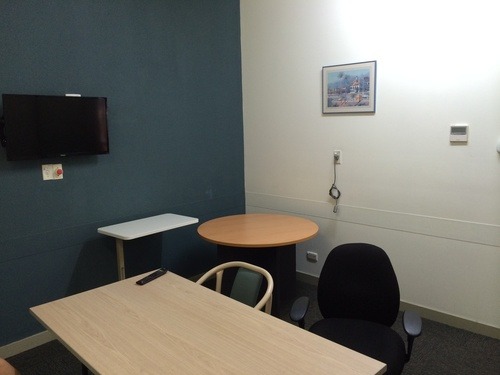
Photo: The hospital experience – empty of design but full of mismatched furniture.
Recently I visited a hospital accompanying someone through registration for a day procedure. The striking thing about this healthcare experience was that it was engineered for the hospital to achieve outcomes but had a complete absence of any design in the patient experience.
Everyone of the staff were concerned and caring. Yet the healthcare experience felt confusing, difficult, alien and uncomfortable. Everything you encounter is engineered for the hospital’s view of that step in the process. The patient experience in each step or across all the steps was not as well considered.
How the Patient Experience can Improve
Here are some examples:
- Early Arrival. No certain time: The patient needed to arrive at 7am. Apparently so did everyone else which created a backlog at reception. There was no idea of when the procedure will occur or when the patient may be able to leave. Nobody seemed to know what was happening, but eventually someone admitted how many procedures the doctor has on the day and how long a standard procedure takes. The patient was left to make a series of contingency plans for departure on these few facts.
- No transparency of process: On arrival we were asked to wait in the room above. Next steps were unclear but the volume of people being registered suggested a wait. After long period of waiting we saw someone pass our door look in and call out down the hall ‘there’s one more’. After more minutes of waiting, we were registered.
- Non-waiting room: The waiting room looked like a dumping ground for discarded furniture. There was nothing to do but sit and stare at its walls and furniture. The power points and buttons on walls suggested that it has been designed to be capable of being a room if needed. What had not been included in the design was a comforting & distracting place to wait when awaiting a procedure.
- Mysterious Hall Walking: While we waited one surgeon fully dressed in a theatre gown passed our door about 10 times. It occurred about every minute and a half. Either the doctor needed exercise or that process needs to be redesigned. It was hardly comforting for someone waiting for surgery.
- Registration Then Nursing Station Then Ward: The steps were designed to suit the hospital’s paper work, not a patient’s comfort or even an efficient use of time and effort. Each step involved waiting. Hotels have realised that check-in, payment and other moments can be redesigned to put the guest in control and get someone quickly to a comfortable place. That change alone improves the experience. Registration could easily have occurred entirely in advance of the visit, especially as it was mostly about payment.
- Wasteful Effort: As it happened the ward was opposite the waiting room. In the middle, we walked to the opposite end of the hospital to visit the nursing station and further away still for the nurse to complete her paperwork.
- Lack of communication: The people were all concerned and individually helpful but everybody was completing one task and nobody had a full picture or an idea as to what anybody else was doing.Hospitals are notorious for the fact that everyone asks the same questions over and over. While the questions are meant as a safety precaution, they are a constant reminder of the lack of communication. Without communication, nobody shaped the overall experience and uncertainty continued up until and after the procedure. On departure there was all sorts of confusion caused by lack of communication. I was even required to return to Registration from my car, leaving the post-operative patient behind, so that a form could be signed, only to be told at Registration that I didn’t need to return.
I have been involved in lots of work improving customer experiences. This experience is typical when services have been fractured into individual steps. The model people have is Adam Smith’s pin factory with a focus purely on specialising and optimising productivity in each discrete step for organisational outcomes. However modern factories are no longer run on this basis. Competitive pressures have meant factories constantly improve, removing waste with focus on coordination of the whole production system, continuous improvement and lean manufacturing.
A poor patient experience not only creates unnecessary issues for a patient, it is wasteful & counterproductive for the organisation and demoralising for all the people involved. Patients want the experience to be quick and effective so give them information and a role in the process. Better patient experiences will reduce the cost and improve the quality of care and the environment for everyone.
Making the Patient Experience Better
The steps for change are simple:
- Look at the situation through the patient’s eyes
- Empower the patient with information, understanding and choices
- Rethink the steps to reduce the waste, backlogs, duplication and effort
- Improve communication and understanding with everyone involved in the experience; and
- Empower and enable everyone to deliver the right outcomes and to suggest better ways of working.
