Truth, Persuasion & the Future of Work

image

We often slip into use the language of force to describe transformation of our organisations in the future of work: rebels, revolution, vanguard, etc. In so doing, we inadvertently romanticise the force & power dynamics that are at the heart of traditional organisations. Using the language of persuasion is more aligned to the changes advocated by the future of work.

Managers will transform to a new way of working when they are persuaded it is truly a better way. The future of work needs the employee’s engagement. We are transforming work to make it more human. Let’s use more human means in that transformation.

Satyagraha

Satyagraha is the term used to describe Mahamatma Gandhi’s approach to nonviolence. This approach has inspired non-violent change since. Focused on ‘insistence in truth’ it sought to focus on action that would bring forth persuasion of the opponents of change and strength in those arguing for change:

pursuit of truth did not admit of violence being inflicted on one’s opponent but that he must be weaned from error by patience and compassion. For what appears to be truth to the one may appear to be error to the other.

Gandhi also said:

Satygraha is a weapon of the strong; it admits of no violence under any circumstance whatsoever; and it ever insists upon truth.

Critical to Gandhi’s approach was the recognition that arguing for a new truth is an act of strength and that the means matter. Adopting the means of the oppressor to justify change weakens the cause.

Changing to the Future of Work

The future of work will not arrive in a revolution. As tempting as it may be to declare that there will be a moment of radical transformation, the changes that will come to the way we work will arrive as one by one managers change to new and better practices.  If they fail to change, it will come as their organisations are replaced by those who work in better ways.

The critical challenge for those advocating change is to endure and persuade. Those managers clinging to old ways genuinely believe that they are better. Use of these means is often a ‘self evident truth’ or ‘what management means’. Change agents must continue to advocate, to seek new arguments to demonstrate the truth of better practices and to take their arguments to those who need to hear change. Most of all they must retain compassion.

There will be no storming of corporate barricades. No new flag will be raised to herald a new era. There will be victories one person at a time as persuasion wins managers over from old models of management. 

Change Agents Must Endure, Prove their Truth and Persuade

Advocating for this change will take endurance. Old models of management are not beyond using force, punishment and exile to preserve their turf. The change agent must understand and embrace the setbacks and difficulties of the challenge.

Change agents must be humble enough to put their truth to the test. Managers will not be convinced by speeches and hype. They are convinced by value and results and when they are comfortable against the risks and emotions of change from the very practices that have founded their success and identity. Their minds will change when they accept a better truth.

If we are to make work more human, more driven by human purpose and human relationships, we must accept the means of change matter. Persuasion is the acceptable means. We must demonstrate better ways, prove the value of experiments and argue the case for change until it is accepted. Our new networks run best on integrity, influence and trust. Let’s make these core to our transformation to the future of work.

The Responsive Bank. Feature article in Q factor Oct 2014

Responding to a disruption and applying the Responsive Organisation principles to financial services

Note: the reference to an MBA in the bio at the end of the article is an error.

The Responsive Bank. Feature article in Q factor Oct 2014

Shapes, Guides, Decides: on Structure

In leadership we are starting to see the need to pull apart our obsession with jobs. We are realising that what matters more than a job is the roles that leaders play and their authority to play them.

A similar need exists in the structures we form from those jobs. In organisational design, we have a tendency to focus overly on structure as if it is the determinant of how the organisation functions.
The structure of an organisation is important. However, we know that all structures perform in different ways because of the networks of relationships that weave through them and the resulting culture that is created.
A focus on structure can be of little value to a manager looking to respond practically to the challenges of a networked economy. That manager often well knows that while changing structure can require as little as a new powerpoint slide, but the way things get done changes far less frequently and with a great deal more difficulty
Why?
  • Structure: A collection of status relationships between individuals. Shapes
  • Decision Process: The commonly accepted series of stages by which decisions are made in the organisation, including what information is expected, who is aware, who participates and who is consulted. Guides
  • Decision Rights: Who & how the final call gets made on any decision. Decides 

Structure influences decision processes and decision rights. However structure does not determine them and at times can work at cross purposes to the intended goals of the organisation. You can have a hierarchy where decision rights are delegated and there is a high level of autonomy. You can have a network that is paralysed by an insistence on consensus before anyone acts on a decision. 

The process used for decisions and what exercise of decision rights are accepted in an organisation is a function of the network of relationships more than the structure. Control by structure is often an illusion.

We need to spend less time focused on our structures and spend more time on how our relationships work and how we make choices.

Networks Demand Leadership. Make Your Choice. Act.

image

Leadership in networks is less about the position you are assigned. The opportunity is the role you choose and the challenge is building authority. The job might be assigned, but the role is chosen and your authority is earned. The networks in and around your organisation are waiting for you to act. If you don’t act, they will move on without you.

Networks solve obstructions

Networks route around obstructions. One potential source of obstruction is the formal roles in an organisation, the hierarchy and the resulting silos.  What results is a wirearchy which Jon Husband has described as

a dynamic two-way flow of power and authority, based on knowledge, trust, credibility and a focus on results, enabled by interconnected people and technology

Think about your organisation. There is a formal process to get a decision made, but everyone knows that the real decisions don’t follow the process. There is informal lobbying. Often someone who is not the decision maker is hugely influential. People chat casually testing positions. Additional information is shared. Deals are done. Trust and credibility play a key role in influencing the ultimate decision, often more than the facts on the table.

These actions are all examples of a network working around the potential obstruction of a hierarchical role or process. These conversations are all examples of how ‘two-way flow of power and authority’ is shaped by people’s actions to demonstrate ‘knowledge, trust, credibility and a focus on results’.

You are a potential obstruction

If you aren’t results focused, aren’t performing the roles required or the network doesn’t have confidence in your actions, a network of people working together will start to route around you.  Your failure to lead others becomes an obstruction. No matter how fancy your title or your place in the hierarchy the network will start solving for the obstruction that you represent. The network in and around every hierarchy is what makes the hierarchy functional.

To avoid being an obstruction, you need to focus on your authority and fulfilling the roles that advance the needs of the organisation and its networks. Your job won’t save you.

Authority takes Action

Leadership in networks is not an abstract and exalted status. Every person in a network is connected. Leadership is demonstrated when people take on needed roles and others move to action.

Leadership is the technology of realising human potential. Leadership is the technology that inspires and enables others to action. That takes a decision to embrace a role, action, influence and authority.  In networks, including the networks wrapped around your hierarchy, that authority comes from action, not position.

The differences in influence and ability to create value come through action.  Action is what builds authority.  The best way for someone to assess your ‘knowledge, trust, credibility and focus on results is to experience it’.  Authority grows influence with other people in the network and that accelerates further action. 

Networks and Network Leadership is not Bounded

If a network needs to go around or outside the hierarchy to solve a problem it does. All it takes is a connection for your network to extend further. Network leaders need to ensure that their leadership goes outside their hierarchies as well.

Customers, community, other stakeholders all influence your knowledge, credibility, trust and focus on results. Sharing the voice of the customer or the community can be a significant part of influencing change. Try to have influence internally without influence externally and you will find over time that your credibility erodes. Celine Schillinger has described how change agents can find that they need to build credibility externally to be more influential in their internal networks.

Leadership is a Choice. A Choice to Act.

Taking on a leadership role is a choice. It is a choice to help others make something happen and enable them to realise their potential. Whether you are in a hierarchy or a network matters little. The same rules apply. The choices that you make, the knowledge that you gather, the influence you build through credibility and trust determine your authority as a leader and whether others will follow.

Nobody has to follow you. Our hierarchies are a fiction that supports our need for status, order and clarity. The networks in and around your organisation know that and work around the hierarchy every day.  

That same network is waiting for your choices and the actions that follow.

SCNOW Webinar Series from Socialcast and Change Agents Worldwide

Change Agents Worldwide and Socialcast have now completed four great webinars on the future of work, enterprise social networking and collaboration:

Recordings of these webinars are available at the Socialcast webinar centre.

Accelerating Trust

image

At the recent DoLectures Australia, many of the attendees remarked on the high levels of trust that had been built between the attendees over the four days. The high trust environment was such that speakers rewrote their talks to share more and some big dreams and surprising admissions were shared on both the stage and around the campfire.

A few key factors helped foster that environment of high trust:

Share a goal: Everyone attended the event to learn and to share in stories of actions that are changing the world. People wanted to become more effective at driving change and often to find a new path in the world. Those common goals fostered connections and trust.

Select for behaviour – especially giving: The event selected for people who were action oriented, passionate and interested in others. These are not abstract values. They come out in action, especially giving. There were a lot of givers in the community. Adam Grant’s Give and Take was a fitting gift for all the speakers (a unexpected gesture by Andy Hedges of Westfield, an event sponsor). From the first night people were sharing ideas and sharing networks in an effort to enable others to move forward. Nothing builds trust like the gift of help.

Strip away the status: when you are camping, sharing communal activities and it gets cold, it is hard to hold on to the trappings of status. Nobody looked their best and everyone’s warm clothes looked alike levelling status that might hold back conversation and connection. 

Build connections: Like any group there were some networks present among the group, but no exclusive cliques. Open networks became a way to accelerate connections as people introduced others and referred people to those who shared an interest or an ability to help. The sense that everyone could talk and understand each other fostered trust. The group left the event deeply connected as a result.

Be present: When nobody has internet or a phone connection, everyone is more present. When almost everyone is staying the whole event, including the speakers, there is time for deeper conversations. People gave themselves over to the event and the company. That presence and the mindfulness it brings gave everyone the chance to truly listen and engage in the event and the activities.

Share stories: Storytelling is a way to learn of others’ experiences, capabilities, goals and actions. Telling stories whether on stage or around a fire enables people to get a richer understanding of the other person.

An environment of trust and concern: Payne’s Hut where the event was held is a place of beauty but more than that it has been constructed and run with a concern to create a wonderful experience. The hosts of Do Lectures added to that experience by taking care to design for the little moments of the event. Trust is reciprocal and reciprocated. When you feel others trust you and show concern for you, you are inclined to follow the role model.

Trust is a critical capability for the future of increasing agile networked organisations. Fostering trust with techniques like these above is critical for the future of work in our organisations.

This post was inspired by a conversation at the event with Col Duthie, the insightful MC of Do Lectures Australia

Action Makes an Abstract Noun Concrete

One of the attractive features of the DoLectures Australia talks was that the speakers didn’t spend too much time throwing around abstract nouns. As a group of people who make change happen the conversation was about what they had done.

Abstraction is a usual feature of conversations about change. In conversations about change, in large organisations and especially at conferences, it can some times feel like every noun is a capitalised noun.

The Dangers of a Capital Letter

Often people speak in general terms about nouns with great big capital letters like Change, Engagement, Community, Empowerment, Innovation, Creativity, Hierarchy, Power, Organisation, etc. Politicians and the leaders of organisations specialise in sprinkling their speech with capitals.

It is important to remember that nobody acts in the abstract. Speaking in abstract terms is a substitute for doing anything. Drop the capital letter and the context is usually much more specific.

A conversation remote from the details of action also generates confusion. There are hundreds of subtle differences in definitions of a concept as simple as Collaboration. At times, this confusion prevents any progress as people debate the meaning of the abstraction and the relevance of any action to their own personal definition.

At other times, this kind of confusion can allow people to impose their own perspectives. In these high level conversations you hear disconcerting phrases like:

“Of course I value Engagement with my people. I send them a weekly email…”

“We are very focused on Community here. That’s why we have a Corporate Social Responsibility function…”

“All our managers create Empowerment in their teams. I have made sure of it…”

Capitalised nouns look great in powerpoint, but they don’t do the work needed.

Action Makes a Noun Concrete

Fixing the explosion of Capitalised nouns in our work and our life is simple.

Do something. Then tell me a story of why and how you did it.

You don’t need a capitalised noun to do. Soaring rhetoric is for eagles.

If you want to use big concepts, make them clear in the context of the story of action. Action makes any capitalised noun concrete. Action rips out the capital.  

Suddenly Empowerment means I specifically empowered this person in this way. if I don’t like your definition of Empowerment, the challenge is not to debate you. The challenge is to do better.

The Future of Work needs to be the future of work.

We have big opportunities to change the future of how we work, make decisions and organise ourselves.

Start engaging in a discussion of the Future of Work and capitalised nouns appear quickly. People can lose sight of the fact that collaboration occurs everywhere, decisions happen every minute of the day and that people are continuously learning, doing and changing the shape of their work and relationships.

As we race into a future of work, let’s remember to act and to keep our discussions grounded.

The One Success Secret to Social Collaboration in the Future of Work

image

There is a lot of advice out there for organisations trying to achieve success in social collaboration and new ways of working. The future of work is very popular now so there is a lot of effort to sell the newness, the complexity and its special nature. Much of that advice makes efforts at social collaboration sound difficult to achieve or alien, if you are working today in a traditional organisation.

Despite all that discussion, there is one practice that helps make initiatives in social collaboration successful and increases the value that is created in the future of work. That practice is simply:

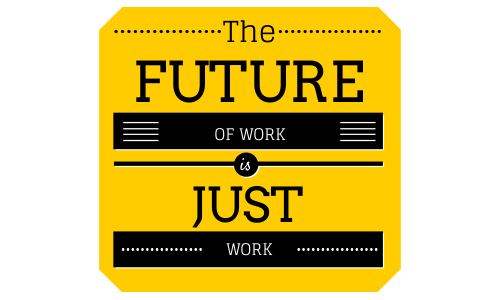
Treat it as just work

We work collaboratively every day

Every day people collaborate at work. Mostly they don’t call it collaboration. Instead, it is seen as having a conversation, sending an email, persuading someone, getting advice, getting help or working together on a task or project.

Social collaboration extends the opportunities of who can engage in this collaboration. Social collaboration tools enable this kind of work to be done with more people, faster and with better ability to leverage the knowledge created. If social collaboration tools don’t make it easier or better to do this kind of work, then users won’t and shouldn’t use them.

Treating social collaboration as a special activity distinct from work confuses people. They debate when they should use this special collaboration. They question the value of collaboration. They can’t see the point. And each time they go back to their work and start collaborating with others again.

Work is why we share information

Many people can immediately see the value of social collaboration as a way to share information. Your enterprise social network looks like Facebook. Your corporate blogs look like the ones in the public domain. Your wikis and knowledge management systems may even be familiar too.

However, this familiarity makes people uncomfortable at work. Clearly we don’t usually share the same information at work as we do in Facebook.  Many people ask: What should I share? What do I have that is worthwhile to share? What will happen if I share the wrong thing?

However in any organisation the best reason to share information is to work. People share information to do work together and to create value. Connecting with work colleagues, working out loud, solving work problems collaboratively and innovating with others are the reasons we share information at work.

Work isn’t special

Treating social collaboration as work addresses other issues that organisations face as they move into the future of work.

You have the policies, processes or campaigns to do your work. You don’t need special approaches to start social collaboration. Your normal work rules and processes should cover your social collaboration too, including rules on privacy & confidentiality, behaviours and performance processes.  If these approaches break, constrain or prevent new forms of social collaboration, there is a good chance they don’t work for other forms of collaborative work and should be changed. Don’t create special rules.

Do you gamify your daily work processes? If you don’t gamify everyday work, don’t gamify engagement with a social platform. Remember it is the work that creates the value, not the adoption. Don’t confuse the tool with the result.

Don’t start with special things. Start by helping your people to do their work better. If your organisation has never ever sought any input to its product development processes, doing a special product ideation session can be valuable, but it is a terrible way to start a social collaboration journey (especially if you fail to follow through on the ideas). You don’t want people building an idea that a social collaboration tool as something for special, rare & unique events. You want people realising its potential to do work and solve work problems each day.

Treating social collaboration as work also addresses why senior executives and other leaders should participate. This is not a special domain. This is where the work gets done. If you want to lead, lead here too. 

Work Creates Value

Most importantly, considering social collaboration as work drives our attention to the question of the value that the work adds.  When we work, we know we need to work more efficiently and find ways to make our work add value. That is part of the deal with work.

Focusing on social collaboration as work also reminds us that we should work to realise our strategy as an organisation. The collaboration must realise the organisation’s goals and the goals of the individuals who need to work.  Collaboration for its own sake is a waste.

Start Working to Work Better.

Social collaboration is the same. We shouldn’t focus on the tools. We should focus on the value of the work we do and how we can do better.

If you want to create value from social collaboration and new ways of working, start by treating it as work. Then ask people to improve their work. Experiment and make changes to make work more productive and effective each day. You will need to change processes, policies and organisational structures over time, but you will be guided by the collaboration of your people. That is the way to realise the human potential in your organisation.

The journey won’t be easy. There will be setbacks and lessons to be learned. People will need to learn new ways and adapt to change but an engaged group of people working together will create greater value for your organisation over time.  

That sounds just like work too.

—-

The Connect>Share>Solve>Innovate maturity model assists organisations to accelerate the value of the work their people do in social collaboration tools in practical ways.  Accelerating the progress of collaborative work from Connection to Innovation significantly increases the returns to individuals and the organisation from new ways of work.  Importantly it also engages people in shaping the future of work in their organisation. If you would like to learn more, please get in touch.