Do You Really Need That New Intranet?

Intranet projects are still popular these days. There is great new technology platforms & many new features available. Internet designs have moved on a lot so your old intranet is starting to look a little tired. Now your employees have new devices so your intranet needs to be mobile first and responsive. Think of the opportunities for new branding, a new name, better search and a refresh of all the content. Finally the intranet could be at the heart of the knowledge management and collaboration in the organisation. Delivering a new intranet is a signature career achievement.

Stop. Are you sure you need that new intranet?

New intranets don’t come cheap. Even after the technology solutions is acquired, the expenditure has only just begun. All that wonderful new design is going to cost money. You will need personas, card sorts and then branding advice. Getting the information architecture right can make all the difference so you will need a lot of time spent on the taxonomy of content, hierarchies of information, businesses and users. Glossaries and other reference materials will need to be reviewed and updated. Search will need to be tuned to make sure that it delivers the right options. All your existing content will need to be reviewed to fit into the new design. Throw in a policy and product information refresh and the costs and time skyrocket. Then there is the maintenance costs of all that content. Add in personalisation, collaboration and social features and the work never ends.

What is the Intranet really for?

To senior managers, an employee communications or HR team, an intranet is a showcase of the organisation, its business strategy and its knowledge. It is the one source of truth. It is the hub of collaboration and a critical place to share messages with all employees. This perception can create a whole lot of politics that disrupts the effectiveness of your new intranet. People become focused about the need to control the design and the content. User focus is swapped for the desire to meet the needs of the hierarchy. That control has real consequences when it disengages users. Worse still it can force one template on everyone and make everyone into ‘content providers’. The costs of this control are in content that gets out of date and grey market sites that spring up to break the shackles.  Soon the efforts to get around the intranet are drawing investment, effort and attention away from the platform. Confusion escalates and the intranet site is on its way back to being a stale reservoir of knowledge.

To an employee an intranet is where all the links in corporate distribution emails go. Usually the intranet is the last place they go to look when they and their colleagues don’t have the answer to hand and local searches have turned up no relevant ideas. Often the intranet is the place where knowledge is tied up in clunky processes & policy that don’t reflect their day job. Everything is anonymous. The context and authority that comes from human connection is lost. An employee does not care about single sources of truth or showcases of corporate messages. They care about findability and usefulness. Nobody browses an intranet willingly.

I know many organisations who have built elegant product sites on their intranet to explain all the features, process and policy relating to their products. Too often they discover that their teams use the customer facing website for product information. The structure of customer facing product information is usually better suited to employee’s roles in explaining that information to customers. It is indexed for Google search. Legal requirements ensure that product teams keep the external information that matters up to date. Also the employee can send the customer a link if they need to explain lots of detail. The pretty intranet is a showcase but the internet is the workhorse. How much of your intranet site could you do away with by directing employees to external sites?

Are the behaviours going to change?

In our work, we create value through our actions. If the behaviours aren’t going to change, then don’t change the intranet.  Changing only the technology alone, will foster only cost and confusion.

If you do want to get better at collaboration, communication and knowledge management, start with a clear understanding of the value to the organisation and the value to the user. Look for ways to achieve your goals that involved changed behaviours and community, not technology. When you are clear on the value of changed behaviours, you will be clearer on what your technology needs to look like to support that work. Now you won’t be forcing an intranet as a solution and you will be able to look at the breadth of options from social collaboration, to working out loud more, to using external internet sites and other tools of helping employees to find what matters most to help them do their job.

You will also have built a case for the whole organisation to align to working in new and better ways.

The Future Belongs to the Curious #PSKEvents

Curiosity is a critical capability for the future of work. We have reached the end of stocks of expertise.

This morning I was lucky enough to be involved in a fishbowl conversation with Cheryle Walker, Andrew Gerkens, Renee Robson, Charles Jennings and an insightful audience. The final question of the engaging conversation about learning and performance was ‘What capabilities matter for learning and development professionals in the future?’ The question prompted a great discussion of the value of strategic, business, relationship and systems acumen as learning becomes more focused on performance improvement & more integral to work.

My contribution was that curiosity is an important capability. As the attention shifts to how organisations can manage big learning systems, those facilitating this change need to be curious well beyond traditional domains of expertise. When work is learning and learning is the work to quote Harold Jarche, there is a need for facilitators of this process to be looking at their system and looking beyond the organisation with an intense curiosity. The question is not ‘what do I or our team need to know?’ The question needs to be ‘what can we learn that helps us work better and be more effective?’

Traditional approaches to learning often have an implicit or explicit assumption that there is a fixed reservoir of knowledge to be known by employees. Global connectivity has shown us that the required knowledge is constantly expanding, being shared and being created as people experiment with the edge and step into new domains or engage with new systems.

Big learning processes are key to the future of responsive organisations. Performance will depend on how fast and how effectively we learn. To shape this we must remember, the future of work belongs to the curious.

From Life-crushing to Life-affirming Work

image

My parody post on the Life-crushing Magic of Hierarchy, rightly prompted the reaction: “Yes, but what do you recommend we do about it?”. This entire blog is an extended essay on what to do to help make work more human. I believe the critical challenge for organisations as we move into the future of work is how to use learning, leadership and collaboration to create more life-affirming workplaces and work. For those who are looking for quick clarity, I thought I would distill a few basic responses to the challenge.

Call The Life-crushing Management & Discuss it

Frighteningly several people have taken the post at face value as a recommendation of management practices. This highlights our need to discuss the excesses and abuses of management practices more widely. Transparency & debate is a first step, because many of the practices will be stopped or adapted when challenged or discussed openly. Importantly, transparency alone is not enough.  We need people to act on change too.

Calling hierarchical leaders to explain their actions is not a step taken lightly. Like it or not, the call will challenge some leaders and not all challenges are welcome. Simple steps can be taken to make it easier to call bad practice and start a discussion:

  • Don’t do it alone: Build a coalition or at least check your perspectives with others before you call a bad practice. Ensure that there is a crowd of supporters for your view point.
  • Seek to understand: Begin by seeking to understand the management perspective. Don’t presume malevolence or incompetence. Most bad decisions come from a lack of shared context.
  • Based your questions in higher purpose, values or strategy: Appealing to and clarifying the higher order can give you more basis for a challenge.
  • Add external perspectives: Closed systems atrophy. Some times lack of diversity can be the problem. Add external ideas, data and perspectives to add weight to your call.
  • Offer help: If you call something, be prepared to work to create a better way. There’s a lot of critics. There are fewer collaborators.

Discuss People, Outcomes & Purpose

The practices “recommended” share a common goal of valuing management power over the effects of work. Creating a vibrant discussion of purpose, the importance of meeting people’s needs and the impacts of work beyond the organisation is critical to moving to more meaningful work. Starting with a strong sense of why work is to be done and the goals it is to achieve for the organisation, the individual and other stakeholders is a key part of a better more engaging work environment.

Importantly, this begins to foster and “outside-in” perspective that pushes hierarchical managers to look to new data and perspectives in their decision making.  Being clearer on goals and purpose is also a fundamental underpinning to allowing new forms of autonomy for employees to react and make change.

Grow Accountability, Autonomy and Change

As we add human accountability to the networks in our organisations, we enable people to begin to grow trust and influence. Think of the definition of wirearchy and focus on increasing ‘the dynamic two-way flow of power and authority, based on knowledge, trust, credibility and a focus on results”. Many simple issues in our organisations can be addressed by allowing people to share more information and begin to exercise autonomy to make decisions that need to be made beyond roles, mere compliance and process constraints. The exercise of that autonomy rises as accountability & trust rises. At the same time, we start to accelerate the pace of change in our organisations enabled by the distributed talents of our people. Increased accountability is one of the goals of traditional management, but common practices tend to disempower. We need instead to increase accountability and empowerment at the same time.

Build Capability

The appeal of traditional management practice is that managers need not be very effective at coordinating people and the employee’s roles are kept rote and simple. Working in more human ways will require organisations to build new capability to lead and to influence and also to make more complex decisions in every role in the organisation. We can’t manage and work in different ways if we have not helped people to develop the required capabilities. Enabling people throughout the organisation to gather information, to learn, to make change and to influence others becomes very important.

Continue the Collaboration & Change

There are no quick fixes, no gurus and no systems to buy to make a more life-affirming workplace. The steps above need to be led by management and by the entire team in the organisation over an extended period of change.  We don’t necessarily need to start by throwing out hierarchy or managers.  In most cases, they come back in another form anyway. What we need to do is to learn to work in new and much more effective ways that value human potential inside and outside the organisation.

Capabilities aren’t learned overnight and new ways of working take time to embed and be secure from the next round of management changes and new hires. The best way to carry this journey forward is to embed it in a collaborative change program that the entire team embraces.  Making life-affirming work part of the cultural fabric of the organisation must be the ultimate goal.  After all, there is no destination, just an endless journey of improvement and change.

Sell Aggression. Buy Relationships

image

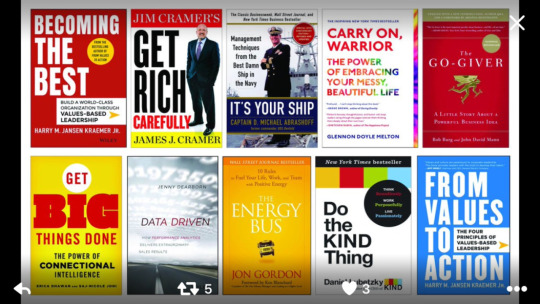
I saw a list shared on twitter of 25 books for CEOs from 2015. The above image was attached to the tweet. I reacted immediately to the macho impression of the attached image of the covers. Then I looked more closely and realised many of the subtitles run contrary to the general image of the cover. These books look like the typical aggressive competitive advice for CEOs to outcompete, outperform and to go big. However, the actual advice within the aggressive red or yellow cover is far more nuanced. Human relationships matter.

Sell Aggression

This is an old game. Strong leadership sells. We sell aggression. Alpha males rule the chimp pack. Wear red and yellow. Stand in a power pose. Be the best. Be simple. Know the right answer. Do one thing better than anyone else on earth and rule the whole damn thing.

Except this is the cheap shot. Aggression primes our primate brain and gets our attention. Aggression makes us pick up the book. Aggression isn’t what makes change happen and isn’t what delivers results. Aggression is the empty wind of a loud shouting exploitative push economy. Aggression is the bait in a leadership bait and switch.

Buy Relationships

Any successful leader knows that relationships is where the real work gets done. Collaboration and cooperation drive progress, not force. Nothing gets done alone. You don’t want anything done by the coerced. You want commitment not compliance.

Humanity triumphs again and again against the forces of power. Force an outcome and passive resistance will undermine its effectiveness. Bureaucracy rules. For every blustery threat, the real deal gets done in a quiet conversation as power is traded for persuasion.

Win commitment and you will see people’s capabilities blossom. The messy beautiful work of leveraging the capabilities of people happens in rich, complex and unpredictable networks of oh so human relationships. That far less saleable work, but it is the work of value. Relationships are where leaders seal the deal when they switch away from the bait of aggression.

Portfolio for the Future of Work

As our economies become more connected, faster and more complicated, these human relationships will only increase in value. Relationships bring information, trust & authority, critical differentiators, cost-lowering capabilities and fundamental elements of effectiveness.

The portfolio strategy for leaders in the future of work is to be long relationships. Those relationships will make your work far richer and more human. Buy now.

Get Uncomfortable

“There’s no comfortable way out of your comfort zone.”
– Paul John Moscatello

Traditional hierarchical management has its pressures, but it is a system built around the comfortable path for managers. In the golden goose school of management, life for managers is easier. They have the expertise, they make the decisions and they have the authority. Employees have narrow tasks to fill in tightly measured roles. Compliance is valued over the dangerous unreliability of commitment.

When we move to the future of work as managers we experience new discomfort. The network has a view and capabilities we can only influence. Autonomy and experimentation further break down the predictable nature of a manager’s role. Leadership is expected of everyone and managers play roles as change agents, coaches, facilitators and capability builders demanding far more individual level of support than the routine orientation of traditional management. Transparency changes the nature of decision making, expertise and the exercise of power. There’s more information and more people with a view.

The future of work is going to demand new skills of managers. Learning new skills is always uncomfortable. New skills only develop outside the comfort zone through practice.

If the last few years of business have taught us anything, it is that clinging to comfort in the face of change is not a viable strategy. All managers need to be exploring the uncomfortable future that is the future of work.

2016 – Tackling Reality

We may doubt that we’re up to being a warrior-in-training. But we can ask ourselves this question: “Do I prefer to grow up and relate to life directly, or do I choose to live and die in fear? 

– Pema Chodron

Welcome back old friend. I’m glad you’re here. Now, let’s get to work 

Carl Richards “Learning to Deal with Imposter Syndrome”

It may be cheaper and easier in the short run to ignore failures, schedule work so that there’s no time for reflection, require compliance with organizational norms, and turn to experts for quick solutions. But these short-term approaches will limit the organization’s ability to learn.

– Francaseca Gino and Bradley Staats “Why Organisations Don’t Learn

Let’s add one more detail to the picture
the much longer,
much less visible chains that allow us freely to pass by. 

Chains by Wislawa Szymborka trans. Clare Kavanagh and Stanislaw Baranczak

Leading into year end, I have been reflecting on what I learned in 2015 and what it means for 2016. All of the quotes above appeared in things that I read today. Reading these quotes clarified for me one of the key insights of 2015 that I had been considering (but perhaps was ducking) – life is far better when you are dealing directly with reality.

Tackling Reality Personally

Life as a solo consultant has its challenges. Over two years into that journey I have come to better understand, accept and deal with its ups and its downs. Work isn’t always consistent or predictable. The point at which you need to give up is usually when things change. The best work arrives all at the same time. There are human limits in time and capabilities. Some times you have to say no. You don’t get to do everything you want or need to do. Others will do differently. Things never go quite as planned. Big risks are essential to progress and so are the small (& big) failures. 

Accepting these realities has made me far more comfortable in my practice. Accepting these some times harsh realities has made me more ready to take advantages of the opportunities that are created.  These opportunities might be the chance to play a larger role in Change Agents Worldwide or another community, the new work that comes unexpectedly or the ability to leverage down time for reflection, connection and new projects, rather than panic.

I have found too that a better & richer focus on what is really going on for others and for me has strengthened both the personal and work relationships in my life.  Taking the time to really understand reality of the situation matters more to me than ever. Confronting reality isn’t always easy. Engaging with some perceptions and beliefs can be painful, some of these are deeply hidden and it can take a long time to accept some of the more difficult realities. However, reality will not and cannot be ignored.

My lessons from applying this effort with others have been equally insightful. So many times in our busyness, we assume we know what is required, we rely on expertise and miss the opportunities to really engage, to really help and to make a real difference. Our ability to work and collaborate with others depends on a rich shared context based in reality. Don’t accept things at face value. Take the time in 2016 to probe and to query the reality of the situation. Without feet planted firmly in reality, we have no way to step forward alone or together.

2016 will be another year of working deeply connected in reality for me. 

Helping Organisations Tackle Reality

In 2015, I blogged in a number of different ways about the need for organisations to better engage with reality. I called our hierarchical organisations dumb. I talked about hierarchy as filter failure. I highlighted that these organisations ignore complexity and even need satire to prick their bubbles some times. Change Agents need a good grip on reality and pragmatic skills to move organisations forward. There are many more examples of the battle to hold organisations accountable to the reality of their situation in the blog posts this year.

The future of work demands organisations step out from their cloisters and engage the reality and the pressures of the world inside their organisation and the world around them. Effectiveness of purpose demands that we look to the real human costs and benefit of that which we do. Internal efficiency or narrowly defined success metrics are no longer enough. Global networks and dynamic disruptive global competition will hold us to account for our failure to confront and leverage reality. 

The better organisations are learning how to use the reality of their people, their capabilities and their networks. They leverage the human capabilities of the people, their networks and their capabilities to continuously create change to grow and be more effective. These organisations recognise the reality that they are a human organisation, that they must base their actions on real conversations and real human capabilities for success. The future of work must be much more human to deliver their purposes. 

The need to tackle reality more effectively is why I focus on learning, leadership and collaboration as core enablers of the future of work. I believe that these three are essential to my personal purpose of making work more human. 2016 will be a key time helping organisations improve their effectiveness and better deliver that purpose in the real world.

ICYMI: 2015 Top 10 Posts by Popularity

The over 10,000 people who have visited this blog in 2015 enables us to review 2015 by popularity of each post. This blog has covered a lot of ground in 2015 in 206 posts so it is interesting to see what rises to the top of the social sharing. The practice of learning, leadership and collaboration for the future of work top the lists as they are the focus of my work and my interests:

  • Competency or Capability Mindsets Matter: I am a little surprised to see this post do so well. When I wrote it I thought of it as more of a technical post dealing with a key HR and management issue. Clearly the need in the future of work to focus on capability and move from strict competency resonates deeply.
  • The Last Thing We Need is an Enterprise Social Network:  This rant of a post from 2014 continues to circulate, educate and amuse
  • Working Out Loud 3 Tiny Habits: The growth of Working Out Loud in 2015 with the release of John Stepper’s book and two Working Out Loud Weeks has made this post from 2014 (and its various forms of content: posters and videos) enduringly popular
  • Big Learning: I see this post as another pillar of this blog ongoing. The idea of organisations needing to arrange systems to accelerate learning and capability development remains as urgent as ever. Big Learning is the next big challenge. In 2016, I am looking to bring Big Learning further to light with clients.
  • Beyond Adoption to Value Creation: The foundational post of my work in collaboration and probably the most linked post within this blog. Also widely used by others to explain the development of collaboration in organisations.
  • Why Hierarchical Management Survives: Institutional Filter Failure Struck me in a flash. Still surprises. As long as our organisations are deliberately dumbed down we will miss out.
  • The Growth Mindsets of Collaboration: I love Carol Dweck’s work on Growth Mindsets. Let’s hope more managers are inspired to consider & encourage them.
  • Double Loop Learning of Working Out Loud: This world has got to complex for single loops. Let’s help people to reflect on whether they are doing things right and even in a triple loop whether they are doing the right things. Working out loud will continue to be a key focus of my work in 2016
  • The Lean Startup of Me: If the circulation that this post received on Linkedin was added to its stats, this likely would have been #1 post of the year. It is certainly the post I get most questions about. This is still the way I approach my practice and life.  It has been invaluable to me and to those I coach on following the independent path.
  • The Future of Work is the Future of Leadership: Another foundational post from 2014 that benefited from a lot of links in 2015. Leadership work will be a big part of 2016. We need change and we need leaders at every level to get us there.

If I take out the 2014 posts, the next most popular 2015 additions would be:

This list of posts is a wonderful encapsulation of the focus of my work in 2015 and the areas that I will be focusing on growing in 2016. There are a few much beloved posts that failed to make these lists.  There are also many posts on the blog that probably should never have been written. That’s the journey of blogging consistently and working out loud on your practice and learning.

Thanks for your support in 2015 and I look forward to sharing more posts in 2016 and being involved in the great conversations that they inspire.

Leadership & Management

A dichotomy of leadership and management is not particularly useful. We need both. We also need to move beyond seeing these concepts as being fixed hierarchical statuses.

At the moment there seems to be a flood of articles and other content about the difference between leaders and managers. The general themes are that leaders are inspiring and people focused will managers are mechanical and fearsome. This content assumes both leaders and managers are hierarchically superior to their teams and that these two concepts are distinct statuses.

Both management and leadership are required in the future of work. However we need these concepts to mean exercise of the respective verbs, not a group of people holding a status. We need to recognise that the practices of leading and managing are our choices to get our work done. We need to manage our information, resources and relationships to achieve outcomes. We also need to lead others when we influence them to support our work.

Discussing leaders vs managers as hierarchical concepts takes us simply to better managers. The bigger issue is moving beyond leadership vs management. We need more of both. The issue is how we move beyond fixed titles like leader and manager that don’t reflect how we all get work done. We need everyone engaged in both leadership and management. A greater depth of leadership and management in our organisations will better enable us individually and collectively to create needed change.

The Future of Work: Future Focused

Traditional organisation models sustain the past. A responsive organisation is focused on the future.

Time Capsules

Traditional hierarchical models of organisation are about sustaining history. They are designed to ensure consistency of execution of an established business model. Because that model worked in the past, it is preserved and tweaked moving forward. The focus on process, policy and compliance drag history with them as they attempt to grapple with a changing world.

The time capsule of ideas, information, policy and process that each traditional organisations carries with it distracts from the present reality of the organisations solution. Employees must learn the history encoded into the organisation rather than deal with the surrounding reality of customer needs and changing competitive environment. Employee’s ability to respond is constrained by legacies of history. Intent on sustaining a legacy of a historical innovation, these organisations find themselves incapable of making the key changes to embrace present needs or future opportunities. They fail in their task of sustaining the past because they find it increasingly hard to make it relevant to today.

Future Focused

The best way to prepare for the future is to create in the present moment. That demands organisations try to understand the conditions outside their organisational time capsule. They need to allow their employees the freedom to learn externally and to change their approach in response to their learnings. Decision making must be unencumbered by the legacies of past history. The organisation must be ready to shed its history if the future demands a new model.

This is a Responsive Organisation. Transparency & Networks help these organisations connect externally and internally to accelerate learning and build trust. Experimentation accelerates learning and keeps decision making grounded in the opportunities of now. Autonomy for employees helps shed the legacies of the past. Importantly a focus on a Purpose externally to the organisations pushes the organisation to reach forward for larger impact, rather than reach inward for greater return on a historical model.

We don’t enjoy living in time capsules. It is time for our organisation to be more future focused and responsive