A one-minute video on The Responsive Organisation. We need to lead the changes in the future of work to make our organisations more responsive to customers and community and to realise human potential.

The video is hacked from The Responsive Org slide deck. Why don’t you hack your own?  

Additional credits:

Dinosaur: http://pixabay.com/en/dinosaur-allosaurus-skeleton-bone-60588/

S&P 500 Charthttp://www.technologyreview.com/view/519226/technology-is-wiping-out-companies-faster-than-ever/

Supermarket aisle: http://commons.wikimedia.org/wiki/File:Supermercato_vuoto.jpg

No Frills Cumbia – Kevin Macleod: http://incompetech.com/music/royalty-free/

Beyond Adoption to Value Creation

Slide1

A great deal of attention in enterprise social networking has gone into ‘driving adoption’. A focus on adoption can distract organisations from the real challenge of any business activity, creating value in fulfilment of the organisation’s strategy.

Adoption is an intermediate goal

Adoption is a means to an end. Adoption is a tool of value creation. It is not the result. The desired outcome is the value created by an engaged community that allows for the fulfilment of a strategic goal through outcomes like better alignment, innovation, adaptation, better customer & community focus, greater agility or improved efficiency.

The desire to move beyond adoption is growing. Luis Suarez recently argued that the language of driving adoption is missing the mark. Joachim Stroh has also highlighted ways in which we need to move beyond traditional adoption.

The logical next step from adoption is the end goal of work. Business and people work to create value in line with a strategy. We need our use of enterprise social networking to create value for each users and for the business as a whole.

Adoption as a goal alone can lead us astray

Our focus on adoption is often reflected with concerns from our traditional hierarchical ways of working. For example I have been asked the following questions about adoption that indicate something is going astray:

  • If we don’t have universal adoption, how will people get our messages?: If you are focused on one-way communication, there’s a good chance they don’t listen to your messages already.
  • Can’t we just mandate adoption? You can, but it rarely works to create an engaged & valuable community. Incentives may be a transitional tool to help people engage with the solution but take care that they don’t make participation an end in itself.
  • Won’t our people resist adopting this new solution? If the solution offers no value or is seen as a distraction from real work, they should resist. If it creates value for users and they see its value to the organisational strategy then this is an issue that we will overcome.
  • What’s the right number of users to adopt a social network? There is no magic number. The right answer is enough of the organisation to create enough valuable conversations for users and the organisation. That can be a surprisingly small percentage of the organisation, provided they are well connected into the larger organisation.
  • We have lots of users. Nobody knows what to use it for. What do we do now? You have users but it is likely you don’t have a community that understands how to do things together to create value for your strategy.

Most importantly of all, enterprise social networks are infrastructure, not tools. Employees need to make sense of a new enterprise social network and integrate it into their work. There is no pre-ordained usage that people can adopt like many other technology systems. Adopting a network as another conversation tool may be interesting but rapidly loses relevance in a busy workplace with many high volume channels for communication. The best guide to employees is to direct their sense-making into how it will create value for their work and strategic value for the organisation.

Often adoption drives demand a lot of overhead and effort. They are pushing something into a community. Where this effort goes to creating niche use cases with easy adoption, selling a uniqueness event in an enterprise social network or investing all the time in unusual campaign activities it can backfire. Employees who come to think of the enterprise social network as being used only for a special activities may not consider the opportunities for every day value creation. In these networks, there is a dramatic difference in utilisation between when adoption is being driven and every day use limiting the potential of the platform. Use caution that your efforts to drive use reinforce the connection to value in daily work and strategy.

Importantly adoption is rarely a goal that makes sense to the managers and leaders whose support is needed to foster a collaborative culture and role model usage. Conversations advocating adoption of social collaboration and other future of work practices can seem abstract and a side issue to the work of the organisation to many managers. Managers are looking for how enterprise social networks contribute to value creation.

Personal and Strategic Value

Value is different for every organisation as organisation’s purpose, strategies and goals differ. Value need not be a hard dollar return on investment. ROI can rarely be calculated in the abstract for infrastructure. From an organisation’s perspective defining a contribution to a strategic goal is often more effective.

Value is different for each individual depending on their goals, their role, their work preferences and their needs. Individuals will need to change their work practices in ways that make sense to them. Role modelling and storytelling will assist this journey but they will make their own sense of value.

There are 5 key elements of the work to moving the focus of enterprise social networking to value creation:

  • Create Strategic Alignment: Make explicit the connection between social collaboration and the strategic goals of the organisation. At a minimum, these conversations will educate your employees on the purpose, strategy and goals.
  • Guide Personal Value Creation: Guide employees to understand how the enterprise social network creates value in their work. In my work with organisations, I use a Value Maturity Methodology based on users maturity through 4 stages Connect>Share>Solve>Innovate.
  • Experiment & Learn: Create an environment for employees and the organisation where the enterprise social network fosters experimentation to create new forms of value in work. Encourage sharing and solving challenges.
  • Foster A Learning Community: An engaged and aligned community of employees working together for business goals is the greatest opportunity for value creation in organisations. Focus on how community accelerates value creation and the key roles required in any community. Understanding the roles of champions and leaders is critical.
  • Discuss Value Creation: Social networking accelerates double loop learning. Discuss value creation in the network as the work conversations occur. Celebrate lessons and successes. Back innovations with corporate muscle. Use these new learning conversation to foster alignment with strategic goals and encourage people to find new personal value.

If you would like to create greater value in your enterprise social network or discuss how the Value Maturity Model applies to assist your organisation to create strategic value, please get in contact. I am available through @simongterry or Linkedin or www.simonterry.com

Why I am excited by Do Lectures Australia

image

Photo: Do Lectures Australia – Write change across anything and it looks good to me.

Do Lectures Australia is almost here

When I first heard about Do Lectures Australia. I went and looked at the Do Lectures website and found stories that resonated deeply. I found:

  • The idea which is put simply this way:

The idea is a simple one. That people who Do things, can inspire the rest of us to go and Do things too. So each year, we invite a set of people to come and tell us what they Do.

I immediately wanted to be a part of the event. I am so excited that after some luck and a great deal of generosity from Yammer. I am going to be a part of the experience later this month.

Why Do I Want to Do?

There are 3 things that are at the heart of why I am excited about the first Do Lectures in Australia

  • The Community: Do Lectures is not a huge conference. The scale is human. The goal is connection, interaction, learning and inspiration in a community atmosphere. The speakers which you can find on the blog are diverse and have achieved great things.  However, the list of attendees is just as remarkable. This is a community that I want to join.
  • The Purpose: In a world that can feel disconnected, apathetic and alien at times, we need people setting out to share their personal purpose, connect with others over purpose and bring great things to life to further purpose.  From what I have seen and know, there is a rare depth of purpose among the attendees at this event. I have already heard some extraordinary stories of what people have done, want to do and why. I want to hear, learn and engage to help more of these purposes come to action.
  • The Do: Conferences that are full of beautiful talking about talking are everywhere. Twitter was invented so that you don’t have to attend them, just read along or watch the videos later. I want to do, not talk. I want to be inspired to do extraordinary things. I want to meet people doing extraordinary things. I want to help others do. Purpose is in the work.

I look forward to sharing more on my return from this extraordinary event. I have had enough luck to date to tell this is going to be a great learning experience.  I will share more of my adventures and insights after I return from Payne’s Hut. I am sure I will be raving even about the ‘Purpose is the Work’ and the ‘Community is the How’. I might even slip in the odd mumbling about leadership in communities, networks and the future of work.

Special Thanks:  I would like to thank the Do Lectures team for keeping the pressure on for me to attend the event. There is nothing like an idea and the support of a community to produce results.

Most of all I would like to thank Yammer for the partnering with Do Lectures Australia to help bring this extraordinary event to life and for giving me the opportunity to attend as their guest, competition winner & Do-er. If any organisation has shown me the power of a community to reinforce purpose, to inspire and to do more, it is Yammer. Thanks for one more proof point.

You Can’t Add a Collaboration Layer

Collaboration is human-to-human interaction. We are rich, creative and diverse, given the chance. You can’t add a collaboration layer to your existing processes.

Collaboration is not something that helps with the work. Collaboration is not something you integrate into your existing systems. Collaboration requires a fundamental rethink of the way work gets done. Collaboration is not a layer because it changes the whole system. Great collaboration goes the whole way through.

The phrase ‘collaboration layer’ is common. The idea of a collaboration layer most likely has its origins in information technology architecture. Collaboration systems are often represented as a different layer of the system stack, similarly to the user interface. As a result vendors and others talking to an IT audience will often promote the need to add a collaboration layer to existing processes. After all adding a collaboration layer sounds relatively painless – all the benefits of collaboration without the change.

As the application of the phrase shifts from systems architecture to the business conversation on how work gets done, something gets lots in translation. Success in the application of social collaboration systems does not come from integrating one more piece of technology into the stack. Collaboration is not an integration challenge. Collaboration is not about machine-to-machine or even machine-to-human interaction. Collaboration is human-to-human.

Collaboration can’t just be layered in on top of everything else. Collaboration requires a rethink of the entire process to foster the best of human interactions. Networks are required for collaboration. However, great communication requires more than a network. Great collaboration requires a community. The highest value collaboration goes beyond a community and builds a change movement.

To bring community to life you need to do more than add a layer of machine-to-human and human-to-human communication over the top of your Taylorist processes. The goal of social collaboration is not to make dumb workers better informed. The goal is to leverage their collective knowledge, intelligence and creativity. Allowing workers to share purpose, connect and create new and better ways of working together comes from giving them the opportunity to connect deeply and to rethink the processes and entire systems that they use to do their work. The best innovations in social collaboration are when entire traditional processes disappear because a newly engaged workforce finds a better way.

People will not stay long in a conversation where machines send them status updates. There is much less value in collaboration, little community and no change if the process is the process and can’t be rethought. This is one of the reasons so many enterprise social networks struggle. Without the prospect of creating a sense of community and the ability to change things, what is the point of participating?

If you want the benefits of rich collaboration, growing community and powerful change driven by your people, then you will need to move beyond a collaboration layer on existing processes. Letting your people use collaboration to change the whole system for the better has to be possible. Collaborative humans will demand it.

What questions build your community?

image

Why do we focus on Push communication?

Push communication is deeply ingrained in our way of thinking. We live surrounded by push messages. The triumph of push is so great in business that push functions, like marketing or PR, are simply called communications. We are used to models that tell us to “Always be closing”, “Get your message out”, “Build awareness” and ‘Be proactive’.  Networking has a bad name for many people because it is seen as the equivalent of cold-call sales.

Social tools are sold as media, driven by advertising revenues and promoted as a new method of advertising yourself. We obsess about follower size or measures of influence like Klout and Kred that are heavily influenced by the ability to push. The ‘Number One Mistake Everybody Makes on Twitter‘ is not to turn a reply into an message to their whole follower base. Do we need more messages when we are living in a period of ‘information obesity’?

Organizations worry about compliance in their employee base in the use of social communication because non-compliance might adversely impact the desired push media & reputation effects. The assumption that push messages must be preserved leads many organisations to ban their employees from sharing or tightly restrict their engagement. Even where social is encouraged many employees struggle with pushing their views forward. A reluctance to push and a reticence about the quality of their messages holds back adoption & use.

John Hagel, among others, has argued eloquently that it is time to move from Push to Pull.  We need to move from communication to community to get full value of the networks that we have built.

What’s your most valuable communication?

Ask any business which conversations are the most valuable and the answers are usually consistent.  The best conversations are where they get a chance to sit around the table with customers or key stakeholders, to let them talk to each other, to listen, to question and to learn. From these conversations come new product ideas, insights into customer drivers and customers taking on the challenge of explaining and even selling your business to others. The insights can be revelatory and the business value outweighs any speech, status update or advertisement.

For conversations to have this value, they must be authentic, reciprocal, valuable to all involved and intensely personal. The conversations aren’t driven by a message the business wants to share. They are driven by questions that bring out what customers want to share. The questions don’t always come from one source. They come from anyone in the conversation.  For that to occur it needs to be underpinned by the relationships, personal connections and trust.

What question is your push communication trying to answer?

When you unpick the next message you want to share as push communication, you will find at its heart a question. Your communication is trying to close off a question that belongs to the customer, an employee or another stakeholder. You are trying to supply an answer to your guess of a question that your push communication won’t let them ask.

Why won’t you let your stakeholder ask their question?  

Closing off a question may seem safe, but control is a false & costly form of safety. Control does not build trust, connection or value. It doesn’t stop the customer forming their own view by thinking of other questions. It simply denies them a way to share any connection with you.

How do you build your community with questions?

Community is the ultimate pull. Community is when your stakeholder choose to connect deeply with you, to work together to create value and to share of themselves for a common goal. Community is a layer of trust and connection that enriches the value of networks.

Community is built by questions, not statements. Asking someone’s name is the first step. Then we ask how they are going. We ask why they are here and what they are trying to achieve. We ask about their hopes and their concerns. We ask what they know and believe. In time, having learned enough, we ask if we can help.

What would happen if everyone asked a question?

Everyone in your business is connected. They have connections at work and in the rich world outside. Hopefully those networks grow each day. They won’t grow more valuable if they are just names and contact details. They grow richer with deep interaction and growing community.

It is hard work getting everyone in your business to master push communication. Many don’t want to use push communication and aren’t confident in their skills to do it well. This challenge of push affects the senior manager as much as the frontline employee. That’s why there are specialists in communication and convoluted communication policies.

Everyone in your business can ask a question. Practised consistently, that questioning develops into an ability to seek and make sense of their environment. Every stakeholder can answer that question if the connection is strong enough. Great questions get shared as people in the network become interested in the discussing the answers generating new questions and learning together.

Use your networks to share questions and you will find every part of your network is contributing to building a rich and valuable community for your business.

What great questions build your community?

Please share your answers.

From Safety to Safer: Middle Management’s Dangerous Transition

image

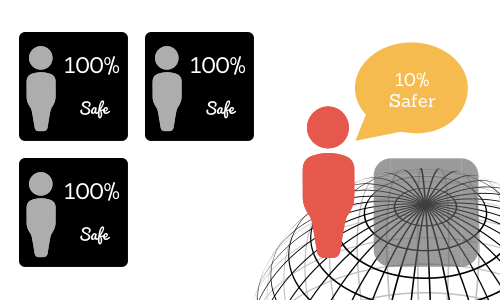
Safety is a common conversation, explicitly or implicitly, in the halls of middle management. Change agents among the ranks of middle managers experience conversations about the need for safety and the dangers of change on a daily basis. Safety is the focus because there are many for whom safety means the preservation of status, roles and resources. We need to move from safety to making our organisations safer for a world of rapid networked change.

The Wrong Kind of Safety

Ask enough middle managers and you will find that there are definitions of safety which involve elements of the following:

  • Ownership: a clearly defined area of responsibility and resources that can be controlled tightly
  • Knowledge is Power: a set of skills, capabilities or knowledge that is closely guarded and relatively unique in the organisation
  • Hierarchical Power: relationships of dependence with management above dependent on the department’s functional expertise and the team below dependent on sponsorship of their careers in the domain
  • Comfortable Accountabilities: Accountabilities should be designed with reference to achievable measures, preferably internal measures related to the discipline.
  • Limited Stakeholders: A few internal stakeholders often from similar functions with similar ideas and ideally few customer or community stakeholders who may introduce different perspectives and diverse issues. 
  • Few Dependencies: Trusting others reduces control and introduces risks, so collaboration and cooperation are avoided by controlling as much of processes and projects as possible 
  • Limited Transparency:  With utmost politeness, share little and participate little in the concerns of the rest of the organisation to preserve the comfort of your domain.
  • Stability: Ensure there is minimum change in business environment, even if this includes refusing to acknowledge market changes.
  • Minimum Risk: Avoid any change that offers risk. Why jeopardise an environment under close control?

The core of these definitions of safety is the idea that the threats to middle managers are internal. The biggest threats comes from other managers or senior management. The external world is not a cause for concern. Safety comes from building an walled fortress within the organisation and focusing internally.

Unsafe at any Speed

In the rapid change of our current business environment, the greatest risk to middle management is not internal. The need for change, the pace of change and its impacts are being driven in the networks around the organisation. Middle management has much more to fear from changing consumer and social behaviour, disruptive technologies and networked ways of working. 

The classic middle management definition of safety makes nobody safer. By turning inward, by resisting accountabilities, stretch and change, these managers guarantee that their organisations are exposed to much more wrenching changes than need be the case. Each of these elements of safety stand in the way of an open, agile and responsive organisation. When middle managers choose to act as barriers to change, the forces of change risk sweeping whole layers and organisations of managers away.

By focusing on a misguided view of individual safety, these managers make the organisation more unsafe as a collective.

Leaders who do not challenge a culture of safety in their organisation are putting their whole organisation at risk. Leaders need to be working to make the organisation more responsive. The safer organisation adapts.

From Safety to Safer

Leaders, change agents and forward thinking middle managers need to disrupt this misguided culture of safety in organisations. The conversation must not be about safety but how to make the organisation safer through adaption. This disruption must involve conflict with traditional views. However, that disruption will help the organisation adapt to a safer culture that opens the organisation up to its internal and external networks.

Here are some simple steps that any leader in an organisation can take to drive a responsive culture:

  • Push for external accountabilities: Raise the bar on performance. Measure customer outcomes. Consider end-to-end process performance to cut across siloed walls. Look externally for measures of success (and not just in the same industry).
  • Bring in external stakeholders: If customers, community, employees and other partners are not stakeholders in the organisations decisions then gather their perspectives and bring them into discussions across the organisation.  There is enormous power in real external views of the organisation, its purposes and performance.
  • Network the organisation: Focus on increasing the flow of information and knowledge within the organisation. Demonstrate the value of collaboration and cooperation in greater efficiency, innovation and engagement in the way work is done. Foster diverse perspectives on the way forward. Most importantly of all delegate outcomes and enable people to make change to adapt without reference to the hierarchy.
  • Experiment: The new definition of safety needs to be a well-run experiment to improve performance. The absence of well-run experiments is a sign of major concern. If you are not testing the way forward in changing times, then you are taking big risks.

You don’t need to be CEO to drive these changes to make a more responsive organisation. (Undoubtedly, it helps). You will need to effectively manage your role & influence in the organisation. However, effective change agents and middle managers can begin to ask the questions and start new conversations leveraging external perspectives. Most importantly of all they can build a network of others frustrated by the culture of safety and work together for change.

From Safety to Safer: Middle Management’s Dangerous Transition

image

Safety is a common conversation, explicitly or implicitly, in the halls of middle management. Change agents among the ranks of middle managers experience conversations about the need for safety and the dangers of change on a daily basis. Safety is the focus because there are many for whom safety means the preservation of status, roles and resources. We need to move from safety to making our organisations safer for a world of rapid networked change.

The Wrong Kind of Safety

Ask enough middle managers and you will find that there are definitions of safety which involve elements of the following:

  • Ownership: a clearly defined area of responsibility and resources that can be controlled tightly
  • Knowledge is Power: a set of skills, capabilities or knowledge that is closely guarded and relatively unique in the organisation
  • Hierarchical Power: relationships of dependence with management above dependent on the department’s functional expertise and the team below dependent on sponsorship of their careers in the domain
  • Comfortable Accountabilities: Accountabilities should be designed with reference to achievable measures, preferably internal measures related to the discipline.
  • Limited Stakeholders: A few internal stakeholders often from similar functions with similar ideas and ideally few customer or community stakeholders who may introduce different perspectives and diverse issues. 
  • Few Dependencies: Trusting others reduces control and introduces risks, so collaboration and cooperation are avoided by controlling as much of processes and projects as possible 
  • Limited Transparency:  With utmost politeness, share little and participate little in the concerns of the rest of the organisation to preserve the comfort of your domain.
  • Stability: Ensure there is minimum change in business environment, even if this includes refusing to acknowledge market changes.
  • Minimum Risk: Avoid any change that offers risk. Why jeopardise an environment under close control?

The core of these definitions of safety is the idea that the threats to middle managers are internal. The biggest threats comes from other managers or senior management. The external world is not a cause for concern. Safety comes from building an walled fortress within the organisation and focusing internally.

Unsafe at any Speed

In the rapid change of our current business environment, the greatest risk to middle management is not internal. The need for change, the pace of change and its impacts are being driven in the networks around the organisation. Middle management has much more to fear from changing consumer and social behaviour, disruptive technologies and networked ways of working. 

The classic middle management definition of safety makes nobody safer. By turning inward, by resisting accountabilities, stretch and change, these managers guarantee that their organisations are exposed to much more wrenching changes than need be the case. Each of these elements of safety stand in the way of an open, agile and responsive organisation. When middle managers choose to act as barriers to change, the forces of change risk sweeping whole layers and organisations of managers away.

By focusing on a misguided view of individual safety, these managers make the organisation more unsafe as a collective.

Leaders who do not challenge a culture of safety in their organisation are putting their whole organisation at risk. Leaders need to be working to make the organisation more responsive. The safer organisation adapts.

From Safety to Safer

Leaders, change agents and forward thinking middle managers need to disrupt this misguided culture of safety in organisations. The conversation must not be about safety but how to make the organisation safer through adaption. This disruption must involve conflict with traditional views. However, that disruption will help the organisation adapt to a safer culture that opens the organisation up to its internal and external networks.

Here are some simple steps that any leader in an organisation can take to drive a responsive culture:

  • Push for external accountabilities: Raise the bar on performance. Measure customer outcomes. Consider end-to-end process performance to cut across siloed walls. Look externally for measures of success (and not just in the same industry).
  • Bring in external stakeholders: If customers, community, employees and other partners are not stakeholders in the organisations decisions then gather their perspectives and bring them into discussions across the organisation.  There is enormous power in real external views of the organisation, its purposes and performance.
  • Network the organisation: Focus on increasing the flow of information and knowledge within the organisation. Demonstrate the value of collaboration and cooperation in greater efficiency, innovation and engagement in the way work is done. Foster diverse perspectives on the way forward. Most importantly of all delegate outcomes and enable people to make change to adapt without reference to the hierarchy.
  • Experiment: The new definition of safety needs to be a well-run experiment to improve performance. The absence of well-run experiments is a sign of major concern. If you are not testing the way forward in changing times, then you are taking big risks.

You don’t need to be CEO to drive these changes to make a more responsive organisation. (Undoubtedly, it helps). You will need to effectively manage your role & influence in the organisation. However, effective change agents and middle managers can begin to ask the questions and start new conversations leveraging external perspectives. Most importantly of all they can build a network of others frustrated by the culture of safety and work together for change.

What Interests My Community Fascinates Me

Living and working in a hierarchy can shape your attention to the world. We all need to be fascinated less by power inside our organisations. We need to be fascinated more by customers and the community outside the organisation.

A common piece of advice in large organisations is expressed this way:

‘What interests my boss, fascinates me.’

The advice highlights that your boss often has a major role in perceptions of your performance and career opportunities. The suggestion is that the path of success is to be ever more conscientious on what matters to your boss. Managing their interests will deliver rewards from their greater hierarchical power.

Except that is terrible advice in almost all circumstances:

  • your boss does not determine real value: value is determined by the network of customers and the community
  • your boss does not determine change: change is driven by collaboration across silos internally and decisions of customers and community externally
  • unless you are great at working aloud, your boss rarely has your better context of what is going on in your role and lacks your networks 
  • many bosses are reactive worrying about the last big issue or the last thing their boss mentioned
  • many bosses are fickle changing their mind on what matters -some even in your performance appraisal
  • the most enduring factor in your performance and careers is the outcomes you deliver not to what or to whom you paid attention. 
  • ‘But you told us to…’ never saves anyone

Being fascinated by every whim of your boss might build a great relationship between you two. (Warning: It might be counterproductive too) However, it will not drive real business performance.

So next time someone asks you to worry about what your boss thinks, don’t. Look outside the organisation in your networks to find what matters. Make your mantra:

‘What interests my customers and community, fascinates me’

Your boss is just one voice in your network and probably the least valuable one.

Communications or Engagement

The single biggest problem in communication is the illusion that it has taken place. – George Bernard Shaw

The traditional mindsets in corporate communications come from the historical use of traditional media. Without return channels, the focus of communication is around reach and frequency of the messages to influence an audience. There is little if any discussion in traditional media unless you make it happen. The speaker has control. The mindset focuses on perfecting a message and deploying it at the right time and channel with minimal distraction.

Increasingly, you see discussion of tips and tricks on how social media can be used in this broadcast way. The mindset of traditional media is being carried across to social. In a related point, we still see debate on whether individuals or organisations should use this channel for their outbound messages.  Many senior executives see social as another optional channel for their outbound messages.

image

However, social media is not a one-way medium. It is more than a two-way medium too. Conversations move in all directions in the network at the choice of the recipient. That’s more than an extra or useful feature. It changes the game.

Suddenly real engagement of your audience matters. Social media is not just another way to get a message out. Your audience’s actions to reply comment and share are critical to how your message spreads in a network. Messages without engagement die quickly.  Engagement can dramatically change the meaning of the message.  

We need an engagement mindset in a social media communication strategy, internally or externally. Social media is most valuable as a way to connect, engage, collaborate and build on ideas with the feedback and input of others. Social media enables community building, advocacy and creating real movements. Asking for input shows respect, deepens relationships and builds connection.

Importantly, that engagement goes on whether you choose to participate or not. The network of customers, employees and community does not require your presence or your message to discuss you or what they want to discuss. They are in control and you need to respect that.

To get the most out of social media remember to focus on the engagement to create real communication between the members in your community. 

Manage an ecosystem or it will manage you

Traditional management focuses on an atomised view of the relationships in a business. Relationships with employees, customers, suppliers, competitors, partners and the community are treated as mutually exclusive, individual & discrete transactions. We put all our relationships into a simple hierarchical structure.  

This convenient fiction is a classic example of organisational stupidity. Linear hierarchical choices are easier for us to use through than complex networks of relationships. Networks get messy quickly. We chose these simplistic view to make organisations easier to manage.  

In this simple model, relationships beyond the bounds of the organisation and its interactions are rarely considered, except under the categories of risks. In our disruptive networked world, every organisation exists in an ecosystem of complex networked relationships. We all need to adjust to making decisions in that ecosystem. If we keep managing to fictions, the ecosystem will take our influence and decision rights away.

So where’s the networked ecosystem?

No organisation is an island.  If you have one employee and one customer you have already begun to build a complex network in their relationships.  

We are increasingly experiencing the dynamic of a networked ecosystem as a result of following principles:

  • All the agents are connected: customers, suppliers, employees and the community are all much more able to connect, share information and collaborate. Importantly, they will connect share and collaborate whether your organisation exists or not.
  • Any agent can play multiple roles: An employee can easily be a customer, a supplier, an influential member of the community and even potentially a competitor simultaneously. The same could be said for any other agent in your ecosystem. Traditional linear thinking struggles to manage this. Just look how many organisations attempt to stifle their employees’ ability to connect with each other or play a role as customer or community advocates.
  • The pace of innovation brings down barriers: Traditional barriers like control of information, power or resources that kept agents isolated are coming down with the accelerating pace of innovation. It is far easier to shift between roles than ever before or to get access to information or connections that you need. If your organisation depends on barriers for its success, there is a great chance someone is working now to circumvent them.  
  • The tools of disruption help us see the system:  increases in networking technologies, data analytical tools and communication technologies increasingly help all participants see and manage the system

A social and natural ecosystem too

When we start to look beyond our traditional linear categories of relationships we can see a wider ecosystem around our organisations. This broader view of relationships helps us see the ecosystem in a fuller light:

  • We can see that our connections and our organisations contribute to social goals
  • We start to see the positive and negative environmental & social impacts of our organisation and its relationships
  • We see new ways to contribute
  • We can look to the relationships that occur beyond our traditional thinking and wonder what contribution our organisation can make or how we might leverage these relationships to add new value

Start Leveraging the ecosystem

With a new more complex view of the ecosystem around your business start asking new questions:

  • How does the wider view refine your organisation’s purpose?
  • What should you do more, better or differently?
  • How do you go faster if you leverage others?
  • What changes in the wider system benefit or harm you? What can you do with other players to have more of the good or less of the harm?
  • How do customers, suppliers, employees and others help you grow your business?
  • Where are the sources of value, the conversations, connections and opportunities in the system that you have been missing?

If you don’t ask these questions, somebody in the ecosystem else will.  There’s a good chance you won’t like their answers.