Work takes Community

No employee is an island. Everyone is surrounded by relationships and the need to share goals, context, information and skills. Focus on the community.

Collaboration is Human not Technological

Dion Hinchcliffe made an important point about #wolweek in his list of key events in the evolution of collaboration.  Dion pointed out that #wolweek celebrates collaboration agnostic of the choice of technology. Working out loud can work as well on post-it notes as it does on an enterprise social network. Working out loud works when it enables an individual to find ways to engage a community.

The rise of Slack has fostered a debate as to whether the answer is small scale collaboration or enterprise collaboration. This debate confuses the technology with the community. Vibrant communities require both small and large scale collaboration. There is no such thing as a Slack community. Slack simply connects (The same is true of an enterprise social network or any other tool). People form the community. That community comes from the users and reflects their connections across the whole of their lives. The community may well, and probably should, reach far beyond the walls of the organisation.

If small scale collaboration doesn’t reach enough people or share widely enough, then people will add tools to achieve the necessary community. That may not always be the efficient way to work. However, we can trust a community to find the effective way to work.

Community is also fractal. Any large scale community is made up of smaller groups working around shared challenges. Don’t force the scale or the groupings for your communities. Allow people to find and shape the scale that works for them. Community management and social network analysis tools can assist communities to connect where there are gaps but they cannot make people into communities.

A vibrant community will use the tools that it takes to collaborate. Members of Change Agents Worldwide collaborate across a bewildering range of tools, as expert users. The collaborate from face to face conversations over coffee (often tagged as Change Agents in the Wild!) through an enterprise social network, through messaging applications, in other networks whereever we come together and in various forms of collaborative document tools. I can never predict where the next useful message will appear but I know it will come from my community. We collaborate where we need to go to bring the benefits of the community to the work.  

Build Collaborative Communities

The work I do with clients using the Value Maturity Model approach is about helping clients to identify and understand the communities that are a part of their work.  For many organisations this is the first time they have started to look at the real human interactions, rather than the formal hierarchies and process charts.

When organisations foster and support these communities across all channels, they discover the exponential potential of their people. Instead of managing people for efficiency like machines, they see that connected people, sharing purpose and working out loud can be dramatically more effective. The value creation through revenue, cost and risk benefits are clear.  The added benefit is building an organisation that is more human, learns better, is more trusting and more connected as a community.

There are now so many ways to connect that the issue is not whether you can bring the communities in your organisation together. Most organisations are struggling to keep up with the new ways that their employees have to connect. You can be sure your competitors are currently seeking these benefits by learning the new ways to bring their communities together. 

The key questions are what you are doing that stops your people benefiting from new and effective ways of working and what could you be doing to enable more communities. How are you enabling your people to achieve the benefits of community in their work?
Share the Rules, Not the Outcome, & Realise Potential

One of the remarkable discoveries of the field of study called complex systems is how order, or what physicists call a lack of entropy, can be created out of seeming randomness by individuals or agents following a small number of very simple local rules. Such systems are said to be self-organising or self-assembling, and often have so-called emergent properties that were not part of any of the rules. The study of these emergent properties teaches us that it is the local rules themselves, not the finished product, that natural selection or some other selective products sculpted to make the finished product. – Mark Paget, Wired for Culture

Management loves order.  That desire for order translates to efforts to plan and specify all the outcomes in the system. Instead, we need to leverage the potential of our organisations by allowing autonomy with simple rules.

The Deadly Entropy of Specifications

Specifying everything in a complex system calcifies the ability of the system to adapt to change. This is when management becomes bureaucracy. If there is only one predetermined process and one predetermined outcome, then individual employees are just cogs in a machine of work to achieve that outcome. However, we rarely find the expected efficiency in that machine. To start, the complexity of the machine prevents us from specifying our outcomes as clearly as we would like. 

In addition, people are not machines and the world is not static or predictable. People can do more. They want to help and they want to respond to their environment. They learn more, change things, interpret, and reorganise things locally. However, our fixed system of outcomes won’t allow it. We find other people and a changing environment rarely enable us to execute the outcomes as simply as we believed.

All our effort to impose order accelerate chaos. Disconnected employees, disconnected processes, silos, poor design and mismatches to the environment accelerate entropy. Our system is not broken. It is working exactly as we intended it just doesn’t prove to be effective enough for a changing competitive environment.

The chaos of disruption is just the force of our environment selecting another organisation that is more effective. The chaos of decay sets in as our predetermined outcomes fall short of the require effectiveness of those who make the selection decisions: 

  • our employees who can work elsewhere
  • our customers who can buy elsewhere
  • our communities who can support other businesses (with infrastructure, regulation, licenses to operate and valuable reputation); and 
  • our investors who can seek better returns elsewhere.

An Alternative: Share Simple Rules & More Potential

Most managers use a few simple pragmatic rules (or heuristics) to do their job. The challenge in organisations is that these heuristic rules aren’t discussed. Manager’s rules are all slightly different in their effectiveness. Some of these rules will survive by promotion and be shared by role modelling, but many won’t surface, simply becoming the mystery of high performance. If nobody shares their rules, there is little ability to learn from more effective rules.

Managers should focus on fostering discussion around these simple rules and encouraging people to adopt the more effective ones.  Working out loud is a great vehicle to foster these discussions as it surfaces the how of work in progress.  More formally, organisations are experimenting with approaches like holocracy that force the organisation to surface these conversations about the effectiveness of rules, responsibilities and approaches.  In time, as these experiments continue we will discover better ways to work and to manage.

Allowing people to operate within the bounds of simple rules enables them to exercise their potential, their local information and the judgment to make the organisation more effective. Simple rules tested for effectiveness are a great bureaucracy killer. For years, Nordstrom had an enviable reputation for customer service by having the simple guideline of “Use your good judgement in all situations.” 

Importantly, focusing on simple local rules allows each part of a system to play its role as it sees fit without needing to align to a fixed objective or a higher set of instructions. Employees are challenged to bring their best potential and to be more human, not cogs in a machine.

The focus of this approach is to create enduring effectiveness and a competitive advantage in the organisation based in some simple expectations of the local rules of behaviour. Culture like that represents a critical competitive advantage.

The Lean Startup of Me

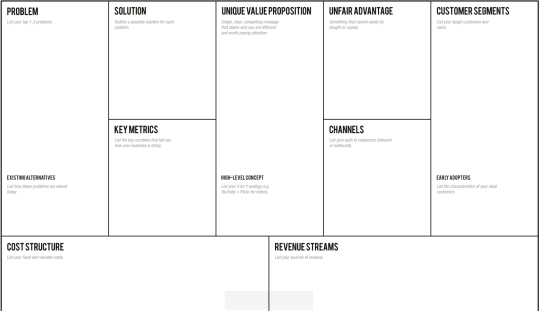
image

Image: The Lean Startup Canvas from https://leanstack.com.

Every career choice is a hypothesis. Test yourself on your proposition and be prepared to pivot and adapt.

Starting Myself

When I left my corporate role, my initial plans were a little vague. I knew I wanted better balance in my life. I knew I wanted to have a bigger impact on my personal purpose and I was prepared to make changes. I was deliberately taking time off to reflect but I wasn’t yet sure of whether I wanted another job or to start a business.

Because I had been involved in a startup, I had followed the development of Lean Startup thinking with keen interest. I also had ongoing conversations, with founders using the approach. As I pondered what to do with my career, I realised I had a chance to do the lean startup of me.

Expand Your Hypotheses

I had a few ideas of what I wanted to be involved in as I searched for new work and roles. These were my initial hypotheses. Some of these have proved to be valuable. Many were ruled out quickly because nobody else was interested in my offer or because the circumstances didn’t deliver the returns or impact on purpose that I wanted.

A simple example was that I initially thought I had an opportunity to work with startups or medium sized businesses. Firstly, these proved to be two completely different hypotheses with little overlap. In both cases, I found when there was money to pay mostly they didn’t want advice, they wanted outsourced management, access to my networks or some other proposition.

Also, I quickly discovered my initial hypotheses were too narrow and limited.  People also started to offer me opportunities to do things that I had never considered before. Some of those opportunities, like the chance to join Change Agents Worldwide, to go to Do Lectures Australia, or the opportunity to work on development of a corporate university helped me expand my sense of what was possible.   

Working through the hypotheses and pushing myself to consider the widest possible impact on purpose changed the work I do and the organisations that I chose to target dramatically. Along the journey I stopped looking for a job and became a consultant actively working in the future of work, customer experience and leadership (and starting up the business of me).

Relentlessly Test Hypotheses

You don’t know until you do. The only way to determine whether a proposition you have offers value is if someone is prepared to pay you enough and consistently enough to do it. There’s two points there: 

  • You need to do stuff
  • People need to pay you consistently

When you are starting yourself up, there is a phase of networking and building profile. The danger is that networking and profile can be all consuming. Coffee and conferences can become your job. Growing networks can become your only return. 

Get in and do things. Think like a startup and push yourself to do work every day. If you need to create a project to work on it, then do so. I found the best sales tool was when I was suddenly unavailable due to the volume of work.  People started calling with work because I didn’t have time for coffee.

It surprised me how many people expected me to do work without being paid for it. I have done a few of those activities, not for the much offered ‘exposure’ but to prove to myself & others the value I can bring in an activity. However, once that is proved once it is time to make money or move on. Continued offers to work for free is a failed test of a hypothesis. Some times people will only pay when you’ve said no several times first. 

Be Lean

Invest small and widely. There will be lots of temptations to put all your eggs in one basket, but remember each opportunity is a hypothesis to be tested. You don’t want to over invest in a proposition that won’t continue. I have turned down investment opportunities, jobs and partnership opportunities for this reason. I ended up deciding the best current scale for my business is me supported by amazing networks of the best talent from around the world, Change Agents Worldwide.

When someone asks me to go all in, I work with them to start with a small test instead. That way we both get to work out what is working and how much we want to invest together.

Remember time is the commodity that you have in greatest scarcity. Allocate your time to investments in your future with care. When people are wasting your time or don’t value it, allocate your time elsewhere.  

Build Platforms

The power of a platform, channels or a consistent community is the ability to run many tests at once. Startups use platforms to learn faster. You can do the same.

Your network is a platform. Strengthen it (remembering your network is not your job). Your thought leadership activities are another platform (remembering it rarely pays the bills). Work with people who have platforms to run better and faster tests on your propositions.

International Working Out Loud week was born out of some casual conversations and unmet needs. It was a fun experiment. As we work to develop the idea further, it offers a platform for additional experiments in the potential of working out loud as a proposition to help others.

Pivot or Persevere

Every day as you test your hypotheses you are going to adapt what you do. You will make small and large pivots. When things work you will persevere and work to scale them like mad. 

Recognise also that somethings that work don’t scale. For example, I have put on hold plans to work with a range of startups in favour of working on a few businesses like Sidekicker where we share a view of what it will take to realise a big potential.

I don’t see my pivots as failures. They are just opportunities to wait for better timing, a better understanding of a client segment or a better proposition. I know I will do work with more organisations in healthcare or more medium sized businesses. It is just a matter of finding the right proposition. While I wait I work still, building capabilities that will help in that eventual proposition.

Be Uniquely You

When I started my work, I wanted to be like all the other successful people. Over time, I realised my unfair advantage was being me.

My skills and experiences are relatively unique at least in the markets that I am working in. That is a very good thing. Trying to make myself more like others dilutes my unique value.

Some people won’t like your uniqueness. You also won’t enjoy working for them. If being you is not good enough for some, that is a failed test and it is time to move on and find someone who wants you for you.

The Lean Startup of You

You don’t need to quit your job, start a business or to become an independent consultant to apply lean startup thinking to your career.  Start asking yourself how you create the most value, how you can do more of that and experiment to make it possible.  You might find it requires a change of job over time but a lot can be accomplished right where you are now.

The power of a lean startup mindset is accelerated learning.  Make sure you are putting what you learn into new actions. 

The Double Loop Learning of Working Out Loud

Today I presented a case study at Learning Assembly Australia (#learnaus) on my personal practice of working out loud.  Like many such presentations, we were soon discussing the value of working out loud on the practice of working out loud. We needed the help of my #wolweek colleague, Jonathan Anthony, the master of meta when it comes to working out loud

However, there is an important reason working out loud commonly creates this experience. Working out loud fosters double loop learning.

The Double Loop

The concept of double loop learning is expounded in Chris Argyris’ classic article ’Teaching Smart People How to Learn’. Argyris contrast double loop learning with the single loop of every day problem solving.  He expresses double loop learning this way:

if learning is to persist, managers and employees must also look inward. They need to reflect critically on their own behavior, identify the ways they often inadvertently contribute to the organization’s problems, and then change how they act. In particular, they must learn how the very way they go about defining and solving problems can be a source of problems in its own right.

Working Out Loud Facilitates Double Loop Learning

When you narrate work in progress and do so visibly, you expose to others the single loop in process. Suddenly your behaviours, context, assumptions and approaches are open for review.  When you begin to answer questions or respond to suggestions of others on your work, you are prompted to reflect on the approach you have chosen. This process of reflection on how you are working opens up double loop learning.

Many people discover the presence of others is not even required for double loop learning to occur.  The process of getting your work visible and shareable can help you to realise new and better ways of achieving your goals. This process can also cause you to reflect on your role in the wider system with whom you are about to share your work. There is nothing quite like the challenge of expressing your thoughts to straighten out your thinking.

The power of double loop learning is that it can help realise breakthrough change in your personal effectiveness. By clearing the blockages, assumptions and other constraints that you have imposed on yourself, your work effectiveness increases. New avenues for learning open up.  Importantly, learning accelerates because the work & the reflection accelerate.  The faster you move around both single and double learning loops the greater the progress towards mastery.

Working Out Loud is a reflective practice. Use it to develop your double loop learning. Working Out Loud is a practice to help ‘learn how to learn’.

Learning from the shared practice of bread making

image

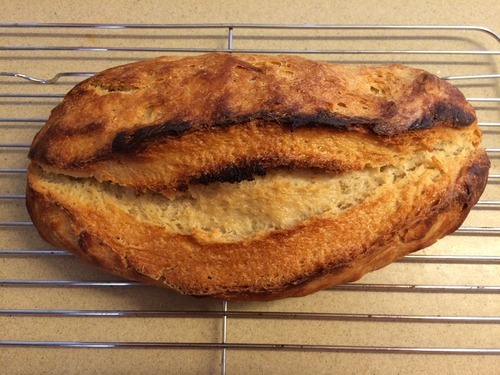
Tonight I started making a new loaf of bread. The one I made this morning is gone. As I began I reflected that what once terrified me as a mysterious challenge has become a practice I can tackle with confidence. Mastery is still a long way off, but the practice has its rewards.

Making bread is a simple practice but one with remarkable options for complexity. The simplicity begins with ingredients. There are only four required – flour, water, yeast and salt. However each of these is a natural product and yeast is a living organism. Variations in flour, temperature and vitality of the yeast interact with the practice of kneading, rising, shaping and baking to introduce complexity. Additional ingredients, processes and time spin bread off in other complex ways.

The complexity means there is a lot to learn and learning from the practice of masters is invaluable. My first loaves were flat and inedible. My own starter was weak, I lacked a grasp for developing the structure of the gluten and I was unaware of what to do when my following of recipes went awry, usually through some minor error of mine.

Here’s a few examples of how I learned from studying the practice of masters:

  • My master sourdough recipe came from the Fabulous Baker Brothers with accretions from all my reading. 
  • A sourdough course at the Brasserie Bakery gave me a better hands on appreciation of kneading and a better starter. 
  • I learned about letter folds to improve the dough from the recommendations of many recipe books. 
  • The Bourke Street Bakery’s Bread and Butter Project cookbook introduced me to a new effective kneading technique for the amateur
  • No knead recipes helped me to understand time and wet dough was my friend and trained me in the ability to plan a loaf ahead.
  • I worked out how best to slash and steam loaves in my home oven from the advice of others and my own experiments. 
  • Reading widely on styles of bread helped hone my confidence to build my own recipes and fix those that drift off track. Particularly useful were The Bread Bible, the Italian Baker, Nordic Bakery and Local Breads 
  • I have become a keen watcher of bakers at work from my lock pizza store to videos online.

If you reflect on the diversity of these influences, you will understand that my loaves aren’t copies of anyone of these sources. They draw from each in different ways, often at different times.

Complexity means each person needs to develop their own unique practice to leverage their opportunities and meet their own needs. There isn’t always a simple to follow recipe when techniques need to be learned. Experimentation is required to make sense of the practice and to make our own changes to make those practices suit.

However, we don’t do that learning and experimentation alone. We stand on ‘the shoulders of giants’ if we connect and learn from those masters around us. However, I can only learn from others if they are prepared to work out loud and share their approach. That working out loud is not all a free gift. I have paid for courses, a library of books and bought a lot of bread in my quest to learn.

The practices of the Responsive Organisation are far more complex than bread making. They involve the purposes, concerns and perspectives of many people in pursuit of common goals with agility and an external focus on customers and community. Sharing and building from our shared practice will help all of us to develop success. Working out loud fuels this learning and connection.

#wolweek Day 7: Learn More. Learn Faster.

Learn more. Learn Faster.

Success is not about what you are. Success is about what you will become.

Success is not about being good, knowing enough or making the right choices. Success is about experimenting to learn faster and learn more. Success is about matching capabilities to the opportunities around you.

The future will not judge you on what you are today. The future will judge you on how well you used your opportunities and potential.

Don’t worry about how you compare to the people that you can see around you. Worry about the ones moving past. They will be the ones who pursue mastery. They will have learned to learn faster.

Everyone is good. Everyone gets better. Nobody becomes great until they get a whole lot better. That demands that they learn faster than others. The great have made more mistakes. They have done more. They share more. As a result, they have learned more in less time.

Every new lesson, capability and expertise creates options. Every new network interaction creates options. In volatile times, options have value. Create options for yourself by learning more, faster. Those hard-won options will matter when your moment comes.

Learn more. Learn faster. Earn your success with effort.

International Working Out Loud Week is 17-24 November 2014

#wolweek Day 5: Networks and Contributions

International working out loud week is from 17-24 November

As I stand before a barbecue writing the final post of the week, I am tired. I am tired but exhilarated. Working out loud week has exceeded all expectation. Why? Contributions and networks.

#wolweek succeeds or fails based on the contributions others make. The week is a mere catalyst.  Your action is what matters. The idea of working out loud spreads when people work out loud sharing their contributions in their networks. Others see and get involved. There is no platform to run. There is no centre. There is an idea spreading through networks through the contribution of others.

Working out loud challenges you to understand what contribution your work can make to others. #wol is a way to give to your networks and allow them to give to you too. 

Last night flying home from Sydney I experienced one of those little contributions. I met a former colleague. He told me a few things but most of all he mentioned he missed my leadership contribution. That one little remark helped make a tiring day satisfying.

Today I had a coffee with someone exploring ideas of how they could make a bigger contribution beyond their current role. Naturally, we discussed the how and why of #wolweek. The same themes kept coming to the fore in that chat: just start; be purposeful; enable people to give to others & build networks.

At the heart of that advice was one idea. Success is not about being good or making the right choices. Success is about experimenting to learn faster and learn more. When you see success in that light you see the value of making a contribution in networks. Deep relationships in networks create options. Options have value. Serendipity happens.

#wolweek is a movement to promote working out loud. However, in so doing, it also shines a light on those who are sharing and giving to others. Making a contribution to these people through #wolweek thanks them for their leadership, their efforts and their many gifts. There are so many people to thank this #wolweek. Anyone who has shared the hashtag or discussed the idea deserves my thanks for their contribution to spreading the movement in their networks.

All I can ask is that you consider what contribution you might like to make.  Look at their contributions, share them in your networks and keep spreading the idea of working out loud.

#wolweek may be coming to an end but working out loud is just beginning. Now it is up to your contributions and your networks.

A very partial list of thanks to finish: thanks to Austen Hunter and Jonathan Anthony, the two most enthusiastic co-founders ever. Thanks to Matt Partovi and Stephen Danelutti for bringing the #weworkunbound network along on the journey. Thanks to Bryce Williams for the definition of working out loud and great post this week on the xOL idea. Thanks to John Stepper for generously giving of his heart, knowledge and experience. Thanks to Jane Bozarth for backing us all the way. Thanks to #ESNChat and The Community Roundtable. Thanks to Change Agents Worldwide for being everywhere, networked and always willing to give. Thanks to the thought leaders who lent us their insight, expertise and audiences. Thanks to the leaders in organisations who shared working out loud with their teams. Thanks to the vendors, partners and consultants who took working out loud to the clients. Thanks to the sceptics who kept us honest with challenges and the better informed who corrected the errors. Thanks most of all to you. Without you, this blog is a mere fleeting squawk, because of you it has a chance to make a contribution.

#wolweek Day 4: Weak Network links and serendipitous surprises

International Working Out Loud Week is 17-24 November

#wolweek continues to be an amazing learning experience. I am fascinated to see what others choose to share and to learn more about there work. Many of the greatest learnings have been as a result of the #wolweek tag and @wolweek account creating new links to distant people in my network.

Last night I facilitated a #wolcircle using John Stepper’s guide to the process of purposefully working out loud for 12 weeks. The discussion was dominated by revelations of little moments of serendipity. All the people in the circle had experienced positive surprises aligned to their goals. Discussing why, we came to the view that the serendipity was the outcome of:
– being more active and more visible
– being purposeful and generous in our intent; and
– exploring weak links and enabling distant people to better see our work and purposes.

We were all so thrilled with the progress of the #wolcircle process. After 4 weeks we all want to recreate the experience with others. Thanks to John Stepper for the process and Michelle Ockers for the coordination to make it happen. Thanks also to my new #wolcircle collaborators who have moved from weak to strong links in a few weeks: Annie Humphries, Vannessa North and Matt Guyan.

A colleague and I worked out loud today on some big sheets of paper around our workspace. This process of exposing our work enabled a breakthrough. I better understood one of the challenges of our project as it was mapped visually by the colleague doing that work.

I had only heard this work described in technical terms. Honestly, I had not focused on what contributions I could make to a colleague’s technical expertise. Seeing and discussing the work, I realised I had an idea from my prior experience to contribute to a solution. Jointly, we developed an innovative way forward using our expertise combined. Moving from talking about our capability building work to seeing and understanding the work better enabled me to realise the link to prior experience.

They say luck is when opportunity meets readiness. The value of working out loud is it fosters both requirements for luck.

Work out loud. It improves your luck.

For more on serendipity and working out loud, see Harold Jarche on working out loud.

#wolweek Day 3: Generosity and Curiosity

International Working Put Loud Week is from 17-24 November 2014.

Generosity and curiosity are values at the heart of working out loud. These are human values we need to foster in the future of work. In times of rapid change and complex social relationships we need generosity and curiosity to build relationships, to prosper and to learn.

I woke this morning to an incredibly generous post by Jonathan Anthony, a reminder of the simple power of the generous acts of acknowledging, recognising and encouraging others. As you can tell from his blog, Jonathan is a curious man who took the chance in our meeting to ask lots of questions, to share lots of ideas and experiences and to deepen an already rich relationship.

Taking a lesson from Jonathan, I endeavoured today to be curious as to the purposes and concerns of the colleagues and stakeholders in my current project. The outcomes were powerful. By asking simple questions I identified issues that concern them that are disrupting our effectiveness as a team. Ask and be surprised what you learn.

Last night I attended a Melbourne Chamber Orchestra board meeting where we discussed philanthropy, an important topic when arts organisations are ever more dependent on private sources of funding. Two things were recommended in that presentation: stand for something and use networks. I tweeted this was great life advice too.

An important conclusion from the philanthropy discussion was that to receive support an organisation must be both generous and curious first. The organisation must show curiousity for the purposes and concerns of its community, it must build strong relationships and a reputation for effectively meeting needs. The organisation receives by giving generously to the community through the organisation’s purpose and to the philanthropists through fulfilling theirs.

Working out loud must leverage generosity and curiousity. These values move people to purpose and away from rampant self-promotion. They move working out loud from me to us. These values are the way working out loud builds trust in work relationships.

Show real interest in another. Go out of your way to help. Seek to understand their concerns and purposes deeply. Invest the time. Give first of yourself.

Enjoy the surprises and the many returns.