The Future of Work is The Future of Leadership

An insight about the future of work dropped this morning as I discussed leadership in the network era with Harold Jarche and Jon Husband, colleagues from Change Agents Worldwide

image

The Future of Work is the Future of Leadership

The future belongs not to the leadership of technology. The future belongs to the technology of leadership.

Our opportunity is not incremental improvement in the leadership of change to implement network technologies. Our opportunity is a much more important transformation of the critical human technology of leadership for the network era. Only new leadership capabilities & concepts will enable us to realise the potential of the future of work

Realising Human Potential is What Matters

If you are one of the thought leaders, consultants or vendors working to bring about the adoption of social collaboration technology, you know there is a raging debate about what changes in social and network technology means for organisations. However, there is much that is unclear in the debate about the future of work.  Social Business is dead, not dead or even not enough. The biggest challenge is adoption, lack of executive buy-in, return on investment or even organisation’s success. You need a collaboration layer, you need purposeful collaboration or you need cooperation instead.

If you are a manager in an organisation trying to achieve outcomes in a rapidly changing business climate, you most likely missed this entire conversation. The debate about the impact of social collaboration technology is not even on your radar (unless a consultant or vendor has caused you to reflect on it for a moment before you returned to the daily challenge of running your business).

What matters most to managers is more effective human collaboration – collaboration that improves the performance of your business for your customers and delivering better work experience for your people. Managers everywhere wish there were better ways to tap the talents, innovation and engagement of their people to help deliver better outcomes. That is at the heart of the discussion of employee engagement in our organisations.

The technology that engages people and realises potential is called leadership. That’s why so many investments are made by organisations in leadership development and in a push for leadership in every role. Leadership is the most effective technology to solve for the management wish.

Network Era Leadership Realises Human Potential

Work is a human task. Leadership is the work of mobilising others to action. Leadership is how we help people to realise their human potential. Much of our network and collaboration technology is just an infrastructure for the work and leadership required. The network can magnify the culture of the organisation, but we need the right leadership models for managers to realise the potential of a network era of work.

Traditional management & leadership approaches inherit many of their concepts from process models borrowed from the industrial era. In this mindset human potential is measured in productivity terms.  The command and control culture focuses on using the right processes to drive human productivity and align that productivity with the right tasks. The engines of human potential (engagement, knowledge creation, experimentation, innovation & enablement) are driven out as sources of volatility & waste. What many call leadership is better described as a process of command of people with an efficiency mindset. That is not leadership at all.

These traditional management concepts also get baked into organisational systems. We have built much technology to explicitly or implicitly reflect these industrial models of management and work. Look inside any organisation and you will find plenty of systems designed from the top-down that reinforce hierarchical command and control. Pull out your system process maps and look for your employee’s ability to do exception handling. In many cases there is no exception process. Exceptions are handled in hacks

Transparency, responsiveness, the ability to work across silos and effectiveness are often surrendered to tight control of process, narrow measurement of process outcomes, compliance and efficiency. Critical systems in customer management and human resources systems offer some of the most striking examples of these constraints and are widely copied from organisation to organisation. To the frustration of everyone, managers and people must work around these systems to collaborate and cooperate effectively while managing waves of top down change management to bring them back to compliance with process.

The disruption of the networked era is evidence of the scale of change that networks are bringing to our lives. ‘Kodak Moment’ has an entirely new meaning today. This pace of change focuses our attention on a need for change in the concepts of leadership & organisation to support a changing world of work.

We need not focus much on the threats of this era. The opportunities of new models of work and leadership are greater. New network technologies give a glimpse of the potential for leaders to better leverage the people of organisations for work and innovation.  However, realising the potential of human collaborative and cooperative knowledge work in networks demands new leadership models.

We Know How to Start Leading in the Network Era

Each new era brings social changes and requires new more effective concepts. We updated the concepts of leadership and management at the birth of the industrial era, leveraging existing concepts from the military and other spheres of human life. Now people need to work to develop new models to leverage the infrastructure delivered by networks and collaboration technology.

The good news is that many of these concepts are already clear and have been developed by practitioners to the point where they are capable of application in everyday work. These practices now work highly effectively and can be taught. Managers now need to pick these up and build the capability in their people to lead in new ways, using:

  • Deeper self-awareness and understanding of human behaviour and drivers of high performance
  • A greater focus on systems and a wider view of outcomes and stakeholders
  • PurposeTrust to enable leadership & followership in every role
  • Experimentation & Adaptation
  • Collaboration & Cooperation
  • Network models of work organisation like Wirearchy, Pods and Swarms
  • Social work and learning, such as personal knowledge management, working out loud.

However, we cannot expect managers do to all the work alone. We will need to support them with learning, coaching and the opportunity to practice the new skills and mindsets.  We need to change the organisational systems and processes that hold back this opportunity to better leverage human potential.  

Making these changes is the great challenge of leadership is in the new network era. It is the work I will be focused on with my colleagues in Change Agents Worldwide as we help others to navigate these changes.

The future of work is the future of leadership for everyone in organisations. Building a better more effective model of leadership will help realise the human potential of this future. Join the effort in your organisation to build a new technology of leadership to make this possible.
The Dread Pirate Roberts Problem

Man in Black: I can’t afford to make exceptions. Once word leaks out that a pirate has gone soft, people begin to disobey you, and then it’s nothing but work, work, work all the time.  

– From the film ‘The Princess Bride’

Many middle managers have the Dread Pirate Roberts Problem. Changing our organisations will require them to break from moulds of leadership that they have inherited with their roles. Middle managers need to invent the new path forward to more responsive organisations or disappear in the disruption of digital networks.

The Dread Pirate Roberts Problem of Middle Management

Man in Black: The name was the important thing for inspiring the necessary fear. No one would surrender to the Dread Pirate Wesley.

In the film ‘The Princess Bride” we discover that the Dread Pirate Roberts that has been terrorising the seas for 20 years is not a person, it is a role. The title Dread Pirate Roberts has been handed down from one player of that role to the next. Each player carries on the traditions and techniques of the role to maintain their effectiveness. When they tire of the role, they retire passing it on to the next person to play Dread Pirate Roberts with terror, ruthless efficiency and no exceptions.

Middle managers can experience the same challenge as the successors of the Dread Pirate Roberts. The role that they take on as managers in a hierarchy comes with cultural expectations that have been built up over years by their predecessors. Culture is an expectation as to patterns of interactions between people. The culture creates expectations of how managers will act, use their power and demonstrate leadership. In many cases those expectations can be no less fearsome than those of the Dread Pirate Roberts.

Many middle managers have not seen or been trained in any other models of management and leadership than those that have prevailed in the role or organisation. Asking or expecting these managers to break from these deep cultural expectations on their own is a vain hope. Even if they are given the skills to act differently, they will find their teams and stakeholders are disappointed that they no longer behave as the Dread Pirate Roberts should.  

The system pressure to return to type in this situation can be strong. Performance management & talent systems reward ‘strong leadership’, usually defined culturally by the existing role of manager. The risk of adopting another model is that any volatility of performance will be seen as failure of the new practice. Personal influence in the networks of ‘strong leaders’ can erode. Struggling to come to grips with new practices managers find management and leadership becomes ‘work, work, work all the time’. It hard not to see why many choose to just continue the traditions, enjoy the rewards and hang out for their chance to retire and pass on the role.

Why does Middle Management Need to Change its Approach?

Digital disruption and networked ways of working are threatening organisations and putting pressure on the traditional function of middle management roles. The role of middle managers as creators and filters of knowledge disappears as knowledge becomes a flow in networks and technology automates the functions.

Middle managers are increasingly facing a need to realise people’s potential in collaboration and create more responsive organisations. More and more organisations are focused on the fact that the poor engagement of people in traditional command and control models is a massive waste of human potential. Every disengaged employee is someone not helping to push the organising forward. More knowledge work demands better use of people’s purpose, passion, creativity and intelligence. Organisations increasingly want leadership in every role, a direct threat to command and control models. Managers need to leverage new mindsets, new questions and gather new knowledge & expertise from networks.

Embedding a New Model

However, when these changes require new management and leadership models, the Dread Pirate Roberts problem arises. A middle manager who is expected to manage by control and power will find a shift to the role of an engaging leader, let alone a network navigator, challenging and confronting. They are going to need to give up their traditional models of influence, perceptions of how they create value and ‘work, work, work’ to influence teams and stakeholders that a new approach works.

Middle managers need to accept the work & the risks. Leadership is work. In the new era of network disruption, leadership can’t be safe. Managers need to accept that they are the change management. Influence is critical and middle level managers need to use their networks and authority to lead that change collectively.

Senior organisational leaders can authorise and support these changes. Senior leaders can help reduce the work and risk of change. However, they cannot make change easier for middle managers. Senior leaders can’t order a change in culture. It will take a new shared story of leadership in the organisation, new capabilities & practices, new systems, and consistent role modelling for a new model of leadership to embed. Social collaboration inside organisations can help managers to accelerate this cultural change by acting as infrastructure of culture magnifying the change in culture and role modelling effective behaviours.

Middle managers need to embrace the opportunities to be leaders, culture change agents and to explore the network navigator role, particularly in networks in and around their organisation. These roles may well be the only functions of a middle manager in a future organisation. By experimenting and working collaboratively with their teams and leaders in this way they will discover the right path forward for their organisation & build critical capabilities for the years ahead.

Perhaps then all the managers playing the role of Dread Pirate Roberts in organisations can happily retire and hang up their boots.

More Poetry at Work

image

The magic of social collaboration is when you become part of a conversation, then others bring their insights.  After the last two posts, this has become poetry week (or so it seems).  

Two Quick Reads

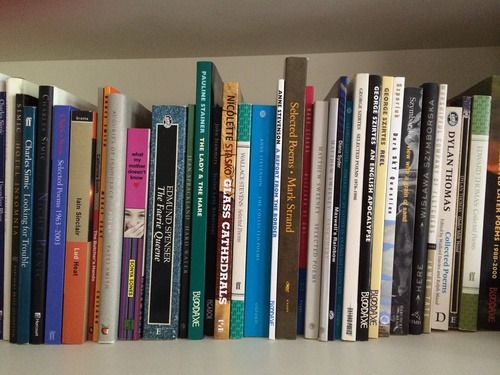
My last two posts discovered two further good reads on the power of poetry:

Deeper Reading

For anyone who wants to dive deeper into this topic, I can recommend:

Action

Lastly, go to your favourite bookstore and buy a book of poetry. There is no better way to realise the power than to dip into the inspiration of a collection of great poems.

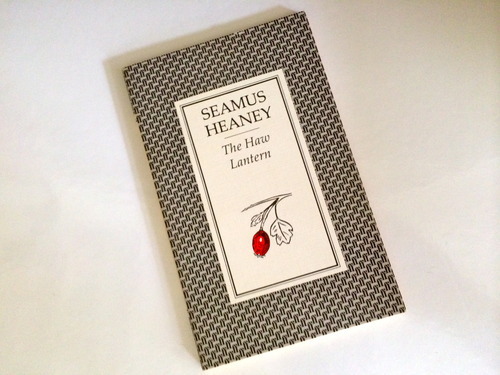
One book can make a difference. My journey into the power of poetry began when a good friend, Geoff Higgins, gave me a copy of Seamus Heaney’s The Haw Lantern. Geoff did me an enormous favour because great poetry is a passion that can sustain a life of creative work.

You could do worse than to decide to follow this practice by the wise Lois Kelly:

image

A Poem as Knowledge Work

A poet’s work is to name the unnameable, to point at frauds, to take sides, start arguments, shape the world, and stop it going to sleep. – Salman Rushdie

The moment of change is the only poem – Adrienne Rich

Genuine poetry can communicate before it is understood – TS Eliot

Poetry is pure knowledge work. Poets take their art, sensibilities, training and deep domain expertise to create a work of pure knowledge, a piece of literature.

We accept that a poet might use elements of the following processes to create their work:

  • Engaging with the world
  • Taking time for reflection & seeking inspiration
  • Working drafts, experimenting, throwing away failures, restarting often and trialling different approaches and ideas
  • Building on patterns, influences, themes and ideas shared by others
  • Collaborating with others, seeking the guidance of colleagues, peers, editors and audiences to improve the work
  • Creating new forms, practices, breaking rules and pushing the discipline of the domain
  • Questing after perfection and never quite realising it. Paul Valery famously said “Poems are never finished, just abandoned

Poetry in this way is an example of knowledge work’s pursuit of effectiveness, over efficiency. The best poems are the result of distilling human experience, creating a leap forward in capability and dazzling in their rich human value.

As much as we may joke about a roomful of monkeys with typewriters writing Shakespeare, we know it cannot happen. Yet many organisations seek to manage knowledge work as a monkey business, concerned solely with the efficiency of the process of knowledge production. This mindset rejects the potential of the elements above and seeks to apply industrial process management to knowledge work. An example is the concern that collaboration in organisations might be wasteful or time consuming.  That concern misses the engaging and creative potential of collaboration.

There is much knowledge work that can be improved. Even poets quest for better more impactful creation.  However, they focus of their improvement is increasing the value of the output and not reducing waste in the process.

We can minimise down time. We can reduce errors and waste in the process.  We can turn the process of knowledge creation into an algorithm. But like poetry created by monkeys, we must acknowledge that the great human potential for connection, emotion, creativity and innovation has been lost in that process.

Poetry is nearer to vital truth than history – Plato

Poetry is the art of uniting pleasure with truth – Samuel Johnson

Always be a poet, even in prose – Charles Baudelaire

Read poetry every day of your life. Poetry is good because it flexes muscles you don’t use often enough. Poetry expands the senses and keeps them in prime condition. It keeps you aware of your nose, your eye, your ear, your tongue, your hand. And, above all, poetry is compacted metaphor or simile. Such metaphors, like Japanese paper flowers, may expand outward into gigantic shapes. Ideas lie everywhere through the poetry books, yet how rarely have I heard short story teachers recommending them for browsing.

What poetry? Any poetry that makes your hair stand up along your arms. Don’t force yourself too hard. Take it easy. Over the years you may catch up to, move even with, and pass T. S. Eliot on your way to other pastures. You say you don’t understand Dylan Thomas? Yes, but your ganglion does, and your secret wits, and all your unborn children. Read him, as you can read a horse with your eyes, set free and charging over an endless green meadow on a windy day.

Ray Bradbury, Zen in the Art of Writing (via hislivingpoetry)

On Poetry

Don’t blame the Leadership. Lead.

Unconnected & unresponsive organisations often find themselves in a trap.

Disengaged employees look up to a Chief Executive Officer and blame them for the lack of a better workplace. At the same time the CEO often wants a more engaged workforce but has no idea how to make the change in an effective way.

The longer this goes on the greater the risk that in this circumstance the CEO pulls the lever on the traditional response and announces a top-down transformation program. With the CEO and the transformation team having accepted the responsibility to drive change, everyone sits back and waits to see how the CEO’s pet project goes.

Many will have seen that moment when the arms start crossing defensively in the auditorium as the CEO announces the change. If the organisation started with disengagement now it has disengagement, along with a healthy dose of apathy & cynicism.

Change from the top

There are few models of change that don’t emphasise the importance of senior management support for change. It has become a litmus test of change in many organisations to inquire about the level and seniority of executive support. Senior management are powerful stakeholders in any change and change takes both collaboration and power.

However none of the change models that work, place all responsibility for change on senior leadership. Senior leadership should support and align change in the organisation to the desired direction.  Nobody said they, or their proxies, had to do it all.

Looking up is disengaging

We have our jobs and our place in the hierarchy. We have power, capability and influence to drive change. Waiting for senior leaders to get the changes required is the most disengaging experience for capable leaders across the organisation.

Looking up can take many forms. Some times it is a simple as feeling the need to have some indication of the ability to proceed. Other times it is created by approval processes on the resources or people required to make change happen. Some times we don’t even know we have referred something up for approval until we challenge why we aren’t acting now.

Creating an environment where people look up for authority will only worsen any engagement issues. Lack of engagement will worsen the problems in the workplace. Instead, give people the authority, trust and confidence in direction to act on their own.

Follow & Act

Take guidance from senior leaders. Support the change they seek to drive. Be a good follower.

Yes, necessary, but not sufficient for real & effective change.

Take it as your responsibility to respond to what you see needs work. Connect with others to encourage them to join you in this important work. Start new conversations that help everyone to understand the changes needed and push change forward.  These simple steps make you a networked change agent.

Understand the strategy and align the changes that you are pushing to where senior leaders are heading.  If you don’t understand ask for clarification, not approval.

Ask for forgiveness, not approval. You will learn and grow as you act. If you are doing the needful to bring about change your organisation and colleagues will not mind.  

Mostly you will get thanks from a grateful CEO.

From CMeO to CUsO

A lot of magic is ascribed to CXO titles. Often there is more real influence in other parts of the network, like middle management.

No matter what you think of the CXO roles, one CXO role is critical: The Chief Me Officer.

The functions of a Chief Me Officer are as follows:

  • Discover your personal purpose
  • Understand your own strengths and opportunities (others will be happy to volunteer your weaknesses and threats)
  • Set some longer term strategic goals for yourself and a few immediate short term experiments
  • Engage your personal networks to align to your own plans
  • Build your own capabilities by developing your own personal knowledge management approaches
  • Lead the work to deliver on your personal plan

A successful Chief Me Officer recognises the ‘buck stops with the CMeO’ on all matters relating to you, your life and your career. Like a good organisation leader they don’t just focus on one part of their business, you need a whole of life and community view of the impacts of you.  With this kind of accountability, this is not a role you can outsource. Family, friends, mentors, organisations, colleagues and people leaders can all help, but they won’t deliver on the plans you need to be successful.

Once you build your plan to become a successful Chief Me Officer, you will be well placed to lead others, engaging in collaboration in the new networked ways of working. The future of networked working needs capable leaders in every role.  How can you start your leadership journey better than by leading yourself?

Once you know how to become a CMeO, you can graduate to being a Chief Us Officer. That’s when the leadership journey gets really interesting…

Purpose is a network of potential

Purpose is exponential.

In a critical way purpose expands your horizons and returns from work. Purpose is a network of potential and brings out the potential of your network.

A network of potential

Purpose is not the answer to an introspective question. Purpose is the expression of your intent in action. The best way to discover your personal purpose is to look back over what you have chosen to do with your life. 

More than ten years ago I was doodling on a pad trying to find a focus to my diverse career history. I decided to draw a network diagram of my personal and work interests, the work that I enjoyed most and always chose to repeat. I drew lines where there were connections between these activities and interests. I began to build a map of my past life experience.

In a short while hubs began to appear where connections were densest. These were the major themes of my life, core activities that I found most rewarding and repeated often. Those hubs were a major insights towards purpose.

It was a short step to make the hubs an engine of potential. If these activities were rewarding and I did them most, then I should do them more and focus my learning in these areas. I began to use those challenges as criteria to choose the roles I would play and to guide my personal learning.

Asking why these activities were the hubs of my life experience took the process further towards an understanding of my personal purpose.

The potential of your network

A second insight came with this exercise. Every one of those activities in my prior life involved people. Around each of the activities in my purpose network was a network of relationships. The network hub activities gave me criteria to consider in my efforts to deepen relationships and choosing the new relationships that I needed to build. 

Purpose highlights the potential of your network to help you to do what you want to do most. 

Understanding purpose enables you to shape the new relationships that you build as well. We meet people every day through a range of activities. When you have a better understanding of your personal purpose, it enables you to more easily recognise a serendipitous new relationship. A strong connection over purpose can deepen relationships quickly.

We are shaped by the work we do and the people with whom we do it. Choosing relationships & organisations to further your personal purpose helps your network deliver exponential returns in impact. There is nothing more powerful than to work with a team that shares purpose. Finding an overlap of purpose accelerates the work and the impact.

Purpose is exponential and that power is in your network. 

PS: Imagine the opportunity to use network analysis to apply this same purpose exercise to an organisation and build purpose using the networks within and around the organisation.