Senior leadership engagement in change is a hot topic. Social collaboration makes the absence of leader engagement obvious. I’m often asked to speak on collaboration, learning and leadership to senior executives. As I used to be one, people want me to share a little of my passion for these topics. Here are some suggestions to guide you in your senior leadership engagement.
It’s not a priority
Collaboration, leadership and learning is unlikely to be a priority for your senior leaders. Sure they’ll discuss it but they don’t want to do it. They don’t know anyone who got made a CEO because his team was the most collaborative or the most agile. There is always a bigger business or customer problem that is on their mind.
Rather than engage in an argument as to why this mindset is wrong (it is – see Big Learning), I start with understanding the real business problems that they want to solve. Once we understand the business problems we can connect collaboration, learning and leadership as solutions to that problem.
Avoid Capitalised Nouns
Senior executives are busy and distracted. They don’t want jargon and hype. They are allergic to empty captalised nouns. The more you use words like Collaboration, Leadership, Engagement etc without making them tangible the less credible you are. The more it sounds like a futuristic vision or a quixotic quest the less relevant you are to their world.
Tell Stories
Stories make change tangible to busy & smart people. Ben Elias of ideocial.com remarked to me recently that it is hard for people to conceive of how their organisation could be highly collaborative. They have never seen it, so the ideas and practices don’t connect with their reality. Specific stories make that connection. Tell rich and engaging stories of how things can be and how to get there.
Ask for something specific
There’s nothing worse that taking the time of senior leaders, winning their support and not being able to define exactly what you want them to do. Always have a specific ask of them ready to go. Have two in case they say yes to the first. Better yet have a personal ask that is framed as something simple that they can agree to do to sustain change. The 3 simple habits of working out loud was designed as one such example.
When you are done, Stop. Leave.
Senior executive time is precious. Give it back to them. Tempting as it may be to bask in the glory of a good meeting and deepen rapport, you will win more credit by leaving when you have done your job. Remember when something is not a priority you are always on borrowed time.
Working out loud helps us to learn faster by making our hypotheses explicit.
Hypothesis is one of those words that makes something simple sound elegant & scientific. Many digital practices like experimentation and design thinking push people to work and test from explicit hypotheses. It sounds better than draft or work in progress. Using hypotheses and testing them quickly is a core practice of organisations that leverage big learning approaches.
Working out loud can help you to discover the speed, engagement and agility of explicitly testing ideas as hypotheses with your work colleagues. If you are reluctant to share a draft idea, ask for help to validate a hypothesis that shapes how your idea will advance.
Confirming the underpinnings of your work as you go both brings stakeholders on the journey and also enables you to get to the destination faster. Treat every share as an opportunity to confirm that you are on the right track. You will benefit by making small adaptations now rather than rework later. You will also be helping your organisation to practise big learning.
In strategy, we often think of organisations as portfolios of capability. Capability creates options. The set of capabilities in an organisation enable you to do some things and not others. Managing that portfolio to allow for performance, adaptation and growth is critical to success in changing environments.
The same principles apply to learning for individuals in organisations. We can help our people see learning as a way to manage their portfolios of capability. This approach creates options and adaptability for the individual and the organisation. Individuals who manage their own portfolios of capability will have richer and more purposeful careers.
Traditional Learning
Traditional learning approaches borrow from the industrial management mindset. What matters is the role, which is an input in a production process. The role has to have certain fixed capabilities. Therefore we recruit and train our people to have those capabilities.
When something changes, we have a problem. We focused on a fixed role, not the people. We treated people as cogs in a process and hoped we could find or stuff them with the capabilities required for a role. This learning largely happens independent of the individuals purposes, hopes or dreams. Their desire to have a role requires them to learn fixed capabilities.
Managing a Portfolio is Adaptive
Nobody is in perfect identity with the capabilities listed on their role description. We all have diverse portfolios of capability. We have different education, experience and networks. We are hired because we bring more to the role than others.
How often have you seen someone with skills required elsewhere but who doesn’t get to apply them? An IT manager once challenged me to demonstrate that new employee profiles couldn’t help him with his need for a programmers in a particular language. “I know all the programmers here”, he said. The first name that came from a search of employee’s profiles highlighted a financial analyst in the same organisation who had a masters in computer science and had declared their experience in programming in that language. The analyst was unknown to the IT manager. What secret talents are hidden in your employee population?
Let’s manage people, not roles so that we can leverage our individual and collective portfolios of capability. People adapt by drawing on additional skills and capabilities. People can look ahead and learn for the next role or the next challenge. Importantly that allows our employees to manage their own portfolios of capability beyond this role and into their whole life.
A Capability Portfolio Approach for Organisations and Employees
Start with your employee’s needs: Use Design thinking to understand your employee journey before, during and after their time with you. What does a new perspective do to help you change the way you enable them to learn?
Manage a portfolio strategy: You have business needs for certain skills. These become the priority areas for your portfolio of capabilities in the organisation. However, they will not be the only areas you have skills in the team. Re-weight the priorities of the portfolio constantly as the business needs change.
Encourage employees share their full set of capabilities with you. Enable them to disclose the skills and experiences that they have that can help you with your business challenges. Look for options that can be created with these additional capabilities for employees and the organisation. Make capabilities searchable, encourage collaboration and create clearing houses to enable projects to call on those skills as needed.
Let employees develop to their purposes and their needs: If you are clear on your business needs, employees know what skills need to be developed. If they don’t want those skills, it is better they don’t want to stay. Finding the alignment between employee purposes and your portfolio needs will strengthen the organisation
Hire and Encourage Diversity: Diverse people bring diverse capabilities into the organisation. Everyone of these is a future option. That’s an option that comes for free when you hire someone whose capable of doing the job.
Employees are accountable for their portfolios of capabilities: This has always been the case but we lost focus on development in some of the paternalistic HR models. Organisations should support and enable development, but they can’t do it to an employee. Leveraging PKM, working out loud and 70:20:10 models enables employees to take greater control of their learning.
Use employee’s capabilities and watch them grow: The best way for a capability to stay current and grow is to be used. How do you let employees step outside their role and use skills on a project, a secondment, helping out a peer in a collaboration, on a hobby project or volunteering externally.
If we focus on our organisations as places to work and learn together, two small but wicked challenges come to the fore. The design of a Big Learning system needs to help an organisation manage these challenges at scale.
Two Small Challenges
Knowing what we know: Lew Platt of HP originally coined ‘if only HP knew, what HP knows’ but the frustrations of shared knowledge have been around since the beginnings of management. We can’t achieve knowledge sharing (& shouldn’t try). However finding a more effective way is an ongoing process of evolution in any group.
Knowing what works: Since FW Taylor management has known its role is focused on isolating what works and what can be improved, but clearly this has been a challenge for as long as people gathered together in challenges. One need only look at the many thousand year history of military thinking so see an example of the evolution of approaches to effectiveness. Separating out what performs well and how to be more effective is an everyday challenge. This encompasses both what works in internal relationships and what works externally for customers, community and other partners.
The problems worth working on in life often have the characteristic that they are easy to describe but wickedly complex to solve. There are no simple transactional or universal solutions to these issues. They sum up the quest of the entire history of management and human organisation.
Many Solutions. An Evolving State
The wickedness of these two small problems is why we require a systemic response. Individual approaches can contribute to the sharing of knowledge or learning what works or both. However effectiveness and scale will require an interplay of many elements of a system and continued learning and enablement of evolution of that system. Organisations that do not focus on creating a Big Learning system that encourages its people to learn, to share and enables them to continuously improve their practices will be left behind.
There is no organisational strategy without the capability to execute it. The demands of a disruptive economy mean organisations need to create systemic approaches that scale learning through every role, Big Learning. However, organisations need to build employee capability in their interests and not just for the sake of the organisation.
Holding on to a Wooden Box
Imagine you asked a friend to hold a wooden box for you. If they are a good friend, they might hold it for an hour or so. Some will give up and take it home to return it later. A great friend might put it down and stay by for a little longer. Very few would bother with the box for more than that without some further instructions, some value to them or some better proof of the worth of the exercise.
Yet organisations continue to ask employees to learn knowledge and skills for the sake of the organisation. Worse still, these approaches to learning are often rolled out with little communication as to the value of the learning for the organisation, let alone the employee.
Consider mandatory role and compliance learning. To employees it is as mysterious as the box request and it is cannot be escaped. The signals sent remind employees that it is designed to protect the organisation as part of a compliance system, rather than helping the achievement of employee goals.
The employee is left to complete the learning for the organisation and then forget it. There’s little surprise that much learning is wasted and is not applied to help organisations achieve strategic goals.
Enable Employee Careers & Purpose
Imagine you had a friend who shared that they wanted to develop a career as a public speaker. You might explain that practice & feedback is a critical part of developing as a public speaker and you could help them see that a wooden box would let them speak at a speaker’s corner whenever they want. There’s a far greater chance your friend is going to make an effort to carry their own box.
Organisations can do more to make their key strategic learning a part of a process of creating greater career options for employees. Learning that advances employee goals first is more engaging, more effective and more likely to endure. Very few people will seek mastery in a skill that is imposed on them. Mastery requires purpose.
Working in this way begins with employees goals and enabling the employee learning journey through all their work. Learning in this approach means thinking beyond tasks & roles to lifetime needs and career lattices. In addition to specific technical skills, learning must develop portable skills that increase the diversity of an employee’s career options.
Bureaucracy has become the definition of the kind of management organisations are seeking to avoid. However, bureaucracy started as a significant step forward in management systems. As we design the future management practices we need to ensure we do not see the same overgrowth.
Here are some of the positive changes that came with bureaucracy. Without continued innovation, these practices took on a logic of their own and became overused:
Incompetence, influence and nepotism were addressed by a hiring and promotion on managerial competence and expertise. Overdone this expertise focus led to an unwillingness to learn, internal focus and new forms of abuse of power.
Inconsistency and unpredictable management decisions were addressed by leveraging policy and hierarchical review. Overdone this led to stasis and disempowered managers who couldn’t address exceptions
Ineffectiveness was addressed by the clarity of division of labour bringing clear accountabilities and measurement of work. Overdone this led to breakdowns in coordination, ability to deliver and waste.
Emergent Management Practice
The reason bureaucracy resulted in these issues is that its design allowed little room for checks on its use. The focus on predictability meant bureaucracy was not generative. It had little or any capacity for new management approaches to emerge. The only approach to issues was the application of more bureaucracy.
As we design the future of work, we must take care that the changes we make address the right issues and do not become equally overgrown:
Solve the right problems in management today: Is hierarchy really the problem? It is human nature to obsess about power and the role of hierarchy in life. Hierarchal power is only one part of how decisions get made. Many of the approaches that ‘rid organisations of hierarchy’ can’t achieve that. There is a good argument that the issues above with bureaucracy are more about learning, use of knowledge, speed and decision making than they are about power.
Simplicity over complexity: Simple practices are more likely to remain transparent. When it is easier for people to understand the practice as a whole and keep its goals in mind, it is harder for people to take individual aspects of the management practice as their own end. Bureaucracy has been bedevilled by people taking means as ends. I suspect one reason Holacracy has found most implementations are ‘Holacracy lite’ is due to the complexity of its original proprietary formulation.
Generative practice: Management practices that challenge users to look for improvements in the practice have inbuilt protection against overgrowth. I focus on the generative capability of Big Learning because the two core elements of learning and enabling work and learning keep a focus & accountability on all in the management system on how to improve the work and its outcomes.
The only way to prevent the overgrowth of new management practice is to be constantly pruning and reshaping our work in the efforts to learn and improve.
Organisations need to rethink their approach to learning. It is no longer a function and an oft-neglected subset of the role of HR. Now it is clearer than ever that learning and the realisation of human capability is the function of organisations.
Why do we come together?
Organisational models are changing. There is much discussion of the potential of new ways of working and organising work. We are thinking about the post-work economy, the Uber-economy, holacracy, responsive organisations, the human-to-human economy or many other forms of the debate on the role and shape of organisations.
What is clear is that in an era where the friction of information, interaction and collaboration is reducing is that organisations to survive must enable people to be and do better together than they can be on their own. Realising the human potential of individuals and teams becomes a critical part of the rationale of organisations, whether that simple rationale is in turn justified in lower transactional costs, trust, scale, access to funding, need for community, collective security or some other rationale.
From Execution of Processes to Learning
When we focus on our organisations existing to better realise human potential we shift the focus of organisations away from the traditional rationale of efficient execution of stable business models. We must recognise that as our people’s knowledge, skills and capabilities grow so can the ways we work, we engage others and we create value. Highly competitive markets and fast followers will compete away value that is not based on organisations continuing to improve their ways of working, their value for customers and that takes collectively learning.
Start-ups are just one example of organisations designed for the purpose of learning. First a start-up seeks to learn what problems need solving. Then it starts to build business models that more effectively address these problems and create value. All the way through this journey, the people in the organisation are challenged to work in better ways, to learn more and to realise their potential. Start-up organisations have become innovators in the ways of working as they have found ways that better enable the potential of their lean teams to be realised. Many of these work practices are now becoming commonplace e.g. agile delivery, lean, customer centred design approaches, experimentation, data analytics, holacracy, collaboration, etc.
From Learning to Big Learning
Increasingly large organisations are seeking to apply these skills to their work to compete and to grow. Slowly learning is being seen as it should have been seen all along, as a critical capability to enable the delivery of strategy and ensure organisational survival against disruption and entropy.
However, learning in this context is no longer a function of HR. Learning becomes a function of every role, every process and every action in the organisation. We are not applying 70:20:10 with the goal of making learning programs better. Now the entire organisation seeks to use the capability of every individual to learn and improve to better achieve its goals and better create value. Organisations will succeed on the extent to which its group of individual learners outperforms the learning going on at competitors. This is Big Learning.
Individual practices like lean thinking, agile, design, experimentation, analytics etc are not implemented to perfect a practice or make work more efficient. Each of these practices are part of creating step changes in performance through learning, a mindset of Big Learning. These practices are developed to enable the organisation to realise its purpose of enabling its people to realise their potential faster and more effectively than competitors.
Big Learning takes a new System
Big Learning takes a new systemic approach to the development of people’s potential and the processes of work in the organisation. Declaring your organisation a learning organisation or increasing funding your learning team won’t cut it. There is no one product or service to purchase. Every organisation needs to develop its own Big Learning system. The changes will involve every role, process and function. The approach will depend on its customers, its strategy, its people and its culture. The answer will depend on what best realises its ability to create increasing value over time.
A New System Takes Change Agents
New approaches to help organisations and their people to learn and share their capabilities, and work in new ways are being created every day. Managers and workers already have a wide range of tools and approaches available to begin their experimentation. Change agents need to be enabled to start to make this change happen. Organisations need to start challenging themselves today whether they are realising the potential of their people to create value for customers and the community.
Photo: Shannon Tipton (@stipton) votes to change the status quo at #EdutechAU.
As our organisations look to adapt to a connected world, learning will need to play a far more strategic role. Learning functions need to move from being order takers to change agents in the transformation of leadership, culture, work and organisational structures. After all, we won’t achieve our strategic goals if people don’t have the capabilities we need.
Changing the Learning Game
Change was at the forefront of the agenda of the EdutechAU workplace learning congress this week. There wasn’t a speaker or a panel that did not seek to address how organisations were using learning to manage change. These changes were hardly minor. For example, in the case studies alone we had examples of:
Medibank building capability for workplace culture and wellness issues in an activity based workplace through experiential & mobile learning
the Australian Electoral Commission rethinking its entire employee development cycle between elections with a goal of focusing more on the why and how than the what.
Coca Cola Amatil building the capability of its operations teams to learn for themselves and from each other without training
AT&T using the scale of MOOCs to retrain its global workforce into strategic capabilities and out of declining roles
using learning and the learning function to change culture at Northern Lights
In all the talks were the key drivers of transformation for businesses and that learning is seeking to better leverage. All our work is becoming:
more connected and social
more open and transparent
more automated
more flexible
more complex
more knowledge based
more dependant on culture
more demanding in terms of speed, quality, efficiency, effectiveness, etc
These changes present an opportunity and a threat to learning function everywhere. Learning has opportunities to be more strategically valuable, reach more people than every and in far more engaging ways. Learning has the potential to do and control less but achieve far more by moving from design and delivery to facilitating learners to pull what they need. At the same time, the threat to learning is that both learners and management has far more available from social channels external to the organisation and the participatory culture available in those networks often more agile and even more engaging.
To leverage these challenges for opportunity, learning needs to move from an order taker for training programs to a strategic agent of change. The new challenge for learning is to rethink how they set about enabling the network of people in the organisation to build key capabilities, to help people build constructive culture and to change the way managers manage and leaders lead. The answer will be less about control and specific training programs and tools and more about how learning works in a system of capability building that reinforces the organisation’s goals and uses the best of what is available in learning, in the social capital of the organisation and its networks.
Becoming More Human
Speaker after speaker highlighted another key element of this transformation. As work becomes more personal and more human, there is also a need for learning to lead that change too. Learning functions need to consider how they design human experiences, faciltitate human networks and realise human potential, even anticipate human emotions. The future of work puts a greater demand on design mindsets, systemic approaches and the ability to weave together networks of experiences and people in support of capability building in the organisation.
This human approach extends also to how learning works. These kinds of programs need experimentation, learning from failure and adaptation over time as the people and the organisation changes. Learning will need to role model and shape leadership as a vehicle for realising the human potential of each individual, organisation and each network.
The Obstacles are The Work
EdutechAU was not an event where people walked away with only a technique to try on a new project. There were undoubtedly many such ideas and examples from social learning, to MOOCs, to experience design & gamification, to networked business models, to simulations and other tools. However, the speakers also challenged the audience to consider the whole learning system in and around their people. That presents immediate challenges of the capability of the learning team and their support to work in new ways. However, those very challenges are part of helping the system in their organisation to learn and adapt. The obstacles are the work.
Thanks to Harold Jarche, Alec Couros, Marigo Raftopoulos, David Price, Ryan Tracey, Shannon Tipton, Emma Deutrom, Joyce Seitzinger, Con Ongarezos, Peter Baines, Amy Rouse, Mark L Sheppard and Michelle Ockers for their contributions to a great event.
Harold Jarche and I before the Edutech Workplace Learning Congress began. Photo by Shannon Tipton (@stipton)
Over the last two days, I chaired the EdutechAU Workplace Learning Congress in Brisbane. In the spirit of working out loud, I wanted to share a little bit of the process of preparing and managing that experience. I will also share a separate post shortly on the conference itself.
Part 1 – Preparation
Any time you are presenting or facilitating, the work needs to be done before the event. Preparation is critical to put you in the best possible position to do a good job but also to manage the likely eventualities. The goal of preparation is not to enable you to follow the plan. The goal is to give you the capability to adjust to whatever happens on the day.
Clarity of expectations
That preparation began when I was asked to take on the role of Chair. The first step was to answer the question “What do they expect from this role?”. Upfront I wanted to understand how I came to be offered the position and what they had been told by those who had suggested me. Understanding the role expectations involved a number of conversations with the conference organisers to understand the event, the audience, the experience that they were seeking to create, the speakers and how they saw the role of a chair. Making sure the expectations are clear up front helps both parties in the lead up to the event.
Understand the Speakers
Bios & topics help you with the what and sometimes the how of speakers. Mostly the audience wants to know why they are listening to someone. The more time you can spend understanding the speakers the better. I didn’t have an opportunity to brief with speakers before the event which would have been ideal. However, I devoted a weekend to reviewing the work of speakers and their accessible profiles on social channels and the internet. That was very useful in helping develop ways to introduce the speakers with some consistency, to enrich their bios and also to anticipate the messages that speakers were likely to be reinforcing in their talks.
Plan any Panels
Planning a panel is more than putting together a list of questions on the chosen topic. You need to understand panellists’ positions, likely areas of conflict, any areas of expertise and areas where there is none. There is nothing more dull than asking a series of questions of the entire panel and running down panellist by panellist until time expires. The goal is to get the value of collaboration from the panel. Work out where discussion, conflict and collaboration will add value to the audience’s understanding of the topic. Facilitate that debate and try to make it a cumulative and seamless experience with the design of your questions.
If your panel is going to involve a mix of questions from the chair and the audience you need to be prepared for all eventualities. How many questions is the audience likely to have? How much time do they need? To whom will you direct undirected questions from the audience? Work out when to give the audience a warning to get their questions ready. Prepare back up questions in case the audience is meek.
It is also important to think through how you will move on from audience members who want to dominate discussion and change topics when required.
Create Tools to Help
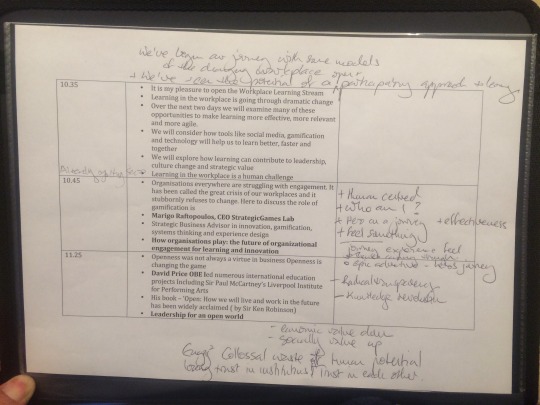
The conference organisers had supplied me with bios and a detailed runsheet. However, I needed to create a tool that I could use to guide me through the event. I settled on a simple landscape format document with three columns – times, comments and notes. The document used bullet points because I normally work to create any talk from a few guiding points of structure.
I typed the information from the bios and the runsheet into this integrated document. I didn’t cut and paste. I typed. I retyped it manually for two reasons
To make sure I put understood things in my own words and could express them simply
To help me to remember the key facts so that I could more easily speak without notes
This process of recreating my own tool helped me to sort out a few ambiguities that I needed to check with the organisers. It also enabled me to see all the speaker information in a consistent format and work on balance and integration of the story of the event.
The advantage of a simple document was also redundancy. I had the document in the cloud, printed and available on two back up devices. I also made sure I had all the key source materials with me as well. That way I was covered for power failures, late changes and any nasty technology surprises.
Understand What You Want to Say
A chair is there to facilitate the event, not to star in it. My role models were some great chairs and masters of ceremony that I had seen at similar events, particularly Colin James, Anne Bartlett-Bragg, James Dellow and the MC of DoLectures Australia in 2014 Col Duthie. You aren’t hired to draw attention to yourself or deliver long speeches. However as someone who is a continuous voice through the event, there is a chance to tell a story across the two days by drawing connections and framing the speakers. I spent some time considering how what the speakers were addressing related to key themes that I address in my work and this blog. That helped me see that there were consistent themes of transformational change, culture, leadership and a new role for learning in the future of work running through the event. I wanted to share some of my personal purpose & stories of making work more human through drawing out these connections
Part 2 – Creating the Experience
A good chair will help create a great experience for the speakers and the participants at the event. Not everything will go to plan. Nothing will go to time. The role of chair to to help smooth the experience and also to help the participants to weave it together into one learning and collaborative experience.
Stay in Contact with Everyone: Everyone means everyone: the organisers, the AV team, the next speaker, future speakers and audience members. Check-in at breaks and use what you learn to think ahead. Check everyone’s understanding. Get feedback. Make sure everyone is on the same page as to what is happening next. Over communicate. When I had issues with the experience, it was because I didn’t follow this simple rule.
Pay attention: There can be a lot going on. You need to be concentrating for the whole journey of the event. A speaker might make a single comment that helps you to draw together the theme of the event. Time can quickly get away from you. Paying attention helps you to anticipate the speakers who are running behind and those that are ahead. That gives you ways that you can help them and the audience.
Roll with the Issues: We lost the time for opening remarks due to late arrivals. I accidentally spoke over an introductory video. Technical issues happened. Changes & corrections were needed throughout the event. Realise that this is all part of the live theatre that is a conference event. Adapt and move on. Whatever you do, don’t panic.
Adapt the Plan: My tool above had room for notes. As you can see there were lots of scrawls. I knew I would need to change what I had to say as I heard the full presentations from the speakers. I knew that if we got behind or ahead then timelines would need to be tweaked to adjust. Some times you will have time to do this in advance and other times you will need to adapt on the fly.
Make connections: Connect ideas. Connect people. Use the social streams around the event to share relevant information to help the speakers and the participants. Help audience members to connect to the speakers. There’s a lot that a Chair can do to assist the event to be a successful one just by bringing people together.
Help Make Sense: Two days of talks, discussions and panels can be overwhelming. However, your role as chair is to help everyone to take away some insight and some themes from the event. Take notes. Digest those notes into themes and share them back to foster further discussion.
These are my notes. What else would you add? I am keen to learn more. Please feel free to comment on twitter or in the comments below.
Every career choice is a hypothesis. Test yourself on your proposition and be prepared to pivot and adapt.
Starting Myself
When I left my corporate role, my initial plans were a little vague. I knew I wanted better balance in my life. I knew I wanted to have a bigger impact on my personal purpose and I was prepared to make changes. I was deliberately taking time off to reflect but I wasn’t yet sure of whether I wanted another job or to start a business.
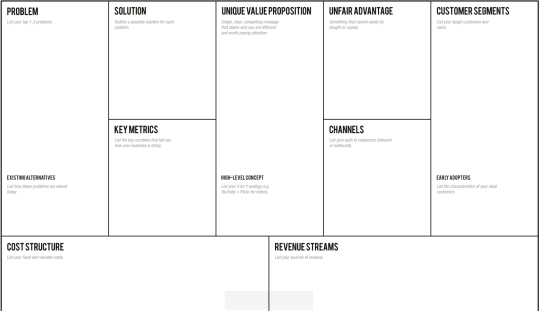
Because I had been involved in a startup, I had followed the development of Lean Startup thinking with keen interest. I also had ongoing conversations, with founders using the approach. As I pondered what to do with my career, I realised I had a chance to do the lean startup of me.
Expand Your Hypotheses
I had a few ideas of what I wanted to be involved in as I searched for new work and roles. These were my initial hypotheses. Some of these have proved to be valuable. Many were ruled out quickly because nobody else was interested in my offer or because the circumstances didn’t deliver the returns or impact on purpose that I wanted.
A simple example was that I initially thought I had an opportunity to work with startups or medium sized businesses. Firstly, these proved to be two completely different hypotheses with little overlap. In both cases, I found when there was money to pay mostly they didn’t want advice, they wanted outsourced management, access to my networks or some other proposition.
Also, I quickly discovered my initial hypotheses were too narrow and limited. People also started to offer me opportunities to do things that I had never considered before. Some of those opportunities, like the chance to join Change Agents Worldwide, to go to Do Lectures Australia, or the opportunity to work on development of a corporate university helped me expand my sense of what was possible.
Working through the hypotheses and pushing myself to consider the widest possible impact on purpose changed the work I do and the organisations that I chose to target dramatically. Along the journey I stopped looking for a job and became a consultant actively working in the future of work, customer experience and leadership (and starting up the business of me).
Relentlessly Test Hypotheses
You don’t know until you do. The only way to determine whether a proposition you have offers value is if someone is prepared to pay you enough and consistently enough to do it. There’s two points there:
You need to do stuff
People need to pay you consistently
When you are starting yourself up, there is a phase of networking and building profile. The danger is that networking and profile can be all consuming. Coffee and conferences can become your job. Growing networks can become your only return.
Get in and do things. Think like a startup and push yourself to do work every day. If you need to create a project to work on it, then do so. I found the best sales tool was when I was suddenly unavailable due to the volume of work. People started calling with work because I didn’t have time for coffee.
It surprised me how many people expected me to do work without being paid for it. I have done a few of those activities, not for the much offered ‘exposure’ but to prove to myself & others the value I can bring in an activity. However, once that is proved once it is time to make money or move on. Continued offers to work for free is a failed test of a hypothesis. Some times people will only pay when you’ve said no several times first.
Be Lean
Invest small and widely. There will be lots of temptations to put all your eggs in one basket, but remember each opportunity is a hypothesis to be tested. You don’t want to over invest in a proposition that won’t continue. I have turned down investment opportunities, jobs and partnership opportunities for this reason. I ended up deciding the best current scale for my business is me supported by amazing networks of the best talent from around the world, Change Agents Worldwide.
When someone asks me to go all in, I work with them to start with a small test instead. That way we both get to work out what is working and how much we want to invest together.
Remember time is the commodity that you have in greatest scarcity. Allocate your time to investments in your future with care. When people are wasting your time or don’t value it, allocate your time elsewhere.
Build Platforms
The power of a platform, channels or a consistent community is the ability to run many tests at once. Startups use platforms to learn faster. You can do the same.
Your network is a platform. Strengthen it (remembering your network is not your job). Your thought leadership activities are another platform (remembering it rarely pays the bills). Work with people who have platforms to run better and faster tests on your propositions.
International Working Out Loud week was born out of some casual conversations and unmet needs. It was a fun experiment. As we work to develop the idea further, it offers a platform for additional experiments in the potential of working out loud as a proposition to help others.
Pivot or Persevere
Every day as you test your hypotheses you are going to adapt what you do. You will make small and large pivots. When things work you will persevere and work to scale them like mad.
Recognise also that somethings that work don’t scale. For example, I have put on hold plans to work with a range of startups in favour of working on a few businesses like Sidekicker where we share a view of what it will take to realise a big potential.
I don’t see my pivots as failures. They are just opportunities to wait for better timing, a better understanding of a client segment or a better proposition. I know I will do work with more organisations in healthcare or more medium sized businesses. It is just a matter of finding the right proposition. While I wait I work still, building capabilities that will help in that eventual proposition.
Be Uniquely You
When I started my work, I wanted to be like all the other successful people. Over time, I realised my unfair advantage was being me.
My skills and experiences are relatively unique at least in the markets that I am working in. That is a very good thing. Trying to make myself more like others dilutes my unique value.
Some people won’t like your uniqueness. You also won’t enjoy working for them. If being you is not good enough for some, that is a failed test and it is time to move on and find someone who wants you for you.
The Lean Startup of You
You don’t need to quit your job, start a business or to become an independent consultant to apply lean startup thinking to your career. Start asking yourself how you create the most value, how you can do more of that and experiment to make it possible. You might find it requires a change of job over time but a lot can be accomplished right where you are now.
The power of a lean startup mindset is accelerated learning. Make sure you are putting what you learn into new actions.