The OODA Loop of Blogging

Work out loud and accelerate the benefits of blogging.

The OODA loop is one of my favourite strategic tools because it highlights the competitive advantage in speed and learning in a Responsive Organisation. I have also found OODA a useful mindset for my blogging and a way to ship posts consistently.

What is the OODA Loop?

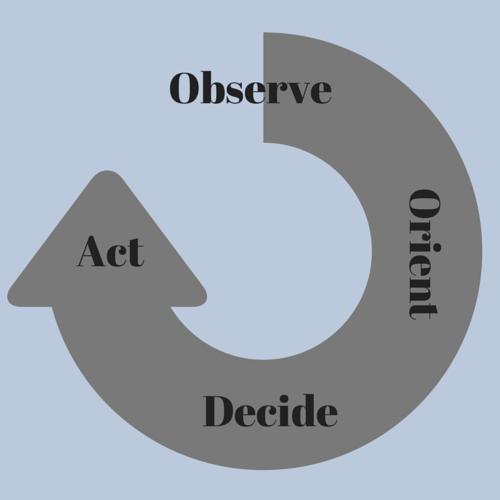
Developed by a U.S. Airforce strategist Col. John Boyd the OODA Loop is the concept that strategic advantage goes to the party who can best navigate the decision loop through observing the situation, orienting themselves, deciding what to do next and translating that decision into action. Through transparency, autonomy and experimentation, a responsive organisation moves decisions to the edge of the organisation accelerating its OODA loop to deliver better business value.

How does OODA accelerate my blogging?

Observe: My blogging is built on a foundation of being constantly on the look out for insights. Every day as we work we are exposed to great ideas, wonderful learning and exciting conversations that challenge our thinking. The more I capture the more I learn and the more I have to share. Are you tuned to observe and capture these opportunities to share through a blog? Managing your attention to observe these moments and building a system to capture notes at the moment helps.

Orient: A blog is an expression of your cumulative knowledge and experience. Finding a way to orient a new observation against your current knowledge matters to building a consistent philosophy. You need to know how a new post fits into your blog. Once I have an insight I try to quickly connect it to other ideas on the blog and elsewhere that extend the thinking. Building this system of links helps reassure you of the value of a new post. Ultimately I would like these links to provide an ever evolving network structure to the ideas on my blog.

Decide: Struggled with a white screen? Found your 500 word post is 2000 words long? These are challenges of deciding what you are writing about. Decide to share one small simple idea. Keep it simple. Stop when it is done. If the idea gets complicated break it into a series. If you have oriented well then the decision on the role and scope of a post is a little easier.

Act: Write. Just start. The best way to solve a problem in a post is to write. You can always throw out and start again later. Only by writing and posting do you generate the interactions that create new insights. Embrace permanently beta. Ship the post and let others help you learn more. This focus on action in blogging is the power of working out loud.

Accelerating the OODA cycle on your blog reduces the risk of a writer’s block or a monster post that can be finished. Work out loud one idea at a time and invite others to share and accelerate your learning.

International Working Out Loud week is from 17-24 November 2014. For more on #wolweek check out wolweek.com. International Working Out Loud week is a great time to put OODA into action in your working out loud.

Standing In: The Future of Work

image

What are you doing to cut through the challenges of attention in the future of work?

Attention Discriminates

Yesterday a client found me in a busy activity-based workspace by my colourful socks. There were too many dark suited males sitting at desks but only one was wearing loud socks. A distinctive trademark cut through the challenges of attention.

Our attention discriminates. We deliberately focus to exclude distractions. When humans lived on the African savannah there was already too much information and attention was a way to economise.

When we enter the future of work that issue of attention explodes. Streams of updates, flat networks of relationships to follow and complex rapidly changing environments create a load on our attention. If you want to be recognised for your efforts in this environment you will need to stand out.

Wearing colourful socks won’t cut it. Socks don’t scale. The traditional response of the extroverts among us just adds to the noise. One pair of colourful socks is a discriminator. Many are noise. We see the same with the ‘look at me’ cries on social media.

The future of work might not be about standing out. Perhaps it is about standing in.

Standing in

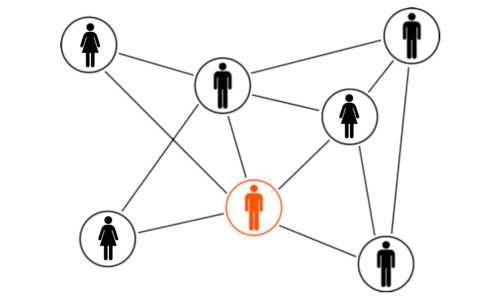
The way to get noticed in a network is to be a valuable node. Your goal is not to push yourself to isolation at the edges, it is to contribute to value creation at the core. In short, you need to stand in (networks).

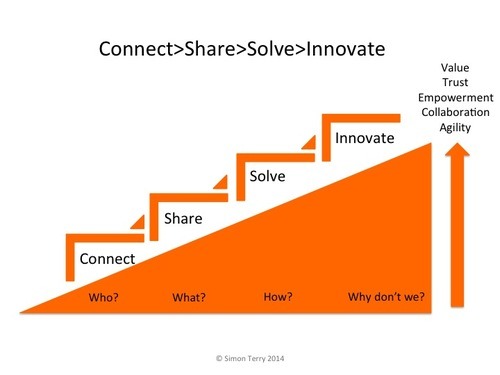
How can we stand in more effectively? The Value Maturity Model offers us a guide:

  • Work for a purpose and gather those around you who share that purpose
  • Make connections between people to improve the efficiency of the network
  • Share relevant information, add new information to your networks and don’t pass on the dross. Working out loud is a great practice that helps others and John Stepper has described how working out loud works for introverts.
  • Help solve problems of others in your network
  • When you see an ability to make a unique difference, take that chance. Innovative opportunities don’t happen often. Take a risk and leverage your network to make something unique happen.

To fight the discrimination of attention in the future of work, focus on standing in (networks).

image

Why #responsivecoffee?

Yesterday was another great responsive coffee event in Sydney. The event began with my short talk about creating value with social business and working out loud. I shared some insights from the Enterprise Social Collaboration Value Maturity Model as a framework for developing a more responsive culture in an organisation. Then the group dived into a vibrant conversation sharing challenges and opportunities as people work to make their organisations more responsive.

One question I am often asked is ‘what is the value of a Responsivecoffee event?’ Here’s my response:

Connection matters:

People working in change can feel isolated. Simply meeting others doing similar work can make it feel more possible. Connection is the foundation of community. After the session yesterday there were all sorts of new connections established that will support people to do more work faster.

Connection is also important because of the diversity of Responsive Organisation challenges. People attending the event were considering the Responsive organisation approaches from the mindsets of consulting, communications, learning, knowledge management, technology, change, property management and many more functional areas. The connections cut across the boundaries of organisations, products, industries, roles, functions and ambitions of the organisations. All those diverse connects help expand the range of possibilities and enable clients to implement change faster.

Sharing Matters:

The conversation was a treasure trove of insights and shared experiences. That sharing encourages people and enables fast change. Many people are just starting out in the journey of being more responsive and more social. Hearing the stories others shared have them confidence to start and a sense of the possibilities and challenges ahead.

Problem Solving Matters:

Many people brought a practical problem to the table and over coffee leveraged the collective insights of the group to move forward and move faster.

Innovation Matters

Responsive coffee remains an agile experiment in value creation. The formats change to create value for those who are attending from session to session.

We are even seeing new intercompany collaborations and experiments being spun off these events. Participants are going away to work together to create new products and services to help accelerate change and address challenges shared. If you don’t bring people together to explore what might be possible you will never see the next horizon.

The Value of Responsive Coffee is Accelerated Maturity

The benefits of Responsive Coffee reflect that of the Value Maturity Model because a purposeful cup of coffee with other change agents is an act of social collaboration. We need more and richer connection to accelerate change in our organisations and the adoption of new ways of working for value. Value occurs in the rich conversations of social collaboration.

Long live #responsivecoffee.

Image credits: 

Coffee: http://pixabay.com/en/coffee-cup-time-meditation-talk-14662/

Photo of Responsive Coffee: Luke Grange

The Last Thing We Need is an Enterprise Social Network

Dear CEO

Re: The Last Thing We Need is an Enterprise Social Network

The purpose of this email is to explain why the last thing we need is an enterprise social network.

This email is in response to the conversation about enterprise social networking in the executive leadership meeting yesterday. We thought it best to summarise the position of the leadership team, because yesterday’s conversation got derailed by anecdotes about social media, technology terminology, fear of change and discussion of abstractions like collaboration, future of work and new organisational structures. Before you left the meeting, you remarked “Based on this discussion, I think an enterprise social network is the last thing we need”. We agree.

We don’t want faddish technology. We need execution of strategy.

As CEO, you’ve been rightly suspicious of all this discussion of social inside the organisation. It is bad enough that your teenage children never look up from using social media on their phones. Whatever that involves, it can’t be needed activity in our organisation. We are a place of work.

What made this country great was well-run organisations, hard work and increasing effectiveness in creating value for customers. That takes focused strategy, disciplined execution and a willingness to do the hard yards. Great organisations aren’t built by chasing technology whims. They come from executing strategy to create better value. When we need to create better execution on strategy, the latest fashionable technology is the last thing you need.

We need better strategic value creation

Times are tough. Industry is more competitive than ever and change keeps increasing. We know customer and shareholder value needs to go up and costs need to come down. We have a strategy that is about meeting these new customer & stakeholder expectations, improving the organisational efficiency and delivering the returns that shareholders demand. We all wonder from time to time whether everyone in the organisation gets the imperative of the new strategy and whether they are all working hard enough to find new ways to create value. We know that we perform better when we have better conversations to make sure that our employees are aligned to the strategy. What we don’t need are distractions when there’s doubt that people even understand the strategy.

When we need strategically aligned value creation, the last thing you need is an enterprise social network.

We need new more effective ways of working

To fulfil the strategy of the organisation, we know as a management team that we will have to start to work in new more effective ways. There has been too much wasteful duplication of work in the organisation. Too many of our processes & policies don’t line up across the silos, aren’t agile enough for the environment and don’t meet customer needs. Both our customers and our employees complain about how badly we do this. We need to start working in new and different ways to identify, solve and improve this on a continuing basis. We have to focus everyone on find and using better work approaches that help us to fulfil the strategy.

When we need working in new and more effective ways, the last thing we need is an enterprise social network.

We need to change management and leadership in every role

Working in more effective ways will likely require us to change the way management works. We are going to need to push decisions down to people closer to the customer and give our people the ability to fix problems. We will need our managers to move from command and control to a coaching and enabling role. We need to ensure that all our people are realising their potential and able to work to create new sources of value. Of course in this new role, middle management will need to be trimmed and the new flatter organisation will need to change more often as we respond to further changes driven by our customers. Employees will need to step up into a leadership role in these changes and with customers, the community and the organisation.

When we need to change the culture of management and asking every employee to play a bigger role in leadership, the last thing we need is an enterprise social network.

We need different conversations

Changing the culture of management is going to demand very different conversations in our organisation. We are going to have to find ways to make sure that conversations are efficient and effective. We need to leverage the contributions of more people from across the organisation. We won’t be able to rely on long meetings, workshops, speeches, video and emails. Did you see the budgets for communications, off sites & roadshows in the forecast for next year? We have to do something different. We will need to involve our people more in making decisions. If that’s going to happen our people will need to be better informed and better able to channel their contributions. Our people will need ways to inform themselves, learn by pulling what they need, share ideas of how to work better and collaborate to solve work problems. We are going to need to encourage our people to join conversations that use their capabilities to innovate, to create value for customers and create new forms of working.

When you need to change the conversations, collaboration and culture of an organisation, the last thing you need is an enterprise social network.

We need more from our people

We wrapped up the last executive leadership meeting reflecting on how big these demands will be on our people. We will be asking for a lot of change in them, their work and the way the organisation exists around them. We will be asking our people to play an increasing role in the success of the organisation. We will want them to lead new conversations to create the future for this organisation. We need our people to be more engaged because we will need much more from our people.

Conclusion: What we need

After you left the executive leadership meeting to catch up with the board, we realised that we are clear what we need as an organisation:

  1. we need to succeed by fulfilling our strategy to create greater value in a rapidly changing market; and to do that
  2. we need to be able to work in new & better ways that create a more effective, agile and responsive organisation; and to do that
  3. we need a new culture in management and more leadership from our people; and to do that
  4. we need new conversations that enable our people to discuss and act on creating better strategic value; and to do that 
  5. we need more engagement and a better ability to leverage the potential of our people to contribute to and lead this change; and to do that
  6. we need an enterprise social network to support the first 5 steps.

If you are surprised by point 6, think back through the needs again. After all you were the first to say that an enterprise social network is the last thing we need. We don’t want an enterprise social network because it is new technology or because it is good for some abstract goal. We need one to help our people to execute on the changes necessary to achieve the goals of our strategy. Enterprise technology only makes sense when it enables us to work in new ways that deliver strategic value. As your management team we can see that the value creation opportunity is compelling. We couldn’t see it when you made your remark, but we have come around to your perspective.

The paperwork required by our old process is already on your desk, but a number of our people have started experimenting with solutions to see what value we can create. (Interestingly, their first suggestion is a better procurement process.) When you get back from the board, your assistant will show you how to log-in and join us discussing how we implement in the new enterprise social network.

Thanks for challenging us to come up with a better way of working.

Please think of the environment and don’t print this email. We’d encourage you to discuss it on our new enterprise social network instead.

If this post sounds familiar or if you would like to create greater value in your enterprise social network or discuss how the Value Maturity Model applies to assist your organisation to create strategic value through enterprise social networking and collaboration, please get in contact. I am available through @simongterry or Linkedin or www.simonterry.com

Swapping Hard and Soft

Image

Management likes to talk about the hard skills and the soft skills of managers. These terms are usually applied backwards.

Hard skills are the decision-making, analytical, performance oriented skills of traditional management. Hard skills are a matter of education, experience and practice. The hard skills are mostly transactional, process-driven and mechanistic. Done right there is little variation in the outcome of the hard skills. If you are a manager for long enough, you can do the hard skills. They are just a ticket to the game.

Soft skills are the people & stakeholder skills, like building trust, fostering motivation, developing people, managing conflict and team building. In most cases, it is a challenge to know whether you have done these skills well and the results of actions in any scenario can vary widely.  These are the skills essential to realising the potential of people in any context but particularly in a world of networked knowledge work. This is the work of leadership and it must be learned the hard way.

Time to Swap

The terms hard and soft are backwards. In a culture of hierarchy, command and control andengineering mindsets, it suits management to think of the manager as engineer tackling the hard work of decisions, managing the machine and delivering results. Hard skills start to sound like they are most important in a culture where power really matters.

Except it is easy to make a decision. It is far harder to have that decision stick and be embraced by other people. Try to coach another person and you soon realise that developing their potential and helping them is not easy.

The soft stuff is what unravels the hard stuff. You need both people and power in management. The soft stuff is far harder than setting the levers on a machine.

Leadership is work.  Hard work.  Importantly, it is the hard work that matters most to realise the potential of your people and to benefit from the future of work in a networked knowledge economy.

Swap your view of what is hard and what is soft.  Better yet leave them both behind as terms that belong to the last age of management.

Image source: Swan feather – http://pixabay.com/en/swan-feather-spring-swan-slightly-16313/

The Network Navigator

image

The power of a networked world is shifting the emphasis of work from expertise to navigation. Are you ready to move from expert to network navigator?

From Expert to Navigator – a financial services example

Research into perceptions of an advice relationships in financial services consistently often comes up with a common theme. Usually, the financial services organisation is keen to build a trusted relationship with the client as an advisor and to demonstrate its depth of expertise in the advice process. 

However, these goals are rarely what the client is looking to achieve. The client is often more interested in building a relationship with someone who is responsive to their needs and who can to help them navigate the complexity to find their own answers. The complexity the client needs to navigate is not just the financial decisions; it includes the organisations own advice and service processes. In times of complexity, uncertainty & change, clients are reluctant to be dependant on someone else’s expertise. They want control. They want to be guided across the map of choices and find an easier way through the process.

The Network Navigator

Networks and the increasing pace of change that they bring about are having a similar disruption for the traditional model of expertise-based advice.

Relying on a proprietary stock of knowledge is no longer enough to justify an advice proposition. Knowledge is increasingly a flow. Stocks of knowledge are out of date too quickly as the network learns more faster by sharing.  If clients want access to stocks of knowledge, they can find the information themselves (& access a greater diversity of insight and experience) if they are prepared to put in the time and effort.  Doing that work for them on an outsourcing basis is a low value task.

The challenge of a networked era is no longer gathering a stock of knowledge. The challenge is leverage rapid flights of knowledge and guiding others through networked knowledge creation. The skills that rise to the fore are no those of hoarding a stock of knowledge. The skills are those of being able to connect people, share capability and create new knowledge together.

The 8 Skills of a Network Navigator

A network navigator does not need to know the answer. They do not even need to know the whole way to the solution. They need to be able to lead others, to leverage the knowledge of the network and to find a way forward in collaboration to create new value: 

  • Setting a course: In a complex world often the purposes, goals and questions are as unclear as the answers. Helping people clarify their objectives and questions before and during their engagement with the network is a critical role that the network navigator can play.
  • Seeing the big picture map: Navigators are people who can hold the network system in view and manage the micro detail to guide people forward.  A navigator creates new value with an understanding the broader map and new & better paths that others may not have considered.
  • Make new connections: Increasing the density of networks can be critical to creating new knowledge and value from network interactions.  Bridging weakly connected groups is another role that navigators can play to realise new insights and value.
  • Recruiting a crew and local pilots:  Building community matters in new network ways of working.  Community takes connection to a deeper and more trusted level and begins to accelerate learning and change.  Network navigators know how to recruit crew to their travelling community and add local pilots as they need to learn faster in new parts of the network.
  • Translating strange cultures: Connecting diverse groups often means that there are differences of context, language and culture to be bridged before conversations can create new knowledge. Network navigators have the skills to understand and share diverse inputs.
  • Logging the journey: A network navigator works out loud to record their journey and let others contribute and benefit from the record.  A network navigator nows there are many others seeking the same answers or looking for better paths forward and makes that possible by sharing their work and inviting others to contribute.
  • Weathering storms & avoid shoals: Journeys through networks are not linear and often unpredictable.  The navigator has the experience and the confidence to see others through the storms and to sustain others in their journeys. Most importantly, when the storm is darkest, they have the passion to keep pushing and keep experimenting.
  • Navigating where there is no map: Network navigators need to be able to embrace uncertainty and ambiguity.  They need to be able to lead others forward to learning even if it is dark and there be monsters.

Acknowledgements:  This post is in large part inspired by conversations with a wide range of participants that occurred during John Hagel’s recent visit to Melbourne for the Doing Something Good dinner and Centre for the Edge workshops that I attended.  It is also informed by ongoing conversations about new networked ways of working among all members of Change Agents Worldwide.  

The New-to-Social Executive: 5 Mindsets

Your mindset matters to how you are perceived and connect in social media. Whether internal or external to your organisations, the way you think and the way you lead play a critical role in your ability to influence others.  As a senior leader atop the hierarchy, you have power and influence in your organisation (Admittedly that’s rarely quite as much as you would like). When you take your leadership position into the realm of social collaboration whether internal to your organisation or externally, there are a few key shifts in mindset from traditional models of leadership.

Keep these in mind these five key phrases:

  1. Be the real human (& sometimes flawed) you”: Nobody is looking to get to know your communication manager’s idea of you. People don’t need you to be the perfect model executive. You can’t have a conversation with a corporate cardboard facade or get help from a PR bot. This is an opportunity to be more human and to use deeper connection and communication. It will demand that you share more of you. If there is more than one of you, one for work and others, then social collaboration will test your ability to maintain the curtain of separation. Using social media works best when you bring your whole self to the activity. You will learn new ways to demonstrate your strengths and authenticity in the process.
  2. Think networks”: Social media flattens out the playing ground. Your current fame, power and fortune won’t deliver worthwhile connections or influence immediately. In this environment, your voice competes with many others and those that are better connected and more trusted will have greater influence than you regardless of their status. Your voice & authority is much more easily challenged and even mocked. Influence works along networks of trust and connections. Valuable business traction comes from deepening connections to stakeholders and influencers in your own world. Start there and build your influence over time as new connections join in to the valuable interactions that you help create.
  3. ListenEngage others”: Listen first. The network doesn’t need to hear you. Mostly it won’t. The network doesn’t need another opinion; it needs your response to and your engagement in the conversations already going on. If you want to deliver on your strategy, the path is through helping others to better align, understand and deliver that strategy with you. How you engage with others is more important in building influence in your network than who you are or what you have to say.
  4. Be helpful”: Make connections & help others find those who can help them. Set context. Guide others. Enable others. Share stuff to help others solve problems for themselves. Ask great, thoughtful & challenging questions. Work aloud and let others prove their value by helping you. Connect with people to deliver them value. People are looking to learn more and help themselves. As a senior leader you can play a critical role
  5. Experiment, learn & change stuff”: The value of human networking is to learn, connect with others and change things. Embrace difference & the chaos that many opinions and desire for change creates. After a while you will recognise the appeal of ‘being permanently beta’, always evolving to better value as you experiment test and learn. If you want to hear your own views, build your personal brand, increase your control or resist change, don’t start in any form of social collaboration. That attitude doesn’t show much respect for the efforts of the others in the network. 

This is the first of two short posts on tips for the senior executive looking to move into using social collaboration tools inside and outside the enterprise. This post deals with mindsets. The next post will deal with how to start engaging.

Purpose endures disruption. Discuss.

We know what we are, but not what we may be. – William Shakespeare

In a time of disruptive change, an organisation needs a strong common purpose to unite & guide its people.  

Purpose is a product of the community in your organisation.  It is the set of beliefs that keep your community together, reflecting your values, impact on others and hopes for the future.

A strong purpose is one that grows out of that community within your organisation.  We are talking about deeply personal values and beliefs.  This is the realm of pull, not push. People will have selected and remained with your organisation because of purpose.   A purpose cannot be imposed without pushing people away from your organisation.

Purpose endures.  

Your product, your business model, your competitive position and your returns may all change.  Just look at the changes you face:

  • Every organisation faces continued change in Who does things.  Tasks move.  People come and go each day.
  • How you do things changes equally fast.  That is the point of continuous improvement.  We want this continuous betterment of our work.
  • When big disruptive change occurs, organisations need to change What they do too. If you haven’t moved from buggy whip manufacturer to delivering remote mobile acceleration control services, you might just have been left behind. 

What keeps your organisation together and focused when everything might need to change really fast?  

A purpose that is shared by the community of your organisation is a centre of focus and consistency.  Importantly, the purpose is something consistently worth the investment of your people’s time, passion and effort over time.  Purpose is the core around which your organisation must build its agility to survive.  Purpose is the reason for which your organisation must survive and why it must prosper.  The more things change the more you will come back to your purpose to choose what to do next.

Discovering purpose

Start an ongoing conversation in your organisation around your purpose.   Seek to discover the beliefs that are shared and guide your organisation into the future.   Build a consensus and educate those who are new.  Social tools are fantastic ways to share and deepen this conversation.  

Ask purposeful questions of each other.  What is the purpose of strategies, changes and major initiatives? When is your organisation at its best?  What beliefs and ideas bring out the best in your people?  

The conversations are more powerful when they are not be dictated from the top of the organisation.  The best conversations on purpose will be those that surface the beliefs of those who deliver impact to customers every day, who make decisions in the middle of the organisation or potentially by asking your customers to reflect on your purpose. Discuss these points of view.  You will find that these conversations contribute to trust by building common ground.

Be prepared to be surprised, but most of all be prepared to find a new focus to the why at the heart of your organisation. Clarity of shared purpose will speed the agility of your people.  After all, your purpose is why you are and the best guide to what you may be next.

Shorten the long run

In the long run we are all dead – John Maynard Keynes 
  
The economic concept of the long run is the period that it takes to be able to change every variable in a system.  It is the time it takes a system to adapt fully.  
  
The long run defined this way is a handy concept for an organisation to use when thinking about change.  Your most disruptive threats will pick the variables that you find hardest to change.  Because you cannot or will not change these variables quickly then you will be in danger of losing value to the disruption.  For example: 
 

  • newspapers: struggled to change an economic model where advertising in the paper funded content to attract an audience when internet businesses offered alternatives for both advertisers and audiences
  • music industry: struggled to change their ways of identifying and managing talent and the economics of distribution models tied to physical distribution when digital music distribution disrupted both
  • premium airlines: struggled to change high costs of labour, fixed cost infrastructure and the value perceptions of their other premium offerings when low cost competition attacked

  
If you want to improve your organisation’s ability to respond to disruption, you need to shorten the long run, your adaption time, by speeding up your slowest areas of change.  In most cases these will not be simple decisions.  The slowest areas of change are often those deep in the hidden infrastructure of the organisation.  

One thing you can do is invest in capabilities to help you change all areas of your business more rapidly:

  • people capabilities:  change leadership, talent, agility of structure and performance measurement
  • system capabilities: flexibility of systems, agile development, standardised integration and ability to leverage new technologies in experiments.
  • process capabilities:  continuous improvement, process measurement, agility of change, etc.

The long run is also the end of the period when the ugly impacts of disruption are felt.  We would all like to move faster through the periods of confusion, pain, adjustment & loss and get back to competing aggressively to win. 

Ultimately, it comes down to the culture in the organisation.  Can you build an organisation that has a long run that suits your business and its environment, where you can change the way you think and work fast enough to survive?

If you can’t shorten the long run, then you can guarantee in an era of disruptive innovation, your organisation will be dead.