Why Collaboration Value is Understated

image

Applying mechanical process productivity to collaboration provides us with an efficiency benefit case for collaboration. Understanding the true benefits of collaboration requires us to understand the knowledge work systems in place and the broader effectiveness of the organisation at creating value.

Value of Collaboration is Not Easy

We always facing the challenge of valuing the benefits of collaboration.  Collaborative technology is part of the infrastructure of the organisation. It’s use is open to many applications that will be co-created by the employees and shaped by the organisation. Many of the outcomes are not direct; collaboration facilitates a more effective organisation.

The temptation is to play it safe. We can use the same process efficiency mindset that applies to any other system to automate processes.  The question usually asked is “How much more efficient will our people be when they use a collaboration system?’  A number of studies have looked at the impact of collaboration systems on in process efficiency of knowledge workers. One of the most widely quoted statistics is the McKinsey survey that identified 20-25% of the time of knowledge workers could be saved with better ways to search for and interact on information. This mindset often drives an adoption focus to collaboration projects that misses a bigger opportunity to create value.

25% Better Off?

If you are processing iron ore into steel and you find a way to do it 25% better, then you will have 25% more steel or need 25% less inputs. That is a mechanical process saving. Inputs became outputs at a cost. This is how our traditional efficiency mindset has focused us on measuring value.

However, knowledge work isn’t like steel manufacture. At the end of a knowledge work process, we still have the inputs and the outputs. Both the inputs and the outputs can be shared widely at very low cost because they are easily reproducible. Most importantly, neither the inputs nor the outputs are fixed. 

Let’s consider a practical example. As a knowledge worker, you are asked to create a new process to improve the efficiency of steel production. Is the goal to do this 25% faster? No, the goal is to create the most efficient way of producing steel.  There are four elements that measure effectiveness of your work:

  • Reduce waste: If there is no better way currently possible or someone has already done the work, then don’t work on creating a new process. Do something else.
  • Reuse existing knowledge: If someone has developed a process that is more efficient, use that process as a basis. Don’t start with a blank page.
  • Create new knowledge: If you can bring together people who have never been connected, if you can share information that has not been shared you may be able to solve new problems or create an entirely more effective process for steel manufacture. This is likely to impact a much larger value opportunity than knowledge work in your organisation.
  • Create new value with existing or new knowledge: Your new process for steel manufacture will be able to be shared across your organisation and may even become a product in its own right.

The economic value of these four elements aren’t productivity measures of knowledge work.  The economic value is the impact on the production of steel and the greater value created in the organisation by collaboration to improve steel production. In my experience the benefits from simply stopping wasteful projects without any value add, is an order of magnitude larger than the productivity benefit from reduced search by knowledge workers.

Thinking more broadly about the economic impacts of collaboration can create a dramatic step change in the benefits for an organisation.  Rather than looking at efficiency in the cost base of knowledge work, collaboration impacts value creation organisation-wide. This new view has a critical role to play in shaping leaders support for collaboration and the level of investment an organisation should make in fostering collaboration in the organisation.

Simple Visuals of Where Digital Transformation May Go Next

Prediction is very difficult, especially about the future – traditional Danish saying often attributed to Nils Bohr

image

The interest in A Simple Visual History of Digital Transformation prompted some to ask about where do we go next. Make any predictions on digital transformation and you can be sure that someone is currently working to undermine your credibility. The following suggestions for the future of digital transformation are offered on the basis that these are ideas that exist “but are not yet widely distributed” to borrow an idea of William Gibson.

image

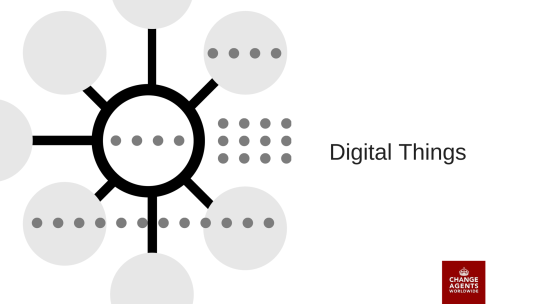
As the costs of digital connectivity and computing power fall, these capabilities are being added to more and more devices. The internet of things has reached our homes and our workplaces. The increased ability to gather and use information in real time will drive new innovations in our businesses and our lives.

image

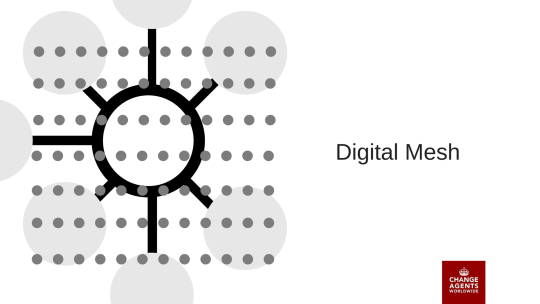
Add enough digital connectivity and computing power and you have created the potential for a mesh of sensors, connectivity and processing power to fill our environments. Now our digital things and our communication devices can be in constant contact and new applications will be developed to take advantage of the rich digital environment.

image

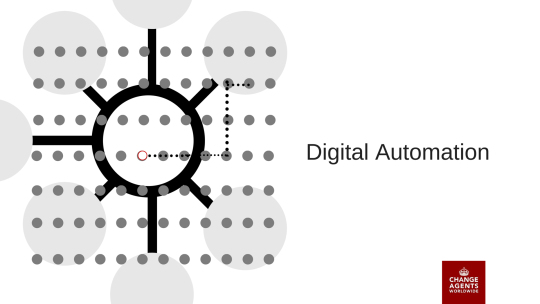
The digital mesh will help accelerate digital automation as many traditional roles of knowledge workers, such as the gathering, digesting and processing of information now flow from an ambient mesh and are managed through algorithms and their managers.

image

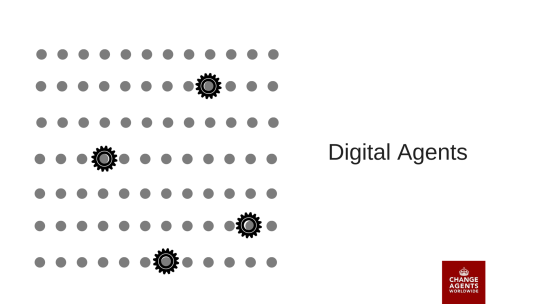
A digital mess also enables the greater leverage of bots, digital agents that can navigate the mesh and achieve outcomes for their owners, clients and masters. These algorithms take on the role of making local decisions or acting as advisers or facilitators across the breadth of the networks. Digital Agents help manage the scale of information and the real time demands of the mesh.

image

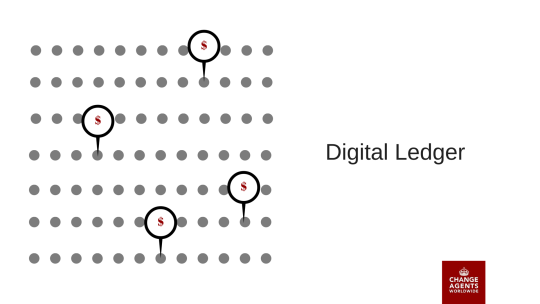
Distributed and connected computing power also enables us to revisit concepts of how we record, store and share information on concepts like ownership, identity and history of transactions.  Instead of a single ledger located in one location, the transaction history can be distributed and validated across the network, as in blockchain. Innovations will build on these capabilities into new domains.

image

The digital mesh increasing can enable individuals by supplying capabilities need for individuals to have greater awareness, connection or to do work that was previously beyond the capability of a single individual. If an organisation is a solution to transaction costs as Coase suggest, there are new implications for the role and future of our organisations and the growing capabilities of the digital systems will shape the work individuals will do (or don’t do).

image

We have not yet begun to explore the potential of extending this digital mesh and its capabilities to the entire world. We can already see new approaches, such using e-commerce villages in China, video in education in India, market pricing data for farmers in the third world or mobile payments in Africa. As the costs of digital technologies fall and reach expands new entrepreneurs will solve new problems for those beyond the reach of this technology today. Perhaps then we will truly experience the power of the Internet of Humanity.

A Simple Visual History of Digital Transformation

image

Since the Mosaic Browser helped introduce the internet to the world, we have experienced a digital transformation of business. We had digital activities in our organisations before. We had already spend almost 50 years computerising processes. However, the digital connectivity of the internet began more radical change. Here’s an overly simple graphical reminder of elements of that journey.

image

We began by creating digital channels to connect our organisations to their customers.  The website began with simple digital brochures and basic contact information. Very quickly our websites became richer and more valuable.  Innovation began outside the organisation that showed the way for all subsequent phases of digital transformation.

image

We added processes to support the customer interactions. In many cases these processes were new, partial and designed solely to support the new digital channels.

image

We saw potential in these digital processes and started to apply them more widely. These processes worked in the midst of our legacy process and often in unconnected ways.

image

As the breadth of our digital channels expanded and we needed to manage new social and mobile channel needs, we needed a dedicated digital team to manage the expanding offering and to help integrate the core digital processes and infrastructure required to support growing digital ambitions.

image

With a digital team to advocate and lead the way on growing digital opportunities, we saw digital interaction takeover much of the electronic communication in the organisation and new integrated digital processes develop in supply chains, shareholder & community management and other forms of stakeholder engagement. APIs began to standardise digital communication formats in an increasing way for organisations. Organisations could leverage vast amounts of data on interactions and increasingly on activity across the organisation. 

image

With digital interactions dominating & pressure to focus on core business activities, organisations began to become more aware that they operated in digital networks, connected to customers, suppliers and other stakeholders. Importantly, it became increasingly obvious that these networks connected all stakeholders reducing transaction costs and increasing transparency. Most dangerously these networks & data flows gave competitive advantage to those most able to leverage digital technologies in disruptive ways.

image

Seeing potential in connectivity, new and existing organisations saw the ability to focus on platforms that connected system players, creating new value and disrupting the traditional business of intermediaries. These platforms were increasingly agnostic of whether they ran on a computer, a phone or another device, giving them greater geographic and temporal reach.  We began to connect all processes & devices into networks to leverage the power of information. Concepts like employee, contractor, supplier and customer had less secure meaning in a networked world as chains of connectivity ran in all directions & right through the organisation.

image

With platforms and networks running through and beyond the organisation, people began to explore the opportunities in new ways of working using digital. The boundaries of organisations no longer constrained the boundaries of work.  Seeking to retain talent, leverage information more effectively and create greater agility, organisations experimented with new digital ways of working and organising work.

This digital transformation has only just begun. There are many more phases ahead. The innovations and experiments of organisations will take us even further into exploring the potential of globally connected digital networks.

The Life-crushing Magic of Hierarchy

Humans are inherently messy creatures. We accumulate history and the entanglements of human relationships and emotions. As a manager this human mess can interfere with the joy of the unrelenting execution of your will. A cluttered organisation shows no respect to a manager’s inherent expertise and power. 

My life as a manager was transformed when I discovered the life-crushing magic of hierarchy. Your life and organisation can be neat and orderly, if you follow these simple organisational principles. 

Touch Everything

Firstly you must understand the principle behind all hierarchical organisation. A manager must constantly touch everything. Dump all your expectations about independent action by your team on the floor. Subject everything to your hands-on micromanagement power. 

You must feel free to touch any activity in the organisation at any time, throw it into a disordered pile and then use your superior management skills to put things back into the places that best suit you. Do this until your organisation shines with respect for your management skill. 

Kill Joy

Look at any activity if it sparks joy in your employees, discard it from your organisation. You have the power to exclude these activities that divert from the joy of experiencing unfettered authority. Crush the activities and discard any employees associated with them. The more meaningless the work the better it will demonstrate your management expertise. If too much meaning arises in work, intervene and make changes or better yet reorganise again.

Process not People

When organising your business it is traditional to be concerned with individual business units, alignment to customer or business outcomes and the people involved. Put aside this nostalgia. 

Focus instead on process. Ask yourself only whether the process brings you joy and crushes the freedom of your people. Make sure your processes are inflexible, opaque, compliance-oriented, end-to-end and untouched by nostalgic human considerations. The more abstract the outcomes that your processes create the better. 

Organise your business one process at a time and follow each process to the end before proceeding on to the next until you have completed your arrangements process by process. This may increase the mess and confusion in the meantime but you will find an organisation that is far easier to control and manage in the end.

If at any time you are not getting joy from this process, reorganise your people to make their arrangement more appealing. Over time your people will begin to appreciate the recognition that they get from being dumped into reorganisation. They will shine around you for the fear that next time you may get them. 

Everything in its place

Everything must be in its place before you go to work. Only you will be best able to determine the sweet spot for an employee. Don’t let them create mess by making career choices. Fold them carefully into their small box alongside their peers in the process. Never let your employees feel that they have a place to which they can go home. 

Arrange your remaining employees in tightly segmented silos and narrow process defined roles. It is essential they are visible and accessible to you at all times. You will need the ability to grab them from their important work at a whim and put them back easily at your pleasure. Measure them continuously to keep them aware of their need to maintain your respect and bring you joy.  

When interacting with your employees discard any that show too much spark. Remember to share your unfettered opinion and discard theirs at every opportunity. Finish every interaction with one of your employees by remarking gently ‘Thanks, I’ll take it from here.’

No Stacking

Stacking can crush employees at the bottom and damage their self-respect. This is an activity which should be reserved to bring joy to you. This is why it is so essential that employees are carefully folded into a place in process. Therefore do away with any unnecessary intermediate managers who may have the time to create fiefdoms to challenge your own. Keep the other managers moving quickly to satisfy your directives so that they have no time for their own thoughts, action or joy. Make everyone subject to your direct instruction and make all the decisions with your unique, shifting and often emotional rationales. 

A category of employee that requires particular attention in removing any other forms of leadership are your change agents. They are an unnecessary source of independence and activity. You will find no spark of joy in your dealings with them. Instead they may even challenge your authority or make unnecessary suggestions. Implement an enterprise social network in your organisation. This will enable you to identify those employees who still hold opinions and may act on their own outside of your chosen process. Gather your change agents. Hug them and thank them for their service. Then bundle them out the door

Follow these principles closely and your hierarchy will be neat, tidy and much smaller. Be sure that it will bring you, and you alone, great joy. Other managers will look on your shiny, svelte & compliant organisation with new respect.

Apologies to Marie Kondo. Thank you to those who gave me encouragement, ideas and suggestions for this post. May it spark some much needed joy in your work. If anyone reading is still in any doubt, don’t do this.

Execution is a Big Learning challenge

‘Vision without execution is just hallucination’ Thomas Edison

Vision & strategy is nothing without execution. Execution is often presented as a challenge of discipline. However the discipline at the heart of great execution is learning. Organisations need to use Big Learning systems to adaptive lay execute their strategy

Vision & Strategy are Hypotheses

The PowerPoint deck might land on the desk with a reassuring thud. The tables of data, the charts and the pictures explaining the vision and strategy are impressive. No matter how excited your strategy team is their plan is just still a guess.

Competitors don’t sit still. Customers are fickle. You underestimated the effort. You over estimated the upside. Reality is always different when you execute a strategy. Local leaders need to adapt the strategy to the reality they must tackle.

Organisations have tried to enforce stronger execution discipline to prevent this adaptation. They worry that the fragmentation of approach will cause issues. However a disciplined execution of a strategy that is not fit doesn’t add any value and can be disastrous. The learning opportunities for the organisation are lost.

Learning and adapting in coordinated ways throughout the organisation is the art of Big Learning. If your vision and strategy can’t adapt to reality, it is still a hallucination, no matter how widely it is shared. Organisations need to focus less on the discipline and more of the coordination of learning throughout the organisation. Finding effective adaptations and proofs of the strategy at work, changing to align and sharing them widely is what brings a vision to life.

The Four Capabilities of a Social leader

Senior executives need new mindsets and new capabilities to be effective in the networked work of the future. Four capabilities will help e executives make the most of their networks:

Personal Knowledge Management: Personal Knowledge Management gives executives the personal learning skills to manage the flow of information and to deepen their personal networks. As executives personally learn to Seek>Sense>Share they develop critical digital skills for network leadership.

Working Out Loud: Working out loud is a practice that helps surface the value of work and learning in networks. Leaders are already the focus of attention. Making their work in progress visible to others is a highly valuable step because it accelerates trust and learning.

Leading in Networks: Network leadership requires leaders to surface shared purpose, build trust and influence and enable collaboration. Expertise, rank and orders are replaced with adaptive leadership techniques that manage learning, tension & alignment.

Creating Value in Networks: Leaders need to be able to set a strategy for their and their team’s engagement with networks. They need to be able to accelerate the maturity of value creation in those networks as they develop through Connect>Share>Solve>Innovate.

Developing leader’s practice of these key capabilities will enhance their effectiveness in enterprise social networks and the future of work.

Learn from the Practice of Work with #wol

Working out loud is key practice to move beyond the theory of work. Working out loud helps solve the obstacles of work, tests ideas and creates interactions to keep work grounded in reality.

The most theoretical conversation in the modern workplace is often when a stakeholder says ‘I agree’. What they are actually saying is ‘I agree in principle to your approach given our common theoretical understanding of what you are doing, the absence of obvious obstacles and my limited understanding of the context’. Agreement like that falls apart when practice diverges from theory, obstacles occur or when more context surfaces.

The theory of work diverging from practice impacts more than stakeholder conversations. It is at the heart of breakdowns of many customer experiences, work processes and policies, incentive schemes, restructures, change initiatives and many other domains. In each case as the theory leaves the design table it meets obstacles, exceptions and other challenges in practice.

Some organisations try to eliminate these issues with a stricter adherence to theory. Instead, the defining practice of an effective modern organisation is how it accepts theory’s limitations and focuses on learning the lessons of real practice. Big learning practices take advantage of the organisations ability to learn through each employee’s work and adapt to break the boxes of the theory. Knowing obstacles are the work, organisations plan to learn and adapt. These organisations never get stuck in theory because it is always subject to improvement in a live test.

Working out loud plays a key role in these responsive organisations bridging the gaps between theory and practice. Working out loud puts ideas out for early tests, surfaces obstacles and shares context widely. A stakeholder who says I agree in a process of working out loud has a surer foundation and a better expectation of what is ahead.

Judge the success of your work in practice. Allow for learning and adaptation. Use working out loud to strengthen the culture of learning in your organisation.

Speaking to Senior Managers

Senior leadership engagement in change is a hot topic. Social collaboration makes the absence of leader engagement obvious. I’m often asked to speak on collaboration, learning and leadership to senior executives. As I used to be one, people want me to share a little of my passion for these topics. Here are some suggestions to guide you in your senior leadership engagement.

It’s not a priority

Collaboration, leadership and learning is unlikely to be a priority for your senior leaders. Sure they’ll discuss it but they don’t want to do it. They don’t know anyone who got made a CEO because his team was the most collaborative or the most agile. There is always a bigger business or customer problem that is on their mind.

Rather than engage in an argument as to why this mindset is wrong (it is – see Big Learning), I start with understanding the real business problems that they want to solve. Once we understand the business problems we can connect collaboration, learning and leadership as solutions to that problem.

Avoid Capitalised Nouns

Senior executives are busy and distracted. They don’t want jargon and hype. They are allergic to empty captalised nouns. The more you use words like Collaboration, Leadership, Engagement etc without making them tangible the less credible you are. The more it sounds like a futuristic vision or a quixotic quest the less relevant you are to their world.

Tell Stories

Stories make change tangible to busy & smart people. Ben Elias of ideocial.com remarked to me recently that it is hard for people to conceive of how their organisation could be highly collaborative. They have never seen it, so the ideas and practices don’t connect with their reality. Specific stories make that connection. Tell rich and engaging stories of how things can be and how to get there.

Ask for something specific

There’s nothing worse that taking the time of senior leaders, winning their support and not being able to define exactly what you want them to do. Always have a specific ask of them ready to go. Have two in case they say yes to the first. Better yet have a personal ask that is framed as something simple that they can agree to do to sustain change. The 3 simple habits of working out loud was designed as one such example.

When you are done, Stop. Leave.

Senior executive time is precious. Give it back to them. Tempting as it may be to bask in the glory of a good meeting and deepen rapport, you will win more credit by leaving when you have done your job. Remember when something is not a priority you are always on borrowed time.

The Two Small Wicked Challenges of Organisations #BigLearning

If we focus on our organisations as places to work and learn together, two small but wicked challenges come to the fore. The design of a Big Learning system needs to help an organisation manage these challenges at scale.

Two Small Challenges

Knowing what we know: Lew Platt of HP originally coined ‘if only HP knew, what HP knows’ but the frustrations of shared knowledge have been around since the beginnings of management. We can’t achieve knowledge sharing (& shouldn’t try). However finding a more effective way is an ongoing process of evolution in any group.

Knowing what works: Since FW Taylor management has known its role is focused on isolating what works and what can be improved, but clearly this has been a challenge for as long as people gathered together in challenges. One need only look at the many thousand year history of military thinking so see an example of the evolution of approaches to effectiveness. Separating out what performs well and how to be more effective is an everyday challenge. This encompasses both what works in internal relationships and what works externally for customers, community and other partners.

The problems worth working on in life often have the characteristic that they are easy to describe but wickedly complex to solve. There are no simple transactional or universal solutions to these issues. They sum up the quest of the entire history of management and human organisation.

Many Solutions. An Evolving State

The wickedness of these two small problems is why we require a systemic response. Individual approaches can contribute to the sharing of knowledge or learning what works or both. However effectiveness and scale will require an interplay of many elements of a system and continued learning and enablement of evolution of that system. Organisations that do not focus on creating a Big Learning system that encourages its people to learn, to share and enables them to continuously improve their practices will be left behind.

Management Overgrown: Time for Regrowth

image

Bureaucracy has become the definition of the kind of management organisations are seeking to avoid. However, bureaucracy started as a significant step forward in management systems. As we design the future management practices we need to ensure we do not see the same overgrowth.

Fixing Management History: Bureaucracy

Bureaucracy was created to fix problems with the previous systems of management. Bureaucracy has its strengths relative to the inconsistent, corrupt and ineffective regimes that preceded it. However, any strength overdone creates a new weakness.

Here are some of the positive changes that came with bureaucracy. Without continued innovation, these practices took on a logic of their own and became overused:

  • Incompetence, influence and nepotism were addressed by a hiring and promotion on managerial competence and expertise. Overdone this expertise focus led to an unwillingness to learn, internal focus and new forms of abuse of power.
  • Inconsistency and unpredictable management decisions were addressed by leveraging policy and hierarchical review. Overdone this led to stasis and disempowered managers who couldn’t address exceptions
  • Ineffectiveness was addressed by the clarity of division of labour bringing clear accountabilities and measurement of work. Overdone this led to breakdowns in coordination, ability to deliver and waste.

Emergent Management Practice

The reason bureaucracy resulted in these issues is that its design allowed little room for checks on its use. The focus on predictability meant bureaucracy was not generative. It had little or any capacity for new management approaches to emerge. The only approach to issues was the application of more bureaucracy.

As we design the future of work, we must take care that the changes we make address the right issues and do not become equally overgrown:

  • Solve the right problems in management today: Is hierarchy really the problem? It is human nature to obsess about power and the role of hierarchy in life. Hierarchal power is only one part of how decisions get made. Many of the approaches that ‘rid organisations of hierarchy’ can’t achieve that. There is a good argument that the issues above with bureaucracy are more about learning, use of knowledge, speed and decision making than they are about power.
  • Simplicity over complexity: Simple practices are more likely to remain transparent. When it is easier for people to understand the practice as a whole and keep its goals in mind, it is harder for people to take individual aspects of the management practice as their own end. Bureaucracy has been bedevilled by people taking means as ends. I suspect one reason Holacracy has found most implementations are ‘Holacracy lite’ is due to the complexity of its original proprietary formulation.
  • Generative practice: Management practices that challenge users to look for improvements in the practice have inbuilt protection against overgrowth. I focus on the generative capability of Big Learning because the two core elements of learning and enabling work and learning keep a focus & accountability on all in the management system on how to improve the work and its outcomes.

The only way to prevent the overgrowth of new management practice is to be constantly pruning and reshaping our work in the efforts to learn and improve.