With his eloquent brevity, Ernest Hemingway gave us the phrase “grace under pressure”. Now is a time of pressures. Lives, livelihoods, relationships, health and more are under strain. Grappling with this mess, unshaven in our leisure wear, it can feel hard to connect our current experience to the concept of grace.
The ancient greek concept of the Three Graces have had shifting origin stories, purposes and composition over history to suit the adorning virtues of each era but they revolve around our common meanings of grace, such as beauty, elegance, courtesy and joie de vivre. In Christian theology, grace is a bestowal of undeserved blessings and the three graces are faith, hope and charity, supporting an optimistic and outward engagement with others. Each of these sentiments are much needed as relief in this time.
We don’t need elegance in our current crisis. Like the ancient Greeks, we should treat the graces as a flexible to the needs of our time and our narrative now. We need to be able to respond to the pressures with grace, but we each get to choose our own three. There is a long list of much needed virtues in this time. To be able to practice our choices from these, under everyday pressures, is to shift our virtues and our values from hobbies to habits.
Here is my list of three graces for our time of pressure:
Compassion: There is real suffering now. We can look beyond ourselves and our losses to acknowledge the sufferings of others and work to alleviate them. Compassion will strengthen our hearts and our communities.
Joy: We lack many of our every day joys. We can find happiness and uplift in the smallest of our gifts. Joy will strengthen our lives & relationships.
Generosity: Today is not a time for how much we take or make. Today is a time for how much we can give to others to help them through. Generosity will strengthen our (common)wealth and societies.
The final word on grace is to remember that grace can be an undeserved blessing. You may not feel worthy of blessing today or any particular day in the future. Worthiness is not the test for grace. Practice self-care and self-compassion. Give yourself the good grace of your company. Forgive yourself and look for the little moments of beauty in each day.
I woke early this morning around 5am. I couldn’t fall asleep again. Sadly I missed the much vaunted early productivity because I was distracted by life these days.
That’s my mistake. Unfortunately I left my #hustle lying between the existential doubt, the mounting work and the devastating news. Spent the last few hours finding it so I could start. Will have to try a clean mind policy instead now. 🤷🏻♂️
Most organisations have a clean desk policy. For productivity and for security of information, desks should be cleared regularly. As someone who likes to work in the inspiration of piles, books and mess, clean desk policies haven’t always been comfortable. However, I recognise the value of a mindful approach.
Now that we are forced to work from home, we need to take the same care with our mindfulness. A clean mind policy can contribute to our health, happiness and productivity. We can’t empty our minds (not least in these circumstances), but we can acknowledge thoughts and put them in their place.
My tweet above was tongue-in-cheek, but there is value in a clean mind policy:
End days by spending 5 to 10 minutes planning to clear the anxiety and set up the start of the next day
Start days with some priority-setting to know what must come first and sift the important from the urgent
Take breaks to reset your energy and be ready to work again.
If other challenges need your time, stop work.
Don’t multi-task (if you can avoid it). Disruptions ruin productivity. It’s better to stop completely than shift back and forth.
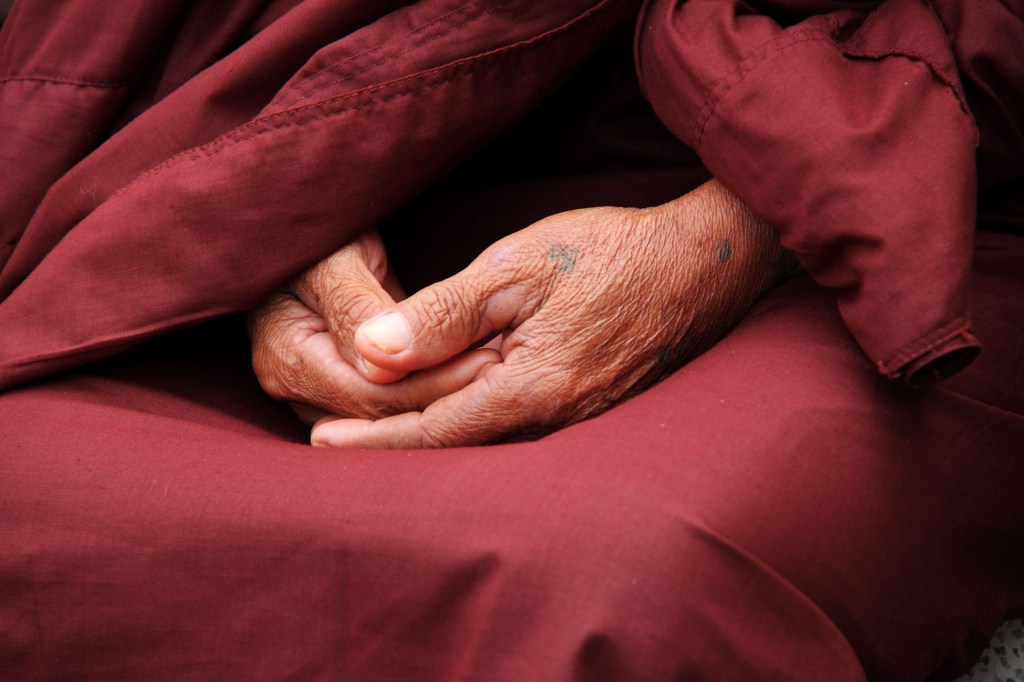
Breathe. Meditate if you can. If you don’t meditate to improve mindfulness, at least take some deep breaths to reset your focus.
Postpone worry. Focus on what you can do now. There will be time for consequences later. It’s never too late to worry. Worry is never about now. Don’t mix crisis and work if you can.
Celebrate the end of tasks. Give your mind the reward of progress.
Laugh. The responses to the tweet thread above completely reset my mood and enabled me to enter the day more productively.
Lastly, and most importantly, forgive yourself some anxieties, some lack of focus and some challenges in these times. The power of a clean mind is seeing life as it is, not as it should be. We can only work with what we have. Anything else is just a messy thought looking for a bin.
Normally our lives progress according to all kinds of barely considered programming. Days have their routines, our work has its habits and our evenings and weekends are filled with patterns that we follow. This current crisis has interrupted our programming.
Instead of the steady stream of multi-channel entertainment that is usually scheduled for us, we are looking a test pattern. We have been challenged to make up an entirely new program for our lives. We need to do this under tight constraints: We need to wash our hands; We need to stay home; we need to maintain physical separation when we do venture out for only essential activities like shopping and exercise. In many cases, we need to do it urgently and without preparation.
Recreating Programming
Our first instinct is to recreate the programs that provide the comfort of the commonplace.
We start working in videoconference meetings that reflect the meetings of our work days and now stretch well beyond consuming meals, commutes and evenings as well. We create dinner parties and drinks in videoconferencing tools to experience the conviviality of our usual weeks. We exercise to online videos. We make our own espresso and our own bread to fill in for our deprivation. Teachers struggle to teach children online in schedules, class formats and worksheets designed for face to face.
We turn to instant messaging, chat and social media for social chatter and conversation. We order online the food and drink that we once ate out. People have been amazingly creative in recreating lost holidays and other experiences in the seclusion of their homes.
Recreating routine will only take us so far. We are denying the interruption. Denying that harsh reality leads to burnout, disappointment and frustration. Denial is one part of the stages of grief. Acceptance comes later.
A Chance to Choose Anew
Usual programming has been interrupted. It may well be off the air for some time. We can’t just go on as unusual. We need to choose our new routines.
Some have found solace in new or old pursuits revisited. I know I have rediscovered and re-engaged with poetry. It is an old passion of mine and it has been a great consolation to seek meaning for these strange days in poetry. Others have found new pleasure exercise routines, or baking, or craft or the simple art of reading deeply.
The television set hung in it’s wire-net cage protected from the flung bottle of casual rage, is fetish and icon providing all that we want of magic and redemption, routine and sentiment.
We also have the chance to choose anew how we live our lives and do our work. We can change the programming and find new routines. We get to ask “what can I do now?’ and our routines don’t need to provide the answer. We can be guided by what seems brightest in the dark moments. These new priorities will help us set the new routines and new priorities.
A simple step is to begin with Steven Covey’s Urgent and Important grid. We spend a lot of our routine time in the Urgent but Unimportant or worse the Non-urgent and Unimportant quadrants. Now is the time to plan. Now is the time to spend more of our time in the Important quadrants.
We also need to give ourselves the time to devote to things that are important but are rarely considered in the rush of our routines:
– Self-care: ‘Put on your own oxygen mask first’ is important advice in any crisis. We don’t have to transform. We just need to survive and forgive ourselves our foibles.
– Care for others: This is not a time for the selfish. We need time for those for whom we care most.
– Support for our communities: We will come through this together, not alone. Even our isolation is an act of community care.
Even our brief interruptions to date have revealed that there is value, productivity and personal rewards in working, interacting and living in new ways. Remote work has enabled some to explore greater productivity and flexibility from new, different and more agile ways of working. For some there is a new balance in households of work shared in families and for others a deeper connection with their families while working. The office has lost some of its magic of routine. The wider losses are many, but there are consolations that are guide to new ways of working and living when the isolation ends.
Some days I wonder how our open plan offices are going. Are they still creating employee engagement, collaboration and innovation without us? #futureofwork
Some of our current priorities and changes are still unclear to us. They might be only a yearning , a discomfort or a hint now. These changes to our programming will become clearer for us later as we have more time and less distractions. We can experiment, but we can also choose to defer these until we learn more. What we are not required to do is maintain the program as it was.
The programming has been disrupted. Pouring our efforts into recreating that programming misses the opportunity to find new value in what comes next. Now is the time to invest in a different future. This time is a time to choose new patterns of life and of work to start now or later.
We see the light because of the darkness. It is only in shadow, that we can find a path to the light. When we get there, let’s remember what led us forward.
A couple of weeks of global pandemic has made ordinary every day actions seem like unattainable joys – wantonly touching our face, engaging with the world, sitting in cafes, travel, visiting others and hugging family, friends and even strangers. We did these things routinely without thought, without concern and without enjoying them because in the light of endless sun everything was bleached and unremarkable. Now we sit in shadows we can see these joys clearly again.
The same holds true of our work. The human, the social and the collaborative we crave as we work away in the shadows within our homes. We did not appreciate these things in the bright sunshine. We were too busy on the dull mechanical parts of work, the process, and the dreary annoyances. Most of these continue to annoy us, but we now see that they can be removed, adjusted or even ignored.
I have spent the second part of my life
breaking the stones, drilling the walls, smashing the doors,
removing the obstacles I placed between the light and myself
in the first part of my life
Octavio Paz, from ‘Eagle or Sun?‘
Teams are working with new freedoms, autonomy and new levels of support in our new distributed life. Meetings go faster and there is less wasted time in our conversations and days. We aren’t mucking around when lives are on the line. From our shadows, we crave the light.
The bright sun will come again. This dark isolation is already bringing it forth slowly like an inevitable dawn. The shadows will be darker, sharper and longer before they are gone.
Like chiaroscuro, we can use the shadows to illuminate us, to help us better see the form and perspective of our lives and work. In the darkest hours, what remains bright should guide us forward.
The challenge is to remember the brightness we craved in the dark when the light returns. Sooner than we think our lives will be awash in sunlight and the pressures and challenges of distinction will return. The work we need to do is to ensure that we spend more time on these bright spots and allow the shadows and mundane distractions to whither from lack of attention and effort.
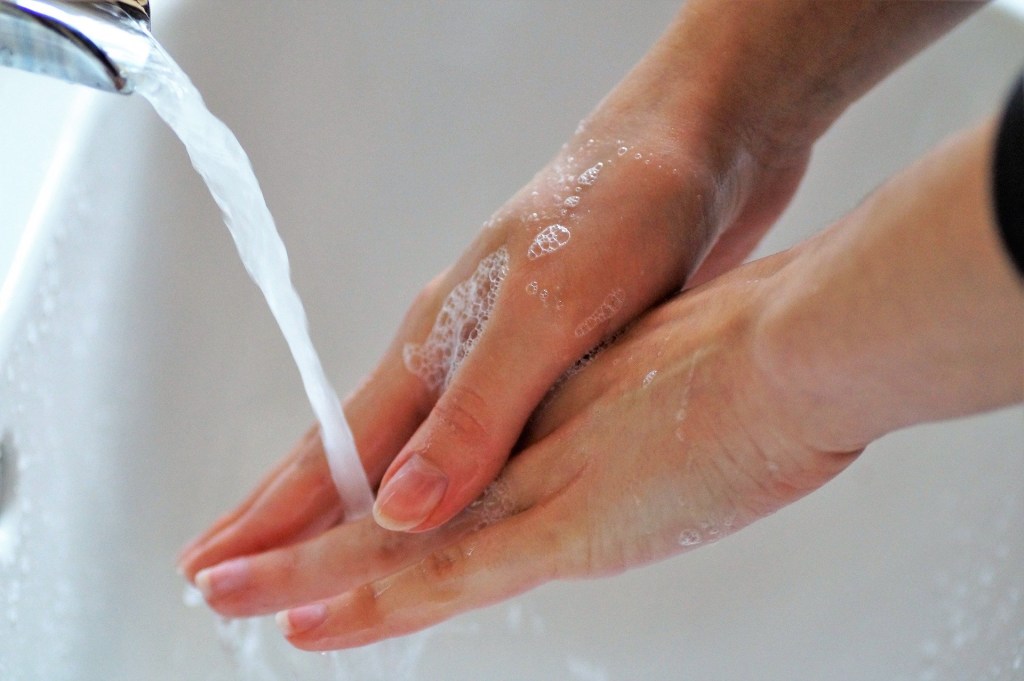
Wash your hands. Stay at home. Practice physical isolation where ever you can. Take care to wear protection around those who might be infected.
The virus doesn’t get to decide
These are the actions we need. They are our rules to guide decision making. We follow them to protect ourselves, those we care most about and others. We make these decisions every day to protect ourselves from the virus.
The virus didn’t decide these rules. If it had emotions, it would hate them.
The virus doesn’t get to decide.
The virus doesn’t get to decide anything. It’s not even alive.
If there is a sin against life, it consists perhaps not so much in despairing of life as in hoping for another life and in eluding the implacable grandeur of this life.
Albert Camus
Every single decision we make is ours. We will own it. That ownership will help us make better decisions. The accountability is ours because we live with the consequences. It’s our life, our family, our work, our organisations and our society.
People are starting to use ‘because the virus’ as an excuse to stop, start or continue. Like many excuses, it obscures more than it explains. We need to remember the virus decides nothing. We make the decisions and, if we outsource our decisions to a virus, we will have an issue when the epidemic ends. It will end.
There is always a philosophy for lack of courage.
Albert Camus
Whether we are going step-by-step, making a little leap or making even bolder changes, these are changes in the context of an epidemic. Some choices are closed to us. What choices remain are still choices we make. They aren’t changes for or against a virus. We have chosen them. We need to own them.
Most importantly, the rules we have chosen to fight the epidemic means some things can’t happen now. We all have losses. Some big and some heart-wrenchingly enormous. We mourn our losses, but we still choose. We still act.
Freedom is what we do with what is done to us
Jean-Paul Sartre
Life still goes on. Right now. Life goes on. We need to live every day. We still need to dream, realise our dreams and our potential. We need to live today even in the midst of a viral epidemic. We live, not for our work, our family or others, but because we live today. It’s our life and the rest of it starts now.
We need to decide and to act today. We need to hold ourselves accountable to do the best we can to with our circumstances, our potential and our goals. We need to manage our responsibilities to family, work and community but we need to recognise that those responsibilities are decisions too. They can change when we change our circumstances and our actions.
This post is not a call for individualism. We’ve seen enough of that reckless behaviour in this crisis. We need collaboration, but we mustn’t confuse collaboration with consensus or concession to others. If our actions and our lives are to be sustainable we must live for both ourselves and others. We will always care for others that’s big part of humanity, but we can’t only live for others.
We dream. We decide. We act. Our time starts now.
"I wish it need not have happened in my time," said Frodo.
"So do I," said Gandalf, "and so do all who live to see such times. But that is not for them to decide. All we have to decide is what to do with the time that is given us."
-J.R.R. Tolkien (The Fellowship of the Rings)
— Niels Van Quaquebeke (@NielsQuaquebeke) April 1, 2020
We’ve strained our resilience. We’ve adapted. Now we’re in the realm of exaptation.
A dinosaur in flight
Resilience and Adaptation
Resilience is a critical starting point. Resilience helps us stay engaged and to recover from the buffets of our stresses and challenges. There are many demands on resilience in this crisis. However, we can’t rely solely on resilience. Resilience only carries us back to where we were before. This crisis will likely demand more from us. We are a resilient bunch. We will recover.
Adaptation is already occuring. We have quickly changed our ways of working, our lives, our strategies and our businesses to adapt to these new conditions. We will continue to adapt using the capabilities we have and the potential of our people to make things better and to improve our lives. That’s what we humans do.
However, our times are going to challenge us to go further than just adaptation. We are going to need to leverage our potential and the potential of others in ways we never thought possible before. We are going to act out beyond our known capabilities. We are going to get creative with what our potential means and what it can deliver for us.
Exaptation
Exaptation is a term from evolution. It is the development of the function of a trait or feature created for one purpose to support another purpose. The classic example is feathers which may have been an adaptation to provide warmth and insulation, but now enable birds, descendants of dinosaurs, to fly with grace. As an example, my Change Agent colleague, Joachim Stroh, has used the concept of exaptation to describe the way that communities adopt and invent new ways of working on collaboration platforms. Yesterday, I talked about the surgeon working as a nurse using his medical talents as needed by his colleagues now. Last night, I was reading how Archie Rose, a distiller, has now found so much succcess making hand sanitiser that it has rehired all its 20 bar staff to work across packing and customer service line for the new product. Stories of adatation and exaptation are everywhere around us. Capabilities and potential being redeployed in creative new ways to support our goals of surviving, growing and getting better.
We all have capabilities and potential that lie fallow or could be redeployed to new and creative purpose. Organisations that see this environment as a chance to cut ‘dead wood’ or to focus too narrowly on ‘core capabilities’ are missing the potential to leverage these capabilities in new, better and creative ways. ‘Shrinking to greatness’ strategies show the limits of our imagination and our leadership.
People who see one role or career or path shut down will find new ways to leverage their potential and to create new value for themselves and for others. Our role is to aid that process with questions, coaching and support. People will need to mourn but they will also need to dream new dreams to pursue this change.
We can all see what can’t be done at the moment. For those losing activities, business and roles, it feels final. We have to help people to ask “What can I do with what I have?’ We have to ask people to be bold and creative in tackling this question. If they do, the process of adaptation and exaptation will lead people to new imagination and new dreams. For some, it may be enough to change their lives and their businesses for ever.
Dinosaurs didn’t go from the ground to flight with a single step. They developed that change over a range of smaller adaptations and exaptations, building their capabilities and the functions to succeed as they go. Small changes accumulate. Capabilities build. New things become possible. New successes can be found if we hold our hope, dream, experiment, and try. We too need to look for the little step-by-step changes we can make to leverage our potential, make use of our capabilities and move forward to a better future.
Post script:
Frankly I’d swap it all my exaptation for a little exaltation. However, the magic of hope is that I continue to dream and I continue to act step-by-step, then I know that the exaltation of success (or the exaltation of an end to this) is coming too.
Curves flatten. People recover. We mourn our many losses and eventually restart our lives. It is not a case of ‘this too shall pass’ for each of those outcomes requires human action. We want better. We have to act to achieve it.
The nature of the human spirit is to seek to realise our potential. We will get better. Our drive for improvement occurs unless we (or others) quash it. The only question is when and at what scale. The answer to that question depends on our actions.
Start Small. Start Now.
In the heart of our troubles, now is the time for action step-by-step.
We can sustain what we can of our lives. We can stay at home. We can wash our hands. We can support those in need. We can reach out to others to make sure that they are OK. We can offer to help. We can start planning the recovery and what will be different. All of these critical actions make life better, for us and for others.
Our losses are obvious now. Lives upended. Jobs lost. Incomes cut. Health threatened. Our gains from these actions are diffuse, but they are still there. Every physical contact cut is one less pathway for the crisis to spread. We are saving others. We just don’t know who. We are making it better now.
Think of the person you most want to see. Stay at home for them. Keep your loved ones safe. #StayAtHome
We are beginning that recovery process now. We are thinking about what needs to change. We have tidied our homes, changed our diets and our habits. We are now debating changes to the role of social safety nets, our corporations and government in times of crisis. As we move forward we need to ensure we don’t get in our own way.
I saw a tweet on the weekend about a Consulting thoracic surgeon in the NHS who has volunteered to work as an ICU nurse to allow tired nurses a rest. Stories like this one are everywhere as retirees return to the healthcare system, people add shifts, solve for shortages, invent new devices and work in new & creative ways. It is not a heroic story. It is a small story about one gesture in a large crisis, but is an example of someone focusing on their potential and not role, or status, or power, or income. In all kinds of ways, people are discovering what they are capable of doing and doing it. Answering the question ‘What can I do now?’ is a powerful guide to the next step in any realisation of our potential.
The next step of our recovery is changing lives. First the lives of those who must recover from their losses. Then all our lives as our society works to make things better. That’s a lot of work. We will only achieve it together. It will take us all to focus on our own potential and the potential of others. We will need to ask ourselves ‘What can I do now? What can we do now together?’
Every journey of a thousand miles begins with a single step
Lao Tsu
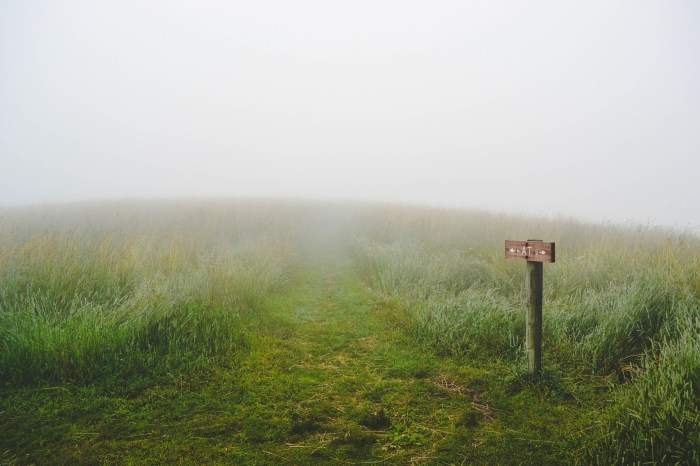
The foggy journey ahead
Faced with an uncertain path, we can still step forward. Step-by-step we will make our way through what lies ahead. Where we end is unknown, but our dreams can lead us forward a step at a time.
Passing through
Days always pass. We don’t need to worry about the relentless rush forwards of time.
The challenge in this uncertain, novel and difficult environment is how we act through all the uncertainties. The doubts and questions surround us. Will there be more shutdowns? Will there be more illness? What will happen to my job, my colleagues, my contacts and so on? Speculation can consume your entire capacity to act. That is if action is not yet entirely overwhelmed by the relentless onslaught of terrible news of loss from around the world.
I have a mantra that has been part of my crisis toolkit for many years. It is my weapon against feelings of loss, frustration and powerlessness. We all would like to wish we weren’t in the situation of a deadly global pandemic. However, we can’t wish that away and mourning our losses takes us so far. It is situations like these that I remind myself:
Some times the only way out is through
We have to go through this. We don’t have to go through it alone, but we have to go through this.
Step-by-step
When things are dark, complex and uncertain, it can come down to putting one foot in front of the other, step-by-step. We get out the other side by solving the challenges in each step, in each day and so on until we are done. That is the way through.
For those trying to manage work and life in this complex domain it is also an exercise in focusing down on the road immediately in front. We can and should still dream of far horizons, but there will be few leaps in this climate. Progress might seem belaboured. It will be. However, we can just focus on the next task and the next task as step-by-step we move closer to our goal.
A good traveler has no fixed plans and is not intent upon arriving. A good artist lets his intuition lead him wherever it wants. A good scientist has freed himself of concepts and keeps his mind open to what is
Thus the Master is available to all people and doesn’t reject anyone. He is ready to use all situations and doesn’t waste anything. This is called embodying the light.