
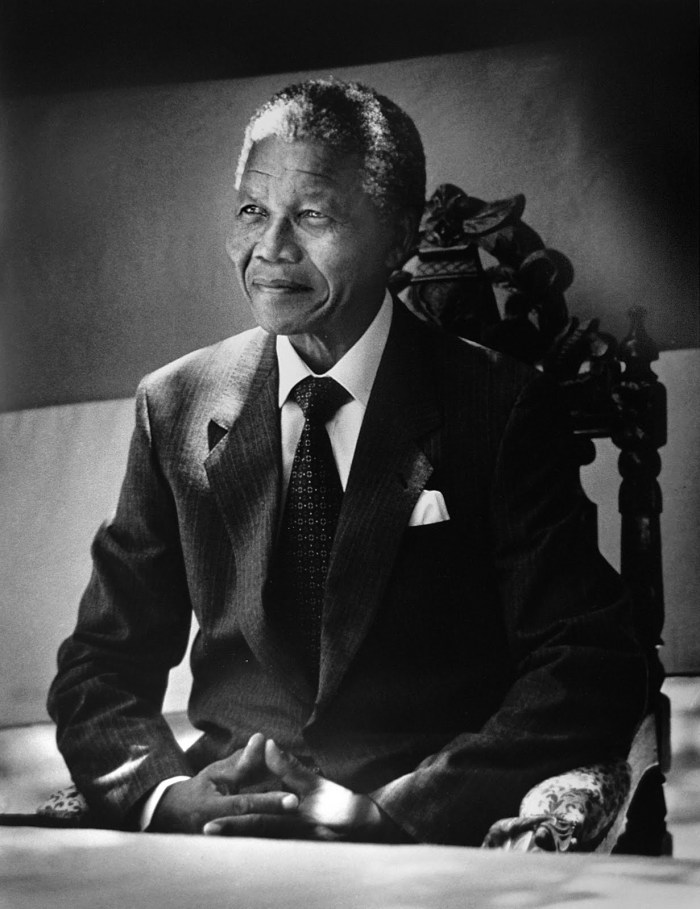
“It always seems impossible until it’s done.”
Nelson Mandela.
A wise leader can
Chair and Non-Executive Director, Advisor, and CEO helping healthcare, finance, and educational organisations drive growth, leverage technology innovation, and realise the strategic value of transformation
Turn your competitors strengths into a weakness.
History is full of example of how clever strategists turned an opponent’s strengths against them. A military strategy list includes Alexander at Gaugemela, Hannibal at Cannae, Marlborough at Blenheim and Napoleon at Austerlitz. Ali’s rope-a-dope in the Rumble in the Jungle and many martial arts disciplines use the strengths of an opponent. In a time of rapid disruptive change, there is a long list of ever changing business examples to add.
How do you make your enemy’s strength your opportunity?
Study their strengths: acknowledge your competitors have strengths and you will be better than many. Study them intently and understand their strengths well, if not better than they do. Don’t rely on your own views. Research their history. Ask others and get a rounded view. Their strengths are also your greatest risks. It is better to understand them well
Encourage overuse: a strength overdone can be a weakness. Overuse of a strength can blunt its impact and even become counterproductive. In many of the examples above the successful strategy was to encourage an opponent to overuse their strength either to create a moment of weakness or to constrains the impact of the strength on the result.
Weaken their focus on facts: a big danger comes from any organisation’s biggest past success. That big success and the strengths that drove success tend to become mythical. Myths are rarely bound to reality’s harsh competive landscape. Leaders can go on trying to recreate a past success leveraging myths when the strategy no longer applies to the situation at hand. Past strengths are often first used and the hardest things for organisations to give up.
Let your competitor be predictable: using strengths is often very predictable. Predictability doesn’t offer any strategic advantage.
Focus on the next competition. Let your competitor win the last competition: strengths are usually built for the last victory. An agile opponent who seeks to change the game can make those strengths a liability in the next competition. This is particularly true where the strength may take a big investment, involve big scale and limit an organisation’s ability to adapt to new competition.
Take calculated risks: every one of the examples above involve calculated risks to go head to head with an opponent’s strength. Many were ‘a close-run thing’. However given in most cases the underdog triumphed against more powerful forces a close competition was already a district improvement in strategic terms.
Persist and ignore doubters: make sure you don’t defeat yourself.
Plan an exit: because these battles involve risk, allow for mitigation. Be ready to flee and fight another day if need be.
If you want to disrupt an opponent, don’t run from their strengths. Focus instead on finding a way to use that momentum against them.
It was not because it was proposed to establish a new nation, but because it was proposed to establish a nation on new principles, that July 4, 1776, has come to be regarded as one of the greatest days in history. Great ideas do not burst upon the world unannounced. They are reached by a gradual development over a length of time usually proportionate to their importance. This is especially true of the principles laid down in the Declaration of Independence. Three very definite propositions were set out in its preamble regarding the nature of mankind and therefore of government. These were the doctrine that all men are created equal, that they are endowed with certain inalienable rights, and that therefore the source of the just powers of government must be derived from the consent of the governed.
– Pres. Calvin Coolidge speaking on the 150th anniversary of the Declaration of Independence
http://teachingamericanhistory.org/library/document/speech-on-the-occasion-of-the-one-hundred-and-fiftieth-anniversary-of-the-declaration-of-independence/
Two new trends are on the rise in business at the moment and they both use the words social and enterprise. Importantly these trends are often more closely connected than many realise. The trends are:
– Enterprise Social Media, the use of social media to foster connection and collaboration inside an organisation; and
– Social Enterprises, an organisation which exists to fulfil a social purpose by leveraging the approaches of the business world
Enterprise social media drives a more social outlook in any organisation where the culture will allow it. At the heart of the connection is that these trends force us to reflect on human concerns like purpose, community and our legacy – enterprise social media simply makes us social.
Enterprise Social Media fosters Purpose
Enabling your employees and other partners to connect and share their stories and experiences will quickly surface the themes of your purpose. Discussing and sharing these examples helps build a stronger sense of community in an organisation and deepens engagement. Importantly, the social network will also offer a forum to discuss, clarify and resolve of the conflicts of purpose that organisations face. Purpose is not a statement issued by management. Purpose is an ongoing dialogue with everyone in the organisation and it’s stakeholders.
Enterprise Social Media fosters Openness
Enabling your people to share their passions, interest, experiences and concerns is going to bring the surrounding community into your organisation. People now have a tool to collaborate on community and social issues. This can range from awareness building to forming groups of like minded employees to organising volunteering and activism. The more open your organisation the better it will be at responding to social needs and feedback.
Enterprise Social Media fosters Accountability
A highly engaged community can become a conscience for Purpose. If employees have a concern about delivery to Purpose or the wider social impacts, they have a forum to discuss and seek action. Importantly this is a public and transparent forum where they may have like minded colleagues. These conversations build accountability in managers across the organisation to explain the connection of their decisions to Purpose, to the creation of social value and to broader community impacts
Enterprise Social Media fosters Leadership
Organisations are full of people who have leadership potential but lack the impetus and a first follower. Social media offers a low risk environment for these first time leaders to connect with their personal purposes and to attract followers. It also offers an environment where leadership for the commmunity can be recognized by the community. Building the leadership voice, action & reward for leadership in your organisation will enable social value.
Enterprise Social Media fosters Innovation
Social value can be created in many traditional commercial organisations through adding a little innovation to everyday activities. Enabling your employees to make suggestions and work together to realise these ideas using enterprise social media can accelerate that process by bouncing unconventional ideas off traditional processes. Employee ideas can add social value by suggesting new challenges to tackle, a change in sourcing, to better ways to leverage waste and even debating where an organisation creates value for customers and the broader community.
Purpose+Openness+Accountability+Leadership+Innovation=More Social Enterprise
People crave purpose and to make a meaningful contribution to society. My experience suggests that given the chance people will leverage enterprise social media to seek to create additional social value in and through their colleagues and organisation. These conversations can generate deep pride and engagement.
The main barrier to this effect is a culture unwilling to allow the challenging conversations required. Our work in fostering more social enterprise is to get out of the way of our people, embrace the growing potential for more social value and do what we can to build stronger purpose and social impact.
Injustice anywhere is a threat to justice everywhere – Martin Luther King Jr.
I am passionate advocate for diversity. I have seen the power of different perspectives, skills and backgrounds working together. Embracing diversity enables us to leverage the potential of all the world’s talents. We all need to advocate for more equal treatment of others.
If you consider this an issue for others, remember this. Discrimination is about perceptions. People are discriminated against because of what they are perceived to be and what that is assumed to mean. Gender, age, race, creed, sexual orientation, and any of the many other bases are all simply proxies for flawed human perceptions.
Perceptions can and will be wrong. Discriminatory perceptions are almost certainly guaranteed to be wrong. In a world that accommodates discrimination, you can never predict which side you will fall of the arbitrary line of these views.
There are too many reasons why someone, including you, might be in the wrong camp. I have seen people form false & prejudicial perceptions for reasons as silly as the colour of clothing, a person’s way of talking or the colour of hair. Silly as the reason may be the prejudice based on perception was real. That anyone should have to continue to experience prejudice is intolerable.
Don’t leave the fate of the talent in your organisation to arbitrary perceptions. Silence is not a strategy and cultural issues will not work themselves out in time. Take steps to address any issues:
When nobody has to worry about the flawed perceptions of others, we are all better off.
Every system is perfectly designed to get the results it gets – Dr Paul Batalden
Moises Naim has written a book, The End of Power , in which he highlights that three trends are weakening traditional political power relationships in a range of political domains from sovereign states to other organisations:
– more: more people, information, resources, activity, etc
– mobility: unprecedented mobility
– mentality: new mindsets and expectations driven from new values and expectations
These three factors are also likely to drive dramatic power relationship changes inside corporations in coming years. Corporate politics is just human politics writ small. More than ever employees, customers, suppliers and communities are leveraging these three trends to challenge hierarchical models of power that trace back to the founding of modern corporate structures.
Social media internally and externally connects more and more people and supplies an escalating volume of information. The edicts of senior managers no longer stand alone. Consumers, partners and employees may well be better connected and have more information on what’s going on than the executive decision maker.
The Internet has accelerated the ability of customers and employees to be more mobile and to engage in new relationships with a corporation. Alternatives are now much more easily found and individuals have greater power to make their own choices or even solutions to needs. Voice is an increasing option where once the dissatisfied had only exit to choose.
These trends will only accelerate the already shifting values and expectations in employee careers and consumer purchase decisions. The employee and consumer expectations of a two-way & values-based relationship is likely to increase. Organisations and leaders will find themselves more accountable for their own rhetoric.
Leaders need to recognize these changes and begin to adapt to new models of leadership. Many leaders bemoan the limits of their status and hierarchical power today. The traditional ability to order technical change is simply less effective in complex adaptive situations. The trends that Moises Naim identifies are only likely to increase the number challenges corporate leaders face that exhibit these characteristics. We all need to start learning new ways now of adjusting to new leadership styles that are more two-way, more adaptive and based more in the strength of authority, not role. The rewards of these new models will come in purpose, engagement and the ability of enabled employees, consumers and partners to innovate.
The leaders who adapt first to these changes will hold distinct advantages over those who cling to traditional models of leadership. Which would you rather have a begrudging captive or a loyal follower?
Every system is perfectly designed to get the results it gets – Dr Paul Batalden
So is ignorance an impediment to progress or a precondition for it? In a recent New Yorker article Malcolm Gladwell discusses Albert O. Hirschman’s work on how creativity can be driven from our efforts to recover from ignorance
Many entrepreneurs strike us as remarkably naive. They dared to act whether others saw only risk.
Hirschman wrote the book Exit, Voice & Loyalty, that I read in a long ago economics degree. I would recommend Hirschman’s book to anyone as it is short, an easy read and amazingly insightful as is discusses the choices of consumers, community and employees to agree, exit or speak up.
That book was a revelation to me because it helped me to clarify that there was a powerful path between acceptance and refusal. There is another path between buying or selling. You don’t have to choose only to stay or exit. You can also speak up for change. Usually it is only when people speak up that the system is able to understand the meaning of the otherwise silent & often missed exits.
Reading Exit Voice and Loyalty led me to the opinion that it is usually better to make your first choice to find some way to speak up or make change happen from within the system. There are only so many opportunities for exit or acquiescence. At some point, we all need to shape things in our world. We can all do this more.
Speaking up gives others the chance to respond to your needs or concerns. Speaking up defines the unnoticed issues. Speaking up is not without risk and conflict. In many cases, it demands the creativity or the naïveté of the entrepreneur to safely make your point and generate change.
In an age of technology to enable collaboration and social interaction, we all need to accept that more connected consumers, communities and employees have many more means to express their views. As voice moves from rare to common, these stakeholders will increasingly prefer voice to slipping quietly away.
We should hope that voice is the growing preference too. After all, losing the support of others is a form of feedback, but not particularly useful feedback.
Speak up and encourage others to speak up too.
This article by Image and Data Manager on the NAB case study of user-led innovation in Yammer is based on my presentation at the Australian Sharepoint Conference in Sydney and Melbourne.
Many organisations need a lidar for collaboration.
Obsessed with roles, structure and the formal processes of work they are unable to see the collaboration buried beneath the jungle of complexity.
If you would like to improve the collaboration in your organisation, ask yourself whether you understand well enough what is already going on.
Build your own collaboration lidar. Pulse check activity across the organisation. Go looking for the collaboration that exists buried in the jungle and do what you can to get your teams to make their relationships, knowledge and collaboration open to the whole organisation.