Friction is an inevitable part of work. We grapple with constraints and challenges to invent new paths forward, to test our abilities and to learn with new skills. In an age of AI, it might be time to value the friction a little more. Sometimes the obstacle is the work.

Frictionless Solutions
The NY Times published a piece yesterday which was a critique of Open AI’s announcement that its AI had solved the Navier-Stokes problem in fluid dynamics, a mathematical problem that qualified as so hard it was one of the Millennium challenges. The opinion piece is sceptical of the value of this as yet unvalidated solution because it involves skipping all the hard grind of mathematics to get there, even if one overlooks the potential plagiarism concerns around the model’s work. Others have commented that scientific journals are now so flooded by quickly produced scientific papers that sifting them for real valuable scientific progress is becoming a challenge in itself. A frictionless race to outcomes risks losing the value of the journey.
This place is an impression
left by the friction-ridges
of a human battle.

Kiersten Bridger, Treaties and Monuments: The Whim of Ephemeral Contracts, or A War Department Map Looks like the Fingerprint of All My Relations
The Value of Friction
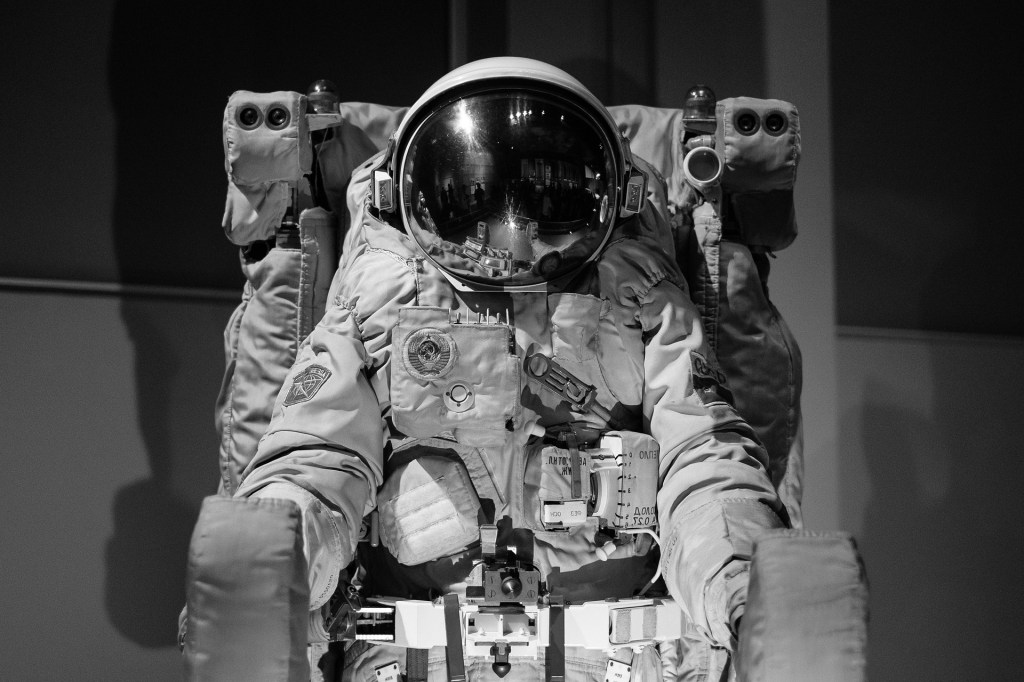
Much of human progress and invention is a consequence of a pursuit of other goals. We stumble across things as we try to solve the problems our goal puts in front of us. The list of everyday items that were invented as the Apollo Moon project sought to meet President Kennedy’s injunction to ‘put a man on the moon and bring him back’ within a decade is long. In many sense, this progress has had much greater and more enduring impact than grainy images of a flag set in moondust, as romantic as that destination may be. The astronauts themselves were focused on the challenges not the magical destination.
My God, I never thought of all this bringing peace and tranquillity to anyone. As far as I am concerned, this voyage is fraught with hazards ... and that is about as far as I have gotten in my thinking. Peace and tranquillity indeed; I wish I had time to digest that, and decide in my own mind whether it’s true or not; in the meantime, I am proprietor of this orbiting men’s room and there are other demands on my time.

Michael Collins, Apollo Astronaut after speaking to Richard Nixon
We don’t learn much in our comfort zone simply because we aren’t very challenged putting one step after the other. More concerningly our comfort tends to reduce the thinking and scrutiny that we might otherwise apply to our work. Work that comes easily can be mundane over time and far more prone to mistakes as our attention wavers. Being forced to reflect and change course when stumped is a critical moment that can enable a change of direction, a breakthrough or better yet a new collaboration. Often the best creations are when two people pursuing different goals discover the intersection of their challenges.
A common fallacy is to see the work we do as only measurable in outputs and outcomes. Management’s machine metaphor can tend to treat all human work as mechanics with inputs leading to outputs. Human work is rich not just because of its destinations. The process to get there builds capabilities, allows for human interaction and provides a rewarding sense of personal value. The grind of work and the challenges overcome often matters much more than the flag at the end of the race. We would be wise to remember this as work accelerates and becomes ever more overwhelming with AI.
Barring a catastrophe, the AI transformation will continue apace. We will not fail to take the advantages that AI offers us in acceleration of work. However, as we design our systems of work in the new world we would do well to remember that obstacles can be the work and that there is a lot to gain on the journey itself. Quick leaps to answers can lose us important parts of the process, especially if the outcomes are black boxes that do not contribute to human potential or capabilities.
...the shank fixing us
together in this world my mother could trust
only so long as everything was done right, only
when she didn't forget to check that I was buttoned up
proper, buttoned up tight.

Sally Green, Shank

One thought on “Value the Friction”