The Broken Photocopier in HR. Buy a Scanner Instead.

Human Resources best practices are often widely copied.  Best practices are contextual and the future of work will require us to carefully revisit past practices.

If there’s a broken photocopier in HR, you might want to order a new scanner instead.

The HR Copier is Broken

Much of what we think of as modern HR practices is copied from long ago. Often these copies are from remarkably few organisations. To name a few examples:

  • General Foods was the first client of the Hay Group one of the leading proponents of role sizing and remuneration schemes.
  • General Motors pioneered much of the best practices of the divisional corporation.
  • GE under Jack Welch was renowned for practices like force ranking of employees, high potential talent management and structured leadership development.
  • Even, Google had a widely copied run with its opportunity for engineers to spend a percentage of their time on personal and hopefully innovative projects. (Perhaps Google should rename itself General Intelligence for this practice to be more widely copied.) 

The HR photocopier continues to churn out the same best practice recommendations for widely divergent organisations. Jon Husband has pointed out that many of our core HR role design practices traced back to the 1950s and shape our thinking about roles, hierarchy and knowledge. In the first CAWW webinar, Harold Jarche made the point that best practices in networks are often highly contextual, depending upon the situation of the organisation, its culture and its environment. Often these practices are applied as tools without reference to the culture and entire system of practices that made them successful in the first place. Applying best practices blindly can result in unintended and even perverse consequences.  For example, the diverse results of the application of forced ranking of performance is evident in any search on the term.

Copying any of these practices carries into your organisation assumptions and values that may not reflect those you would choose on your own. Implicit assumptions, like distrust of employee motivation and capabilities, can have widespread impacts and hold back the ability to leverage employee engagement, creativity and innovation. Worse still your culture is likely to subvert the process to suit the normal pattern of interactions.  People make their own unique sense of new HR practices, particularly if they requires actions that are uncommon or uncomfortable in your organisation like hard conversations, transparency of performance and conflict. Perfecting the tool alone will not deliver the promised outcomes in this case.

Disruptive change makes blind copying even more dangerous. Copying competitors and past practices is no guarantee of success in a changing environment. Even the organisations above have reconsidered practices and seen variations in performance over time. The pace of change around organisations, the threats to their talent and the need for people to respond have all changed greatly.

Copying practices from the pages of business publications, recommendations of consultants or piles of management books leads to focus internally on implementation and management. HR skillsets become dominated by the skills to manage these borrowed practices. There becomes a real danger that the practices once implemented will ossify and become barriers to agility and performance improvement.

Buy a Scanner instead

Swap the copier for a scanner. Scan the system, test improvements & learn.

Human Resources can play a critical role in helping an organisation be more responsive to its environment. Few of the practices above are tailored to a digital, social and network era. An organisation needs constantly to be tuning the interactions, practices and conversations of the organisation to meet needs for agility, capability and performance. To play this role, the function will need to both look outwards to the networks around the organisation, contribute perspectives on capability and performance alignment to strategy and deeply understand the interactions, barriers to success and drivers of performance internally. This activity is a critical strategic enabler and major source of intelligence for managers looking for the next competitive advantage.

In an era when continuous improvement of processes and practices is the norm, human resources needs to be seeking ways to drive critical daily improvements in the systems inside the organisation that manage a critical component of performance, people. HR’s scanners should be leading that process. Because people are not just cogs in a process, we also have the opportunity to engage them deeply in the design, implementation and improvement of the practices that directly impact them. 

Most importantly of all HR needs to understand the diversity of the research into new practices and conduct its own experiments, measurement and innovation. After all, a unique culture of HR practices ideally suited to the culture of one organisation is the hardest competitive advantage to replicate.

The Broken Photocopier in HR. Buy a Scanner Instead.

Human Resources best practices are often widely copied.  Best practices are contextual and the future of work will require us to carefully revisit past practices.

If there’s a broken photocopier in HR, you might want to order a new scanner instead.

The HR Copier is Broken

Much of what we think of as modern HR practices is copied from long ago. Often these copies are from remarkably few organisations. To name a few examples:

  • General Foods was the first client of the Hay Group one of the leading proponents of role sizing and remuneration schemes.
  • General Motors pioneered much of the best practices of the divisional corporation.
  • GE under Jack Welch was renowned for practices like force ranking of employees, high potential talent management and structured leadership development.
  • Even, Google had a widely copied run with its opportunity for engineers to spend a percentage of their time on personal and hopefully innovative projects. (Perhaps Google should rename itself General Intelligence for this practice to be more widely copied.) 

The HR photocopier continues to churn out the same best practice recommendations for widely divergent organisations. Jon Husband has pointed out that many of our core HR role design practices traced back to the 1950s and shape our thinking about roles, hierarchy and knowledge. In the first CAWW webinar, Harold Jarche made the point that best practices in networks are often highly contextual, depending upon the situation of the organisation, its culture and its environment. Often these practices are applied as tools without reference to the culture and entire system of practices that made them successful in the first place. Applying best practices blindly can result in unintended and even perverse consequences.  For example, the diverse results of the application of forced ranking of performance is evident in any search on the term.

Copying any of these practices carries into your organisation assumptions and values that may not reflect those you would choose on your own. Implicit assumptions, like distrust of employee motivation and capabilities, can have widespread impacts and hold back the ability to leverage employee engagement, creativity and innovation. Worse still your culture is likely to subvert the process to suit the normal pattern of interactions.  People make their own unique sense of new HR practices, particularly if they requires actions that are uncommon or uncomfortable in your organisation like hard conversations, transparency of performance and conflict. Perfecting the tool alone will not deliver the promised outcomes in this case.

Disruptive change makes blind copying even more dangerous. Copying competitors and past practices is no guarantee of success in a changing environment. Even the organisations above have reconsidered practices and seen variations in performance over time. The pace of change around organisations, the threats to their talent and the need for people to respond have all changed greatly.

Copying practices from the pages of business publications, recommendations of consultants or piles of management books leads to focus internally on implementation and management. HR skillsets become dominated by the skills to manage these borrowed practices. There becomes a real danger that the practices once implemented will ossify and become barriers to agility and performance improvement.

Buy a Scanner instead

Swap the copier for a scanner. Scan the system, test improvements & learn.

Human Resources can play a critical role in helping an organisation be more responsive to its environment. Few of the practices above are tailored to a digital, social and network era. An organisation needs constantly to be tuning the interactions, practices and conversations of the organisation to meet needs for agility, capability and performance. To play this role, the function will need to both look outwards to the networks around the organisation, contribute perspectives on capability and performance alignment to strategy and deeply understand the interactions, barriers to success and drivers of performance internally. This activity is a critical strategic enabler and major source of intelligence for managers looking for the next competitive advantage.

In an era when continuous improvement of processes and practices is the norm, human resources needs to be seeking ways to drive critical daily improvements in the systems inside the organisation that manage a critical component of performance, people. HR’s scanners should be leading that process. Because people are not just cogs in a process, we also have the opportunity to engage them deeply in the design, implementation and improvement of the practices that directly impact them. 

Most importantly of all HR needs to understand the diversity of the research into new practices and conduct its own experiments, measurement and innovation. After all, a unique culture of HR practices ideally suited to the culture of one organisation is the hardest competitive advantage to replicate.

Design not Engineering – healthcare

image

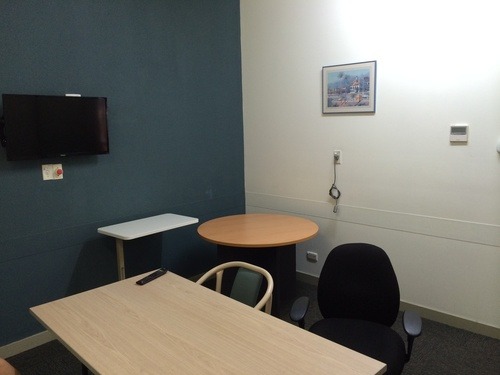
Photo: The hospital experience – empty of design but full of mismatched furniture.

Recently I visited a hospital accompanying someone through registration for a day procedure. The striking thing about this healthcare experience was that it was engineered for the hospital to achieve outcomes but had a complete absence of any design in the patient experience.

Everyone of the staff were concerned and caring. Yet the healthcare experience felt confusing, difficult, alien and uncomfortable. Everything you encounter is engineered for the hospital’s view of that step in the process. The patient experience in each step or across all the steps was not as well considered.

How the Patient Experience can Improve

Here are some examples:

  • Early Arrival. No certain time: The patient needed to arrive at 7am. Apparently so did everyone else which created a backlog at reception. There was no idea of when the procedure will occur or when the patient may be able to leave. Nobody seemed to know what was happening, but eventually someone admitted how many procedures the doctor has on the day and how long a standard procedure takes. The patient was left to make a series of contingency plans for departure on these few facts.
  • No transparency of process: On arrival we were asked to wait in the room above. Next steps were unclear but the volume of people being registered suggested a wait. After long period of waiting we saw someone pass our door look in and call out down the hall ‘there’s one more’. After more minutes of waiting, we were registered.
  • Non-waiting room:  The waiting room looked like a dumping ground for discarded furniture. There was nothing to do but sit and stare at its walls and furniture. The power points and buttons on walls suggested that it has been designed to be capable of being a room if needed. What had not been included in the design was a comforting & distracting place to wait when awaiting a procedure. 
  • Mysterious Hall Walking: While we waited one surgeon fully dressed in a theatre gown passed our door about 10 times. It occurred about every minute and a half. Either the doctor needed exercise or that process needs to be redesigned. It was hardly comforting for someone waiting for surgery.
  • Registration Then Nursing Station Then Ward: The steps were designed to suit the hospital’s paper work, not a patient’s comfort or even an efficient use of time and effort. Each step involved waiting.  Hotels have realised that check-in, payment and other moments can be redesigned to put the guest in control and get someone quickly to a comfortable place. That change alone improves the experience. Registration could easily have occurred entirely in advance of the visit, especially as it was mostly about payment. 
  • Wasteful Effort: As it happened the ward was opposite the waiting room. In the middle, we walked to the opposite end of the hospital to visit the nursing station and further away still for the nurse to complete her paperwork. 
  • Lack of communication: The people were all concerned and individually helpful but everybody was completing one task and nobody had a full picture or an idea as to what anybody else was doing.Hospitals are notorious for the fact that everyone asks the same questions over and over. While the questions are meant as a safety precaution, they are a constant reminder of the lack of communication.  Without communication, nobody shaped the overall experience and uncertainty continued up until and after the procedure. On departure there was all sorts of confusion caused by lack of communication. I was even required to return to Registration from my car, leaving the post-operative patient behind, so that a form could be signed, only to be told at Registration that I didn’t need to return.

I have been involved in lots of work improving customer experiences. This experience is typical when services have been fractured into individual steps.  The model people have is Adam Smith’s pin factory with a focus purely on specialising and optimising productivity in each discrete step for organisational outcomes. However modern factories are no longer run on this basis. Competitive pressures have meant factories constantly improve, removing waste with focus on coordination of the whole production system, continuous improvement and lean manufacturing.

A poor patient experience not only creates unnecessary issues for a patient, it is wasteful & counterproductive for the organisation and demoralising for all the people involved. Patients want the experience to be quick and effective so give them information and a role in the process. Better patient experiences will reduce the cost and improve the quality of care and the environment for everyone.

Making the Patient Experience Better

The steps for change are simple:

  • Look at the situation through the patient’s eyes
  • Empower the patient with information, understanding and choices
  • Rethink the steps to reduce the waste, backlogs, duplication and effort
  • Improve communication and understanding with everyone involved in the experience; and
  • Empower and enable everyone to deliver the right outcomes and to suggest better ways of working.

Distrust in Hierarchies: A Barrier to Trust in Networks

In the future of work, we are going to talk a lot about trust.

We will need to consider trust deeply because it is a critical underpinning to success in our new ways of working. We need to recognise the trust that we choose to grant is a design choice. We are likely to need a new precision in our understanding of trust.

Most of all we need to ensure that the distrust that pervades our hierarchies is not a barrier to building new trust in networks.

Our hierarchical organisations often hide an assumption of deep distrust. Organisational structure, role design, silos assume people must be separated to generate clear performance measures. Performance management and reward schemes assumes people will not perform without extrinsic motivations. Management, monitoring and compliance are often set to treat 100% of employees poorly against a tiny risk of failure. People are assumed incompetent unless proven otherwise. If your processes allow no variations, discretion or exception handling, then there is likely little trust in your organisation. If messages are consistently spun and the real news is on the grapevine, not the intranet, then there is no trust in communication.

Trust will emerge in effective networks. However, trust is reciprocal. If your hierarchy is telling people that they can’t be trusted, then it is getting in the way of the emergence of trust in the networks in and around the organisation.

Remember how you treat your people plays a large part in how they will treat each other and their networks, including your customers and communities.

Don’t expect your people to give and build trust over your distrust in them.

Distrust in Hierarchies: A Barrier to Trust in Networks

In the future of work, we are going to talk a lot about trust.

We will need to consider trust deeply because it is a critical underpinning to success in our new ways of working. We need to recognise the trust that we choose to grant is a design choice. We are likely to need a new precision in our understanding of trust.

Most of all we need to ensure that the distrust that pervades our hierarchies is not a barrier to building new trust in networks.

Our hierarchical organisations often hide an assumption of deep distrust. Organisational structure, role design, silos assume people must be separated to generate clear performance measures. Performance management and reward schemes assumes people will not perform without extrinsic motivations. Management, monitoring and compliance are often set to treat 100% of employees poorly against a tiny risk of failure. People are assumed incompetent unless proven otherwise. If your processes allow no variations, discretion or exception handling, then there is likely little trust in your organisation. If messages are consistently spun and the real news is on the grapevine, not the intranet, then there is no trust in communication.

Trust will emerge in effective networks. However, trust is reciprocal. If your hierarchy is telling people that they can’t be trusted, then it is getting in the way of the emergence of trust in the networks in and around the organisation.

Remember how you treat your people plays a large part in how they will treat each other and their networks, including your customers and communities.

Don’t expect your people to give and build trust over your distrust in them.

Happy New Year: Do Better

Page 1 of The Responsible Company by Yvon Choinard and Vincent Stanley.

Happy New Year: Now Let’s Do Better

The responsibility of a business to stakeholders, like its customers, people and communities, and to broader society is not managed in a department or a report. Responsible business is not the work of others. It is not a glossy wash you put over the top of the way you work to make things look better for stakeholders.

Responsibility

The key word is responsibility. Responsibility begins and ends with how you make decisions in your work. That responsibility applies to everyone. Responsibility is not a good intention, a wise donation or a clever offset. Responsibility means owning the need for better decisions and actions that maximise the value that you create and minimise the waste.

If you are not taking into account the wider implications for society and sustainability of your decisions and actions, then you can do better. You can make sure your decisions and actions add more shared value tomorrow than they did today. The decisions will be different for every organisation, but they will make both the business and the society better. That is good business.

Social Responsibility is Here

You will not escape responsibility. Our social world is making business more networked and more social. With that networking comes a great increase in transparency and accountability to your stakeholders. Every day businesses are being questioned on unthinking actions and decisions.  If you are not stepping up to better manage your responsibilities, expect someone to be helping you to change. You do not need to become an ideologue or to become a not-for-profit, you just need to believe in people and want to improve.  By looking at a broader frame, you can make smarter business decisions that create shared value in society.

Do Better

Do Better. Start with one step. It is that simple. Find ways to make decisions with better impacts and less waste. Enable your people to help you in this journey of continuous improvement.

Start making yourself aware of the options to do better. Read the Patagonia story and other resources on shared value. Measure the impacts that matter to you and your people. Ask your people to contribute on what matters to them and how you can do better. Make small improvements every day.

Your business will reward you for the new attention. Do something to get yourself started on the path to better business.