The Choice: Two Roads or Promises?

image

Two roads diverged in a yellow wood,
And sorry I could not travel both
And be one traveler, long I stood
And looked down one as far as I could
To where it bent in the undergrowth;

Then took the other, as just as fair,
And having perhaps the better claim,
Because it was grassy and wanted wear;
Though as for that the passing there
Had worn them really about the same,
Robert Frost

At times, we can reduce the challenges in leading organisations to a greeting card: There are two paths in management, a traditional one and now a better one. Pick the wrong one and your organisation will fail. The reality of modern leadership is more complex.

However, the glorification of the ‘road less travelled by’ is not the meaning of Frost’s poem. ‘The road less travelled by’ is hardly an appealing option for managers who must make decisions every moment of every day about how to lead their organisations and respond to the challenges before them. “The road less travelled by” is usually a road out of the organisation.

Frost’s subtle poem reminds us that many choices are obscure and evenly balanced when made. That obscurity is rarely resolved. We are left to define ourselves by the choices we have made and see the outcomes as results when the connection between choice and outcome is often remarkably complex.

Two Roads

Faced with the challenges of a rapidly changing networked economy many managers choose the path of efficiency. In a time of crisis, they redouble their efforts to deliver certainty, control and secrecy. Seeing threats in a digital economy these manager seek to take greater control and shore up the traditional defences that seem to offer certainty. Rather than deal with complexity, it is easy to declare a new simplicity.

Others are increasingly experimenting with experimentation, autonomy and transparency. They are seeking to create new forms of organisation from responsiveness and adaptation. However, as the use of new models increases there are real challenges to be resolved and new cultures and practices to be built.  It is a brave middle manager who chooses to introduce this approach into an existing organisation of any size. At times, the Responsive Organisation can feel more discussed than delivered.

Some times the two approaches are mixed and we don’t even realise. Our traditional ways can be so deeply ingrained that we can’t see the irony of ordering autonomy and experimentation. For a manager considering how to respond to a situation in the moment, considering new ways of working can seem like a luxury. After all, wasn’t the point of all our experience and training to give us tacit knowledge on which to rely when things get challenging?

Not Simple, Complex

Managers don’t struggle with organisation and choice in the simple or even the complicated domains of choices.  In these cases, traditional approaches work with some predictable degree of success. Recommending a responsive strategy in these examples is as wasteful as managers embedded in traditional management mindsets would see it.

However, the challenge of the modern organisation is rarely bringing complexity to simple choice. Bureaucracy may make simple management choices feel complex to implement, but the choice remains straightforward. The challenge for organisations is pretending there are simple choices when the domain becomes increasingly complex.

Complex choices are where we need learning, experimentation and new ways of working. This is the where we need to sense and respond. This is the domain in which managers see the networks around us change the nature of our traditional considerations.

Promises to keep

The nature of the complex environment in which we operate as managers is that we rarely know in advance what path will be the best choice. This can be a tough pitch to sell to your executive committee.  Worse as Roger L Martin has argued even a ultimately superseded business model may be successful long enough to make you look stupid.

We are trained as managers to define our journeys by their outcomes, just like the narrator of Frost’s Two Roads poem. This consequentialist logic is often used to justify the triumph of abstract organisational goals over personal, human or community outcomes in the process.

Perhaps instead we should define our journeys by the path.  Focusing on the process of walking the path changes our questions:

  • What management path values our personal purpose and delivers the greatest personal rewards?
  • What management path values the potential of others and seeks to maximise that potential?
  • What management path delivers on the promise to customers and the community inherent in our organisation and its people?
  • What management path maximises the net positive impact and contribution from all in the organisation?

Asking new questions is an act of leadership. The answers to these questions will help define better ways of working and new models of social leadership that can carry us through the management journeys ahead.

When we cannot know the journey’s destination, perhaps the better challenge is to walk the road well. We can run our organisations to deliver better answers to these questions.  A first step is freeing our people to contribute to their potential to these answers. We may yet find that all our roads lead to the same place, but we will arrive in better shape as managers, organisations, communities and as a planet, if we do so.

This reflection brings to mind another equally beautiful Robert Frost poem, “Stopping By Woods on a Snowy Evening”.  As we go forward into the dark and cold challenges ahead, this reflection challenges us as managers to consider the miles to go and the promises we must keep:

He gives his harness bells a shake 
To ask if there is some mistake.
The only other sound’s the sweep
Of easy wind and downy flake.

The woods are lovely, dark and deep, 
But I have promises to keep,
And miles to go before I sleep,
And miles to go before I sleep.
– Robert Frost

Picture credit: http://pixabay.com/en/tree-stump-forest-environment-283218/

You know the moment

image

You know the moment.

You know the moment when someone showed you what you were capable of achieving. That moment when another person helped you to see as possible achievements that you doubted yourself.

Someone helped you find your purpose, inspired you to tackle a challenging goal, refocused you on your strengths or helped you to find the missing piece of capability to reach new levels of performance. In that moment, someone helped you realise your potential.

That moment is a moment of leadership.

The person who led you in that moment may not have had a position of authority. It could be a colleague, a team member, a customer, a teacher, a storyteller or a stranger. Whoever demonstrated leadership did so from an interest in developing your potential, not from a position of power.

The conversation in that moment most likely did not feel like a ‘leadership’ conversation. It could have been a question, praise, a concern, feedback, mentoring, coaching, advice, suggestions, ideas, a chat or a story. Whatever the conversation in that moment, you knew they were genuinely interested in helping you to achieve what you were capable of achieving and because it would help fulfil your purpose. Whether or not, that conversation fulfilled a purpose of the other was secondary.

Leadership is the art and technology of realising human potential.

Every moment is a moment to help others find their purpose or their potential. Every moment could be one of those conversations. Everyone can make a difference.

So, how are you using this moment?

Integrate at Goals, not at Process

image

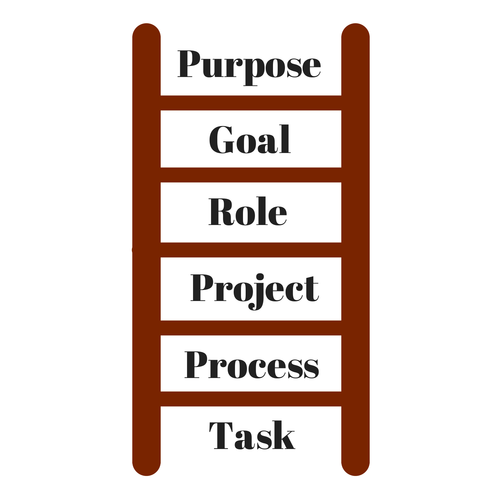
How do you integrate open network conversations into closed linear processes? Integrate social conversations by integrating at the purposes and strategic goals. No organisation wants its collaboration constrained by processes or systems.

Organisations, vendors and analysts are touting the advantages of integration of enterprise social networking into legacy processes in organisations. Enterprise social networking needs to be come a part of the everyday work in organisations as it is another set of tools to foster conversations and collaborations that create value. Without connection to the daily work of individual employees, enterprise social conversations won’t deliver the value we need. However, far too many of our existing work processes aren’t set up to accommodate creative, agile and productive social conversations. Patterns of allowed conversation in a process based integration rarely changes that.

Don’t Integrate through the Current Process

Existing legacy processing systems are designed for efficiency. They constrain choice. They automate steps and narrow discretions. The goal is to simplify tasks, remove errors and ensure repeatable activities can be achieved with the minimum in investment in human talent.

These systems achieve significant efficiency gains with a cost of human potential, agility and effectiveness. However, they are not designed for conversation about work. One only has to reflect on everyday poor customer experiences to see that these systems gain efficiency by handling poorly the exceptional, unusual case or situations requiring a response to change. Conversations, change and collaboration do not fit the industrial model of work that these process systems are designed to fulfil. They are not designed to leverage the potential of talented knowledge working employees connected in networks.

Collaboration is not a layer that can be integrated into existing fixed processes designed for efficiency. Collaboration offers the opportunity to enable people to change and improve the process and the work. Collaboration creates choices with a view to increasing agility, improving effectiveness and realising human potential.

A conversation that must integrate into a process system will become a conversation about the constraints of the system at some point.

Integrate by Creating a Purpose-oriented Conversation

Offer people autonomy, purpose and an opportunity to develop mastery and you will offer them an ability to fulfil their potential. If you want to integrate social conversations into your work, integrate the conversations at this level. The key to reinforcing human potential is to offer people a way to discuss how their work aligns and creates value for the purpose and goals of the organisation, not its processes.

image

An employee who is challenged to integrate his or her work at the level of the goals of the organisation has an opportunity to stop, change or transform the process. That employee can respond to the situation before them, use their discretion and use the talents of their colleagues. The employee can look to deliver greater value than the current process allows. That liberty reinforces their accountability and validates the organisations confidence in the potential of the employee. A key barrier to engagement in many organisations is that an employee can struggle to find the connection between their work and the goals of the organisation. Goal-oriented conversations can play a critical role to surface that connection.

Another advantage of reinforcing a connection at the level of enterprise-wide purpose and goals is that it acts as a reminder that collaboration is an enterprise-wide experience in work. Collaboration is not constrained to the customer management systems or work process systems. A collaborative ecosystem and the social conversations that support it should reach throughout the organisation to achieve its goals and purpose.

Leverage human potential to help realise goals

Telling people what to do and shaping how they might be allowed to have a discussion seems easy and seems efficient. However, it comes at a significant cost of human potential. Leadership in networks demands more of employees, leaders and their organisations. To maximise the opportunities for networked ways of working, allow people the opportunity to find integration of their social conversations at the level of the organisations purposes and strategic goals, not constrained by its processes.

If you would like to create greater value in your enterprise social network or discuss how the Value Maturity Model applies to assist your organisation to create strategic value through enterprise social networking and other forms of collaboration, please get in contact. I am available through @simongterry or Linkedin or www.simonterry.com

What I learned from Global Day 1 of #wolweek

image

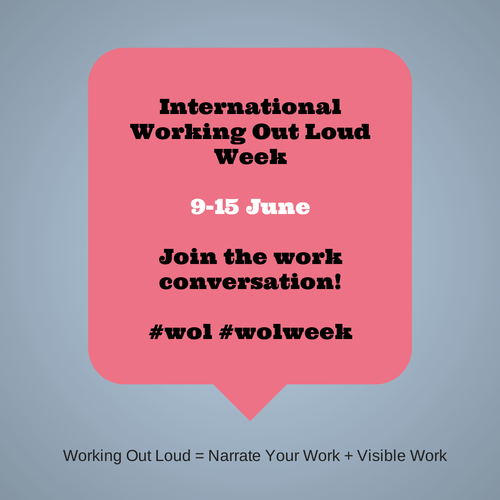
Lessons are already coming in from International Working Out Loud Week (#wolweek) even though it has only just begun.

While it is the end of Tuesday in Australia, Monday was a holiday and most of the world is only now starting day 2 of #wolweek. Here’s what I have experienced so far:

  • Just do it: #wolweek began as a conversation with Jonathan Anthony and Austen Hunter. Somewhere along the way the idea of a week working out loud had a date assigned and became International Working Out Loud Week. The idea clearly resonates with over 200 tweets alone on day 1. If your idea is good enough put it to test in the market without further ado. We could have spent a year planning the event and got less traction.

//platform.twitter.com/widgets.js

  • Sharing magnifies: The conversation that started #wolweek was public. We discussed our plans everywhere we could. Ideas and encouragement helped us continue. People jumped in to push the momentum up on this because they believed a week celebrating working out loud was worthwhile. As there is no organisation behind International Working Out Loud week and there has yet to be a meeting, enthusiasm and participation driven by sharing sustains the activity.
  • Networks explode: I wondered if #wolweek would be a phenomenon of a few chatty people at first. However when we saw major influencers (Thanks Helen Bevan, Gloria Lombardi, Helen Blunden, Rachel Miller, Jane Hart, Miguel Zlot and many more) and brands with big reach ( Thanks Change Agents Worldwide, NHS, Yammer and more) join the conversation it was clear that the sharing of #wolweek would be magnified by networks. Networks explode the potential of sharing. As Jonathan Anthony likes to say, we discovered the BOOM! moment.
  • You are the person: Bryce Williams first described working out loud. There are many other advocates who are probably better placed have spent more time promoting working out loud than the instigators of #wolweek (for example John Stepper, Jane Bozarth, Harold Jarche, Luis Suarez, Austin Kleon, etc to name only a few). If we had worried about support, their engagement or permissions, it would not have happened. Many of the above have jumped in enthusiastically as supporters of #wolweek.  

//platform.twitter.com/widgets.js

  • Change takes time: I have learned to enjoy the fruits of working out loud in networks, but I have always biased this working out loud to networks that have a common purpose and people I know even, if it may be part of  much larger community. It is still uncomfortable for me to use twitter or another totally public forum for this sharing. #wolweek has already shown me the benefits of being a little more open and a little less final in my sharing in this public forum. I can start to see what Luis Suarez and others have gained from moving beyond email into open conversations.
  • Less noise:  I expected to see a lot of noise (apologies if I am inflicting some, but then adjust your filters). I have been searching for posts with the tags #wol, #wolweek and #wolyo. I expected to find at least some noise. Perhaps it is my purpose in learning about #wolweek, but I have found almost all the posts fascinating, a great insight into other’s work. I am not alone.

//platform.twitter.com/widgets.js

Four more days to go globally.  Let’s see what magic all this sharing can bring.

The Last Thing We Need is an Enterprise Social Network

Dear CEO

Re: The Last Thing We Need is an Enterprise Social Network

The purpose of this email is to explain why the last thing we need is an enterprise social network.

This email is in response to the conversation about enterprise social networking in the executive leadership meeting yesterday. We thought it best to summarise the position of the leadership team, because yesterday’s conversation got derailed by anecdotes about social media, technology terminology, fear of change and discussion of abstractions like collaboration, future of work and new organisational structures. Before you left the meeting, you remarked “Based on this discussion, I think an enterprise social network is the last thing we need”. We agree.

We don’t want faddish technology. We need execution of strategy.

As CEO, you’ve been rightly suspicious of all this discussion of social inside the organisation. It is bad enough that your teenage children never look up from using social media on their phones. Whatever that involves, it can’t be needed activity in our organisation. We are a place of work.

What made this country great was well-run organisations, hard work and increasing effectiveness in creating value for customers. That takes focused strategy, disciplined execution and a willingness to do the hard yards. Great organisations aren’t built by chasing technology whims. They come from executing strategy to create better value. When we need to create better execution on strategy, the latest fashionable technology is the last thing you need.

We need better strategic value creation

Times are tough. Industry is more competitive than ever and change keeps increasing. We know customer and shareholder value needs to go up and costs need to come down. We have a strategy that is about meeting these new customer & stakeholder expectations, improving the organisational efficiency and delivering the returns that shareholders demand. We all wonder from time to time whether everyone in the organisation gets the imperative of the new strategy and whether they are all working hard enough to find new ways to create value. We know that we perform better when we have better conversations to make sure that our employees are aligned to the strategy. What we don’t need are distractions when there’s doubt that people even understand the strategy.

When we need strategically aligned value creation, the last thing you need is an enterprise social network.

We need new more effective ways of working

To fulfil the strategy of the organisation, we know as a management team that we will have to start to work in new more effective ways. There has been too much wasteful duplication of work in the organisation. Too many of our processes & policies don’t line up across the silos, aren’t agile enough for the environment and don’t meet customer needs. Both our customers and our employees complain about how badly we do this. We need to start working in new and different ways to identify, solve and improve this on a continuing basis. We have to focus everyone on find and using better work approaches that help us to fulfil the strategy.

When we need working in new and more effective ways, the last thing we need is an enterprise social network.

We need to change management and leadership in every role

Working in more effective ways will likely require us to change the way management works. We are going to need to push decisions down to people closer to the customer and give our people the ability to fix problems. We will need our managers to move from command and control to a coaching and enabling role. We need to ensure that all our people are realising their potential and able to work to create new sources of value. Of course in this new role, middle management will need to be trimmed and the new flatter organisation will need to change more often as we respond to further changes driven by our customers. Employees will need to step up into a leadership role in these changes and with customers, the community and the organisation.

When we need to change the culture of management and asking every employee to play a bigger role in leadership, the last thing we need is an enterprise social network.

We need different conversations

Changing the culture of management is going to demand very different conversations in our organisation. We are going to have to find ways to make sure that conversations are efficient and effective. We need to leverage the contributions of more people from across the organisation. We won’t be able to rely on long meetings, workshops, speeches, video and emails. Did you see the budgets for communications, off sites & roadshows in the forecast for next year? We have to do something different. We will need to involve our people more in making decisions. If that’s going to happen our people will need to be better informed and better able to channel their contributions. Our people will need ways to inform themselves, learn by pulling what they need, share ideas of how to work better and collaborate to solve work problems. We are going to need to encourage our people to join conversations that use their capabilities to innovate, to create value for customers and create new forms of working.

When you need to change the conversations, collaboration and culture of an organisation, the last thing you need is an enterprise social network.

We need more from our people

We wrapped up the last executive leadership meeting reflecting on how big these demands will be on our people. We will be asking for a lot of change in them, their work and the way the organisation exists around them. We will be asking our people to play an increasing role in the success of the organisation. We will want them to lead new conversations to create the future for this organisation. We need our people to be more engaged because we will need much more from our people.

Conclusion: What we need

After you left the executive leadership meeting to catch up with the board, we realised that we are clear what we need as an organisation:

  1. we need to succeed by fulfilling our strategy to create greater value in a rapidly changing market; and to do that
  2. we need to be able to work in new & better ways that create a more effective, agile and responsive organisation; and to do that
  3. we need a new culture in management and more leadership from our people; and to do that
  4. we need new conversations that enable our people to discuss and act on creating better strategic value; and to do that 
  5. we need more engagement and a better ability to leverage the potential of our people to contribute to and lead this change; and to do that
  6. we need an enterprise social network to support the first 5 steps.

If you are surprised by point 6, think back through the needs again. After all you were the first to say that an enterprise social network is the last thing we need. We don’t want an enterprise social network because it is new technology or because it is good for some abstract goal. We need one to help our people to execute on the changes necessary to achieve the goals of our strategy. Enterprise technology only makes sense when it enables us to work in new ways that deliver strategic value. As your management team we can see that the value creation opportunity is compelling. We couldn’t see it when you made your remark, but we have come around to your perspective.

The paperwork required by our old process is already on your desk, but a number of our people have started experimenting with solutions to see what value we can create. (Interestingly, their first suggestion is a better procurement process.) When you get back from the board, your assistant will show you how to log-in and join us discussing how we implement in the new enterprise social network.

Thanks for challenging us to come up with a better way of working.

Please think of the environment and don’t print this email. We’d encourage you to discuss it on our new enterprise social network instead.

If this post sounds familiar or if you would like to create greater value in your enterprise social network or discuss how the Value Maturity Model applies to assist your organisation to create strategic value through enterprise social networking and collaboration, please get in contact. I am available through @simongterry or Linkedin or www.simonterry.com

Why Work Must Be Human

The future of work must be more human. As we move deeper into a networked knowledge economy we can already see the fractures of the traditional industrial management model.  

Taylorist scientific management that underpins much of traditional management can be so abstract in its consideration of the human role in work that it can border on a psychopathic level of detachment. There are many examples where the parallels between sociopathy and management have been drawn. Some even go far enough as to recommend it.

How to become a corporate sociopath:

  • Lose empathy: refer only to customers and employees as acronyms, abstractions and averages (see FTE, Engagement score, Customer Satisfaction, Average handle-time, NPS, etc)
  • Lose ethics: Compromise your values to maintain your power & your position first in small decisions and then in decisions with larger influence over time (see Management, Hierarchy, Goal-orientation) 
  • Culture: Surround yourself with a culture that glorifies anti-social behaviour and down plays human elements (see Results-focus, Hard management skills, Efficiency, League ladder, Bell-curve, etc)
  • Lose Reality: Learn to withhold information then to spin information to further your agenda. Slowly begin to believe your own spin and create an internal world that shapes your perception and decision making (see Personal Branding, Managing Up, Stakeholder relations, PR, Marketing, Excel model, Corporate Politics, etc)
  • Isolation: Isolate yourself from friends & community and develop an echo chamber for your own views (see Silos, Work/Life Balance, Corporate retreat, Business Networking, Travel, Staff, Yes Men, etc)
  • Paranoia: Develop a healthy sense of paranoia to survive (see Competitive marketplace, Corporate ladder, etc)
  • Be Bold: Start to judge leadership, power and status on absence of fear, willingness to tackle large scale and boldness of action. (see Go Big or Go Home, Burning Platform, BHAG, Too Big to Fail, Bet the business, etc)
  • Narrow Goals: Sacrifice discussion of the diversity of potential goals to chose a single abstract financial measure of success (see EPS, ROI, Make Plan, etc)
  • Power: Begin to see all living things as commodities subject to your power. (see Human Resources, Processes, Policies, Inputs and Outputs, Capital and Labour, GDP, etc)

All in a normal day in many offices…

Making Work More Human

Not all organisations suffer from sociopathy. They balance the inhuman thread in management with other considerations to retain a focus on realising the broadest of social and human outcomes.

Breaking the bubble of sociopathy in dysfunctional organisations takes effort. The steps are not that hard to practice:

  • Listen: Start to listen to the real human voices. Help others to speak and tell their stories. Help others to share their potential and contribute to a better organisation.
  • Engage: Find out other people’s goals. Help them to realise their goals and their potential. Invest time in working for others and understanding their needs more deeply.
  • Immerse: Spend time in the actual environment where work occurs talking to the people doing the work and the customers and community benefiting from the work. See the context and consequences of actions.
  • Reframe: Change the scale of decision making. Look at individual impacts as part of the process. Use names of actual people. Ask ‘what could we do to create more value?’ Ask ‘Is there another way to move forward without these impacts?’
  • Design: Recognise that policies, processes and products are built by and used by real people. Design to their needs and with their involvement.
  • Collaborate: Share your plans with others and allow them input. Let others help shape and improve your work.  Be transparent as to the strengths and weaknesses in this process.
  • Experiment: Test potential decisions. Make room to learn.
  • Lead: Encourage. Enable. Inspire. Don’t impose or impact.

Making work more human does not require us to abandon capitalism, to remove our results focus or be less ambitious. It may make work more challenging but it will also increase our sense of purpose and reward. 

Every employee in an organisation can ask for one or more of these steps to be added to a decision making process. One such request may be novel but it is rarely seen as a challenge to the authority of traditional management approaches. Introducing these techniques acts as a catalyst of change. The impact is to help make work more human. We are all the beneficiary of that action.

The Blocking Boss

image

Obstruction is everywhere

The commonest question I am asked when talking to potential change leaders is:

What do I do when my boss doesn’t support my work, my change agenda or my leadership approach?

That challenge is one I am personally very familiar with it. I am not alone. Recently in conversation with Geoff Aigner one of the authors of The Australian Leadership Paradox we were both reflecting on how commonly change agents experience this challenge. The topic came up repeatedly in conversations the authors had exploring Australian leadership in preparation for that book. Many of the reasons for the conflict are tied to the four paradoxes that the Australian Leadership Paradox book outlines. If your boss prefers the other side of paradox, you are unlikely to agree on a way forward. However, both Geoff and I agreed that overcoming a blocking boss likely deserves a book of its own. Instead, here’s a short post from my personal experience.

In this post, I refer to a boss because it is the concept most experience. However, the person in a hierarchical position of power may not be your direct boss or even in your line of management. In other cases the blocking may be more abstract to pin down with distant committees or an abstract ‘they’ opposing your work. In these latter cases, it is essential to first separate the myth from the reality and find real people with whom discuss the work. One can’t argue with a perception.

Here is some lessons from my experience working with a unsupportive or blocking boss:

  • Be wary: Aware
  • Embrace your power: Ignore 
  • Change the conversation: Influence
  • Work the system: Evade 
  • Flee the system: Escape 

Be Wary: Aware

Before you continue with any change that is opposed by the hierarchy you need to be aware. You will need to check your motivations. You will need to understand your own strengths, weaknesses and resilience (each will be tested). You will need to be clear on your change, its impacts, risks and consequences. You will need to understand the landscape incredibly well. You will need to see the networks in the organisation, the political agendas, the personal agendas, the influence, the strategy and much much more.

If you are simply in the flush of enthusiasm for an idea, stop. If your ego is bruised by rejection or you don’t like criticism, ostracism or exclusion, then don’t continue. If it has become a power game to continue, then stop. Important change is not about you. Leading important change is about delivering better outcomes for everyone. Leading this kind of change takes enduring commitment and purpose to deliver for others. A bruised ego is a warning sign that this is personal. 

Only continue if you can see the landscape, the benefits and risks to others and your own motivations clearly. Only continue if you know that the journey will be rough and unrewarding and you have the strengths and the resilience to persevere. The experiences you have in this difficult leadership journey will demand continuing self-awareness and system-awareness. You will need to manage this carefully and know when to protect your self (see Flee the System: Escape)

Embrace Your Power: Ignore

The simplest technique is to ignore your boss and continue on. Of course, this is rarely the safest. It also misses the opportunity to understand whether your boss might be right (see Change the Conversation: Influence)

When you understand the difference between your job, the role you are playing and your authority, you may discover you don’t need your boss to endorse your work to achieve the change that you want. We often have far more influence and resources at our disposal than we expect or understand. Remember we have a uniquely human capacity to constrain our power to act. These constraints are insidious. Thinking you need support of your boss or organisation for action is one artificial self-constraint.

Without formal support from the hierarchy there is much you can do by taking on new roles and leveraging your authority in your networks. If you do this in a community with others, then you will magnify your influence. (see Work the System: Evade)

Sadly, you may find this also means you will receive no recognition for your work from your boss. You may even see your performance discounted for having engaged in activities that were not required or were seen as a distraction. Ultimately you might lose your job for insubordination or the threat you pose to the authority of your boss.

Most people are not comfortable with this level of risk. Therefore it is advisable to use this approach in combination with the others below. Remember if you believe enough in the change, losing your job when you can’t bring about change might not be such a bad thing (see Flee the System: Escape)

Change the Conversation: Influence

Every leader needs to have hard conversations to influence change in action. You should seek to engage your boss in conversation about the change, if only to understand their perspective more deeply. Prepare for this conversation.

How well do you understand your boss’ goals and drivers? What reasons does your boss have for blocking you? Does the strategy of the organisation or the bigger system give you any levers to change their perspective? Are there facts that you know that your boss does not or vice versa? What is it that you see that you may not have discussed adequately with them?

Before you begin this conversation recognise that the conversation will go best from a position of strength. Prepare. Find others who can help you with your change and to influence your boss (see Work the System: Evade).

Choose your timing. Make sure you have done all that you need to do on the other areas that you boss has asked of you. You don’t want this conversation to become a feedback session on how you fall short of your role’s performance expectations.

Prepare for the conversation.  Seek to find alignment on goals & purpose first. Only then move on to the implications and finally to agreeing new actions.

Hard conversations are not easy and may not be appreciated. The difficult conversations might lead you to further insight into changes required or to see change is impossible (see Flee the System: Escape). However, change will not come about without continuing to have hard conversations.

Work the System: Evade

Not all change uses official channels. Not all change is public and approved. There will be times when you might need to run a rebellion or even a revolution to make change happen, particularly in large organisations or large systems. At worst, you are going to have to play the politics of power and influence to at least continue your work or at best find someone more influential to release your constraints.

To continue to work on change when it is opposed, you will need to become well aware of how to lead in the networks in your organisation. You will need to use networks to avoid the obstructionist managers and build a coalition that can continue your work. This may even enable you to stop completely, if a coalition of others takes up your work.

You may need to even go into the networks outside your organisation and push change back in with influence from external sources. External networks, like customers and community, can validate the reasons for change. That can help you find new ways to influence your boss (see Change the Conversation: Influence) or more confidence & strength to continue (see Embrace Your Power: Ignore).

A boss who is asking you to stop work on change will not appreciate activity to perpetuate that change in this way. If you are working at the boundaries of the organisation take care that you are not jeopardising both your goals and the organisation. However, it is almost always required that you work the system and its rules to advance your cause when your boss is opposing needed change. The risks you are taking might lead straight to Flee the System: Escape.  Running an evasive strategy is rarely fast or effective first time. You will need to prepare for a long campaign and many setbacks. Be ready to persist.

Flee the System: Escape

Not all change succeeds. Sometimes persistent & effective opposition is a warning signal to leave. Your organisation may not want to become the organisation you would like it to be. 

Sad as it may be, in this case the best option is to get out fast. Staying will only lead to the organisation rejecting your changes and you.

Leave and take your leadership elsewhere. You will find greater reward working elsewhere and you might even find a way to make the change later.

Conclusion: Be Aware. Lead. Continue.

Be aware first and foremost. Maintain that awareness as circumstances change.  If you have a purposeful & needed change to lead, the only option that you have is to continue. When you stop, you lose your authority to lead. You will become part of the blocking mechanism of the manager who opposed you – by your actions, by your words or by your example.

Networks route around obstructions. You should too. Keep going. Be aware. Persist. Learn. Change your approaches but above all continue until you succeed or must escape.  

Good luck for safe and successful change leadership.

image