The Power of Peers – Peer Academy

img_1191

I recently agreed to become an Ambassador for Peer Academy, because I see enormous potential in a new platform for organisations to bring together all their employees in the experience of sharing expertise, growing strategic capabilities and realising potential in new ways. Peer Academy is an exciting Melbourne startup founded by Kylie Long and Onur Ekinci that already has great traction in creating a public marketplace for skill-sharing and delivering tailored peer academies for organisations.

Designing Peer Learning Academies for the Future of Work

Yesterday I participated in a design studio session on the Peer Academy product roadmap with the team and a number of clients and prospects. What became evident quickly was how much potential there is untapped in organisations and how new solutions can make it easier for people to share their expertise and collaborate to achieve personal and work goals.  We cannot leverage what our people already know when their skills are hidden, when collaboration is not recognised and when building capabilities takes unvalued time and effort.

In past learning projects with organisations, I have seen the power of peer mentoring.  Focusing on the exchange of learning and experience by peers expands the learning culture in an organisation from a culture of giving to the more junior and less experienced to a two-way dynamic exchange of skills and experience through networks. That benefits all in the organisation, reinforces collaboration and flattens the power dynamic in the organisation. The more people you engage in peer mentoring the value of that learning accelerates and scales exponentially.  This is one of the key reasons why I believe so strongly in the power of working out loud to help others to learn by watching work in progress.

Ultimately, peer learning is powerful too because the feedback of your peers is a way to understand and validate the skills and capabilities that you have developed.  Every time a peer shares their learning it is a two-way gift, both teacher and student benefit from the experience. Tacit knowledge is made explicit. Knowledge is validated and the teacher learns something from feedback. The organisation benefits too as understanding of the capabilities of the organisation develops through the platform and learning can be far more responsive to business needs than a centralised learning team developing courses to plan.

As we move into the fast paced agile future of work, organisations need to move more to leverage the collective potential of people. Social learning mediated through peers in networks are a key part of this opportunity.  This kind of learning is more than just peers delivering courses to each other. Ultimately peer learning becomes part of a Big Learning culture in the organisation, a systematic approach to ensuring every interaction in the company is a learning experience for individuals and the organisation.  This personal collaborative approach to learning is at the heart of organisational effectiveness in the digital era.

The Asymmetrical Advantage of Working Out Loud

Working out loud enables others to better understand you and your work. That can be an advantage if it allows you to focus on them.

Working out loud is not close to common. The practice is growing as more people realise the benefits of purposefully sharing their work in progress. However, it a passionate but small community who consistently practice working out loud.

As someone who works out loud a lot, I have seen a particular advantage in the asymmetry of working out loud practice. People I meet often know a lot about what I do. That enables our interaction to focus more on what they do.

There are a number of advantages in my working having been exposed first:

  • Pull over Push: In discussion people will bring up the ideas and work that I have done that they want to discuss. They pull me towards more effective conversation without the hard work of pitching and digging. People choose to interact based on what they already know of my work. That is a better and more useful choice.
  • Trust comes with understanding: the more someone has followed my work the better they are likely to understand my approach and who I am. That provides a sure foundation for our interaction and helps ensure that there are fewer misunderstandings. Ultimately, if they chose to interact on the basis of that knowledge I can be surer that we are likely to have a productive conversation based in deeper trust.
  • Less Talk & More Listening: The less I have to talk to explain myself in an interaction the more I can listen. Listening to another person is a great way to build understanding and connection but our desire to get out the story of our work can get in the way. We all love to be heard.  People enjoy a conversation that is mostly about their work, needs and challenges.
  • More work solving problems: The less time I have to spend on pitching and explaining my work the more time we can spend discussing solutions to problems. Being able to reference already shared work saves time too. Having another person in the conversation who is familiar with your thoughts and approaches can mean both of you can collaborate to solve ideas together.

The Adaptive Nature of Working Out Loud

Leveraging our expertise leads us in straight lines to our usual solutions. Leveraging the expertise of a network creates new adaptive possibilities.

The Entropic Silo of Expertise

Expertise is incredibly important to success in business and in life. Talent people will outperform amateurs.  However, without care expertise can create a narrowing of the possibilities to solve problems and improve work.

Expertise usually comes allied to experience. Having done it before, the answers seem obvious. This ability to quickly apply past solutions can lead experts to develop a sense of uniqueness and even ego around their expertise. If it is perceived there is no value asking others or to ask others might imply a vulnerability in expertise, experts begin to experience the entropy of lack of feedback. Working in isolation and implementing familiar patterns without much reflection, the expert is vulnerable to changing needs, changing circumstances and external innovation. Worse still, an expertise that is not shared is trapped in that person’s head and not able to be learned from or leveraged by others. For an organisation, this creates increasing key person risks.

For an expert the requirements of a solution may seem far more complex than for actual users. A simple example is the temptation for a proud expert to design out any risk of failure. This risk aversion reflects their desire to be associated with a superior solution. That solution may also be more expensive, slower and over specified for the actual user.

The Adaptive Nature of Working Out Loud

To change and adapt to our systems, we need to experience vulnerability. We need a lack of clarity and a sense of disequilibrium to force us to reflect on the need for changes to make our work more effective. Working out loud can supply this disequilibrium to push us from our silos of expertise and to consider the diverse ideas and inputs of others.

The disequilibrium of  exposing our expertise to the needs and desires of our users is a highly generative one. Importantly it brings purpose and goals back into the forefront of the expert’s work. Critically too, this form of working out loud can enable experts with different approaches to the same issue to connect across disciplines to develop novel approaches to meet user needs.

Importantly to be vulnerable, we need a safe space to share. Creating a environment in which people have the shared purpose, trust and confidence to work out loud is an essential pre-requisite.  This space might be created in the small group dynamics of a working out loud circle or in a trusted community of peers or even in public. Wherever it is created their will be adaptive leaders who take on the role of maintaining the environment and safety in the group.  They will also play the role of stirring up tensions to force the group to reflect on their networks and other ways of solving challenges. Working out loud needs leaders who can create these safe spaces and also influence interactions to leverage rather than break down under tension.

If your organisation is rich in technical expertise, such as law, engineering, healthcare or any specific business discipline, there is a significant benefit in working out loud to foster adaptation in your experts. Use working out loud to connect your experts to users, other experts and stakeholders and you will see new adaptive potential.

#WOLWEEK DAY 5: GROWTH MINDSET

This International Working Out Loud Week we will be sharing a reflection on a different element of working out loud each day.  We will be using John Stepper’s latest iteration of the five elements of Working Out Loud as a guide to those reflections. Our fifth reflection is on Growth Mindset.

GROWTH MINDSET

We can be better.

Our talents are not fixed. Through effort, stretch and learning we can improve our abilities. We work every day to be better at what we do, to better fulfil our purpose and our potential.

If our talents are not perfect, that is because they never can be. There are no limits on our ability that work will not release. If our work is not perfect that too is because there is always more, always another better way to attempt. The way we do our work is but one of millions of paths to our goals. If our purpose or potential is never completely fulfilled, then that is because we strive for more. We want to make a bigger difference.

The value of working out loud is to help us see that everyone’s work is not perfect as it develops. We understand the edits, the changes, the false starts and the dead ends that lead to success. We stop comparing other people’s showreels to our own cutting room floor. We realise that embarrassment, failures and setbacks are temporary but abandonment of our purpose is final.

Working out loud brings us together with others who want to grow and to learn.  We come together with others who want to improve their work and achieve their purpose in better ways. We are encouraged, challenged and supported to take on the daily work of getting better. Supported by a global community pursuing better work and a better life, we work together to grow.

We can be better. Together.

International Working Out Loud Week is from 6-12 June 2016

#WOLWEEK DAY 4: GENEROSITY

This International Working Out Loud Week we will be sharing a reflection on a different element of working out loud each day.  We will be using John Stepper’s latest iteration of the five elements of Working Out Loud as a guide to those reflections. Our fourth reflection is on Generosity.

GENEROSITY

Generosity is not new. We know how to give. Human beings are highly sophisticated animals at the fine arts of altruism, collaboration and generosity. Giving generously is what our societies do best.

In our work cultures, we some times lose the generosity of spirit that underpins humanity.  Our focus on performance, on efficiency and on competition, can make generosity seem counterproductive, suspect and weak. Yet elite performance and ultimate effectiveness depend on high levels of trust. We build trust when we move beyond our own agendas. We build trust when we start to give something of us to others.

Working out loud helps us to see that our gifts can be many. We can give as simply as giving our attention to another, to truly listen to their needs or their story.  We can give by recognising another and celebrating their progress in their work. We can give by providing material help, information or even just a sense of direction to someone. We can give by creating a sense of shared community in a task or a challenge and allowing others to use our networks to achieve their ends. Everyone of us can give the gift of reaching down and helping someone else up over the work we have completed to where we stand now. When we share our work visibly with a generous spirit we discover others can learn from our work and others yet may reciprocate our generosity with help, support and guidance.

Generosity is the social magic that triggers the wonderful synchronicity of working out loud. Our generous gifts inspires others, some far from our networks, to respond to our visible work. We cannot know what, when or if we will get something back in return for our generosity in working out loud. Working out loud is not a transactional exchange. Working our loud is an investment in our relationships and our networks. We invest for the future and for others. Be generous in those relationships.

The purpose of our work is to benefit others. Give a gift

International Working Out Loud Week is 6-12 June 2016

#WOLWEEK DAY 3: VISIBLE WORK

This International Working Out Loud Week we will be sharing a reflection on a different element of working out loud each day.  We will be using John Stepper’s latest iteration of the five elements of Working Out Loud as a guide to those reflections. Our third reflection is on Visible Work.

VISIBLE WORK

All our work is visible to others to some extent unless we actively seek to hide it. What the visible work element of working out loud asks us to do is to consider how we can make our work more visible to those who can benefit and those who can help.

This is not about completed work.  That would be visible outcomes. The element of visible work is making work more visible to others and narrating that work in ways that enable other people to learn and to help. You may not value your work and your work process but making that work more visible to the right people might help you to understand how they value your work and how they can help you make your work more valuable.

Visible does not necessarily mean public. The audience who can see your work might be small and focused.  Visible does not necessarily mean insistently distracting. Visibility is the beginning of findability.  You may want to simply make your work visible where it may be found later by someone like you working on a similar problem.

Visible work is a far wider trend than working out loud in the future of work. We see visible work in Visual Management Boards, Kanban, Trello, dashboards and other tools of visual management. We see visible work in agile projects, in design thinking exercises, in ideation exercises and other environments where people need to coordinate work into one vision. The post-it note is the byte of visual work in these contexts. Visible work underpins our activity based workspaces, our collaboration solutions and many more management systems and practices. Rather than simply let the process or environment make your work visible, take control of your work and shape its visibility to help yourself and others.

Think for a minute about your invisible work – the efforts you put in, the anonymous giving, the work that gets folded into other work or slides off the end of the desk or meeting table. How rare is it that there is joy or even satisfaction in the invisible work? Most of it goes to waste. All of it is neglected. Visibility of work is a step to a better life and a better career. Start sharing your work as it happens.

International Working Out Loud Week is from 6-12 June 2016

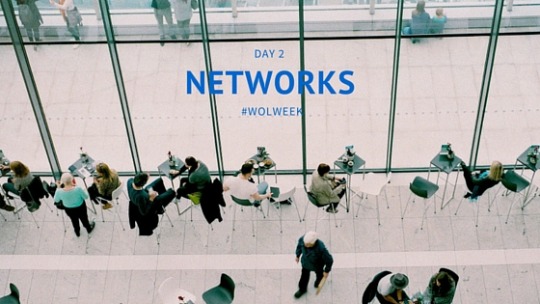
#WOLWEEK DAY 2: NETWORKS

This International Working Out Loud Week we will be sharing a reflection on a different element of working out loud each day.  We will be using John Stepper’s latest iteration of the five elements of Working Out Loud as a guide to those reflections. Our second reflection is on Networks.

NETWORKS

We have always had other people involved in our work. We have always had colleagues, managers, partners, suppliers, customers, regulators and the broader community with an interest in what we do and how we do it. Every day as we do our work without even calling it networking we manage a complex series of relationships to get our work done. We don’t need to go looking for networks. We already have them.

With global connection through digital networks, our ability to see and connect to the networks of people around our work is now greater than ever. With greater connection comes greater demands for transparency, accountability and engagement. With greater connection comes greater opportunities for new information and for learning. Even if we wanted to do our work on a remote island, we would struggle to escape connection to these networks and their demands.

Working Out Loud challenges us to think of the role these networks play in our work and the role that we play in our networks. Working out loud doesn’t add any complexity to the work or to the networks.  That complexity is already there. Working out loud asks us some key questions: Who would benefit from greater visibility to our work? From whom can we benefit if they knew more about our work and our challenges? Working out loud does not demand that we engage the whole world all day. Working Out Loud asks that we share with those in our networks for whom our work matters in a meaningful way.

People who do not participate in networks are treated by the network like a blockage. They lose influence as the network routes around them seeking to engage in the necessary interactions. The value of Working Out Loud is it asks us to consider what role we should play in our networks and how we can better use our networks in our work. That is a critical element for anyone in the future of work.

International Working Out Loud Week is from 6-12 June 2016

#WOLWEEK DAY1: PURPOSE

This International Working Out Loud Week we will be sharing a reflection on a different element of working out loud each day.  We will be using John Stepper’s latest iteration of the five elements of Working Out Loud as a guide to those reflections.

We start with Purpose. Purposefulness in working out loud helps unify all the other elements of working out loud: the mindfulness of networks, the visible sharing, the generosity and the growth mindset.

PURPOSE

We work for a purpose. We work to have some impact on others. We work to make ourselves and our world a better place. That purpose should be at the heart of our working out loud too.

Working out loud should be directed to some end.  Working out loud cannot be a random broadcast of activity. We share our work visibly and narrate our work so that others can benefit, whether through a greater understanding of our work, through opportunities to collaborate or have input or through learning about the process we take when we work. Our purpose inspires us to use whatever practices will help us have greater effect.

Purpose should shape the networks and communities with whom we share our work. Our purpose reflects a desire to use our skills, networks and capabilities to help others.  With whom we work out loud should be shaped by these same people.  We should work out loud to benefit from and benefit those best placed to engage with our purpose.

Generosity is inherent in purpose. Purpose leads outside the building of our work, outside our own narrow concerns and encourages us to reflect on how our work can give to the world.  This generous mindset helps us assuage the common self-centred fears of sharing our work as it happens – fear of loss, fear of embarrassment and fear of unfairness.

Purpose also sustains us in our growth mindset.  There are obstacles in any work. There are many obstacles in adopting a practice of working out loud. There is also no one right universal way of working out loud that will suit every person, situation and purpose. We embrace all the practices and approaches that have been created to foster purposeful sharing of work because any practice may be of benefit to someone. There are many schools of working out loud.  People may be inspired by the ideas and practices of Bryce Williams, John Stepper, Jane Bozarth, Harold Jarche, Sahana Chattopadhyay, Helen Blunden, Dennis Pearce, Jonathan Anthony, Catherine Shinners, Ayelet Baron, Lesley Crook, Isabel De Clercq, Bert Vries,  Simon Terry and many more. Focusing on how we can learn together, how we can help each other to achieve more and how we can move beyond the setbacks is important to taking our work and this new practice to the world.

Purpose is the reason at the heart of our work, our life and our careers. As we seek to use working out loud ‘for a better life and career’ we must be guided by purpose in our practice.

International Working Out Loud Week runs from 6-12 June 2016.

The Privilege of Working Out Loud

image

Not everyone is allowed to work out loud. Those who can must value their opportunities and seek to help others to share.

I was reading an article in the newspaper on the weekend about a new book by Tara Moss on “Speaking Out: A 21st Century Handbook for Women and Girls”. The discussion in the book of barriers to women speaking up and the techniques that can assist caused me to reflect on the barriers many people face in sharing their work out loud.

Not everyone can work out loud. The real pressures that hold people back can be social, gender, hierarchy or the culture of their organisation. For many people, the expectation in their organisation is that someone with their position, role or work will keep silent, do what they are told and just deliver. Something as simple as talking out loud about your work with others is a privilege.

As a privilege, working out loud is something that needs to be used with respect. I have always stressed that working out loud is a choice. We cannot mandate it, because that choice will not suit many and may not be available to all.

As a privilege, working out loud should be used to benefit others. If you can work out loud, you have a contribution to make. Those who can speak out have an opportunity to help others to be heard. Those who can speak out can support others who may face barriers or abuse. Those who can speak out have an opportunity to role model better ways and to fight for changes that give voices to others in their organisation and their society.

If you can work out loud, use that privilege to help others.

Breathe

Last year there were over 200 posts to this blog. I have been blogging almost daily for more than eight years now, first internally for five years at NAB and then for the last three years on this blog. I write on many of the days I don’t publish, leaving some ideas for future research and development. The near daily process of working out loud on ideas has been amazingly productive and a wonderful source of new relationships and opportunities.

Last week I needed to put together two different talks on working out loud, one for the AITD Conference and another for Intranets2016. As I sat down to work through those talks I discovered I was able to draw on a reservoir of ideas that I had thought through, blogged and turned into images. Having a ready source of my thoughts helped me to see new connections and new opportunities:

//platform.twitter.com/widgets.js

Blogging has also become a deeply ingrained habit over time. When I began trying to blog daily I used BJ Fogg’s tiny habit approach to get me started. My blog post each day was the work I did while I drank my first coffee. I would never have forecast when I began that thinking out loud would become the way I work through so many challenges. When I have an idea or a challenge to consider my first thought is to start working through how I would blog it. Now I am much more alert each day to the insights and the opportunities. I am always looking for connections and querying how what I read relates to past and future blogposts. I have learned to be much more concise in my thinking and expression. Most importantly I have learned to let more of myself out in the process. The latter has played a key role in creating and deepening relationships.

Last week I was explaining my blogging process to a friend and I found myself saying ‘It’s just like breathing’. I surprised myself with how casually I referred to the process, but it was true. Persistent practice moved me forward to a different relationship to my working out loud. Because the habits are deeply engrained the stress and anxiety of writing slips away a little more. What is left is the joy of thinking, sharing and making new connections.

Breathe.