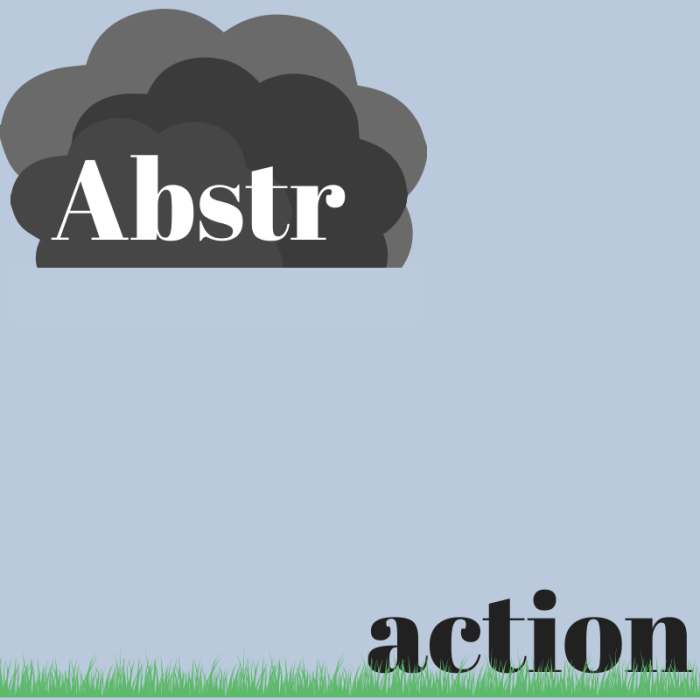
The gap between inaction and in action
Thanks to Hannah Cutts for the suggestion
Innovation, Collaboration, Learning & Leadership
The gap between inaction and in action
Thanks to Hannah Cutts for the suggestion
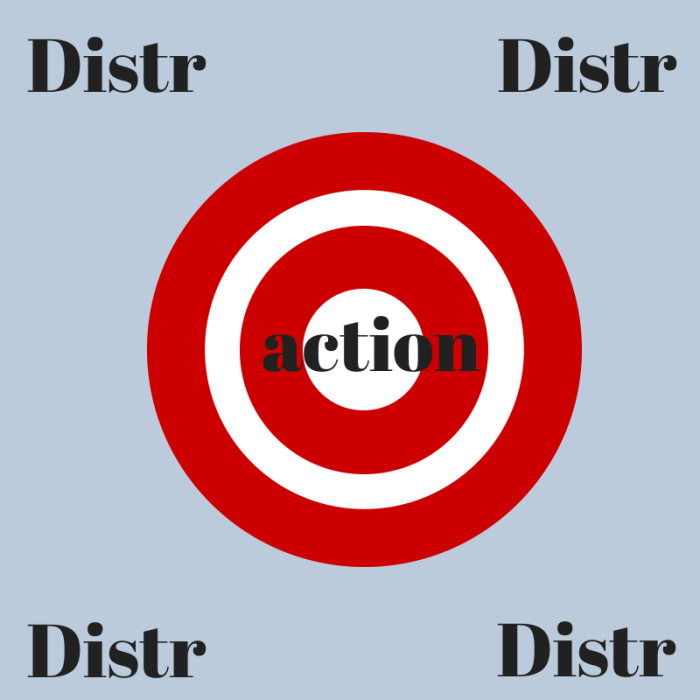
Focus action to avoid distraction

Empathy builds empires – Daniel Epstein
Action unravels abstraction. Action makes doubt obsolete. Action immerses people in the real challenges.
Action makes us mindful of others and ourselves. Action offers opportunities for achievement and a growth mindset. Action brings flow.
A bias to action is a bias to learning, to value creation and to realising human potential. Immersed in action we can find our wisdom, abundance and empathy. Action brings out leadership and leadership is demonstrated in work.
There is no stronger foundation for an empire.
We can’t know what is coming next, but we can work with others to bring it about. We can’t know what others need, but we can engage them in the work. We can’t do everything, but we can do at least one thing well.
We can.
Act.
Before enlightenment, chop wood, carry water. After enlightenment, chop wood, carry water. – Zen Proverb
Do Lecture by Tom Herbert on the importance of baking bread.
The Fabulous Baker Brother’s book is fantastic.

One of the attractive features of the DoLectures Australia talks was that the speakers didn’t spend too much time throwing around abstract nouns. As a group of people who make change happen the conversation was about what they had done.
Abstraction is a usual feature of conversations about change. In conversations about change, in large organisations and especially at conferences, it can some times feel like every noun is a capitalised noun.
The Dangers of a Capital Letter
Often people speak in general terms about nouns with great big capital letters like Change, Engagement, Community, Empowerment, Innovation, Creativity, Hierarchy, Power, Organisation, etc. Politicians and the leaders of organisations specialise in sprinkling their speech with capitals.
It is important to remember that nobody acts in the abstract. Speaking in abstract terms is a substitute for doing anything. Drop the capital letter and the context is usually much more specific.
A conversation remote from the details of action also generates confusion. There are hundreds of subtle differences in definitions of a concept as simple as Collaboration. At times, this confusion prevents any progress as people debate the meaning of the abstraction and the relevance of any action to their own personal definition.
At other times, this kind of confusion can allow people to impose their own perspectives. In these high level conversations you hear disconcerting phrases like:
“Of course I value Engagement with my people. I send them a weekly email…”
“We are very focused on Community here. That’s why we have a Corporate Social Responsibility function…”
“All our managers create Empowerment in their teams. I have made sure of it…”
Capitalised nouns look great in powerpoint, but they don’t do the work needed.
Action Makes a Noun Concrete
Fixing the explosion of Capitalised nouns in our work and our life is simple.
Do something. Then tell me a story of why and how you did it.
You don’t need a capitalised noun to do. Soaring rhetoric is for eagles.
If you want to use big concepts, make them clear in the context of the story of action. Action makes any capitalised noun concrete. Action rips out the capital.
Suddenly Empowerment means I specifically empowered this person in this way. if I don’t like your definition of Empowerment, the challenge is not to debate you. The challenge is to do better.
The Future of Work needs to be the future of work.
We have big opportunities to change the future of how we work, make decisions and organise ourselves.
Start engaging in a discussion of the Future of Work and capitalised nouns appear quickly. People can lose sight of the fact that collaboration occurs everywhere, decisions happen every minute of the day and that people are continuously learning, doing and changing the shape of their work and relationships.
As we race into a future of work, let’s remember to act and to keep our discussions grounded.

The Formula for Awesome: the picture

A life of purpose, learning and work for change is rarely a straight line.
As the speakers at Do Lectures Australia told their stories, I went looking for patterns. The journeys were as diverse as the achievements of these remarkable people. However one shape kept recurring in the patterns of my notes of the talks:
The Zig Zag
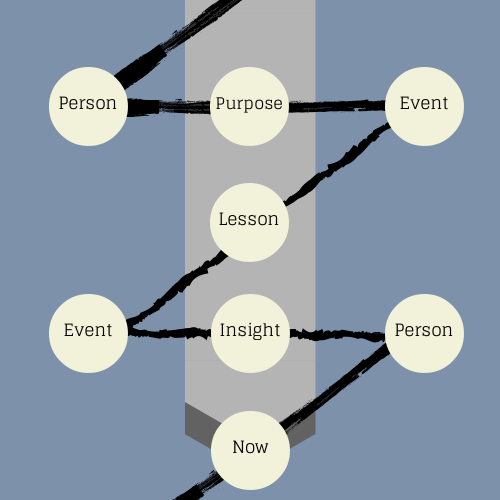
The Do Lecture speakers shared their stories with openness and vulnerability. They laid out their doubts and setbacks. We heard stories to make you cry and to lift your heart. The speakers had dealt with dreams that can’t be achieved, success that turns to heartbreak and the need to balance inner demons.
As a result, there were many stories of zigzags. These major changes of direction were as a result of:
We often think of successful careers and lives as an elevator straight up to success. Sudden rapid elevation is usually a feature of only small periods of time. Only the truly lucky progress without experiencing the doubts, effort, setbacks and changes of direction.
Instead it is far more common to see people zig zag as they learn, improve and find greater purpose. The travels of the story are not a random walk. All the paths lead back to purpose repeatedly and each return is informed by hard won learning. All the paths took sustained effort and emotional toil but the learning and work was its own reward.
So next time you start to despair at the mess of the ongoing changes in your life, remind yourself that learning and change are a part of growth. As hard as it may be to make change, those who take new directions learn and do more.
Waiting your life for an elevator will lead to far more disappointment. Those who follow the zigzags that life offers learn that the work itself provides the rewards.