
Acorns grow into oaks.
From little things big things grow.
Actions accumulate.
Innovation, Collaboration, Learning & Leadership
Acorns grow into oaks.
From little things big things grow.
Actions accumulate.

2020 feels like five years already and there are still months to go. One reason it has been a year of fatigue is the sense that there has been so much to process all the time. We are dealing with a feeling of cognitive load.
We started the year with monsters at the gates and we have dealt with a global pandemic and its losses, economic and social shocks in many and varied ways. Adaptability places a constant burden on our thinking. We need to remain alert to signals, to query the need for change, to decide and to act responsively.
For many our work has moved home. For others work has stopped entirely. Both bring new thoughts and attentions to our daily efforts. Finding space for presence and escape from this load can be well nigh impossible. Even our vacations are so circumscribed by anxieties and locational limits we just are us at home, working a little less.
Our experience of the year has then been overlaid with a gradual and at times dramatic loss of function in global political discourse. We have had to pay attention to the grandstanding, extraordinary behaviour, authoritarianism, populism, incompetence and lies in many corners of the globe. Worrying about the future of our society has at times been the lesser demand in 2020.
This cognitive load has real consequences. All the extra thinking, stress and concern helps explain our fatigue and the perception of the slow pace of the year. It help explains the anger. It is also a source of errors and failings. This morning I slept through an alarm. Yesterday I missed the start of a critical meeting. Things get missed. Messages are unanswered lost in the rush, the worry and the thinking.
The human brain is designed to filter out irrelevant details and focus our attention on the key risks that our ancient ancestors faced on the African savannah – sudden changes, occasional threats, the rise and fall of scarcity and abundance. We just aren’t built for a relentless overabundance of anxiety and inputs.
There’s no imminent change to our circumstances and these pressures. We will need self-care and community care to manage these challenges through the balance of this difficult year. We can all take steps to manage this cognitive load:

On the weekend, a friend noted that they are experiencing so much joy from people across Melbourne as we come out from lockdown. The exceptions are mostly a category of people who are angry and entitled. That expression struck a chord with me as it is a pattern occurring more widely in our lives.
Entitled
We all have expectations, hopes and dreams. An entitlement is something further than a mere expectation. It is a right to see something occur. An entitlement is a literal privilege. As a status, entitlements come as of right without the trouble of effort or the need for qualifications like courtesy or ability.
I’ve lived a privileged life and I have very high expectations. At times I find myself drifting these expectations into entitlements. Surely I deserve success? Surely I should be recognised and rewarded? Don’t I get more respect? Life has a way of consistently reminding me that entitlements are rare and few. The obstacles are the work.
Yet around me I see increasing warning signs of entitlement. Some are familiar. Expectations that a voice has priority and is decisive in discussions, on issues, or in conversation. A lack of consideration of and courtesy in the work that others are doing to provide service, to support community or to keep the wheels of life turning. A focus on the individual and the personal over wider community obligations.
Some are much more dangerous. Cars that go through red lights, white lines and stop signs for the convenience of the driver. People that push in and won’t share space, a challenge in a time of social distance. People who think the rules of a community don’t apply to them or don’t extend to others.
We live in a network of social norms. Perceptions of hard fixed entitlements rarely accommodate the subtle mutuality and adaptability that make a community work. We must remember that rights come with with responsibilities. Any lawyer will tell you the worst client is one who has a point of principle to prove, because the absolutism of principle rarely reflects the parallel commercial, moral and social responsibilities. Those responsibilities are to others and entitlements exist in these complex webs of mutuality. What we can do and what we should do are different things.
Angry
The path from a sense of entitlement to anger is a short one. Once something is of right, then people defend a perceived injustice and do so fiercely. Social media has nicknames for those who angrily enforce their sense of entitlement, because the pattern is predictable. We regularly see the many forms of rage from road rage, to fury at customer service through to the trolling of social media.
The path to anger is not inevitable. It is a choice to react in that way. Viktor Frankl reminds us that between stimulus and response we have time for thought. We react angrily because we presume that others are infringing our entitlements. We react angrily because we presume a threat or disrespect. In most cases, others are surprised to discover we have any sense of entitlement at all. It is always worth questioning whether the expectations you hold are shared by others. In a diverse, distributed and fast moving world, fewer expectations are shared that you expect. You cannot presume a shared context. To paraphrase a famous aphorism, given the choice between malice and misunderstanding, it’s better to assume a misunderstanding.
Another element of any anger to assess in such a situation is at whom are we really angry. Zen Buddhism counsels that anger is often a project of our disappointments at ourselves onto others. Like Frankl, Zen masters like Charlotte Joko Beck ask us to refrain from the instant emotional response and take time to let matters clear before we act. Asking “what am I experiencing now?’ in a moment of anger or intense emotion can provide suprising insights. I often discover that my anger is a reaction to my own failure to act – to prevent a harm, to communicate more clearly or to manage a risk. I am not defending a right. I am protecting a frightened ego from the consequences of its own disappointment.
Allowing distance and presence, seeking first to understand and focusing on communication before emotion, unravels the intensity of our anger. It also unravels our expectations and entitlements. We discover that connected in webs of mutuality what matters is not our perception or even our legal rights, but the foundation of shared understanding and the shared norms that follow.

Our work follows us everywhere now. Evenings, weekends and vacations are accessible by and commonly interrupted by work. We need to consider whether it is time to take our whole self from work.
Of late, I have read a flurry of articles around bringing your whole self to work. Most people who have tried that have found their whole self is rarely appreciated. Whatever that expression is trying to encourage, the employee experience is usually different. Few workplaces are genuinely realms of inclusion. Before you ask the employee to initiate that sharing it is better to ensure that they are welcome to bring their whole selves. As long as the culture of work is a performative environment, our whole self is likely to be too far from the idealised norms to be appreciated there.

The bigger issue about taking your whole self to work is that it further centres work. Work is meant to be the bit that delivers some sense of achievement and an income to support a rich and fulfilling life outside of work. Even if we put aside the relentlessness of the hustle bros, expectations of availability, responsiveness and work centricity are misaligned with the reality of our desire for a life.
One reason working from home has been such a trauma for many is that it has brought the work centricity deeper into the home, at the exact moment that enabling supports like childcare, schools, home care and wider family have been removed. Accomodating somebody’s life in a video conference when working from home is not allowing people to bring their whole selves to work. It is work invading a place that people used to go to escape work.

In an era of mobile phones, instant messaging and chat channels, work doesn’t even respect the weekend or vacation boundary. Out of office responses are useful, but they assume that people won’t see their crisis as just urgent enough or a minor inconvenience to interrupt your much needed escape.
If the idea of taking your whole self from work sounds transgressive. It is because it is. We have reached a point where work is the norm, the expectation, the continuous presence and the centre. Anyone who has been between work, whether by choice or by accident, can describe the difficult conversations where people can’t process that you don’t happen to work at this moment. It usually involves long discussions of what you used to do, plan to do or could do to remove the disconcerting absence of work. Work is such a fixation that even when I explained to people that I was consulting, they would say ‘Don’t worry. It won’t last long’.
There is no way of being fully human without being fully stuck or event completely absent: we are simply not made that way. There is no possibility of pursuing a work without coming to terms with all the ways that it is impossible to do it. Feeling far away from what we want tells us one of two things about our work: that we are at the beginning or we have forgotten where we are going
David Whyte, Three Marriages
We have to take our whole selves from work so that we can see those selves and that work more clearly. We have to have distance to be able to bring new perspective to the most important work, creating a rich and fulfilling life despite all the challenges and obstacles. More work can be a path from disadvantage or an opportunity to build wealth. More work can be a vehicle for success or an opportunity to achieve long overdue recognition. For most people though more work is just the grind of more work. The more of yourself you put into work the return, financial or personal, is unchanged. By taking some distance, we can understand where we stand and what we need from our work. Then we can go back. What we choose to bring to work after we take our whole selves away will be more valuable to us and to our organisations.

There was a meme that went around a few years ago highlighting that Airbnb was the most valuable accomodation service with no hotels, Uber the most valuable transportation service without cars, and so on. The point of the meme was an ongoing shift in our economy from asset ownership to services as the source of competitive advantage.
Our new pandemic world throws up a new source of competitive and strategic change. Organisations are beginning to recognise that location isn’t what it once was. We are in danger of being dislocated.
At the beginning of the industrial era, entrepreneurs created factory towns to have a dedicated community of employees, to develop unique skills and capabilities in their employees and to preserve intellectual property. From that location they sent product out to the world.
Despite the major shift from manufacturing to services, organisations still think in factory town terms. A new campus is still a marquee project for a CEO and in Australia we have been through an era of heavily investment in collaborative office spaces, mostly for property savings but under a veneer of innovation, collaboration and human capability. Location is a source and a gathering point of human capability, even if that location is a financial centre trading in global markets or an innovation hub like Silicon Valley intent on enabling the world to collaborate, work and live digitally.
Organisations are now challenged to think about where the best capability lies for their strategy, not where their organisation may be located. Effective strategy has always been about the best development and use of human capability. Now this capability can come from a global market. This is not offshoring where organisations engage in labour arbitrage, or the gig economy where organisations seek to shift the risk of business volatility to contingent contractors. This is an explicit recognition that, subject to the limitations of remote work, you can hire anywhere and get the best capability. If your organisation has global ambitions, one has to question why your human capabilities are limited to the supply in your own town or that which will move to your town.
How did Airbnb, Uber and the like become household names? They presented novel solutions the limitations of marketplace services for accommodation and transportation. They aren’t perfect but the delivered a compellingly differentiated proposition to scale globally. The barriers to remote working and its issues are problems for organisations to solve to leverage the best global capabilities to deliver their strategy. Many organisations are already deep into experimentation, investment and development of new models of hiring, of work and of capability. There is new strategic advantage and new level of performance that organisations can achieve if they are able to work with their people and develop new and better ways of working.
Remote and flexible work is not a temporary or short term fix to a pandemic. Things will not go back to 2019 business as usual. Organisations seeking competitive and strategic advantage should be exploring the opportunities and new solutions and new ways of working for our dislocated world of work.
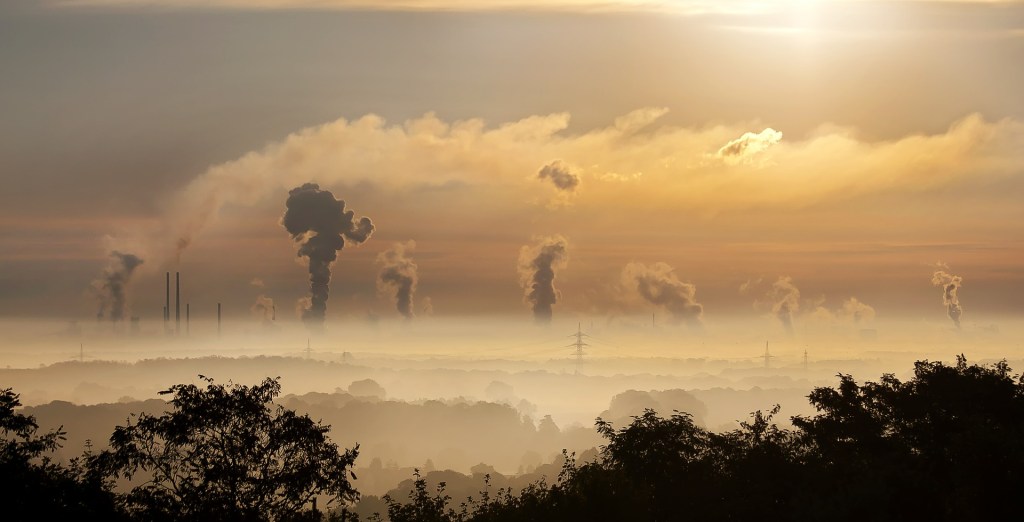
Do you know the moment when relief and tiredness merge into one experience? The moment before you realise that this new achievement is not the crest it is a shoulder on the ongoing climb. Take a pause to look back and celebrate what we have done. Then we must go on.
I wrote earlier in this pandemic about the challenges of fatigue. Across many domains we are now seeing that fatigue play out. Here in Victoria, we experienced a rollercoaster 48 hours where it briefly looked liked our reopening from lockdown would be delayed by a new outbreak, only to experience two days of no cases or deaths and the announcement of the new path out of lockdown. Devastation turned to doughnuts.
In the intervening 24 hours of disappointment across a range of connections, you could see the impact of the fatigue. Everyone is tired of work, of restrictions, of their narrow relationships, of lost sleep, of lost dreams, of grief, of worry for friends, family, colleagues, community and more. We needed hope and change, just like we needed to do all the work to make that hope and change possible.
This is not a small voice
Sonia Sanchez, This is not a Small Voice
you hear.
One benefit of blogging through the last nine months has been to be able to look back on the rollercoaster journey and the reiteration of themes of hope, love, poetry, connection, frustration, remote working, collaboration, community, loss and work. Sharing all that has also fostered critical interactions, conversations and support that has helped me through this journey so far. That digital exhaust is a record of the exhaustion we all feel. However, it is also a record of all that has worked, all we needed to do together and the work that still lies ahead.
We are exhausted. However, the pandemic is not over, our organisations still need to continue to change and adapt. There are great big global challenges and small personal ones that we still need to address together. The hope, today as ever, is that we can come together and start to do that work.
Earlier in the pandemic, I referenced Emily Dickinson’s Hope is a thing with feathers a great deal. Let’s go back to Emily now for the current air of celebration and the rowing in Eden yet to come:
Wild nights – Wild nights!
Were I with thee
Wild nights should be
Our luxury!Futile – the winds –
To a Heart in port –
Done with the Compass –
Done with the Chart!Rowing in Eden –
Emily Dickinson, Wild Nights
Ah – the Sea!
Might I but moor – tonight –
In thee!


Our digitally mediated lives can lure us into a performance. There are implications for this as we consider what increasingly virtual forms of working bring to our workplace, a realm in which performance and impressions already had an outsized role.
Nobody Knows You’re A Dog
Back in 1993, the New Yorker published a cartoon that used the punchline ‘On the internet nobody knows you’re a dog, That cartoon became a meme about anonymity on the internet. Anonymity is still an issue for this domain but now we must also consider another implication of this cartoon – our social web as a realm of performance as identity. Because nobody knows you are a dog, who you portray can be carefully shaped and is often difficult for your digital colleagues to assess.
Erving Goffman led the way in helping people think of identity and impression management as a form of performance. We can consciously or unconsciously shape other’s impressions by how we act. In our new digital lives these impressions surround us:
We could confine these actions to the psychological challenges of a few but humans in society are creatures of social validation & social norms. The more performative identity we see, the more it influences our thinking of what is ideal or at least a norm. Personal branding is a topic of discussion because personal branding is something people do and some times it helps people to change perceptions and achieve their goals. Whether better, wider or greater communication is actually what did the work is often lost in the social proof.
Performance as the Work
One theory as to why our virtual meetings are proving so exhausting is that the Brady bunch format means all the faces are on the screen at the same time. We are by nature inclined to study human faces and to worry about the appearance of our own. We are tired in part by the drama of all the performance. Moving out of gallery view can restore some of the intimacy of the discussion and reduce the performative load.
There is also a greater load in managing often diverse social norms in a rapid fire series of meetings. Context switching brings a social burden as we tailor our performance to different audiences. Even with a greater casualisation of work attire in this era, we still recognise the different expectations of a board meeting, a sales pitch, a team meeting and video drinks.
What can we do to help people with the challenges of performance?
We may never quite know the real identity of our digital colleagues. They may struggle to express it themselves. However, if our digital world of work is going to carry the burden of social performance then we can do more to make it easier, fun and rewarding. We are ultimately social creatures and that includes our work lives.

Life is full of risk. Managing risk isn’t about elimination. Managing risk is choosing what risks to embrace and which risks to mitigate. In no arena is this more important than in the personal relationships which underpin our work. Focusing on taking more risk in these relationships is the path forward to higher individual and team performance.
Psychology Safety to Take Risks
Through the work of Amy Edmonson we have come to understand the importance of psychological safety in teams and organisations. Edmondson defines psychological safety as
‘a shared belief the team is safe for interpersonal risk taking’.
The critical point and the benefit to individuals and the team of psychological safety is the willingness to embrace risk. Risk is associated with return. The safety to take risks in that team will enhance performance. Embracing risks in interpersonal relationships also provide an environment that mitigates performance risk through respectful and supportive feedback. Edmonson’s work has consistently shown that teams with psychological safety manage risk and quality better. Interpersonal risk enables lower performance risk.
The embrace of risk in psychology safety can be lost in some discussion of the concept. People commonly confuse the term with risk elimination, avoiding conflict, making people feel comfortable and even political correctness. It is essential that we understand that psychological safety is the opposite.
Many team dynamic models highlight the critical role of conflict and feedback in team performance. From Tuckman’s stages of group development to Lencioni’s five dysfunctions of a team, conflict and feedback are key elements of alignment, performance and adaptation in teams. Every situation of conflict and feedback involves interpersonal risk. Performance demands more interpersonal risk, not less.
Embracing Personal and Interpersonal Risk
Alan Watts reminds us that all relationships are founded on an act of faith. That faith is called trust, a belief to some extent in the reliability, integrity or performance of another.
The moment that you enter into any kind of human undertaking in relationship, what an act of faith. See, you’ve given yourself up. But this is the most powerful thing that can be done: surrender.
Alan Watts
With that trust comes some act of surrender and its consequent risks. We give up part of our knowledge, will, work, life and concerns to another for their care and management. We cannot eliminate this trust or its related elements of risk. The more we seek to exclude trust and resist this surrender the greater the overhead burdens we place on our relationships.
In organisations, we drown in this overhead, because we are unwilling to take interpersonal risk. Unwilling to take interpersonal risks, we have pursued mitigation of our doubts through poor substitutes for interpersonal trust like trustless transactional relationships, contracts, surveillance, supervision, measurement or compliance processes. Because trust is reciprocal, our unwillingness to trust sees others unwilling to trust us. One reason blockchain has no transformed organisations or even contracts is the path to better performance of relationships is enabling higher trust, not trustless ledger machinery.
Melissa Beck recently wrote a wonderful post, In Praise of Risk. She highlights that these personal and interpersonal risks are a key part of moving forward with our lives. To paraphrase her conclusion we need to carry on and, perhaps stupidly, ridiculously, take more risks.
By taking these personal and interpersonal risks, we will find new relationships – new ways of living, working and performing. The lessons and adaptations we make after embracing the risk is how we will improve ongoing. The next level of individual and team performance is in embracing risk.
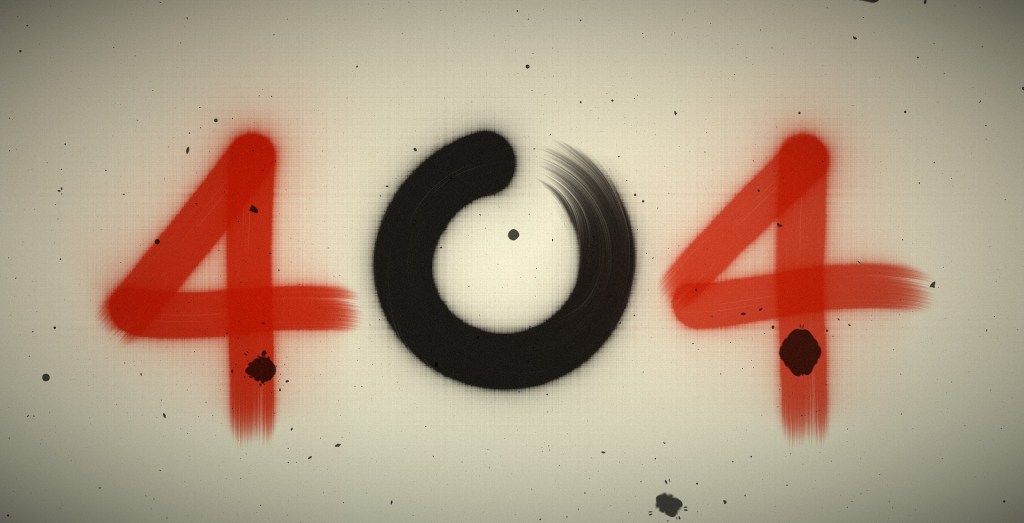
We spend a lot of our life searching. Sometimes we search for the wrong things. Far too often we are searching in the wrong spot. No wonder that search can feel unending.

This morning I was reminded of an old joke. A man comes along the street at night to find a drunk looking for his car keys under a lamp. He joins in the search but neither of them can find anything. Eventually, the man asks “Are you sure you dropped them here?” to which the drunk replies “No, I dropped them over there, but the light is better under this lamp.”
The anecdote came to mind this morning as I was searching through my social media feeds. I realised something that had been creeping up on me:
Whatever needs had prompted me to scroll the feeds was not present in what I was seeing. Whether it was distraction, good news, validation, connection or hope, the best those feeds could offer was a proxy for that experience, a tease of the possibility that experience was out there. I could keep waiting or I could log out. I chose the latter.
I need to retrain my brain. I’m going to find another place to search. I’m going to step away from the bright lights and go search in the dark where there’s a hope of finding something meaningful.
Social media feeds are still a powerful way to reach others around the world, learn from differing perspectives, benefit from the curation of others and to find surprises. Over time my use of these platforms has evolved from these purposes. Using them effectively involves searching in the right place with the right tools for the right content.
My brain threw up the human equivalent of a 404 error message. It is time to refine my search.
You who do not discriminate
Louise Gluck, Vespers
between the dead and the living, who are, in consequence,
immune to foreshadowing, you may not know
how much terror we bear, the spotted leaf,
the red leaves of the maple falling
even in August, in early darkness: I am responsible
for these vines.

Then practice losing farther, losing faster:
Elizabeth Bishop, One Art
places, and names, and where it was you meant
to travel. None of these will bring disaster.
This has been a year to grow fatigued by loss. The relentlessness of disaster has magnified the very real losses of life, of health, and of livelihood. Strangest of these losses and perhaps the most inconsequential is the loss of that which we have never had. With loss of travel, connection and gathering has come a raft of grief for things we never had.
I lost a summer to bushfires. As an Australian, that was expected. Fires happen in a dry continent. However, the scale was extraordinary and skies grey or orange with acrid smoke belonged more in Blade Runner 2048 than the Melbourne suburbs.
General Petraeus, when the death-count of American troops
Andrew Motion, Losses
in Iraq was close to 3,800, said ‘The truth is you never do get
used to losses. There is a kind of bad news vessel with holes,
and sometimes it drains, then it fills up, then it empties again’—
As I prepared for my first trip to Seattle in over a decade, the Coronavirus pandemic broke out there and I lost a trip to see much missed colleagues and much loved family. This early warning and the worrying news from China meant that I moved my work to home before my city faced its first lock down. I began to miss my rituals and my regular haunts from the morning coffee to a lunchtime trip to a bookstore. From my privileged position at home, I watched the mounting damage around the world. as chaos mounted, I grieved for a safe just and equitable world of which I’d dreamed.
I am supported by multiple global communities that are versed in virtual tools and have provided comfort, distraction and companionship in this time. Never has community been so important to me as when we come together to battle a global public health crisis.
I have been lucky in that I have had no major losses, just the inconvenience of isolation, and yet I still have experienced moments of grief for a world that might have been. I thought perhaps it was strange to mourn that you have never lost, but a quick search revealed it is well known and that there is lots of advice on how to handle this experience. Even still my story seems a little trivial compared to those stories of loss of dreams and ideals. At best, my life has been a mildly inconvenienced and perhaps delayed.
If it became impossible to touch and be touched, to see
David Harsent, Loss
and be seen, to love and trade ecstasy for risk where risk
is ecstasy, to be hidden in plain view, to be perfectly lost
which means lost to the world, lying side-by-side arms linked
in a bond so intricate it could never unfold or break
We can’t live life backwards. Our losses and our grief are real. We will seek what closure life will allow. We can tell ourselves all kinds of stories about the past, some for comfort, some for validation, and some as inspiration. Some of these stories are even true. Other stories we tell are those of the future. These are the stories that inspire us to get out of bed and to go on with our lives. Whether these are true or not remains in our hands. If we mourn the loss of these stories too much now, we determine their fate.
Whatever the circumstances, we do not lose the ability to yearn and to dream. These stories may tease our hopes and bring future losses. However, they are also the vehicles for us to come together with others, to create new things and to realise our potential. We cannot be afraid of the stories that may not eventuate. Our future is full of them, just as it is full of so much other potential.
An hour comes
WS Merwin, Memory of the Loss of Wings
To close a door behind me
The whole of night opens before me