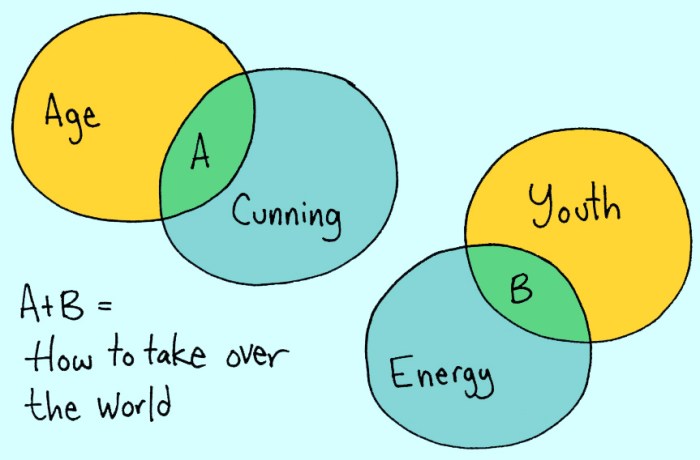
Interesting people engage outside their peer group.
Chair and Non-Executive Director, Advisor, and CEO helping healthcare, finance, and educational organisations drive growth, leverage technology innovation, and realise the strategic value of transformation
Allow customers to support and engage your brand at different levels in marketing communications. Not all customers are extreme fans. As much as you’d like all customers to be extreme fans engaging them that way is likely counterproductive.
Take Me Out to the Baseball
I’m a bit of a casual fan of baseball. I would happily be more engaged. I just happen to live in the wrong hemisphere to spend much time on the game.
On a recent trip to San Francisco, I had a chance to go AT&T Park to watch the Giants lose to the Dodgers in a great game in a great environment. It was an amazing day. I would happily repeat the experience.
Talking Baseball
So where’s the issue?
Buying my game ticket online there was an option to opt out of receiving an email of news & marketing from Major League Baseball and the San Francisco Giants. There’s not much baseball news in Australia. Against my usual practice, I opted in to email marketing.
I was struck immediately by the passionate tone of the emails that flowed and their determination that I must be a diehard Giants fanatic. Apparently, I needed prompting several times a week to participate in club activities, to purchase MLB services from partners and to attend every game. I had invitations to vote for players in awards that I didn’t know existed. I was offered lots of products I can’t buy and discounts I can’t use.
Of course, I ended up unsubscribing because what was missing was any news or marketing relevant to a curious casual fan of the game living on the other side of the world. Even if I had been as passionate as they seemed to expect, I just couldn’t do anything they asked. There were no relevant calls to action and no content that wasn’t a call to action.
Passionate Fans Matter
Everyone should cater to the passionate fan. By all means cater to their every need. We all like to think that talking passionately about our brand will rub off. It might. If that all you do, it can be counterproductive.
Plan for the Less Passionate Too
I was left with the impression that the curious, casual or distant fan segment is missing from the Major League Baseball email marketing plan. Maybe baseball don’t need this segment in email or it is not profitable enough. Maybe growing the brands engagement with travellers or those with a casual interest is not on the agenda. The issue is that baseball will now never know what might have been possible.
Build Engagement with Segmented Calls to Action
Every brand needs to segment its calls to action in every channel. Always allow options for the less engaged or those building engagement with your brand. Given your customers and potential fans meaningful ways to build engagement.
If you don’t, the only option for a hard won prospect (and potential future hardcore fan) is to unsubscribe.
Post Script on Social Marketing
Interestingly, the strategy around @SFGiants twitter account is much more accessible to a fan who wants to build engagement. Then perhaps they know that many of the half million followers will never have bought a ticket.
Every moment of every customer or employee experience matters. Talk like a real person, your customer. What you say sends a big signal.
We all know the moment. The moment a starts talking generic corporate speak to us. Often we are so used to these meaningless generic moments they are almost a parody
– “we apologies for the inconvenience”
– “your call is important to us”
– “because your safety is important to us…”
– “our operators are waiting for your call”
– “it’s not personal”
– “policy says…”
– “buy now and as a special offer we will throw in free steak knives”
– “satisfaction guaranteed”
– “have you tried restarting the computer”
– “thank you for your business”
– “is there anything I can help you with”
– “operational issues require…”
– “the assets of this business walk out the door at the end of each day”
– and many more
Don’t use these words. Stop. Every moment you use a generic phrase you remind customers and your people that you are just like everyone else. Every time an employee has to say one of these things you run a big risk that they stare blankly into space and disengage from the customer and from you. You have declared to your customers and employees that there is absolutely nothing special or unique about you.
Customers don’t talk this way. They say things they mean in their own words. They are real people. You should be real people too.

Many years ago I pitched an initiative to a senior executive group. The presentation went without a hitch. There were no hard questions and no push back. I walked out of the meeting pleased until a wise mentor of mine asked a devastating question:
What level of engagement was there in the room?
My mentor went on to point out that without pushback it is unlikely anyone in the room actually turned much of their mind to my initiative. The lack of pushback was bad news because it meant that support would fade quickly and little follow through would occur. Sadly, he proved right.
That day I learned a lesson to bring on questions, debate and conflict to generate engagement. No matter how compelling your case for change, you need debate to get people to consider the options, risks and issues. Without debate, people don’t agree. They just acquiesce.
Debate, questions and conflict are an essential part of how knowledge gets attention, currency and is shared in organisations. You can’t advance a meaningful agenda without them.
If it feels like you lack opposition, then there’s a good chance you are inadvertently playing to the safe ground. Platitudes might win unthinking support. That might work for a while, but there’s a risk you will lose your support when real challenges arise.
If others aren’t bringing debate, then start the debate yourself. Raise the hard questions and doubts. Provoke your likely opponents. A real discussion upfront is always better. Knowing where you stand as a change agent is critical. It will give you valuable information on what to do next to move forward.
It is amazing what you can accomplish when you don’t care who gets the credit – Harry S Truman
Yesterday I discussed the vexed issue of ownership of collaboration. Credit for the successes of collaboration is one other reason people are so keen to own it and also why ownership belongs with the users.
Credit is also a vexed issue for innovation. As Harry Truman notes, giving credit away is often the only way to get something done. Far too many change agents are frustrated that their good ideas are quickly taken for implementation, often without credit or further involvement. Sadly, the great ideas don’t get implemented easily.
Three other challenges come for organisations that run on the concept of credit:
How can an innovator or change agents deal with issues of credit?

Baseball has one thing right. Nobody expects a batter in baseball to get a hit every time.
Baseball tracks at bats and hitting percentages. Batter’s careers are determined by the percentage, not the individual hit. It is expected that the best bats will:
– work there way up through thousands of little league and minor league at bats
– have a slightly better hitting percentage
– swing and miss more than half the time.
Many people won’t start something unless it is a sure fire hit. Like baseball, life doesn’t work that way. You have to have the attempts to get a small percentage of hits. For most people, improving performance is not a matter of improving their strike rate, just making more attempts.
Importantly, the only way to improve either the strike rate or the number of successes is to try. If you strike out, try again. If you haven’t had a go for a while, step up and try.
Next time you are wondering where success comes from remember to step up to the plate.
Lead users to realise the value of better collaboration
Twice last week in conversation I stumbled across the challenge of who owns collaboration. Once was an organisation grappling with who “owned collaboration”. Once was a tech company who noted that their valuable tools lacked a natural “owner” in their clients. This is such a common challenge at least one vendor proposes the effort of annual reviews of ownership.
In many cases what drives the debate about ownership is the need to cut a cheque to invest in a better solution. Imagine if the English language had a license fee. I can imagine the organizational debate about who owned English and who had to maintain it. People see the immediate inconvenience, the benefits are diffuse and there is often a tricky path to realizing value for the company strategy.
In other situations ownership debates arise from the number of parties involved. Ownership is a problematic concept with something that inherently involves multiple silos and many engaged people.
Having spent much of my working life being asked the question of “who owns the customer?” I have the same answer:
The end user does.
Each customer owns their relationship with an organisation. Decisions should be made to meet the customers needs. We need to reflect the customers right to choose or they will go elsewhere. That means everyone in the organisation needs to put the customer first. Everyone needs to put their ego in check and deliver on the best experience the whole organisation can deliver.
Collaboration is owned by the users
Collaboration is no different. Those who collaborate, the employees and other users, own collaboration in your organisation. After all, they make decisions each day to invest their critical time in collaboration to create value for themselves and the organisation. Increasingly, they can engage elsewhere. Engaging users is the best way to create, sustain and build value from collaboration.
Every organisation needs leaders to make sure that that activity is supported & guided to benefit the organisation’s purpose and strategy. In enlightened organisations, just as with customers, support will come from the highest levels. If not, it is up to you to take responsibility to support the users in your organisation.
How do leaders help users own collaboration?
When nobody else will step forward to advocate for a critical skill for future organisations, it is essential that you do. Leading users to own their own collaboration and create increasing value will deliver huge rewards for you and your organisation.

The best way to change the future of work is to change how we interact.
The Responsive Organisation Manifesto recognizes that there are fundamental changes afoot in the nature of work and calls for action to make our organisations more purposeful, responsive, more engaging, more empowering, more networked, more mobile and more community oriented. Groups like Change Agents Worldwide are working to help organisations with services and solutions to navigate these big changes.
Hacking Organisations is Hard
There’s lots of enthusiasm for big change. Big change is hard. There is a lot yet to be worked out. The decision making processes take time. Experiments are required. Not all of us feel we have the power to make big change.
There are things we each can do now. In our control. Today.
Hack Yourself First
Organisations are made up of individuals. The pattern of interactions of those people determine purpose, processes, decisions, use of resources & ultimately culture. Changing these interactions is more important than changing roles, hierarchy and many of the other formal organisation trappings. There are too many companies that changed their hierarchy and found things still work the same way as ever.
We can each have an impact on the future of work by changing our own behaviours first. If we change our own interactions that contributes to change. View each new interaction as an experiment. Is it worthwhile enough to inspire others to copy it?
Six Personal Behaviour Hacks for a More Responsive Organisation
Here are some simple triggers of our common organizational life where we can adopt new responsive habits
These small changes can have a significant impact on the responsiveness of your work and your leadership. You might even inspire a movement of others to copy you.
These actions alone are not enough. What other hacks or changes can we make? Please post your thoughts in the comments
Working aloud requires new habits of work. 3 little habits will help you experiment with techniques and the benefits.
I’ve been reading about BJ Fogg’s tiny habits. In doing so, I realized the tiny habits reflect how I learned to practice new ways of working aloud using enterprise social networking.
How does a busy executive build a habit of working aloud?
Make a decision to build a new habit. Set yourself up with a login and the right apps. Then break your new working aloud habit down into common triggers and simple steps.
I have previously shared that checking in to a social network 3 times a day for 5-15 minutes easily creates the impression of continuous engagement. If there’s always something new from you when people check, then it looks like you are always there.
Here’s some triggers and habits I used to create a new working aloud habit:
Trigger1: First coffee, tea or other beverage
Habit1: Describe Describe one moment in your day ahead. Tell of something you are doing or starting, a visit, conversation or meeting. A post simply stating where you are can work. Everyone has something worth noting.
Trigger2: About to leave for lunch
Habit2: Interact. Like a post or answer a post. Interactions supporting others have great value. Your quick answer can make a difference.
Trigger3: Leaving for the day
Habit3: Recognition Recognise one person or team achievement. Every organisation needs more recognition and there’s something to recognize every day.
That’s it. The community will do the rest. You might not see a response immediately, but if you keep the habits up these posts will draw likes, questions and comments. Then people will ask you questions on other topics which you will answer in Habit2. Over time, people will engage you in the community and its concerns.
Repeat
Now repeat that process for a few weeks. As a busy executive that may be all the working aloud you will ever do. However, as the habit builds you might find yourself more willing to put time into the community and its rewards. When you are more confident with the habit and relationships in the community, you can swap to new topics and bigger challenges.
Don’t rush. Let the little habits grow from 5-15 minutes 3 times each day. If the benefits aren’t there, stop. However, don’t be surprised if over time the responses change how you work going forward.
Uniting the like-minded agents of change is a common first step in creating change. Too much unity of the like-minded is also a path to failure.
Undoubtedly change agents benefit from connection, collaboration and collective force. The life of a change agent can be a lonely one. Having others to share the load matters.
Building an overly united collective of people equally oriented to change has its dangers for the success of any change:
– Shared Context: People embrace ideas when they share sufficient context to understand them. Uniting a group of change agents can rapidly accelerate the sharing of knowledge within the group. Soon that group will have lost some shared context with those that need to embrace change.
– Us & Them: Silos are inevitable in any attempt to draw a ring around a group united in purpose. Without great care, unity will also come at a cost of factionalism as people seek out those who hold views of those closer to their own. All of this connection is in the opposite direction to the external engagement that drives change.
– Grand Plans: United we dream. We plan lots of steps without engaging those who must join us in the changes. United we dream. Dreams inspire, but don’t deliver.
– Power of Conflict: Interaction, debate and conflict helps keeps ideas evolving and relevant. Flaws appear when ideas are challenged and when ideas are tested by diverse views. Unity will reduce conflict. No change prospers by talking only to the converted.
– Compromise: Surrounded by those equally convinced, compromise can feel weak. Standing ground against the system looks like an option and is commonly raised. This gesture of pulling rank on the system may come with a giddy sense of opportunity but is actually a failure, alienating others and preventing further progress to change. Opting back-in later is always challenging.
So how do you get the benefits of greater connection without the risks?
– Share your story: Work out loud. Keep putting ideas out and discussing them widely
– Keep the doors open: Constantly engage with new people, both like-minded, neutral and opponents. Any time your ideas are not being disturbed once a day you are in an echo chamber.
– Favour unity of purpose & action over dogma: People only need to be agreed enough on the direction to work together. The change agents don’t need to agree each last point of implementation yet. Details will come in time.